
For most travelers, the Westinghouse 1000-Lumen Solar Camping Lantern is the best overall pick in this lineup because its stated brightness suits shared camp spaces better than the compact inflatable models. The LuminAID Max 2-in-1 stands out when phone charging matters, while the BioLite Luci Emergency Lantern is a strong choice for travelers who value USB-C charging and a packable emergency light. The central tradeoff is between brighter, more versatile lanterns and lighter, simpler designs that are easier to carry but may offer less illumination or fewer functions. Solar charging is useful when there is time and sun, but it is less predictable than charging from a wall or power bank. Read on for the full breakdown and help matching a lantern to your trip.

Get travel and outdoor gear delivered free with Prime
- Fast, free delivery on millions of items
- Prime Video, Amazon Music and more included
- Member-only deals all year
Complete the kit


Key Takeaways
- The Westinghouse is the clearest all-rounder on paper: its stated 1000 lumens give it a stronger case for lighting a group area than the smaller inflatable options.
- The LuminAID Max adds a distinct backup-power role by combining lantern use with phone charging; choose it for that flexibility, not as a substitute for a dedicated power bank.
- The BioLite Luci favors a modern charging setup with USB-C, while the LuminAID Nova keeps the inflatable format simpler for buyers who mainly want a portable light.
- Several generic models advertise 5000–5200mAh batteries and IP65 protection; their similar headline specs make controls, charging details, and confirmed runtime more useful comparison points than lumen claims alone.
- Multi-packs solve a different problem from single lanterns: the XTAUTO four-pack and two-pack inflatable option can spread light around a group, but bring more pieces and may not match a high-output single lantern.
| Westinghouse 1000-Lumen Solar Camping Lantern |  | Best for Bright Campsite Lighting | Maximum light output: 1000 lumens | Color temperature: 5000K daylight white | Lighting modes: High, medium, low, SOS | VIEW LATEST PRICE | See Our Full Breakdown |
| LuminAID Max 2-in-1 Inflatable Solar LED Camping Lantern and Phone Charger |  | Best for Solar Charging on the Go | Maximum light output: Up to 200 lumens | Charging: Solar or USB | Phone charging output: 5V, 2.1A | VIEW LATEST PRICE | See Our Full Breakdown |
| Rechargeable Solar Camping Lantern, 5000mAh, 2000 Lumens, IP65 |  | Best for Maximum Brightness and Modes | Model: C30 | Maximum light output: 2000 lumens | Battery capacity: 5000mAh | VIEW LATEST PRICE | See Our Full Breakdown |
| Solar Camping Rechargeable Lantern 5200mAh LED, 6 Light Modes, IP65 Waterproof |  | Best for a Compact High-Capacity Lantern | Battery type and capacity: Lithium-ion polymer, 5200mAh (19.25Wh) | Maximum light output: 1000 lumens | Charging: Solar and USB fast charge | VIEW LATEST PRICE | See Our Full Breakdown |
| BioLite Luci Emergency Lantern, Solar Powered, USB-C, Rechargeable | 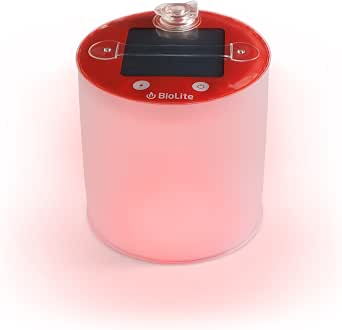 | Best Compact Emergency Lantern | Maximum light output: 200 lumens | Battery life: Up to 10 hours | Charging: Solar and USB-C | VIEW LATEST PRICE | See Our Full Breakdown |
| LuminAID Nova Inflatable Solar LED Lantern |  | Best for Lightweight, Weatherproof Travel | Light output: Up to 75 lumens | Power source: Solar or micro USB | Battery life: Up to 24 hours | VIEW LATEST PRICE | See Our Full Breakdown |
| Glocusent 400H Rechargeable Camping Lantern with Solar Charging |  | Best for Flexible USB-C Lighting | Battery capacity: 5000mAh | Charging: USB-C and auxiliary solar | USB-C charging time: 3.5 hours | VIEW LATEST PRICE | See Our Full Breakdown |
| XTAUTO 4-Pack Collapsible LED Camping Lanterns |  | Best for Group and Emergency Kits | Pack size: 4 lanterns | Battery capacity: 1,600mAh per lantern | Charging methods: USB and solar | VIEW LATEST PRICE | See Our Full Breakdown |
| Solar Camping Lights Rechargeable Lantern 5000mAh LED, 5 Light Modes, IP65 |  | Best for High-Output Camp Lighting | Battery capacity: 5000mAh | Maximum light output: Up to 2,000 lumens | Light modes: White, warm, natural, red, and SOS red strobe | VIEW LATEST PRICE | See Our Full Breakdown |
| Solar Inflatable LED Lanterns, 2-Pack |  | Best for Simple Solar-Only Packing | Quantity: 2 lanterns | Material: PVC | Size: 13 × 13 × 3 cm | VIEW LATEST PRICE | See Our Full Breakdown |
| solar powered travel lantern | Water resistance | Weight | Maximum light output | Charging |
|---|---|---|---|---|
| Westinghouse 1000-Lumen Solar | IPX4 | — | 1000 lumens | Solar and USB-C |
| LuminAID Max 2-in-1 Inflatable | — | 10 ounces | Up to 200 lumens | Solar or USB |
| Rechargeable Solar Camping Lan | IP65 | 8.8 ounces (250g) | 2000 lumens | — |
| Solar Camping Rechargeable Lan | IPX5 | 293g | 1000 lumens | Solar and USB fast charge |
| BioLite Luci Emergency Lantern | IP67 | 2.8 ounces (80g) | 200 lumens | Solar and USB-C |
| LuminAID Nova Inflatable Solar | IP67 waterproof | 5.3 ounces | — | — |
| Glocusent 400H Rechargeable Ca | IPX5 | 153 g (5.4 oz) | — | USB-C and auxiliary solar |
| XTAUTO 4-Pack Collapsible LED | Described as waterproof; no rating specified | — | — | — |
| Solar Camping Lights Rechargea | IP65 | 250g | Up to 2,000 lumens | — |
| Solar Inflatable LED Lanterns | IP55 | 100g | — | — |
More Details on Our Top Picks
Westinghouse 1000-Lumen Solar Camping Lantern
The Westinghouse 1000-Lumen Solar Camping Lantern is the strongest fit here when your priority is lighting a larger campsite, rather than packing the smallest possible lamp. Its 1000-lumen output and four modes, including SOS, give it more reach than the 200-lumen LuminAID Max 2-in-1. Solar and USB-C charging also offer a practical backup when daylight is limited, though the supplied details do not state how long a charge lasts or how quickly solar charging works. The tradeoff is bulk: its rigid, nearly eight-inch-tall ABS body takes more room than the inflatable LuminAID or BioLite Luci. IPX4 protection covers splashes and light rain, not immersion, so it is less suited to wet conditions than those IP67-rated options.
Pros:- Up to 1000 lumens can light a larger campsite than the 200-lumen inflatable options.
- Solar and USB-C charging provide two ways to replenish the battery.
- SOS mode adds an emergency signaling option.
- Integrated carry handle makes it easy to move around camp.
Cons:- IPX4 protection is limited to splashes and light rain, not immersion.
- No lighting runtime is specified, making it harder to plan around overnight use.
- Rigid dimensions take more pack space than inflatable lanterns.
Best for: Campers who want a bright, handle-carry lantern for shared campsite use and a USB-C charging fallback.
Not ideal for: Ultralight travelers or campers expecting submersion-level water protection; it is a rigid lantern with IPX4 splash resistance.
- Maximum light output:1000 lumens
- Color temperature:5000K daylight white
- Lighting modes:High, medium, low, SOS
- Charging:Solar and USB-C
- Battery:4000mAh lithium-ion, included
- Water resistance:IPX4
- Dimensions:4.54 × 4.04 × 7.95 in
- Warranty:1-year limited
Our verdict“Choose the Westinghouse if campsite brightness matters more than compact packing or full waterproofing.”
LuminAID Max 2-in-1 Inflatable Solar LED Camping Lantern and Phone Charger
The LuminAID Max 2-in-1 earns its place by doing more than lighting a tent: it can also provide a 5V, 2.1A phone charge. That makes it a more useful travel backup than the brighter Westinghouse lantern, which does not list phone charging. At up to 200 lumens, though, it is better for a tent, table, or personal light than illuminating a whole campsite. Its inflatable TPU body packs to about an inch thick and has IP67 waterproof and dustproof protection, a clear advantage over the Westinghouse’s IPX4 rating. The main catch is dependence on conditions: a full solar recharge is listed at 16–20 hours of direct sun, and phone charging may not fully replenish a device. USB charging is the quicker route when available.
Pros:- Combines a lantern with a 5V, 2.1A phone-charging output.
- Inflatable design packs to about one inch thick and weighs 10 ounces.
- IP67 waterproof and dustproof construction; it also floats when inflated.
- Brightness is adjustable up to 200 lumens.
Cons:- Solar recharge takes a listed 16–20 hours in direct sunlight.
- Maximum 200-lumen output is modest beside the Westinghouse and SAMUUN lanterns.
- Phone charge may reach only 75–100%, depending on the phone.
Best for: Travelers and campers who want a pack-flat lantern that can also provide emergency phone power.
Not ideal for: People who need broad, high-output campsite lighting or expect quick recharging from sunlight alone.
- Maximum light output:Up to 200 lumens
- Charging:Solar or USB
- Phone charging output:5V, 2.1A
- Recharge time:16–20 hours in direct sunlight or 1–2 hours by USB
- Water and dust resistance:IP67
- Weight:10 ounces
- Packed thickness:1 inch
- Warranty:1 year
Our verdict“Pick the LuminAID Max if compact solar lighting and backup phone power matter more than high brightness or fast solar charging.”
Rechargeable Solar Camping Lantern, 5000mAh, 2000 Lumens, IP65
Among these picks, the SAMUUN C30 claims the highest output at 2000 lumens, pairing that brightness with white, warm, natural, and red light plus an SOS strobe. Five dimming levels make it more adaptable than the Westinghouse, which offers four basic modes but no listed runtime. SAMUUN specifies over nine hours at maximum output and more than 85 hours in eco mode; those are useful planning figures, though the claims are not independently verified. Its IP65 rating and stated 1.5-meter drop resistance also suit rougher trips better than the Westinghouse’s splash-only protection. The key solar limitation is substantial: the description says sunlight adds only about 20% charge per day. Treat solar as a supplement, not a dependable daily reset, and expect a relatively flat but broad lantern in your pack.
Pros:- Claimed 2000-lumen maximum is the highest output in this group.
- Multiple color options, five dimming levels, and an SOS strobe allow varied use.
- IP65 rating and stated 1.5-meter drop resistance suit rough outdoor handling.
- Can provide emergency phone charging.
Cons:- Solar charging is described as replenishing only about 20% per day.
- Runtime and battery-life claims are not independently verified.
- The broad, flat body may be less convenient to pack than an inflatable lantern.
Best for: Campers who want several light colors, a high claimed lumen ceiling, and stated runtime figures for planning.
Not ideal for: Travelers relying on sunlight to fully recharge each day or buyers who need independently verified runtime claims.
- Model:C30
- Maximum light output:2000 lumens
- Battery capacity:5000mAh
- Lighting modes:White, warm, natural, red, and SOS strobe
- Dimming levels:5
- Claimed runtime:Over 9 hours at 2000 lumens; 85+ hours in eco mode
- Water resistance:IP65
- Weight:8.8 ounces (250g)
Our verdict“Choose the SAMUUN C30 for claimed brightness and lighting flexibility, but plan to use USB rather than solar as its main recharge method.”
Solar Camping Rechargeable Lantern 5200mAh LED, 6 Light Modes, IP65 Waterproof
This 5200mAh lantern is a middle ground between the compact inflatable lamps and the higher-output SAMUUN C30: it claims up to 1000 lumens in a small ABS housing weighing 293g. Its six brightness levels and five specialized modes, including warm, natural, and red SOS, offer more adjustment than the Westinghouse’s four modes. The battery capacity is slightly higher than the Westinghouse’s 4000mAh, but capacity alone does not establish longer runtime; this listing provides no runtime figures. Solar charging is also described as adding about 20% per day, so USB fast charging is the more dependable option when available. IPX5 protection handles water jets better than the Westinghouse’s IPX4, but it still is not the IP67 immersion protection offered by LuminAID Max 2-in-1 and BioLite Luci.
Pros:- Compact ABS body weighs 293g and measures 100 × 100 × 45 mm.
- Up to 1000 lumens with six brightness levels and five specialized modes.
- 5200mAh battery supports USB fast charging as well as solar input.
- IPX5 water resistance offers more protection from water jets than the Westinghouse’s IPX4.
Cons:- Solar charging is listed at about 20% per day, limiting its value as a sole recharge source.
- No lighting runtime is provided.
- The listed 80-year battery-life claim appears unreliable and is not a useful planning figure.
Best for: Backpackers who want a compact, rigid lantern with several brightness settings and useful red-light modes.
Not ideal for: Campers needing documented runtimes, immersion protection, or a lantern that can fully recharge from a day of sun.
- Battery type and capacity:Lithium-ion polymer, 5200mAh (19.25Wh)
- Maximum light output:1000 lumens
- Charging:Solar and USB fast charge
- Light settings:6 brightness levels and 5 specialized modes
- Water resistance:IPX5
- Dimensions:100 × 100 × 45 mm
- Weight:293g
- Operating temperature:-20°C to 60°C
Our verdict“Choose this model for a compact, mode-rich lantern if you can rely on USB charging and do not need immersion protection.”
BioLite Luci Emergency Lantern, Solar Powered, USB-C, Rechargeable
The BioLite Luci Emergency Lantern is the lightest pick here at 2.8 ounces, making it an easy backup to keep in a travel bag rather than a primary lamp for a large campsite. Its inflatable, collapsible form takes little storage space, while solar and USB-C charging give it more flexibility than a lantern that relies on just one charging method. At up to 200 lumens and a stated 10-hour battery life, it is closer to the LuminAID Max 2-in-1 than to the 1000-lumen Westinghouse, but its five modes include red, flashing, and SOS beacon settings for emergency use. IP67 protection gives it a clear advantage in wet conditions over both rigid lanterns. The tradeoff is limited output and small-battery capacity: it suits personal lighting and preparedness better than long, bright nights at camp.
Pros:- At 2.8 ounces, it is lighter than the other listed lanterns.
- Inflatable, collapsible construction stores compactly.
- Solar and USB-C charging offer two replenishment options.
- IP67 waterproofing and SOS beacon mode suit emergency use.
Cons:- Maximum 200-lumen output is limited for lighting larger spaces.
- The stated battery life is 10 hours, and heavy use may require frequent recharging.
- Its small form is better for personal or emergency lighting than as a main campsite lantern.
Best for: Travelers building a compact emergency kit who want a lightweight, waterproof lantern with solar and USB-C charging.
Not ideal for: Campers who need a bright shared-area light or expect extended use without frequent recharging.
- Maximum light output:200 lumens
- Battery life:Up to 10 hours
- Charging:Solar and USB-C
- Lighting modes:High, low, red, flashing, and SOS beacon
- Water resistance:IP67
- Weight:2.8 ounces (80g)
- Material:PVC
- Warranty:1-year manufacturer warranty
Our verdict“Choose the BioLite Luci as a lightweight, waterproof backup, not as your main source of bright campsite lighting.”
LuminAID Nova Inflatable Solar LED Lantern
The LuminAID Nova is a strong fit when packability and weather protection matter more than a powerful beam. At 5.3 ounces, it collapses for travel, then inflates into a 75-lumen lantern with a broad 120-degree spread. Its IP67 rating and shatterproof, dustproof construction make it better suited to wet or dusty trips than the Solar Inflatable LED Lanterns, 2-Pack, which have a lower IP55 rating. The tradeoff is modest brightness: 75 lumens works for tent lighting and nearby tasks, not for lighting a large campsite. Solar charging takes about 10 hours of direct sunlight, so the micro USB option is the more dependable way to prepare it before departure. I’d choose this for a compact, resilient personal lantern, not as a high-output camp light.
Pros:- Lightweight, inflatable design packs down for travel
- IP67 waterproof, dustproof, and shatterproof construction
- Solar and micro USB charging provide two ways to recharge
- Up to 24 hours of stated runtime
Cons:- 75-lumen maximum is limited for lighting a large campsite
- Solar charging takes about 10 hours in direct sunlight
Best for: Backpackers and travelers who want one lightweight lantern for tent use, wet-weather trips, and emergency kits.
Not ideal for: Campers who need bright area lighting or rely on solar charging to quickly replenish a lantern during a short stop.
- Light output:Up to 75 lumens
- Power source:Solar or micro USB
- Battery life:Up to 24 hours
- Recharge time:About 10 hours in direct sunlight; 1–2 hours via micro USB
- Water resistance:IP67 waterproof
- Weight:5.3 ounces
- Dimensions:4.75 × 4.75 × 4.75 inches
- Beam angle:120 degrees
Our verdict“Choose the Nova for compact, weather-ready tent lighting; skip it if you need a bright area lantern.”
Glocusent 400H Rechargeable Camping Lantern with Solar Charging
The Glocusent 400H is the most adaptable pick here for travelers who want control over light color and a useful USB-C charging setup. Its three color temperatures and stepless brightness adjustment let you switch from warmer tent light to cooler task lighting, while the red SOS mode adds an emergency signal. USB-C takes about 3.5 hours; solar is best treated as a backup, since the stated solar charge time is 40 hours. That makes it less suitable for solar-first travel than the LuminAID Nova, whose solar recharge is much shorter. The Glocusent can also charge other devices, but its brightness information conflicts: one description gives 15–250 lumens while product information lists up to 1,200. I’d buy it for its charging and lighting options, not on the strength of the highest output claim.
Pros:- USB-C charging takes a stated 3.5 hours
- Three color temperatures and five stepless brightness levels
- Red SOS mode and ability to charge other devices
- Compact 5.4-ounce design can hang or stand
Cons:- Solar charging takes a stated 40 hours, making it auxiliary rather than practical primary charging
- Brightness specifications conflict between 15–250 lumens and a 1,200-lumen maximum
- IPX5 protection is less extensive than the Nova’s IP67 rating
Best for: Car campers and travelers who want USB-C charging, adjustable color temperature, and an emergency device-power option.
Not ideal for: Solar-only travelers or buyers who need a clearly specified, dependable maximum brightness.
- Battery capacity:5000mAh
- Charging:USB-C and auxiliary solar
- USB-C charging time:3.5 hours
- Solar charging time:40 hours
- Brightness:Conflicting listings: 15–250 lumens in description; up to 1,200 lumens in product information
- Color temperatures:3000K, 4500K, and 6000K
- Water resistance:IPX5
- Weight:153 g (5.4 oz)
Our verdict“Pick the Glocusent for versatile USB-C-powered camp lighting, but not if solar charging or a verified output figure is your priority.”
XTAUTO 4-Pack Collapsible LED Camping Lanterns
The XTAUTO 4-Pack takes a different approach from single-lantern picks: it provides four collapsible lights, so a group can spread them across tents, a vehicle, or an emergency kit. Each lantern offers 360-degree lighting and can also be used as a flashlight, giving it more flexibility around camp than the single-purpose area light of the LuminAID Nova. USB and solar charging are both listed, and the stated runtime reaches 25 hours, though the product data gives no solar recharge time. It also calls the lanterns waterproof without specifying an IP rating, which leaves less clarity about wet-weather limits than the Nova’s IP67 specification. The four-light quantity is useful for shared trips, but these are not the choice for buyers seeking a clearly rated, premium weatherproof lantern.
Pros:- Four collapsible lanterns supply light at multiple locations
- 360-degree beam and flashlight use cover different camp tasks
- USB and solar charging options
- Up to 25 hours of stated battery life
Cons:- No waterproof rating is provided to clarify the level of water protection
- Solar charging time is not specified
- Individual battery capacity is 1,600mAh, which may limit power between charges
Best for: Families, car campers, and emergency-preparedness buyers who need several portable lights rather than one feature-rich lantern.
Not ideal for: Backpackers counting every ounce or campers who require a stated IP rating and clear wet-weather limits.
- Pack size:4 lanterns
- Battery capacity:1,600mAh per lantern
- Charging methods:USB and solar
- Battery life:Up to 25 hours
- Beam angle:360 degrees
- Light source:7 LEDs
- Material:ABS
- Water resistance:Described as waterproof; no rating specified
Our verdict“Choose this set when four compact lights matter more than precise weatherproofing details or premium single-lantern features.”
Solar Camping Lights Rechargeable Lantern 5000mAh LED, 5 Light Modes, IP65
With a claimed 2,000-lumen maximum and a 5,000mAh battery, this lantern is the high-output option in this group. It is a better match for lighting a broad campsite than the LuminAID Nova, which tops out at 75 lumens and is built around compact tent use. Five modes include white, warm, natural, red, and an SOS strobe, while IP65 protection suits dusty camps and rain exposure. The stated runtime ranges from over nine hours at full brightness to up to 96 hours in eco mode, so the long figure depends on using reduced output. Solar replenishment is described as up to 20% daily, not a full recharge, making USB charging important for trip planning. I’d favor this for a base camp, while treating its solar input as a supplement.
Pros:- Claimed 2,000-lumen maximum suits area lighting
- Five modes include warm, natural, red, and SOS strobe options
- IP65 protection provides rain and dust resistance
- USB charging plus solar replenishment and stated phone-charging capability
Cons:- Solar charging replenishes up to 20% daily rather than serving as a fast full recharge
- At 250g, it is heavier than the Nova and other inflatable travel lanterns
- The 96-hour runtime applies to eco mode, not maximum brightness
Best for: Car campers and base-camp users who want a bright, multi-mode lantern with USB charging and solar top-ups.
Not ideal for: Ultralight travelers who prioritize a very low carry weight or campers expecting sunlight to fully recharge the battery quickly.
- Battery capacity:5000mAh
- Maximum light output:Up to 2,000 lumens
- Light modes:White, warm, natural, red, and SOS red strobe
- Dimming levels:5
- Battery life:Up to 96 hours in eco mode; over 9 hours at full brightness
- Water resistance:IP65
- Weight:250g
- Solar recharge:Up to 20% of charge daily in sunlight
Our verdict“Choose this for brighter base-camp lighting and flexible modes, provided you can carry its extra weight and charge it by USB.”
Solar Inflatable LED Lanterns, 2-Pack
This two-pack of inflatable solar lanterns suits travelers who want a simple, compact light without USB charging or replaceable batteries. Each lantern deflates for storage and offers low, bright, and SOS modes, while the 100-gram weight keeps it easy to carry. Compared with the LuminAID Nova, this set gives you two lights and a lower stated weight per lantern, but the Nova provides IP67 protection and the option to recharge by micro USB. Here, solar charging takes 8–10 hours, and the stated runtime is 10 hours, so a cloudy stretch or a high-use night can leave little reserve. The IP55 rating is suitable for outdoor exposure but does not match the Nova’s higher water protection. I’d pick these for uncomplicated trips with reliable sun, not as the most rugged emergency lanterns.
Pros:- Two lanterns offer separate lights for a tent and nearby area
- Inflatable, deflatable design packs compactly
- Low, bright, and SOS modes cover basic lighting needs
- Solar charging avoids replaceable batteries
Cons:- Solar charging takes 8–10 hours in sunlight
- Stated battery life is 10 hours
- PVC construction and IP55 protection offer less reassurance than the Nova’s IP67 build
Best for: Casual campers and travelers who want two lightweight solar-only lanterns for fair-weather trips and compact storage.
Not ideal for: Travelers who need USB backup charging, longer stated runtime, or stronger water protection for wet conditions.
- Quantity:2 lanterns
- Material:PVC
- Size:13 × 13 × 3 cm
- Weight:100g
- Battery capacity:1000mAh
- Power source:Solar
- Charging time:8–10 hours in sunlight
- Battery life:10 hours
- Water resistance:IP55
Our verdict“Choose this two-pack for lightweight, straightforward solar lighting in sunny conditions, but skip it if you need USB backup or tougher water protection.”
How We Picked
I ranked these solar-powered travel lanterns by how well their stated features serve common travel needs: lighting a shared campsite, packing small, offering useful charging options, and providing practical backup illumination. Brightness claims, battery capacity where listed, charging connections, water-resistance ratings, form factor, and pack quantity all informed the comparison. I gave extra weight to details that help buyers predict use away from an outlet, while treating advertised specifications as claims rather than verified real-world performance.
The order reflects role and versatility, not a claim that one design suits everyone. The Westinghouse leads for its stated 1000-lumen output; the LuminAID Max earns a high place for combining light and phone charging; and the BioLite Luci stands out for USB-C and a compact emergency-light format. Models with similar capacity or waterproofing claims rank lower when their listed details provide less distinction, while multi-packs are judged on distributed group lighting rather than single-lantern performance. Because solar recharge speed and runtime depend on conditions, I favor buyers checking those specifications against their trip rather than relying on solar charging alone.
| solar powered travel lantern | Charging |
|---|---|
| Westinghouse 1000-Lumen Solar | Solar and USB-C |
| LuminAID Max 2-in-1 Inflatable | Solar or USB |
| Rechargeable Solar Camping Lan | — |
| Solar Camping Rechargeable Lan | Solar and USB fast charge |
| BioLite Luci Emergency Lantern | Solar and USB-C |
| LuminAID Nova Inflatable Solar | — |
| Glocusent 400H Rechargeable Ca | USB-C and auxiliary solar |
| XTAUTO 4-Pack Collapsible LED | — |
| Solar Camping Lights Rechargea | — |
| Solar Inflatable LED Lanterns | — |
Factors to Consider When Choosing Solar Powered Travel Lanterns
Before choosing a lantern, I would match its format and charging plan to the trip, not just its brightest headline number. These broader checks help separate a useful travel light from one that is awkward to recharge, carry, or rely on.
Choose useful light, not just a large lumen claim
Lumens describe total light output, but they do not tell you how evenly a lantern lights a table, tent, or cooking area. A highly focused beam can feel harsh in a small shelter, while a diffused lantern may suit close-up use better even with a lower output. Think about whether you need one lantern for a shared campsite or a soft light beside a sleeping area. Check whether the lantern offers adjustable brightness, since running it at a lower setting can help conserve its battery. A common mistake is buying the brightest model without checking its low setting or how light is distributed. When product information gives only a maximum lumen figure, treat that as one part of the decision rather than a guarantee of comfortable all-night lighting.
Treat solar as a recharge option, not a schedule
Solar charging works best when a panel can sit in direct sun for a long stretch, which may not fit a shaded campsite or a day spent traveling. Weather, season, panel placement, and available daylight all affect how much charge a lantern gains. Before a trip, check whether the model also accepts USB charging and how long a full charge takes through that connection. For multi-night use, plan around the battery capacity and stated runtime at the brightness you expect to use, rather than assuming daylight will refill it each day. A frequent misstep is counting on a small built-in panel as the only charging source for emergency use. I would treat solar as a useful backup and start a trip with the lantern charged by a reliable power source when possible.
Match battery capacity and runtime to nights away
Battery capacity, often listed in milliamp-hours, can help compare models, but it does not directly predict how many hours of light you will get. Output level, LED efficiency, battery design, and any phone-charging use all affect runtime. Look for runtime figures at more than one brightness setting and check whether the maker explains how those figures were measured. If you plan to use a lantern for several evenings, a lower setting and a way to recharge by USB can matter more than a large capacity number alone. Using a lantern as a phone charger also draws from the same stored energy, so the light may not last as long afterward. Pick a reserve plan for essential trips instead of treating a lantern battery as guaranteed emergency power.
Pick a format that suits your luggage and campsite
Inflatable lanterns can flatten for packing and offer a broad, soft glow, while rigid lanterns may be easier to handle and position. The tradeoff is that an inflatable body can require more care around punctures and may feel less convenient when you want a quick, one-handed setup. A collapsible lantern can pack down without an air-filled shell, but check its folded size and how securely it opens. For backpacking, packed dimensions and weight matter more than a bulky feature list; for car camping, a larger light may be a fair exchange for easier shared-area illumination. Multi-packs spread light across a tent, table, and path, but they create more items to store and keep charged. Choose the form that fits how you move through camp, not just how it looks in a product photo.
Read water-resistance claims in context
An IP rating can clarify protection against dust and water, but it does not mean a lantern is indestructible or suitable for every wet-weather situation. Check the exact rating and the manufacturer’s guidance on rain, splashes, and submersion before taking a light near water. Pay attention to charging-port covers and seams, since those areas can affect how well a device holds up in travel use. A lantern advertised as IP65 is a better-informed choice for exposure to dust and water jets than one with no stated rating, but its manual still sets the limits. Avoid charging a wet lantern or sealing it away before it has dried. For trips where heavy rain is likely, pair a rated light with dry storage rather than relying on the rating alone.
Decide whether phone charging is worth the tradeoff
A lantern with a phone-charging function can reduce the number of devices in a travel kit, but its battery may offer only a partial phone top-up and may lose useful lighting time in the process. Check the output connection, charging speed, and whether the lantern can provide light while charging another device. USB-C can make cable choice simpler, but the connector alone does not establish fast charging or a large power reserve. If phone access is safety-critical, a dedicated power bank is often a more dependable backup than drawing from a lantern. If you mainly need a small emergency charge at camp, a dual-purpose model can still make sense. Weigh the convenience of one combined device against the benefit of keeping lighting and phone power separate.
Frequently Asked Questions
Can a solar lantern be my only light for a multi-night trip?
It can be the main light for some trips, but I would not plan around solar recharge alone unless you know the lantern’s charging rate and expect steady direct sun. Shade, clouds, short winter days, and time spent moving camp can leave a panel with little opportunity to charge. Check runtime at the brightness you will actually use, then compare it with the number of evenings away. For a remote or safety-sensitive trip, bring a backup light or a way to recharge by USB. Solar is most dependable as one part of a charging plan, not an automatic daily refill.
Is a lantern with a phone-charging port a good replacement for a power bank?
Usually not if keeping a phone powered is a priority. The lantern’s battery has to serve both lighting and device charging, so using it for a phone can shorten the time available for camp light. Product listings may not state how much phone charge the lantern can provide, and battery capacity alone does not reveal the usable amount. A dual-purpose lantern is convenient for a small emergency top-up or reducing kit for a short trip. For navigation, communication, or several days away from outlets, I would carry a separate power bank.
How should I compare lanterns when one lists lumens and another lists battery capacity?
Those figures answer different questions: lumens describe light output, while battery capacity indicates stored electrical charge. Neither figure by itself tells you how long the lantern will run at a comfortable brightness. Look for runtime at specific settings, charging time, and whether the light can be dimmed. If a listing gives only a maximum lumen claim or a capacity figure, compare its available details cautiously rather than treating either as a direct measure of usefulness. For travel, I would prioritize a clear runtime range and a charging method that fits the trip.
Should I choose an inflatable lantern or a rigid collapsible one for backpacking?
Inflatable models can pack flat and provide diffuse light, which suits travelers who want a light that takes little space in a pack. Their soft construction may need more care around sharp gear, and inflation or setup can be less convenient than opening a rigid collapsible design. A rigid model may feel easier to handle, but its packed shape can take up more room. Compare packed dimensions and weight rather than assuming every collapsible lantern is equally compact. If the lantern will ride in a crowded pack, protective storage can matter as much as the body style.
Does an IP65 rating mean I can leave a lantern out in heavy rain?
It indicates a stated level of protection against dust and water exposure, but it is not a blanket promise that the lantern can be left outside in every storm. Check the manufacturer’s instructions for rain use, immersion limits, and care around charging ports. Water can also enter through damaged seals or covers, especially after rough handling. I would store the lantern under cover during heavy rain and dry it before charging. If a listing gives no clear rating or care guidance, treat that as a reason to seek more information before relying on it in wet conditions.
Conclusion
For most campers and travelers, I would choose the Westinghouse 1000-Lumen Solar Camping Lantern as the best overall because its stated output gives it the strongest case for shared-area lighting. The LuminAID Max 2-in-1 is my best pick for dual-purpose use when an occasional phone top-up matters, while the BioLite Luci is the best premium-leaning option for buyers who value USB-C and a compact emergency-light format. Beginners who want a straightforward packable light can start with the LuminAID Nova, provided its simpler feature set matches their needs. For group trips, the XTAUTO four-pack or the two-pack inflatable lanterns suit spreading light around camp; for a listed high-output option, compare the 2000-lumen rechargeable model with the Westinghouse and verify its runtime and charging details. My final check would be to confirm runtime, recharge time, packed size, and water-use guidance before choosing—especially if solar will be your main charging source.