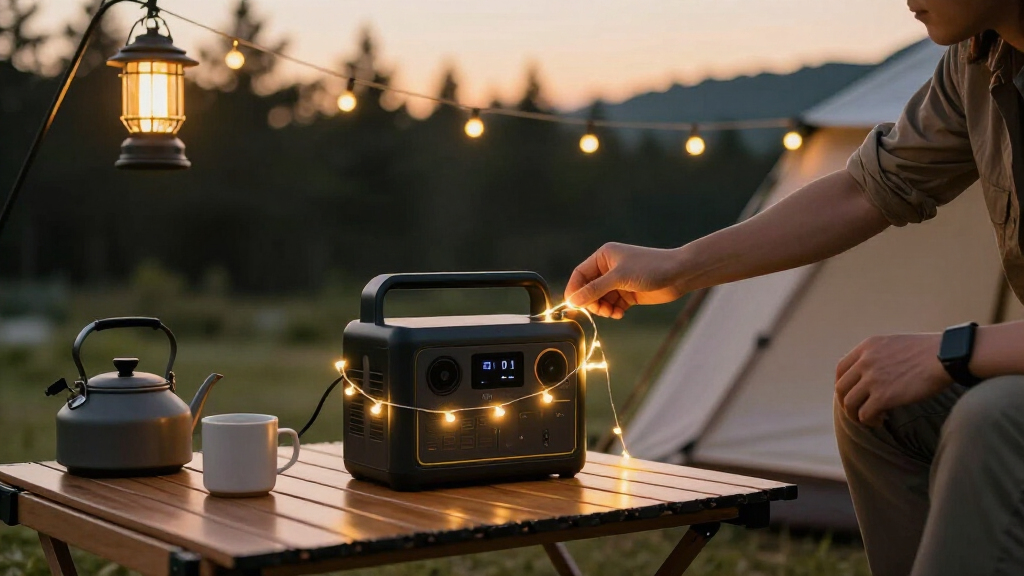

For camping, the best portable power station balances capacity, weight, and battery chemistry — and that tradeoff shapes this entire category. The Anker SOLIX C300 (AC version, #15) earns my best overall pick for car campers who want a well-rounded 288Wh unit with fast USB-C charging, while the Jackery Explorer 1000 v2 stands apart as the only true multi-day option here, with 1070Wh and a 1500W inverter that runs everything from a portable fridge to an electric kettle. On the budget end, compact units like the MARBERO 88Wh and HOWEASY 120W keep phones and headlamps topped up for almost nothing, though they can’t touch AC appliances. The main tension you’ll face: LiFePO4 models like the VTOMAN FlashSpeed 300 and ALLWEI 300W last thousands of cycles but are heavier per watt-hour, while lighter NMC units die sooner. Read on for the full breakdown, including which small units punch above their weight and which big ones aren’t worth the bulk.

Get travel and outdoor gear delivered free with Prime
- Fast, free delivery on millions of items
- Prime Video, Amazon Music and more included
- Member-only deals all year
Complete the kit


Key Takeaways
- The Anker SOLIX C300 AC version (#15) beats its DC-only sibling (#1) for most campers because it adds a real AC outlet — worth it unless you only charge USB devices.
- LiFePO4 chemistry appeared in eight of fifteen models (ALLWEI, VTOMAN, BLUETTI, DaranEner, ZeroKor, and others); it consistently traded a weight penalty for 3–5x the cycle life of NMC units like the Jackery Explorer 300.
- The Jackery Explorer 1000 v2 is the only model here sized for multi-day trips or families; everything else in this lineup is a 1–2 night solution at best.
- Bundled solar panels (ZeroKor, Westinghouse) look convenient but often attach weak 60W panels — buying a stronger 100W+ panel separately usually charges faster for similar money.
- Sub-200Wh units (MARBERO 88Wh, Westinghouse iGen400s, HOWEASY, 192Wh generics) share a ceiling: surge limits under 300W mean no electric kettles, hair dryers, or induction cooktops, ever.
| Anker SOLIX C300 DC Portable Power Station, 288Wh, 300W |  | Best for USB-C Charging | Capacity: 288Wh | Output Wattage: 300W (DC only) | Battery Type: LiFePO4 | VIEW LATEST PRICE | See Our Full Breakdown |
| Portable Power Station 192Wh LiFePO4 Outdoor Generator with 100W AC Outlet |  | Best Ultralight Backup | Capacity: 192Wh | Output Wattage: 100W rated / 200W surge | Battery Type: LiFePO4 (3,000+ cycles) | VIEW LATEST PRICE | See Our Full Breakdown |
| ALLWEI Portable Power Station 300W, 256Wh LiFePO4 Solar Generator |  | Best Solar-Ready Value | Capacity: 256Wh | Continuous Power: 300W (600W peak) | Battery Type: LiFePO4, 3,000 cycles | VIEW LATEST PRICE | See Our Full Breakdown |
| Westinghouse iGen400s 400W 183Wh Portable Power Station and Solar Generator |  | Best for Multi-Device Charging | Peak Power: 400W | Running Power: 200W | Capacity: 183Wh | VIEW LATEST PRICE | See Our Full Breakdown |
| Jackery Explorer 1000 v2 Portable Power Station, 1070Wh, 1500W |  | Best Premium for Basecamp | Capacity: 1070Wh | AC Output: 1500W (3000W surge) | Battery Type: LFP, 4,000 cycles | VIEW LATEST PRICE | See Our Full Breakdown |
| ZeroKor 300W Portable Power Station with 60W Foldable Solar Panel | 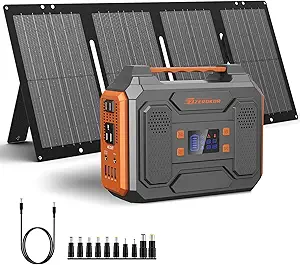 | Best Complete Solar Kit | Output Power: 300W max | AC Outlets: 2 x 300W max | USB Ports: 3 x 5V/3A, 1 Quick Charge | VIEW LATEST PRICE | See Our Full Breakdown |
| VTOMAN FlashSpeed 300 Portable Power Station, 300W 230Wh LiFePO4 |  | Best Battery Longevity | Output: 300W (600W peak) | Capacity: 230Wh LiFePO4 | Cycle Life: 3000+ | VIEW LATEST PRICE | See Our Full Breakdown |
| HOWEASY Portable Power Station, 120W (240W Peak) Solar Generator |  | Best Ultralight Pick | Capacity: 88Wh | Output: 120W (240W peak) | Ports: 8 total including 2 AC, USB-C 18W, 2 QC 3.0 | VIEW LATEST PRICE | See Our Full Breakdown |
| Jackery Explorer 300 Portable Power Station, 292Wh |  | Best Trusted All-Rounder | Capacity: 292Wh LiFePO4 | Output: 300W rated (600W surge) | Outlets: 2 AC, 1 USB-C PD 100W, 2 USB-A, 1 car port | VIEW LATEST PRICE | See Our Full Breakdown |
| HOWEASY Portable Power Station 260W (500W Peak) Solar Generator |  | Best Port Variety | Output Power: 260W (500W peak) | Ports: 9 total: 2 AC, 1 USB-C 65W PD, 3 USB-A, 3 DC | Weight: 5 lbs | VIEW LATEST PRICE | See Our Full Breakdown |
| BLUETTI Elite 30 V2 Portable Power Station, 288Wh 600W LFP Solar Generator |  | Best Fast-Charging Pick | Capacity: 288Wh | Continuous Output: 600W | Surge Output: 1500W (Power Lifting Mode) | VIEW LATEST PRICE | See Our Full Breakdown |
| MARBERO Portable Power Station 88Wh, 120W Surge, Solar Generator 24,000mAh |  | Best Ultra-Light Emergency Kit | Capacity: 88Wh (24,000mAh) | Running Wattage: 80W (120W surge) | Output Ports: 8 | VIEW LATEST PRICE | See Our Full Breakdown |
| DaranEner 300W Portable Power Station, 192Wh LiFePO4 Solar Generator |  | Best Battery Longevity for the Price | Capacity: 192Wh | Output: 300W (600W surge), pure sine wave | Battery Chemistry: LiFePO4, 3,500+ cycles | VIEW LATEST PRICE | See Our Full Breakdown |
| GRECELL Portable Power Station 330W, 230.88Wh Solar Generator |  | Best Value Mid-Size Pick | Capacity: 230.88Wh | Output: 330W (600W surge), pure sine wave | AC Outlets: 1 | VIEW LATEST PRICE | See Our Full Breakdown |
| Anker SOLIX C300 Portable Power Station, 288Wh Solar Generator for Camping |  | Best Quiet All-Rounder | Capacity: 288Wh | Output Power: 300W (600W surge) | Ports: 3x AC, 1x car socket (120W), 2x USB-C (140W), 1x USB-C (15W), 1x USB-A | VIEW LATEST PRICE | See Our Full Breakdown |
| portable power stations for camping | Capacity | Weight |
|---|---|---|
| Anker SOLIX C300 DC Portable P | 288Wh | — |
| Portable Power Station 192Wh L | 192Wh | 3.9 lbs |
| ALLWEI Portable Power Station | 256Wh | 6.4 lbs |
| Westinghouse iGen400s 400W 183 | 183Wh | — |
| Jackery Explorer 1000 v2 Porta | 1070Wh | 23.8 lbs |
| ZeroKor 300W Portable Power St | — | — |
| VTOMAN FlashSpeed 300 Portable | 230Wh LiFePO4 | 7.4 lbs |
| HOWEASY Portable Power Station | 88Wh | 2.3 lbs |
| Jackery Explorer 300 Portable | 292Wh LiFePO4 | 7.1 lbs |
| HOWEASY Portable Power Station | — | 5 lbs |
| BLUETTI Elite 30 V2 Portable P | 288Wh | 9.4 lbs |
| MARBERO Portable Power Station | 88Wh (24,000mAh) | 3.2 lbs |
| DaranEner 300W Portable Power | 192Wh | 5.73 lbs |
| GRECELL Portable Power Station | 230.88Wh | — |
| Anker SOLIX C300 Portable Powe | 288Wh | — |
More Details on Our Top Picks
Anker SOLIX C300 DC Portable Power Station, 288Wh, 300W
This option stands out for something most small camping power stations still get wrong: two-way 140W USB-C ports. Compared with the ALLWEI 300W, which tops out at 60W on USB-C, the C300 DC can fast-charge a laptop and a tablet simultaneously at full speed — a genuine advantage for campers who work remotely. The DC-only port layout is the defining tradeoff: there is no AC outlet at all, so anything requiring a wall plug, like a small fan or a camera battery charger with an AC brick, is off the table. What you gain is a case 30% smaller than similarly sized units and remarkably fast recharging — roughly 80% in an hour — provided you bring a high-wattage USB-C charger. That charger, along with the shoulder strap, is not in the box.
Pros:- Two 140W two-way USB-C ports charge laptops at full speed and other devices at the same time
- Recharges to 80% in about an hour when paired with a high-wattage PD charger
- Roughly 30% smaller than comparable capacity units, easily packed in a backpack
- LiFePO4 battery chemistry with a 3-year guarantee for long-term reliability
Cons:- No AC outlet, which excludes most small appliances and AC-only chargers
- Wall charger and shoulder strap are sold separately, adding hidden cost
Best for: Remote workers and photographers who mostly need to charge laptops, drones, and phones off-grid and want the smallest possible footprint
Not ideal for: Campers who need to run anything with an AC plug — this model has no inverter or wall-style outlet at all
- Capacity:288Wh
- Output Wattage:300W (DC only)
- Battery Type:LiFePO4
- Ports:7 total: 2x USB-C 140W, 1x USB-C 100W, 1x USB-C 15W, 2x USB-A, 1x car socket 120W
- Charge Time:~1.5 hours full, 80% in ~1 hour
- Recharging:USB-C, solar (select Anker panels), 12V car
- Warranty:3-year limited guarantee
Our verdict“Buy this if your camping kit is entirely USB-C; skip it if anything you own plugs into a wall socket.”
Portable Power Station 192Wh LiFePO4 Outdoor Generator with 100W AC Outlet
At 3.9 lbs and roughly DSLR-camera sized, this unit is the lightest full-featured pick in the lineup, and that alone justifies its place. The Westinghouse iGen400s carries more outlets and more running watts, but it also asks you to haul noticeably more weight; this model targets the backpacker or minimalist car camper who wants one AC outlet, a couple of USB-C ports, and nothing extra. The 100W rated output is the hard ceiling — think phone, headlamp, camera batteries, and a small fan, not a blender or a heated blanket. Its UPS pass-through function is unusual at this size and gives it a second life as an emergency desk backup at home, while the LiFePO4 cells rated past 3,000 cycles mean it will survive many seasons of occasional use.
Pros:- Featherweight at 3.9 lbs with a camera-bag-friendly footprint
- LiFePO4 cells rated for over 3,000 charge cycles
- UPS function keeps devices powered seamlessly during outages
- Seven output ports including a true AC outlet plus SOS-capable LED lighting
Cons:- 100W continuous output restricts you to phones, tablets, and small electronics only
- Plastic housing feels less rugged than metal-bodied competitors for rough trail use
Best for: Backpackers, motorcycle campers, and minimalists who want AC and USB power at the absolute lowest weight
Not ideal for: Anyone hoping to run a CPAP overnight or a portable fridge — the 100W output and 192Wh capacity are too tight for sustained loads
- Capacity:192Wh
- Output Wattage:100W rated / 200W surge
- Battery Type:LiFePO4 (3,000+ cycles)
- Ports:1 AC, 2 USB-C, 2 USB-A, 2 DC
- Weight:3.9 lbs
- Dimensions:4.6 x 4.6 x 7 inches
- Warranty:1 year
Our verdict“The right pick when weight is the deciding factor and your devices are small; wrong if you need sustained AC power.”
ALLWEI Portable Power Station 300W, 256Wh LiFePO4 Solar Generator
The ALLWEI earns its spot on solar flexibility. Where the Anker SOLIX C300 DC locks you into specific Anker panels, this unit works with any compatible third-party panel through its built-in MPPT controller, and its dual AC-plus-solar charging cuts recharge time to roughly two hours. Compared with the similarly sized Westinghouse iGen400s, ALLWEI offers more usable capacity (256Wh versus 183Wh) and a longer warranty — five years against two — which matters if this purchase needs to last a decade of camping trips. The pure sine wave inverter is safe for sensitive gear like CPAP machines and laptops, a real differentiator at this price level. The catch: 300W continuous output means no high-draw appliances, and the 6.4 lb weight sits awkwardly between ultralight and full-featured.
Pros:- Built-in MPPT controller plus four recharge methods, including dual AC + solar fast charging
- Pure sine wave output safe for CPAP machines and sensitive electronics
- LiFePO4 battery rated for 3,000 cycles — roughly a decade of typical use
- 5-year warranty, longer than most rivals in this capacity class
Cons:- Solar panel sold separately, so the off-grid setup costs more than the sticker suggests
- 300W output cannot run higher-wattage appliances like blenders or heated blankets
Best for: Off-grid campers who plan to recharge primarily with solar panels and want maximum flexibility in panel choice
Not ideal for: Campers wanting an all-in-one kit — the solar panel costs extra, and the 300W ceiling rules out kettles, heaters, and most cooking gear
- Capacity:256Wh
- Continuous Power:300W (600W peak)
- Battery Type:LiFePO4, 3,000 cycles
- Ports:1 AC, 2 DC5521, 1 car socket, 1 USB-A 18W, 1 USB-C PD 60W
- Charge Time:3.5-4 hrs AC; 2-2.5 hrs dual; 4-5 hrs solar (100W)
- Weight:6.4 lbs
- Warranty:5 years
Our verdict“The smart choice for solar-first campers who want panel freedom and a long warranty without paying for capacity they won’t use.”
Westinghouse iGen400s 400W 183Wh Portable Power Station and Solar Generator
Nine outlets is the headline here, and it is a legitimate one: two AC sockets, four USB-C ports, two USB-A, and a 12V DC port mean a whole campsite of phones, lanterns, and cameras can charge simultaneously without a single dongle. The Anker SOLIX C300 DC matches the port count but goes all-DC; the iGen400s covers both worlds. The tradeoff is capacity — 183Wh is the smallest in this batch, roughly half the Anker’s, so those nine outlets share a shallow pool. Also worth knowing: the 400W figure is peak power only, with 200W continuous running power, which is fine for lights and laptops but not induction cookware. Reaching 80% in two hours from a wall outlet is respectable, though you supply the AC adapter yourself.
Pros:- Nine outlets, including two AC and four USB-C, handle a full campsite’s small devices at once
- Charges to 80% in about 2 hours from a wall outlet
- Weather-resistant shell and carry handle built for outdoor handling
- Quiet, fume-free operation is safe inside a tent or RV
Cons:- 183Wh capacity is small for the size class, limiting total runtime across those many ports
- AC wall adapter and solar panel are both sold separately
Best for: Family or group campers charging many small devices at once — phones, GPS units, lanterns, and cameras together
Not ideal for: Solo campers with one or two devices — you pay for nine outlets you won’t use while getting the least capacity in the lineup
- Peak Power:400W
- Running Power:200W
- Capacity:183Wh
- Outlets:9: 2x 120V AC, 4x USB-C, 2x USB-A, 1x 12V DC
- Charge Time:80% in 2 hours (120V)
- Safety:Overcharge, overload, overheat, low-voltage protection
- Warranty:2-year limited
Our verdict“Pick this when outlet count matters more than capacity; pick a larger unit when runtime does.”
Jackery Explorer 1000 v2 Portable Power Station, 1070Wh, 1500W
This is the roundup’s power ceiling: 1,070Wh and 1,500W of continuous output — nearly four times the capacity of the Anker SOLIX C300 DC and triple its wattage. That is the difference between charging phones and actually running a portable fridge, an electric kettle, or a small AC unit at a drive-in basecamp. The Explorer 1000 v2 also brings real charging speed, hitting full in one hour with app-enabled emergency mode, and its LFP cells are rated for 4,000 cycles, outlasting the ALLWEI’s 3,000-cycle claim. At 23.8 lbs it is not a backpack item, and the ecosystem has walls: fast charging must be re-enabled through the app every time, and solar input works only with Jackery’s own panels, which are not bundled. You are paying a premium for headroom you may never touch.
Pros:- 1,500W output runs appliances other picks here cannot touch, including fridges and small AC units
- 0-100% recharge in one hour with emergency charging mode enabled
- LFP battery rated for 4,000 cycles with a 10+ year lifespan
- Smart app control with a 30 dB quiet charging mode for campsites
Cons:- Solar panels are not included and only Jackery panels are compatible
- The 1-hour fast charge must be manually re-enabled in the app each time
- At 23.8 lbs it is car-camping gear, not carry-in gear
Best for: Basecamp and RV campers who run real appliances — fridges, kettles, fans, or CPAP all weekend — and recharge between trips
Not ideal for: Tent campers and hikers counting ounces — at nearly 24 lbs it is overkill for charging phones and headlamps
- Capacity:1070Wh
- AC Output:1500W (3000W surge)
- Battery Type:LFP, 4,000 cycles
- Ports:3x pure sine wave AC, 2x USB-C, 1x USB-A, 1x DC car port
- USB-C Charging:PD 100W
- Charge Time:1 hour (emergency mode) / 1.7 hours (default)
- Weight:23.8 lbs
Our verdict“Worth the premium if your camping involves appliances; pure overkill if you just need to keep phones alive.”
ZeroKor 300W Portable Power Station with 60W Foldable Solar Panel
This pick stands out as the only entry in this batch that includes a solar panel in the box, which changes the math for campers who want true off-grid capability without buying extras. The bundled 60W monocrystalline panel at 20.5% conversion efficiency pairs with a built-in MPPT controller, so solar harvesting is more efficient than plugging a basic panel into a competitor like the HOWEASY 88Wh, which requires a separate panel purchase. Compared with the Jackery Explorer 300, the ZeroKor offers similar 300W output but slightly fewer premium touches. The tradeoff is capacity and chemistry: like most budget units here, it won’t run anything beyond small electronics, and the junction box on the panel isn’t waterproof, so it needs care in wet weather. It also dislikes being shelved for months without a top-up charge.
Pros:- Includes a 60W foldable solar panel with strong 20.5% conversion efficiency
- Built-in MPPT controller makes solar recharging more efficient
- Three recharge methods: AC, solar, and 12V carport
- BMS protection with short circuit, over-current, and overheating safeguards
Cons:- Solar panel junction box is not waterproof
- Long idle periods can trigger a protection state requiring a reset charge
Best for: Campers who want a ready-to-go solar generator bundle without buying a panel separately
Not ideal for: Anyone hoping to run coffee makers, water pumps, or other high-draw appliances — 300W is the hard ceiling
- Output Power:300W max
- AC Outlets:2 x 300W max
- USB Ports:3 x 5V/3A, 1 Quick Charge
- Solar Panel:60W monocrystalline, 20.5% efficiency
- Recharge Methods:AC outlet, solar (MPPT), 12V carport
- Safety:BMS with full protection suite and cooling fan
Our verdict“This is the pick for campers who want everything in one box for off-grid weekends, as long as their device list stays under 300W.”
VTOMAN FlashSpeed 300 Portable Power Station, 300W 230Wh LiFePO4
The FlashSpeed 300 makes the list on one strength above all: a LiFePO4 battery rated for 3000+ cycles, which means it will still be useful years after standard lithium units in this price band have faded. Compared with the ZeroKor 300W, it trades the bundled solar panel for a better battery and faster top-ups — 100W PD input gets it to 80% in roughly two hours, one of the quickest recharge times in this lineup. Seven outlets let a whole campsite’s phones, headlamps, and a laptop charge simultaneously, and four recharge methods (including USB-C PD) beat most rivals here. The compromises are familiar: 230Wh is modest for multi-day trips, and the 300W ceiling rules out anything that heats or pumps. Campers needing longer runtime should look upmarket to the Jackery Explorer 1000 v2.
Pros:- LiFePO4 chemistry rated for 3000+ charge cycles
- Fast 100W PD recharge to 80% in about 2 hours
- Seven outlets for charging multiple devices at once
- Four recharge options including solar and car outlet
Cons:- 230Wh capacity is modest for extended off-grid use
- 300W output can’t handle high-power appliances
Best for: Frequent campers who want a power station that survives years of regular use without battery degradation
Not ideal for: Extended off-grid trips — the 230Wh capacity runs dry fast once the sun goes down
- Output:300W (600W peak)
- Capacity:230Wh LiFePO4
- Cycle Life:3000+
- Outlets:7 total (2 AC, 100W PD USB-C, 3 USB-A, 1 DC)
- Weight:7.4 lbs
- Recharge Methods:Wall socket, solar, car outlet, USB-C PD
Our verdict“The smart choice for weekend campers who charge often and want a battery that outlasts the unit’s body.”
HOWEASY Portable Power Station, 120W (240W Peak) Solar Generator
At 2.3 pounds and roughly the size of a large water bottle, this is the featherweight of the entire roundup — nearly a third of the weight of the VTOMAN FlashSpeed 300 and far easier to clip to a pack. For backpackers and bikepackers, that size advantage is the whole story: it powers phones, a GPS unit, a small fan, and headlamps through 8 ports, which is generous port selection for this weight class. The tradeoffs are steep, though. The 88Wh capacity and 120W ceiling mean it’s strictly a small-electronics station — no laptops under heavy load, no cooking devices, and multi-day trips will outlast it. Unlike the ZeroKor bundle, the solar panel is sold separately, so off-grid recharging adds cost. The built-in LED with SOS mode is a nice safety touch for tent-side use.
Pros:- Featherweight at 2.3 lbs with a hidden carry handle
- Eight ports including 2 AC sockets, USB-C, and QC 3.0
- Three recharge options: AC, solar, and car charging
- Built-in LED light with SOS mode
Cons:- 88Wh capacity limits runtime on anything beyond phones and small devices
- Solar panel not included
- 120W output can’t run most AC appliances
Best for: Backpackers and minimalist campers who count every ounce but still want AC outlets
Not ideal for: Car campers or families — the 88Wh capacity and 120W output won’t cover a real campsite’s needs
- Capacity:88Wh
- Output:120W (240W peak)
- Ports:8 total including 2 AC, USB-C 18W, 2 QC 3.0
- Weight:2.3 lbs
- Cycle Life:1500+ cycles
- Warranty:24 months
Our verdict“Buy this only if pack weight is your top priority; everyone else gets far more capacity per dollar elsewhere in this list.”
Jackery Explorer 300 Portable Power Station, 292Wh
The Explorer 300 is the most balanced small station in this batch: 292Wh of capacity — the largest here — paired with a LiFePO4 battery rated for 4,000+ cycles, which edges even the VTOMAN FlashSpeed 300 on longevity. At 7.1 lbs with a solid integrated handle, it’s light enough to carry from car to tent while holding enough power for a weekend of phones, cameras, drones, and even a CPAP machine overnight. Solar charging is quick too — 80% in about 2.8 hours with a 100W panel — though that panel costs extra, unlike the ZeroKor’s bundled kit. The 300W ceiling remains the standard limitation for this class, so anything with a heating element is off the table. Compared with the smaller HOWEASY units, the payoff is real capacity; compared with the Jackery Explorer 1000 v2, it’s a matter of weight versus runtime.
Pros:- Largest capacity in this batch at 292Wh
- LiFePO4 battery rated for 4,000+ cycles
- Charges up to 6 devices including laptops and CPAP machines
- Fast solar charging: 80% in roughly 2.8 hours with a 100W panel
Cons:- Solar panel sold separately
- 300W output too low for high-power appliances
Best for: Weekend car campers and CPAP users who want dependable capacity from an established brand
Not ideal for: Off-grid campers on a budget — the solar panel is a separate purchase, unlike the ZeroKor bundle
- Capacity:292Wh LiFePO4
- Output:300W rated (600W surge)
- Outlets:2 AC, 1 USB-C PD 100W, 2 USB-A, 1 car port
- Weight:7.1 lbs
- Charge Cycles:4,000+ to 70% capacity
- AC Charge Time:About 4 hours
Our verdict“If you want one small station that does everything reasonably well and lasts a decade, this is the safest bet in the lineup.”
HOWEASY Portable Power Station 260W (500W Peak) Solar Generator
Nine output ports is the headline here — more than any other product in this roundup — letting a small group charge two laptops, three phones, and DC accessories simultaneously without swapping cables. The 65W USB-C PD port is the fastest Type-C output among the lightweight picks here, and at 5 pounds with a hidden handle it splits the difference between the tiny 88Wh HOWEASY and the 7+ lb Jackery Explorer 300. A lifetime warranty with 24/7 support is an unusual commitment at this size. The catch: 260W is the lowest full-size output here, and the manufacturer doesn’t publish a Wh capacity, which makes it hard to compare runtime against the VTOMAN’s 230Wh or Jackery’s 292Wh — a real transparency problem for a spec-driven purchase. It suits group charging, not heavy single devices.
Pros:- Nine output ports, the most in this lineup
- 65W fast-charging USB-C port for laptops
- Light 5 lb build with hidden handle
- Lifetime warranty with 24/7 customer service
Cons:- No published battery capacity in Wh
- 260W output is the weakest in the full-size group here
Best for: Small camping groups who need to charge many small devices at the same time
Not ideal for: Buyers who compare specs closely — the missing Wh capacity rating makes runtime hard to judge before buying
- Output Power:260W (500W peak)
- Ports:9 total: 2 AC, 1 USB-C 65W PD, 3 USB-A, 3 DC
- Weight:5 lbs
- Charging Methods:Solar (18-24V), AC adapter, car charger
- Safety:Short circuit, overcurrent, overvoltage, overload, overheating protection
- Warranty:Lifetime warranty
Our verdict“Choose this for simultaneous multi-device charging on a group trip, but skip it if you need to know exactly how much runtime you’re buying.”
BLUETTI Elite 30 V2 Portable Power Station, 288Wh 600W LFP Solar Generator
Where most small camping units treat recharging as an afterthought, the Elite 30 V2 charges from 0 to 80% in 45 minutes, which means a quick top-up at a campsite outlet or visitor center gets you back to full power before lunch. The 600W continuous output also outmuscles the 300W caps on the Anker SOLIX C300 and GRECELL 330W, and Power Lifting Mode stretches that to 1500W for brief high-draw tools. Add a 10ms UPS switchover and this doubles as home backup for a router or CPAP machine. Compared with the Jackery Explorer 300, the LFP chemistry here should outlast it by years of weekend trips. The tradeoff is that 288Wh drains quickly under sustained loads, and the solar panel is a separate purchase.
Pros:- 380W fast wall charging reaches 80% in 45 minutes
- 600W continuous output with 1500W Power Lifting surge handles devices rivals can’t
- Durable LFP battery chemistry for long-term ownership
- 10ms UPS switchover protects CPAP machines and routers at home
Cons:- 288Wh capacity is entry-level and drains fast under heavy loads
- Solar panel (PV60L) sold separately, adding to total cost
Best for: Campers who move between sites often and want rapid wall recharges plus enough output for a kettle, fan, or laptop simultaneously
Not ideal for: Anyone planning multi-day off-grid stays — 288Wh won’t sustain a fridge or nightly cooking without frequent recharging
- Capacity:288Wh
- Continuous Output:600W
- Surge Output:1500W (Power Lifting Mode)
- Battery Type:LFP (LiFePO4)
- Weight:9.4 lbs
- Charge Time:0-80% in 45 minutes
- UPS Switch Time:10ms
- Charging Modes:8 (AC, solar, car, etc.)
Our verdict“This pick makes the most sense for campers who prioritize fast recharges and higher output in a sub-10-pound package over raw capacity.”
MARBERO Portable Power Station 88Wh, 120W Surge, Solar Generator 24,000mAh
At 3.2 pounds and roughly the size of a large paperback, the MARBERO M82 is the unit you actually toss in a daypack rather than leave in the car. Its role here is narrow but honest: phone top-ups, headlamp batteries, a small fan, and an LED light with up to 68 hours of runtime and SOS mode. That lighting endurance beats everything else in this lineup as a genuine safety feature. Compared with the DaranEner 192Wh, you give up more than half the capacity and any chance of running a CPAP machine, but you save weight and pack space. Pass-through charging means it can sit between a solar panel and your devices during the day. Two AC outlets sounds generous until an 80W running cap reminds you this is a small-battery device.
Pros:- Featherweight 3.2 lb design with a built-in carry handle
- LED flashlight with SOS mode and up to 68 hours of runtime
- Pass-through charging lets it manage solar input and device output simultaneously
- 8 output ports including dual AC outlets for a unit this size
Cons:- 80W running wattage can’t handle most real appliances
- Solar charging requires separately sold MARBERO panels
Best for: Backpackers, day hikers, and car-campers who need phone and light coverage with minimal weight
Not ideal for: CPAP users or anyone running laptops all evening — 88Wh runs dry in hours and 80W limits what can plug in at all
- Capacity:88Wh (24,000mAh)
- Running Wattage:80W (120W surge)
- Output Ports:8
- Weight:3.2 lbs
- Dimensions:6.5 x 4.6 x 3.1 inches
- Charging Time:0-80% in 2 hours
- LED Runtime:Up to 68 hours (level 1)
Our verdict“This model is better suited to weight-conscious campers who need lights and phone charges, not appliance power.”
DaranEner 300W Portable Power Station, 192Wh LiFePO4 Solar Generator
The DaranEner’s pitch is endurance in the long run rather than the big numbers: its LiFePO4 cells are rated for 3,500+ cycles, roughly triple the lifespan of the standard lithium pack inside the GRECELL 330W. That makes it a smarter buy for campers who trip monthly and don’t want a degraded battery in two seasons. A full 2-hour AC recharge keeps turnaround short, and pure sine wave output keeps laptops and CPAP hardware safe. Compared with the VTOMAN FlashSpeed 300 at a similar capacity and output, the DaranEner counters with heat resistance to 140°F and a sub-50dB noise floor for tent-adjacent use. Be realistic about scale, though: 192Wh covers a weekend of gadget charging, and the 300W ceiling rules out anything with a heating element.
Pros:- 3,500+ cycle LiFePO4 battery for years of regular use
- Full AC recharge in just 2 hours
- Pure sine wave output safe for laptops and CPAP machines
- Runs under 50dB and is roughly 30% smaller than traditional generators
Cons:- 300W output can’t run hair dryers, kettles, or mini-fridges with compressors
- Compact capacity supports only 2-4 hours of CPAP backup
Best for: Frequent weekend campers who want a battery that stays healthy for years and only need phones, laptops, fans, and lights
Not ideal for: High-draw appliance users and anyone needing overnight CPAP backup beyond 2-4 hours
- Capacity:192Wh
- Output:300W (600W surge), pure sine wave
- Battery Chemistry:LiFePO4, 3,500+ cycles
- AC Recharge Time:2 hours
- Solar Recharge Time:3.5 hours (60W panel)
- USB-C:PD 60W
- Weight:5.73 lbs
- Operating Noise:Under 50dB
Our verdict“This option stands out for campers who value long-term battery health and quiet operation over maximum capacity.”
GRECELL Portable Power Station 330W, 230.88Wh Solar Generator
The GRECELL lands in the sweet spot between the tiny MARBERO and the pricier Anker SOLIX C300: 230.88Wh of capacity with 330W of pure sine wave output, enough for a laptop, camera batteries, a fan, and a small cooler without much juggling. Its USB-C PD 60W charging is more than twice as fast as standard USB-C, and the built-in MPPT controller makes solar recharges noticeably more efficient than the GRECELL’s car-only fallback competitors. Dual silent cooling fans keep it comfortable near a tent. The honest costs: one AC outlet limits simultaneous appliance use, 330W still won’t touch a hair dryer, and the standard lithium chemistry ages faster than the LFP packs in the BLUETTI Elite 30 V2 or DaranEner.
Pros:- Pure sine wave output safe for CPAP machines, laptops, and other sensitive electronics
- 230Wh capacity handles phones, fans, and small fridges over a weekend
- USB-C PD 60W charges devices at more than twice standard USB-C speed
- Three recharge methods with efficient MPPT solar controller
Cons:- Only one AC outlet limits simultaneous appliance use
- Standard lithium battery degrades faster than LFP rivals over years of use
Best for: Budget-minded car campers balancing capacity, price, and device safety for weekend trips
Not ideal for: Off-grid travelers planning week-long stays — capacity runs out after a couple of days without sun or an outlet
- Capacity:230.88Wh
- Output:330W (600W surge), pure sine wave
- AC Outlets:1
- USB-C:1x PD 60W, 1x PD 18W
- Total Ports:6
- Recharge Methods:AC, solar (MPPT), car outlet
- Battery Type:Lithium
- Safety:BMS with overload, overcharge, and short-circuit protection; dual cooling fans
Our verdict“Compared with similar options, this pick makes the most sense for campers wanting solid mid-size capacity without paying for premium battery chemistry.”
Anker SOLIX C300 Portable Power Station, 288Wh Solar Generator for Camping
The SOLIX C300 wins on refinement: at 25dB it’s quieter than a whisper, making it the one unit in this lineup you can run inside a tent all night without a second thought — a real advantage over the fan-cooled GRECELL. The 8-port layout including three AC outlets and 140W USB-C is the most versatile here, and an 80% recharge in 50 minutes nearly matches the BLUETTI Elite 30 V2’s speed. The 3,000-cycle LiFePO4 battery and 5-year warranty signal long-haul reliability. The quirks are annoying but manageable: the shoulder strap costs extra, and it only works with Anker 60W or 100W panels — owners of PS30, PS200, or PS400 panels are out of luck. The 300W ceiling also matches its rivals’ most common limitation.
Pros:- Near-silent 25dB operation suitable for in-tent overnight use
- 8 ports including 3 AC outlets and 140W USB-C fast charging
- LiFePO4 battery rated for 3,000 cycles with a 5-year warranty
- Recharges to 80% in 50 minutes via wall outlet
Cons:- Shoulder strap sold separately despite the carry-focused design
- Incompatible with Anker PS30, PS200, and PS400 solar panels
Best for: Tent campers and CPAP users who need silent overnight operation with a polished port selection and warranty
Not ideal for: Owners of older Anker PS30/PS200/PS400 solar panels, or anyone needing more than 300W of AC output
- Capacity:288Wh
- Output Power:300W (600W surge)
- Ports:3x AC, 1x car socket (120W), 2x USB-C (140W), 1x USB-C (15W), 1x USB-A
- Recharge Time:80% in 50 minutes (wall outlet)
- Battery Type:LiFePO4, 3,000 cycles
- Noise Level:25dB at 3.3 ft
- Warranty:5 years
- Compatible Solar Panels:Anker 100W or 60W only
Our verdict“This model is better suited to campers who value silence, port variety, and long-term support over raw wattage.”

How We Picked
I ranked these stations against what actually matters at a campsite: usable capacity versus packed weight, inverter wattage against realistic camp loads, battery chemistry, recharge speed, and port selection. A model earns a higher spot when it covers the widest range of campers for its size and price — not when its spec sheet is longest. Surge ratings were checked against the honest demands of real gear, since a 300W rating that can’t start a mini-fridge is a camping failure, even if it looks fine on paper.
Weight played an outsized role in ordering. Camping, unlike home backup, means carrying the thing — so I penalized units that hit 10+ pounds while offering under 250Wh. Battery chemistry was the other major sorting filter: LiFePO4 models gained ground for their long cycle life and heat tolerance, while NMC models earned credit for lighter weight and compact frames. Finally, bundled solar panels and fast charging (especially USB-C PD input on the Anker units) served as tiebreakers between otherwise similar competitors.
Factors to Consider When Choosing Portable Power Stations For Camping
Before picking a specific model, it helps to understand where campers most often go wrong. Capacity numbers are marketing-friendly but misleading in isolation, and the biggest regret I hear about is buying too small — or too heavy — for the actual trip style.Match Watt-Hours to Trip Length, Not to Price
The most common mistake is buying capacity for the trip you wish you had instead of the one you take. A weekend car camper charging two phones, a headlamp, and a camera drone needs roughly 100–150Wh total, which makes a 250Wh unit plenty with a safety margin. A family running a 12V fridge, LED string lights, and a CPAP machine burns through 300–600Wh per day, which puts anything under 500Wh out of contention. Multiply your devices’ wattage by hours of use before you shop — the math takes ten minutes and prevents the classic error of buying a 100Wh unit and discovering it can’t survive one night. Also remember that usable capacity is about 85% of the rated figure, since inverters and conversion lose energy. And capacity you never use is just weight you carried for nothing.
Why LiFePO4 Chemistry Usually Wins for Campers
Battery chemistry is the least glamorous spec but the one that determines whether your station is useful in year four. LiFePO4 (LFP) batteries tolerate 2,500–4,000 charge cycles before degrading to 80% capacity, while older NMC cells fade after 500–800 cycles. For a seasonal camper, that difference is meaningless; for someone out every month, it’s the difference between a five-year purchase and a two-year one. LFP also handles hot car interiors better, which matters when the station rides in a trunk all summer. The tradeoff is weight — LFP packs run roughly 20–30% heavier per watt-hour, which is why the lightest units in this roundup use NMC. My rule of thumb: choose LFP if you camp more than a dozen nights a year, and accept NMC’s weight savings only if you’re carrying the station on foot.
Inverter Wattage Decides What You Can Actually Plug In
Capacity tells you how long; inverter wattage tells you whether the device runs at all. Small appliances have hidden startup surges — a portable fridge can draw double its running wattage at compressor startup, and anything with a heating element (kettle, heated blanket, induction plate) eats 600–1,500W instantly. A 300W station cannot run any heating appliance regardless of its battery size, and a weak surge rating will trip the unit even below the listed continuous wattage. Check both numbers: continuous output and peak/surge output. If your must-run device is a heated blanket at 180W, a 250W unit with a 500W surge is fine; if it’s a kettle, nothing under 600W continuous makes sense. When in doubt, add 30% headroom to your largest load.
Weight and Form Factor: The Carrying Reality Check
Manufacturers list weight in spec tables; campers discover it at the trailhead. Under 8 pounds is genuinely backpackable for short portages and kayak trips, 8–15 pounds works for carting between car and tent, and above 15 pounds you need a reason — usually a fridge or multi-day capacity. Handle design matters more than people expect: a rigid top handle survives being yanked out of a packed trunk better than side straps. If you’re hiking in more than a quarter mile, I’d argue a small station plus a folding solar panel beats one big unit, since you can leave the panel at camp recharging while you carry nothing. Cylindrical or cube-shaped units pack into bins and backpacks far better than wide flat ones, which sounds trivial until you’re loading a car for four people.
Solar Charging: Input Rating Matters More Than Panel Size
Most buyers fixate on the panel’s wattage and ignore the station’s maximum solar input — the number that actually gates recharge speed. A 100W panel feeding a station capped at 60W input wastes 40% of its potential, while a station accepting 200W can pair two panels and recharge in a single sunny afternoon. Also check the connector type (MC4 versus 8mm versus Anderson) and whether the bundled panel is even worth keeping; many kits include panels barely larger than a laptop for the sake of a nicer box. Orientation and weather realistically yield 50–70% of a panel’s rated output, so budget a full day of good sun to recover 200–300Wh. If you camp under forest canopy, solar is nearly useless and wall charging before departure is the honest plan.
Pass-Through Charging and Port Selection
Pass-through charging — using the station while it recharges — turns a solar panel into a live power system rather than just a battery filler, and not every model supports it safely. Look for it if you plan to run a fridge all day off solar. Port mix is the other silent differentiator: a 100W USB-C PD port charges modern laptops at full speed, while a 60W port leaves them crawling, and pure-DC models without an AC outlet will surprise anyone who assumed all stations have wall plugs. A 12V carport output is quietly one of the most useful camping ports, since car fridges, fans, and pumps run more efficiently at 12V than through an inverter. Count your actual plugs before buying, not after.
Frequently Asked Questions
Is a 300Wh power station enough for a weekend camping trip?
For two people charging phones, cameras, headlamps, and a small fan, 300Wh is comfortable for two nights with power to spare. The math breaks down roughly as 20Wh per phone charge, 30–50Wh for a camera kit, and 60–80Wh for an overnight fan, so you’ll sit near 150Wh total for a full weekend. Things change fast if you add a portable fridge, which pulls 300–600Wh per day on its own and eats the entire battery. If a fridge or a CPAP machine is on your packing list, step up to the Jackery Explorer 1000 v2 or accept a solar panel as mandatory equipment. For ultralight weekends without appliances, even a sub-200Wh unit covers you, as the MARBERO and DaranEner entries demonstrate.
What’s the difference between the two Anker SOLIX C300 models in this roundup?
The DC version (#1) has no AC outlet — it charges purely over USB-C, USB-A, and DC ports, which makes it lighter and cheaper but useless for anything with a wall plug. The standard C300 (#15) adds a 600W AC inverter, letting it run small blenders, laptop chargers via wall adapter, and LED setups that only ship with AC plugs. For most campers the AC version makes more sense, because the flexibility costs little in weight and the price gap is modest. Choose the DC version only if you’ve genuinely audited your kit and everything charges over USB-C — which is increasingly true for photographers and drone pilots. If you’re unsure, the AC model future-proofs you against the one gadget you buy next year that needs a wall socket.
Should I buy a power station bundled with a solar panel or purchase them separately?
Bundles win on convenience and guaranteed connector compatibility, but they frequently pair a capable station with an underpowered panel — the ZeroKor kit’s 60W panel is a good example, since it needs roughly two full sunny days to refill that battery. Buying separately lets you match a 100–200W panel to a station with high solar input, cutting recharge time in half for a modest extra cost. The middle path is often best: buy a strong station now, add a serious panel later once you know your real consumption patterns. Check the station’s maximum solar input wattage before any purchase, because that ceiling — not the panel’s rating — sets your recharge speed. One compatibility check on connector types (MC4, 8mm, Anderson) avoids the classic mismatch mistake.
Can these power stations run a portable fridge for a full camping trip?
Only the larger units manage it. A typical 12V camping fridge draws 40–60W running but surges to double that at compressor startup, so the inverter or 12V output needs at least 100W of headroom — which most models here handle, but the sub-200Wh stations can’t sustain it for long. Runtime is the real constraint: a 250Wh station might keep a fridge running 6–10 hours depending on ambient temperature, while the Jackery Explorer 1000 v2’s 1070Wh capacity covers 24–40 hours unaided. Pairing any station with a 100W+ solar panel extends runtime indefinitely in good sun, making solar almost mandatory for fridge users on multi-day trips. If a fridge is central to your setup, buy capacity first and treat anything under 500Wh as a partial solution.
Are cheap sub-200Wh power stations worth buying, or will I outgrow them immediately?
They’re worth it for a specific profile: campers who charge USB devices, run string lights, and maybe power a small fan. For that use case, something like the MARBERO 88Wh or the generic 192Wh units does the job at a fraction of a larger station’s cost and weight, and they slip into a backpack where nothing bigger fits. The outgrowth risk is real, though — the moment you want a blender, an electric kettle, or a fridge, a 120–300W inverter ceiling ends the conversation permanently. My honest framing: these are complements, not starter stations, best bought as a second unit for specific trips or as a gift for occasional campers. If you already suspect you’ll want AC appliances within a year, skip the small unit and buy 250Wh+ with LiFePO4 chemistry from day one.
Conclusion
After comparing all fifteen, the decision comes down to trip style more than brand. Best overall goes to the Anker SOLIX C300 (AC version) — its 288Wh capacity, fast USB-C charging, and genuine 600W inverter cover the widest range of campers at a carry-friendly weight. Best value belongs to the ALLWEI 300W, which delivers LiFePO4 chemistry and a full port selection at the budget end of the lineup, outclassing the generic 192Wh unit on longevity for similar real-world capability.
Best premium pick is the Jackery Explorer 1000 v2, the only station here built for multi-day family trips and heavy loads like fridges and kettles — everyone else in this roundup is a 1–2 night tool by comparison. Best for beginners is the Jackery Explorer 300: its interface is dead simple, the app is optional, and it teaches you your own consumption habits before you spend more. For specific needs, the VTOMAN FlashSpeed 300 suits cycle-count-obsessed frequent campers, the MARBERO 88Wh fits ultralight and budget kits, and the ZeroKor bundle makes sense for first-time solar users who want everything in one box. Whatever you choose, match capacity to your real trips — the best station is the one whose weight you’ll actually carry and whose battery you’ll actually use.
Fall Picks
fall essentials
As an affiliate, we earn on qualifying purchases.