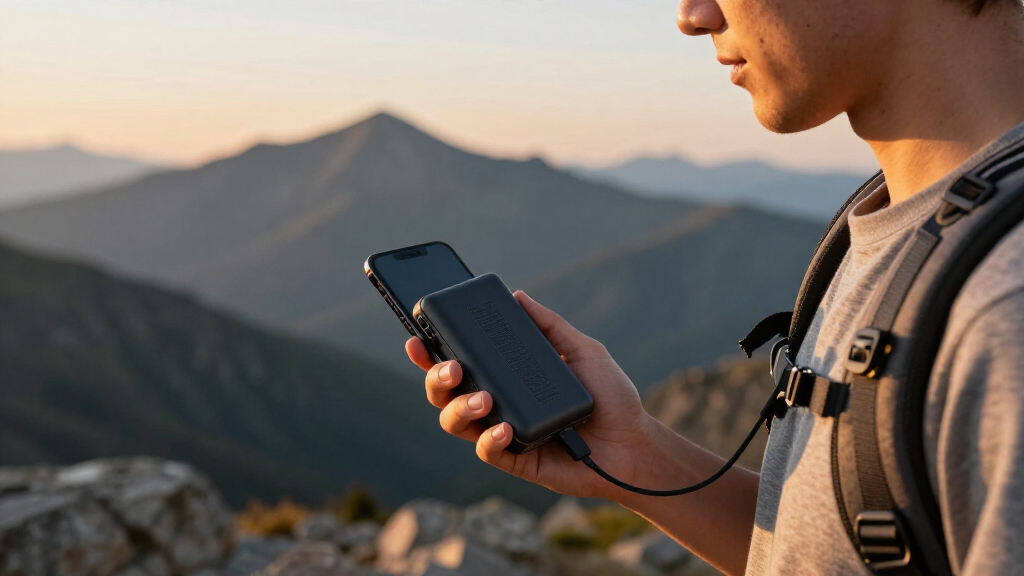

When you’re shopping for compact travel power banks, the real battle is between capacity and portability: a 10,000mAh unit that slips into a pocket, or a 35,000–50,000mAh brick that can charge everything but weighs down your bag. For most travelers, the Nitecore NB10000 Gen3 takes the top spot thanks to its ultra-light carbon fiber build, dual fast-charging ports, and airline-safe capacity. If you want built-in cables so you can leave the accessories at home, the SABANI 35,000mAh offers far more capacity for the price, while the TRON 5-in-1 is the standout for Apple users who want one device for iPhone, Watch, and AirPods. The tradeoffs — weight, recharge time, wireless speed, and price — matter a lot in this category, and the wrong pick can be a daily frustration. Keep reading for the full breakdown of all eight models.

Get travel and outdoor gear delivered free — and shop member deals
- Fast, free delivery on millions of items
- Access to Prime Big Deal Days deals on October 6–7
- Prime Video, Amazon Music and more included
Complete the kit


Key Takeaways
- Carbon fiber construction was the biggest differentiator for true pocketability — the Nitecore NB10000 Gen3 and NW5000 weigh roughly half what comparable aluminum or plastic models do.
- Three of the eight models include built-in cables, which eliminates the most forgotten accessory on trips — but every one of those models sacrifices slimness in exchange.
- The 35,000mAh and 50,000mAh options push against airline carry-on limits and take notably longer to recharge, making them better suited to base-camp travel than daily carry.
- Wireless charging was consistently slower than wired on every model that offered it; magnetic wireless only made sense for top-ups on the Nitecore NW5000, not full recharges.
- Price tracked poorly with quality here — the cheapest picks (SABANI, OHOVIV) offer the most raw capacity per dollar, while the premium Nitecore models charge a premium almost entirely for weight savings.


| compact travel power bank | Capacity | Weight | Dimensions |
|---|---|---|---|
| Nitecore Pocket 10000 Carbon F | 10,000mAh | 160g (5.64 oz) | — |
| Anker Nano Power Bank | 10,000mAh | 8.2 oz | 3.21 x 1.99 x 1.42 inches |
| Anker Powerbank 545 Nano Black | 10,000mAh | — | 11.5 x 4.5 x 15.5 cm |
| SABANI Portable Charger 35000m | 35,000mAh | 335g | 151 x 73 x 20mm |
| OHOVIV Portable Charger Power | 50,000mAh | 1.07 lbs | 5.82 x 2.83 x 1.18 inches |
| Nitecore NW5000 Carbon Fiber M | 5,000mAh (3.85V) | — | — |
| TRON 5-in-1 Travel Charger & 1 | — | — | — |
| NITECORE NB10000 GEN3 Portable | 10,000mAh (3.85V) | — | — |
More Details on Our Top Picks
Nitecore Pocket 10000 Carbon Fiber Power Bank 10000mAh Fast Charging Portable Charger
At 160g and just 12.5mm thick, the Nitecore Pocket 10000 is the lightest bank in this lineup, and that’s the whole point of it. The woven carbon fiber shell isn’t just for looks — it keeps the frame rigid without the weight penalty you get from the chunkier SABANI 35000mAh. An integrated two-way USB-C cable means one less thing to pack, and the IP65 water resistance is a genuine differentiator for outdoor travelers that no other pick here offers. The tradeoff is raw speed: at 22.5W max output, it charges phones about half as fast as the Anker Nano’s 45W, and the 10,000mAh capacity limits you to roughly two phone charges. For anyone prioritizing pocketability over power, this model makes the most sense.
Pros:- Featherweight at 160g — nearly 10x lighter than the OHOVIV 50000mAh
- IP65 water resistance for outdoor and unpredictable weather use
- Built-in two-way USB-C cable eliminates cable packing
- Dual USB-C ports allow simultaneous charging of two devices
Cons:- 22.5W output lags far behind the Anker Nano’s 45W charging speed
- 10,000mAh capacity means frequent recharging on longer trips
- No USB-A port, so older accessories are left out
Best for: Minimalist travelers and hikers who count every gram and want a slim bank that disappears into a pocket
Not ideal for: Laptop owners or anyone charging tablets — 22.5W output and 10,000mAh won’t keep up with bigger devices
- Capacity:10,000mAh
- Weight:160g (5.64 oz)
- Thickness:12.5mm (0.49 inches)
- Max Output:22.5W
- Ports:2 USB-C ports
- Built-in Cable:USB-C, two-way
- Water Resistance:IP65
- Airline Approved:Yes
Our verdict“Buy this if maximum portability and weather resistance matter more than charging speed or capacity.”
Anker Nano Power Bank, 45W 10,000mAh Portable Charger
Where most banks in this roundup top out at 22.5W, the Anker Nano doubles that to 45W, which is enough to fast-charge a phone to half in about 20 minutes — and even trickle-charge some laptops in a pinch. The smart display shows exact remaining percentage, a step up from the guesswork of blinking LEDs on the SABANI, and the retractable built-in USB-C cable keeps everything self-contained. Compared with the Nitecore Pocket 10000, you trade slimness and water resistance for raw speed: at 8.2 oz it’s noticeably heavier and there’s no IP rating. The single USB-C output also means no charging two devices at once, which multi-port travelers will feel immediately.
Pros:- 45W output charges phones roughly twice as fast as 22.5W competitors
- Smart display shows precise remaining battery percentage
- Retractable USB-C cable keeps the bank fully self-contained
- Flight-approved and pocketable at roughly 4.4 x 2 inches
Cons:- Only one USB-C output port for charging devices
- Heavier than the Nitecore Pocket 10000 at 8.2 oz
- 10,000mAh capacity fills only about two phone charges
Best for: Commuters and business travelers who need the fastest possible phone top-up between meetings or flights
Not ideal for: Multi-device users — one output port means queueing your devices rather than charging them together
- Capacity:10,000mAh
- Max Fast Charging:45W
- Input:30W
- Dimensions:3.21 x 1.99 x 1.42 inches
- Weight:8.2 oz
- Built-in Cable:Retractable USB-C
- Display:Smart battery display
- Flight Approved:Yes
Our verdict“This is the pick when charging speed, not capacity, is your top priority for daily carry.”
Anker Powerbank 545 Nano Black 10000mAh
Think of the Anker 545 Nano as the no-frills workhorse of this lineup. It doesn’t have the retractable cable, smart display, or 45W speed of its sibling, the Anker Nano — but it also asks less of your wallet for the same trusted 10,000mAh core. Compared with feature-laden options like the SABANI or the OHOVIV, this model strips everything back to the essentials, which is exactly its appeal for buyers who already own cables and just want a dependable spare battery. The drawback is straightforward: no confirmed fast-charging spec means older, slower charging speeds, and there are no built-in cables to fall back on if you forget yours. If you want Anker reliability at the lowest possible entry point, this is it.
Pros:- Trusted Anker build quality and brand support
- Straightforward operation with nothing to learn or configure
- 10,000mAh covers roughly two full phone charges
- Usually the most affordable name-brand option in this class
Cons:- No confirmed fast-charging capability
- No built-in cable, so it’s useless if you forget yours
- Feature-poor next to similarly sized rivals with displays and retractable cables
Best for: Budget-conscious buyers who already carry their own cables and want trusted-brand reliability without paying for extras
Not ideal for: Speed-focused users — without confirmed fast charging, topping up a modern phone takes noticeably longer than the Anker Nano’s 45W
- Brand:Anker
- Capacity:10,000mAh
- Color:Black
- Dimensions:11.5 x 4.5 x 15.5 cm
- Fast Charging:Not specified
- Built-in Cable:No
Our verdict“A sensible bare-basics buy for anyone who values brand reliability over bells and whistles.”
SABANI Portable Charger 35000mAh Power Bank with Built-in Cables
The SABANI occupies the middle ground this roundup actually needs: more than triple the capacity of the Nitecore Pocket 10000 while staying at a reasonable 335g — roughly a third the weight of the OHOVIV 50000mAh. The standout feature is the four built-in cables (iOS, USB-C, USB-A, Micro), meaning a family with mixed devices needs nothing else in the bag. Charging up to six devices at once makes it the natural choice for shared travel, though 22.5W shared across that many devices means everything charges slowly when the ports fill up. It also can’t touch the Anker Nano’s 45W single-device speed. Still, for a weekend trip with two people and varied gadgets, the balance here is hard to beat.
Pros:- 35,000mAh provides roughly 6-8 full phone charges per refill
- Four built-in cables cover iOS, USB-C, USB-A, and Micro devices
- Charges up to six devices simultaneously
- Compact 151 x 73 x 20mm frame for its capacity class
Cons:- 22.5W output divides thinly when multiple devices are connected
- 335g weight is heavy for a jacket pocket
- Requires a USB-C cable (not built in) for recharging the bank itself
Best for: Couples and small families traveling together with a mix of iPhone, Android, and older devices
Not ideal for: Gram-counting hikers — at 335g it’s more than double the Nitecore Pocket 10000’s weight
- Capacity:35,000mAh
- Weight:335g
- Dimensions:151 x 73 x 20mm
- Fast Charging:22.5W PD
- Input/Output Ports:USB-A, USB-C
- Built-in Cables:iOS, Type-C, USB-A, Micro
- Simultaneous Device Charging:Up to 6 devices
Our verdict“The sweet-spot choice for multi-device travelers who want big capacity without big-bank bulk.”
OHOVIV Portable Charger Power Bank 50000mAh with 4 Built-in Cables
When outlet access disappears for days — camping, festivals, long-haul travel with a group — the OHOVIV’s 50,000mAh capacity delivers over ten smartphone charges, dwarfing every other pick here. Like the SABANI, it carries four built-in cables plus three ports for up to six devices at once, and the digital display helps you track a battery this large actually takes hours to refill. The tradeoffs are real: at 1.07 lbs, this is not pocket carry — it’s a bag item — and it won’t fly, since 50,000mAh exceeds standard airline limits, unlike the Anker Nano and Nitecore Pocket which are flight-approved. There’s also no wall charger in the box. This option stands out purely for off-grid endurance, not everyday carry.
Pros:- 50,000mAh capacity provides 10+ full smartphone charges
- Four built-in cables plus 2 USB-A and 1 USB-C ports charge six devices at once
- Digital display shows remaining charge at a glance
- Overcharge, short circuit, and overheating protection included
Cons:- Exceeds airline battery limits, so it’s ground-travel only
- 1.07 lbs weight makes it strictly a bag-carried item
- Wall charger not included and recharging takes hours
Best for: Campers, festival-goers, and group travelers who will be away from outlets for days at a time
Not ideal for: Air travelers and daily commuters — 50,000mAh exceeds typical airline limits and 1.07 lbs is too heavy for pockets
- Capacity:50,000mAh
- Weight:1.07 lbs
- Dimensions:5.82 x 2.83 x 1.18 inches
- Charging Ports:2 USB-A, 1 USB-C
- Built-in Cables:iPhone, Type-C, Micro USB, USB-A
- Fast Charging:22.5W PD, QC4.0
- Display:Digital battery display
- Protection:Overcharge, short circuit, overheating protection
Our verdict“The off-grid power station of the bunch — buy it for multi-day outlet-free trips, not for air travel or everyday carry.”
Nitecore NW5000 Carbon Fiber Magnetic Wireless Power Charger with Eco-Sensa Type C Fast Charging Cable
Snap the Nitecore NW5000 onto the back of an iPhone and it disappears — at roughly the weight of a few sheets of paper, it’s the lightest magnetic option in this lineup. The carbon fiber shell isn’t just for looks; it keeps the pack rigid where plastic magnetic banks feel hollow. Compared with the Nitecore NB10000 GEN3, you trade half the capacity for wireless convenience and a slimmer silhouette, which is a fair swap if your phone rarely leaves your hand while traveling. Compared with the TRON 5-in-1, the NW5000 wins outright on pocketability but loses badly on versatility — there are no built-in plugs, adapters, or multi-device charging here. The 3,000mAh rated output covers roughly one emergency top-up, not a full day off-grid.
Pros:- Exceptionally light at just 22g for the battery cell, genuinely pocket-forgettable
- Magnetic attachment means no cable management while walking or commuting
- Carbon fiber construction resists flexing and scratches better than plastic shells
- USB-C fast charging support on both input and output
Cons:- Only ~3,000mAh of rated usable capacity — a single partial charge for most phones
- Magnetic wireless charging is limited to specific device compatibility, and no charging cable or accessories ship in the box
Best for: iPhone owners who want an invisible, snap-on emergency boost for commutes, evenings out, or as a slim backup alongside a main charger
Not ideal for: Anyone needing multiple full phone recharges — the 5,000mAh capacity is a single top-up, and Android users without magnetic cases lose the headline feature
- Capacity:5,000mAh (3.85V)
- Rated Energy:3,000mAh at 5V output
- Input:USB-C: 5V/2.4A, 9V/2A, 12V/1.5A
- Output:USB-C: 5V/2.4A, 9V/2.22A, 12V/1.67A
- Battery Weight:22 g
- Special Feature:Magnetic wireless power source
- Compatible Devices:iPhone, Samsung
Our verdict“Buy it as a sleek magnetic top-up for a MagSafe-style phone, not as your primary travel power source.”
TRON 5-in-1 Travel Charger & 10,000mAh Power Bank, Wireless for iPhone/iWatch/AirPods, TSA Approved, Built-in Cables, LED Display, Travel Case Included
If your goal is to leave every other charger at home, the TRON 5-in-1 is the most complete package here. It folds a 10,000mAh battery, 15W magnetic wireless pad, built-in cables, and swappable US/EU/UK/AU plugs into one TSA-approved brick — effectively replacing a wall adapter and a separate power bank. Compared with the Nitecore NB10000 GEN3, you give up some portability and a cleaner look, but gain international plug compatibility and the ability to charge a phone, watch, and earbuds simultaneously. Against the Anker Nano, the TRON leans less on raw wattage and more on breadth. The real tradeoff is bulk: this is a bag charger, not a pocket charger, and wireless speeds trail its wired output.
Pros:- Genuine 5-in-1 design: wall adapter, power bank, magnetic wireless pad, and built-in cables in one unit
- Interchangeable US, EU, UK, and AU plugs cover travel in 150+ countries without extra accessories
- LED display shows exact remaining battery instead of vague indicator dots
- Included travel case keeps cables and plug adapters organized in a carry-on
Cons:- 10,000mAh must be rationed when charging three devices at once — expect a single full phone charge plus partial top-ups
- Slightly bulky for pocket carry compared with dedicated power banks
- Wireless charging is slower than its wired USB-C and USB-A outputs
Best for: International travelers who want one device to cover wall charging, a power bank, and multi-device wireless charging across 150+ countries
Not ideal for: Minimalist packers or everyday pocket carriers — it’s noticeably heavier and bulkier than slim options like the NW5000 or NB10000 GEN3
- Battery Capacity:10,000mAh
- Wireless Charging:15W max magnetic
- USB-C Output:20W max
- USB-A Output:22.5W max
- Compatibility:iPhone, Samsung Galaxy, Google Pixel, iPad, Apple Watch, AirPods
- Certifications:UL, FCC, RoHS (TSA approved)
- Travel Compatibility:150+ countries with interchangeable plugs
- Included:US/EU/UK/AU plug adapters and travel case
Our verdict“This is the one-device answer for multi-country trips where consolidating chargers matters more than minimal weight.”
NITECORE NB10000 GEN3 Portable Charger
The NB10000 GEN3 hits the sweet spot this roundup is built around: full 10,000mAh capacity in a chassis that vanishes into a jacket pocket. Its 22.5W dual USB-C output means you can fast-charge a phone and earbuds at the same time, something the smaller Nitecore NW5000 simply can’t do with its single-cell design. While the TRON 5-in-1 offers more travel features, the NB10000 counters with a fraction of the bulk and a carbon fiber frame that shrugs off pack life — which is why hikers and trail runners gravitate toward it. The tradeoff is purity over versatility: USB-C only, no wireless charging, no built-in adapters, and no display beyond basic indicators. Heavy users will also find one full charge per day limiting compared with monster packs like the SABANI 35,000mAh.
Pros:- 10,000mAh capacity in one of the lightest, slimmest form factors available
- Dual USB-C ports support simultaneous fast charging at up to 22.5W
- Carbon fiber composite construction is far more pack-durable than plastic shells
- 38.5Wh rating stays within airline carry-on limits with room to spare
Cons:- USB-C only — older cables, USB-A accessories, and wireless charging are all off the table
- Capacity covers one full phone charge; power users off-grid for days will want the SABANI 35,000mAh instead
Best for: Ultralight backpackers, trail runners, and daily commuters who want a full phone recharge (or two partial ones) with almost no added weight
Not ideal for: Travelers who rely on Lightning, USB-A accessories, or wireless charging — there’s no cable flexibility or magnetic pad here
- Capacity:10,000mAh (3.85V)
- Rated Energy:38.5Wh
- Input:USB-C: 5V/2A, 9V/2A, 12V/1.5A (18W max)
- Output:Dual USB-C: 5V/3A, 9V/2.22A, 12V/1.87A (22.5W max)
- Construction:Carbon fiber composite frame
- Ports:2x USB-C (input/output)
Our verdict“The best pure power-to-weight choice in this lineup for anyone who counts grams but still wants a real 10,000mAh charge.”
How We Picked
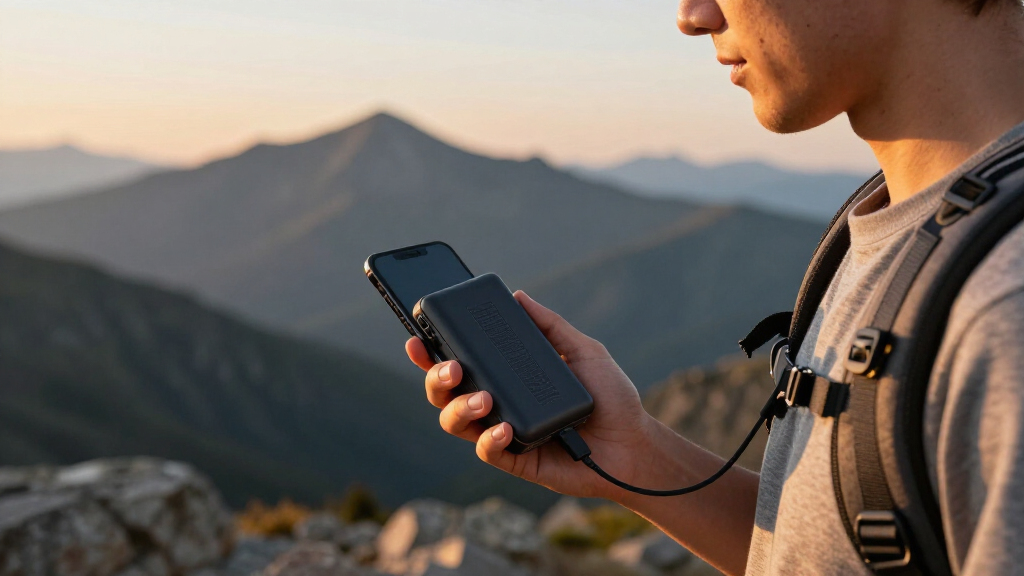
Since the whole point of this category is travel, I weighted weight and volume more heavily than raw capacity. A power bank that stays in your hotel room because it’s too heavy isn’t a travel power bank — it’s luggage. I also scored charging speed in both directions: how fast the bank charges your phone, and how fast the bank itself refills, since a slow recharge overnight is a common hidden frustration. Built-in cables, wireless capability, and included accessories counted as practical conveniences only when they didn’t add bulk.
On top of that, I factored in airline compliance (anything approaching or exceeding the typical 100Wh carry-on limit got flagged), build durability for life in a backpack, and price per usable milliamp-hour. Models were then ranked by how well they serve a specific traveler: the featherweight Nitecore units earned the top spots for frequent flyers, the high-capacity SABANI and OHOVIV placed mid-pack for capacity-first buyers, and the TRON earned its slot as a niche pick for the Apple ecosystem rather than as a general-purpose charger.
Factors to Consider When Choosing Compact Travel Power Banks
Before picking a specific model, it helps to understand what actually separates a good travel power bank from one that collects dust in a drawer. These are the factors that shaped my ranking — and the ones most buyers get wrong.Real Capacity vs. Stated Capacity
The number printed on the box is the battery’s internal capacity, not what actually reaches your phone. Because of voltage conversion and heat loss, expect roughly 60–70% of the rated milliamp-hours to arrive at your device. A 10,000mAh bank realistically delivers about 1.5–2 full charges to a modern flagship phone, not three. This gap widens with wireless charging, which wastes additional energy as heat. The practical mistake here is buying capacity you don’t carry: if you only need one top-up per day, a 10,000mAh model is sufficient, and paying for 50,000mAh just adds weight you’ll regret on every walking day of a trip.
Wattage, Ports, and Recharge Speed
Output wattage determines whether a bank charges just a phone or can also handle a tablet, camera, or small laptop. 20W covers phones comfortably; 45W and up opens the door to laptops. Just as important but frequently ignored: input speed. A large-capacity bank with a slow input rating can take eight or more hours to refill — a real problem if you’re moving between hotels with limited outlet time. Check whether the bank supports PD fast charging for both input and output, and count the ports. Two outputs lets you charge a phone and earbuds simultaneously, which matters more on multi-device trips than you’d expect.
Weight, Size, and Airline Rules
Most airlines cap carry-on batteries at 100Wh (roughly 27,000mAh at 3.7V), which makes the largest banks in this roundup a gray area depending on how the airline calculates and enforces the limit — and power banks are never allowed in checked bags. Beyond compliance, think about where the bank will actually live. A sub-150g unit disappears into a jacket pocket; a 500g unit changes how you pack. Carbon fiber shells, as on the Nitecore models, buy you a meaningful weight reduction without sacrificing durability, which is why they command a premium over similarly specced plastic models.
Built-in Cables and Wireless: Convenience or Compromise
Built-in cables solve a genuine problem — forgotten and tangled charging cables are the most common travel accessory failure — but they add thickness, create a single point of failure, and can’t be upgraded when connector standards shift. My advice: built-in cables make the most sense for casual travelers and backup kits, while frequent flyers usually prefer separate short cables for flexibility. Wireless charging follows a similar logic. Magnetic wireless is great for passive top-ups while a phone sits in your pocket, but it charges at roughly half the speed of a cable and heats the battery — fine for convenience, poor as your primary method.
Build Quality and Long-Term Value
A power bank lives at the bottom of a backpack, gets dropped on tile floors, and endures temperature swings in cars and plane cabins. Cheap enclosures crack, and lithium cells degrade whether or not you use them — expect 2–4 years of meaningful service before capacity noticeably fades. Established brands with solid warranty support (Anker in particular) tend to honor replacements without hassle, which is worth a few extra dollars. Also check the small things: an LED percentage display beats four vague dots, pass-through charging lets the bank and phone charge from one outlet overnight, and a low self-discharge rate means the bank still has juice after sitting unused for a month.
Matching the Bank to Your Travel Style
City travelers with reliable overnight charging need far less battery than someone on a long-haul flight, a multi-day hike, or a festival weekend with no outlets. If you charge nightly and just need afternoon insurance, a 5,000–10,000mAh magnetic unit is the right call. Long transit days call for 10,000–20,000mAh. Only off-grid or multi-device-heavy travelers benefit from 35,000mAh and beyond — and those buyers should accept the weight honestly rather than pretending it’s compact. The most common mistake I see is buying one giant bank for every scenario instead of a small one you’ll actually carry every day.
Frequently Asked Questions
Is a 10,000mAh power bank enough for a long flight?
For most travelers, yes. A 10,000mAh bank delivers roughly 1.5–2 full charges to a modern smartphone after conversion losses, which comfortably covers a long-haul flight plus a day of heavy navigation and photo use. Where it falls short is if you’re charging multiple devices — a phone, earbuds, and a tablet can drain it before landing. If you travel solo with one phone and overnight access to an outlet, 10,000mAh is the sweet spot between capacity and pocketability, which is exactly why the lightweight Nitecore models rank so high. Only bump up to 20,000mAh or more if you regularly share power or fly ultra-long routes.
Can I bring a 35,000mAh or 50,000mAh power bank on a plane?
It depends on the airline and how the battery’s watt-hour rating is calculated. The standard carry-on limit is 100Wh, which corresponds to about 27,000mAh at the typical 3.7V cell voltage — so 35,000mAh and 50,000mAh banks technically exceed it and are prohibited by many carriers, even in carry-on luggage. All power banks are banned from checked bags without exception. If you need serious capacity for flights, the safer play is two smaller 20,000mAh banks rather than one oversized unit. Always check your specific airline’s rules before flying, because enforcement varies and having a bank confiscated at security is an expensive lesson.
Are built-in cables worth it, or should I stick with separate cables?
Built-in cables make the most sense if you’re prone to forgetting accessories or want a single grab-and-go object for your bag — the SABANI and TRON models in this roundup are built around that idea. The tradeoffs are real, though: the bank gets thicker, the cable can fray over years of bending, and you’re locked into whatever connectors it shipped with. If your household mixes Lightning, USB-C, and micro-USB devices, separate short cables give you flexibility a built-in set can’t match. My general rule: built-in cables for casual travelers and emergency car kits, separate cables for anyone who travels more than a few times a year.
Why are carbon fiber power banks like the Nitecore models so much more expensive?
You’re paying almost entirely for weight reduction, not extra capacity or speed. A carbon fiber shell lets the NB10000 Gen3 come in at roughly half the weight of a comparable plastic 10,000mAh bank while surviving the same drops and backpack compression. For most people that premium is hard to justify — a 50g savings doesn’t matter if the bank rides in a roller bag. But for ultralight travelers, hikers, and anyone who carries the bank in a pocket all day, the difference compounds over thousands of hours of use. If weight isn’t a daily pain point for you, spend the savings on capacity or a second bank instead.
Do I need magnetic wireless charging on a travel power bank?
Magnetic wireless is a convenience feature, not a performance one — it typically charges at half the speed of a cable and generates more heat, which isn’t great for long-term battery health. Where it genuinely earns its place is passive top-ups: snapping the bank onto your phone while walking between meetings or during a commute keeps you topped up without managing cables. The Nitecore NW5000 shows the concept done well in a tiny package, but as a sole charging method it’s too slow for anyone on a tight schedule. If your phone supports magnetic attachment and you value grab-and-go simplicity, it’s worth having; otherwise, put that budget toward faster wired charging.
Conclusion
The right pick here depends less on specs and more on how you travel. For the best overall balance, the Nitecore NB10000 Gen3 is hard to beat: airline-safe capacity, fast dual-port charging, and a featherweight carbon fiber build that earns its premium for frequent flyers. The SABANI 35,000mAh is the clear best value if raw capacity per dollar is the goal — just remember the airline caveat and the extra weight.
For beginners and casual travelers who want zero fuss, the TRON 5-in-1 bundles cables, wireless charging, and a travel case into one purchase, making it the easiest entry point for Apple users. The Nitecore NW5000 is the best premium ultra-compact pick for minimalists who only need magnetic top-ups. Skip the high-capacity OHOVIV unless you’re specifically off-grid for days, and choose the Anker models if you want dependable fast charging from the most established brand in the category. Whatever you pick, match the bank to your actual daily routine — the best compact travel power bank is the one you’re willing to carry every single day.
Halloween Picks
halloween
As an affiliate, we earn on qualifying purchases.