
To approach and land a high-performance glider safely, you should focus on precise control, aerodynamic factors, and strategic planning. Start your descent at the right altitude, maintain your best glide speed, and make smooth pitch and bank adjustments. Visualize your landing zone, configure your aircraft early, and fine-tune your approach as you near touchdown. If you want to master these techniques for safer, more efficient landings, exploring further will give you the insight you need.
Key Takeaways
- Maintain a stable approach by controlling airspeed and descent rate, aligned with the glider’s best glide speed.
- Visualize and select the optimal landing pattern, considering wind direction and wind drift.
- Use smooth, gradual adjustments to pitch, bank, and speed to ensure a predictable and stable glide path.
- Fine-tune approach parameters in real-time based on feedback to ensure a precise and safe landing.
- Prepare for a go-around if conditions become unfavorable, ensuring safety and proper landing pattern execution.
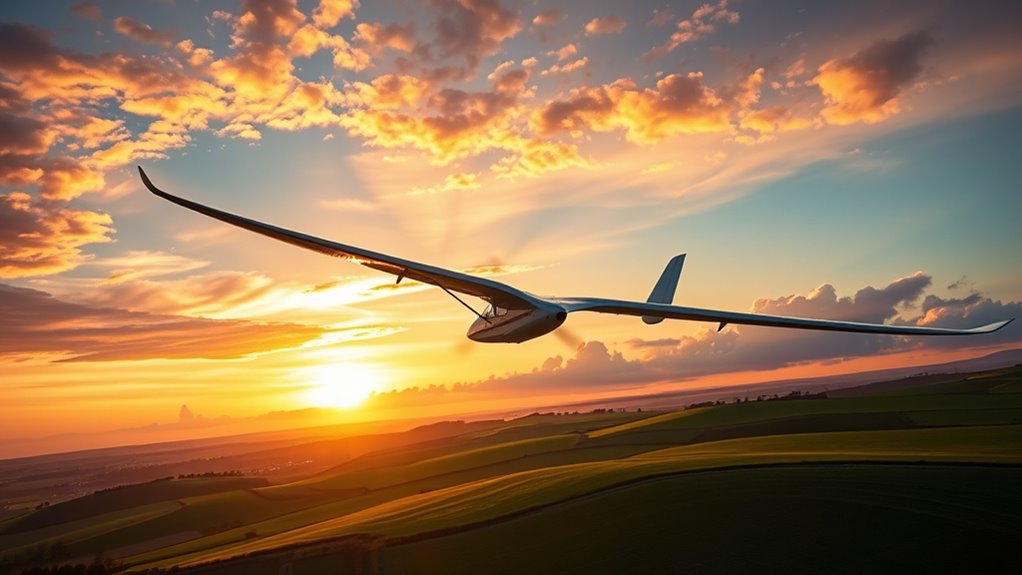
Landing high-performance gliders requires precise approach techniques and well-planned patterns to guarantee safety and efficiency. These aircraft rely heavily on understanding glider aerodynamics, as their ability to maintain lift and control during the final approach hinges on subtle aerodynamic factors. As a pilot, your mastery of these principles is key to executing smooth, safe landings. You need to anticipate how variables like airspeed, angle of attack, and wind conditions influence your glide path. By adjusting your pitch and speed carefully, you optimize your glide ratio and prepare for a controlled descent. Recognizing how glider aerodynamics affect your aircraft allows you to fine-tune your approach, minimizing unnecessary energy loss and maintaining control as you near the ground.
Your pilot techniques play a fundamental role in managing the approach pattern. It’s important to start the descent at the right altitude and position yourself accurately for the final approach. Maintaining a consistent airspeed aligned with your aircraft’s best glide speed is essential, especially in high-performance gliders where slight deviations can lead to significant control issues. As you descend, make gradual, smooth adjustments to your pitch and bank angles, ensuring your flight path remains stable and predictable. This stability is essential for dealing with variable wind conditions, which can cause drift or turbulence during the final stages of landing. Your ability to read the wind and adapt your approach accordingly demonstrates skillful pilot techniques that enhance safety and precision.
When planning your approach pattern, it’s important to visualize the landing zone and choose a suitable landing direction based on wind conditions. A well-executed pattern involves configuring your aircraft early, so you’re ready to transition into the final glide smoothly. This includes setting your approach speed, configuring your spoilers or airbrakes if needed, and aligning your aircraft with the intended landing area. Throughout the pattern, maintain a steady descent rate and avoid unnecessary altitude fluctuations, which can complicate the final approach. You should also be prepared to execute a go-around if conditions become unfavorable or if your approach becomes unstable. This proactive decision-making is a key aspect of pilot techniques that guarantees safety and control.
In the final phase, as you approach the landing zone, fine-tune your airspeed and descent rate based on real-time feedback from wind and aircraft behavior. Precise control during this phase is essential for a safe touchdown, especially with high-performance gliders that are sensitive to small aerodynamic changes. By applying your knowledge of glider aerodynamics and employing disciplined pilot techniques, you can execute smooth, accurate landings that preserve your aircraft’s integrity and your confidence. Additionally, understanding approach patterns helps pilots plan their descent trajectory more effectively, leading to safer landings. Ultimately, mastering approach techniques and planning effective landing patterns ensures you land safely, efficiently, and with minimal stress, making every flight a rewarding experience.
glider approach and landing training kit
As an affiliate, we earn on qualifying purchases.
As an affiliate, we earn on qualifying purchases.
Frequently Asked Questions
How Do Weather Conditions Affect High-Performance Glider Landings?
Weather conditions greatly impact your high-performance glider landing. Weather variability can cause unpredictable wind shifts and turbulence, making control more challenging during approach. Thermal influence affects your descent rate and glide path, requiring you to modify your approach accordingly. You must stay alert to changing weather patterns, adapt your landing strategy, and be prepared for sudden gusts or thermal activity to ensure a safe, smooth touchdown.
What Are Common Mistakes During High-Speed Approaches?
During high-speed approaches, you often make mistakes like flying the approach too fast or too slow, which affects your approach speed. You might also lose the correct glide slope by descending too steeply or leveling off too early, risking a hard landing or overshoot. To prevent these errors, maintain a steady approach speed, stay on the glide slope, and make smooth, controlled adjustments. This ensures a safe, precise landing.
How Can Pilots Improve Precision in Landing Patterns?
To improve precision in your landing pattern, focus on maintaining a consistent glider glide path and approach alignment. Use visual references and keep your speed steady, adjusting as needed for wind conditions. Practice smooth, controlled turns and avoid over-controlling. By staying centered on your approach and making small, deliberate corrections, you’ll enhance accuracy and guarantee a safer, more precise landing every time.
What Safety Precautions Are Essential During High-Performance Landings?
During high-performance landings, you should always check your landing gear for proper extension and function. Maintain stall awareness to avoid unintentional stalls close to the ground, especially with high speeds and tight patterns. Keep a safe distance from obstacles, and communicate clearly with your crew. Be prepared to execute a go-around if conditions become unsafe. These precautions help guarantee a safe, controlled landing every time.
How Does Aircraft Weight Impact Approach and Landing Techniques?
Your glider weight considerably impacts your approach and landing techniques. Heavier gliders require higher airspeeds, larger control inputs, and extended landing distances. You need to adjust your approach to maintain proper energy, ensuring you don’t overshoot or stall. Lighter gliders, on the other hand, respond more quickly and need careful management of descent rate. Always factor in weight to plan a safe, controlled landing, avoiding sudden maneuvers that could compromise safety.
Conclusion
Mastering approaches and landing patterns is vital for high-performance gliders, ensuring safety and efficiency. Did you know that proper technique can reduce landing accidents by up to 30%? By understanding your aircraft’s behavior and practicing precise control, you’ll land smoothly even in challenging conditions. Keep honing your skills and stay attentive—your confident, controlled landings make all the difference in enjoying and excelling in high-performance soaring.