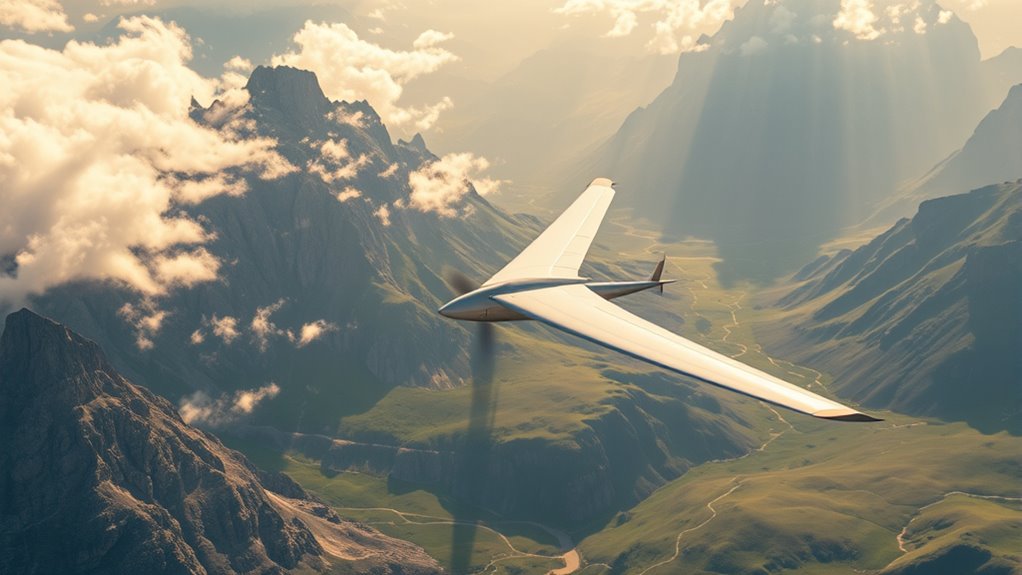

To maximize cross-country soaring in the French Alps, use cols and valleys as natural guides for finding lift and planning your route. Valleys channel warm air and act as corridors, while cols serve as strategic crossing points where thermals often gather. Watch for cloud formations and landscape cues to identify thermal triggers early. By understanding how these terrain features influence lift, you’ll enhance your efficiency and safety—keep exploring to learn more about harnessing these landscape signals effectively.
Key Takeaways
- Use valleys as natural channels to gain altitude and navigate efficiently across rugged terrain.
- Cross cols at strategic points where thermals tend to gather, facilitating peak crossings.
- Observe cloud formations along ridges and valleys as indicators of active lift zones.
- Recognize thermal triggers like dark patches and uneven terrain to find rising air early.
- Combine landscape cues with visual cloud signals to optimize route planning and enhance safety.
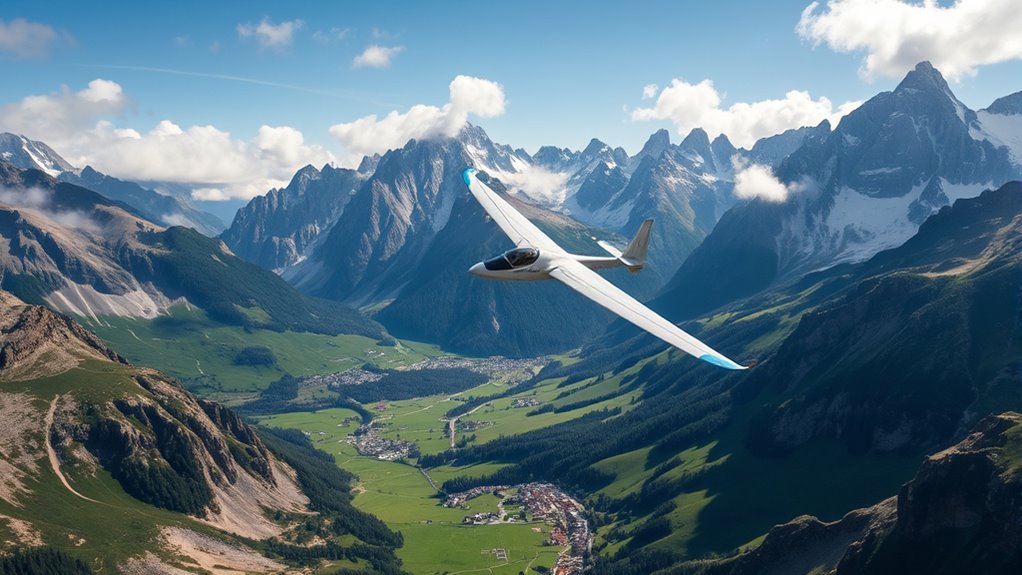
Cross-country soaring in the French Alps offers an exhilarating experience for pilots of all skill levels. As you navigate the rugged terrain, understanding how to utilize colls and valleys becomes essential for a successful flight. The Alps are filled with natural features that can either help or hinder your progress, depending on how well you interpret the environment. One of the most critical aspects is recognizing thermal triggers—those subtle cues that indicate rising air—and understanding cloud formations that signal the presence of thermals.
Thermal triggers in the Alps are often linked to the sun’s heating of the ground and the landscape’s diverse features. Darker patches of land, such as rocky slopes or patches of bare soil, absorb more heat, creating localized thermals that can lift you higher. You’ll notice these thermal triggers early in the day when the sun warms the terrain unevenly. As you fly, pay close attention to how the landscape looks—areas with a rough, uneven surface tend to generate more thermals. Additionally, the orientation of the valleys influences thermal activity; east-west oriented valleys can channel warm air, intensifying thermals along their length.
Darker patches and rough terrain early in the day signal rising thermals in the Alps.
Cloud formations are your visual cues for locating thermals. Cumulus clouds, especially those that form along the ridges and valleys, indicate rising warm air. These clouds often appear as small, puffy formations with flat bases, signaling the presence of thermal activity nearby. When you see these clouds, it’s a good idea to circle around and gain altitude, especially if they are clustered along a valley or ridge. These formations act as natural markers, guiding you toward areas with reliable lift. Conversely, the absence of clouds or the presence of stratus clouds may mean less thermal activity, prompting you to seek alternative routes or switch to ridge soaring if conditions allow.
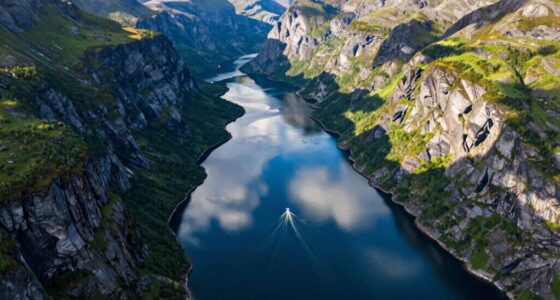
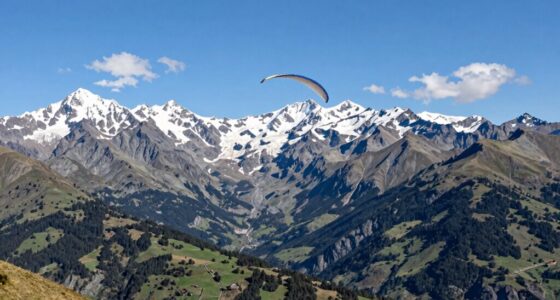
Using the terrain around you, particularly the colls and valleys, can notably enhance your soaring experience. Valleys act as natural corridors that funnel warm air and thermals, making them ideal routes for gaining altitude and maintaining energy. Cols, the passes between peaks, often serve as strategic points to cross challenging terrain because they tend to gather rising warm air, especially when the sun has heated the surrounding slopes. By observing how cloud formations cluster along these features and noting thermal triggers, you can plan your route to maximize lift and minimize unnecessary circling. Recognizing thermal triggers and their relation to landscape features can significantly improve your efficiency and safety during flight.
In the end, mastering the interpretation of thermal triggers and cloud formations allows you to exploit the landscape’s natural cues. The French Alps aren’t just a visually stunning backdrop—they’re an active environment full of signals that, when understood, can elevate your soaring to new heights.

Thermal Flying for Paraglider and Hang Glider Pilots
As an affiliate, we earn on qualifying purchases.
As an affiliate, we earn on qualifying purchases.
Frequently Asked Questions
What Seasons Are Best for Cross-Country Soaring in the French Alps?
You’ll find spring and summer the best seasons for cross-country soaring in the French Alps. During these months, seasonal wind patterns and thermal activity are at their peak, providing strong lift and favorable conditions. You’ll enjoy longer flights and better chances of catching ideal thermals as the sun heats the valleys and cols, making it perfect for soaring enthusiasts. Avoid winter, when conditions are less predictable and thermal activity diminishes.
How Do Weather Patterns Affect Soaring Conditions in the Alps?
Weather patterns are your compass in the Alps, shaping soaring conditions like a master painter with a palette. Mountain turbulence and wind shear are key players; turbulence can toss your glider, while wind shear can suddenly change your altitude or direction. Clear, stable days bring smooth thermals, but rapid shifts in weather can turn the sky into a wild ride. Stay alert, read the signs, and adapt to nature’s unpredictable dance.
What Safety Precautions Are Recommended for Pilots in This Region?
You should always prioritize safety by conducting thorough equipment checks before flying and staying prepared for emergencies. Carry essential safety gear like radios, GPS, and first aid kits. Familiarize yourself with emergency procedures and weather updates, especially in the unpredictable Alpine environment. Always fly within your skill level, avoid risky weather, and have a clear plan for quick descent if conditions worsen. Staying vigilant and prepared keeps you safe during your soaring adventures.
Are There Specific Skills Required for Flying in the Alps’ Terrain?
You need specific skills for flying in the Alps, like understanding mountain turbulence and ridge lift. You should be adept at reading the terrain, recognizing when mountain turbulence might affect your flight, and skillfully utilizing ridge lift to stay aloft. Strong situational awareness and precise control are essential, as the terrain can change rapidly. Practice flying in mountain conditions to develop these skills, ensuring safe and efficient soaring in this challenging environment.
How Do Local Regulations Impact Cross-Country Soaring Activities?
You might worry about maneuvering regulations, but staying compliant is straightforward. Local regulations impact your soaring by enforcing airspace restrictions and requiring regional permits, which ensure safety and coordination. Always check current rules before flying, as they vary by area. Respect these regulations to avoid penalties, and you’ll enjoy smooth cross-country soaring in the French Alps, fully compliant and focused on the thrill of flight.
Conclusion
So, next time you consider gliding through the breathtaking French Alps, remember there’s a delicate dance between challenge and reward. By skillfully traversing cols and valleys, you unlock a world of soaring possibilities, each lift a gentle whisper of adventure. Embrace the subtle art of cross-country flying, where patience and finesse turn a simple flight into an experience you’ll cherish forever. Sometimes, the quietest journeys reveal the most extraordinary views—if you’re willing to listen.