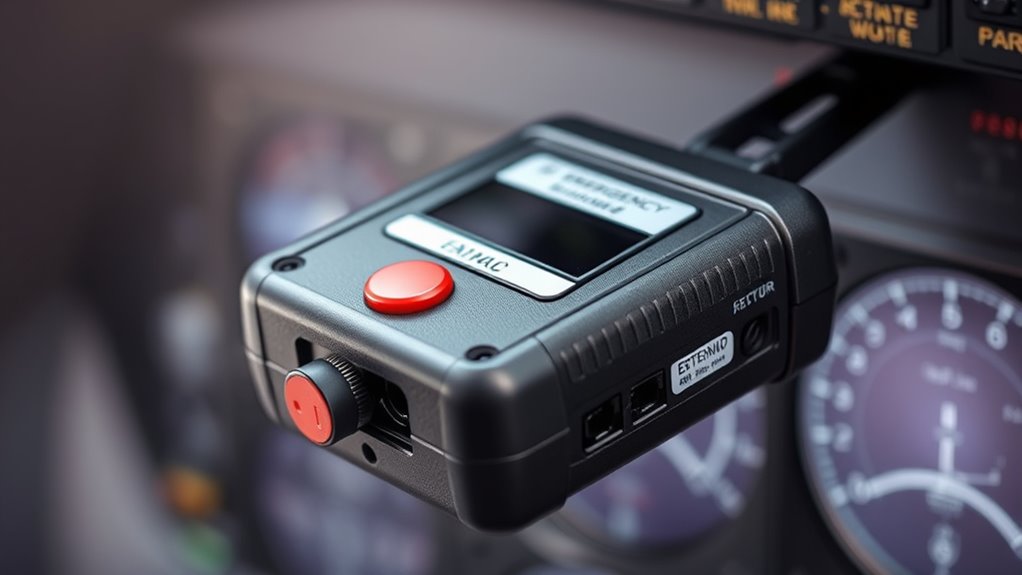
Emergency Locator Transmitters (ELTs) come in various types, including aircraft ELTs that activate automatically or manually, and maritime EPIRBs designed for vessels. These devices operate on specific frequencies like 121.5 MHz and 406 MHz, often incorporating GPS for precise location. Regulations from agencies like FAA and IMO set strict standards to guarantee reliability, registration, and battery maintenance. If you keep exploring, you’ll discover how these devices play a vital role in safety and rescue operations.

Get travel and outdoor gear delivered free with Prime
- Fast, free delivery on millions of items
- Prime Video, Amazon Music and more included
- Member-only deals all year
Key Takeaways
- ELTs and PLBs are critical for maritime and aviation safety, transmitting distress signals to facilitate rapid rescue.
- Types include aircraft ELTs, maritime EPIRBs, with modern devices featuring GPS for accurate location tracking.
- Regulatory agencies like FAA, IMO, and ITU set standards for device certification, registration, and frequency use.
- Technological advances have improved signal strength, reliability, battery life, and location accuracy of emergency transmitters.
- Compliance with regulations ensures devices effectively aid rescue operations and meet international safety standards.

Have you ever wondered how search and rescue teams locate missing aircraft or vessels so quickly? The answer lies in the essential role of emergency locator transmitters (ELTs) and personal locator beacons (PLBs). These devices are indispensable tools for enhancing maritime safety and guaranteeing swift search and rescue operations when accidents happen. By transmitting distress signals upon activation, they dramatically reduce the time it takes for rescue teams to find those in need, potentially saving lives in critical situations. Understanding the types of ELTs and their regulatory standards helps you appreciate how safety is maintained across various modes of transportation.
Search and rescue rely on ELTs and PLBs to locate missing aircraft and vessels quickly and save lives.
There are primarily two types of emergency locator transmitters: aircraft ELTs and maritime EPIRBs (Emergency Position Indicating Radio Beacons). Aircraft ELTs are installed in airplanes and helicopters, designed to activate automatically during a crash or when manually triggered. They emit distress signals on specific frequencies, which are picked up by satellites and search and rescue teams. Maritime EPIRBs serve a similar purpose but are tailored for vessels. These devices are mounted on boats and ships, and they also activate automatically upon water immersion or manually by crew members. Both types are built to withstand harsh environments, guaranteeing reliable operation when most needed. Additionally, adherence to regulatory standards ensures these devices function effectively in emergencies.
Regulations governing these devices are strict and indispensable for their effectiveness. Agencies like the Federal Aviation Administration (FAA), International Maritime Organization (IMO), and the International Telecommunication Union (ITU) set standards for ELT and EPIRB performance, placement, and testing. For instance, aircraft ELTs must meet specific certification standards and be tested regularly to guarantee proper functioning. Similarly, maritime EPIRBs must be registered with relevant authorities, and their batteries require periodic replacement to prevent failure. These regulations also specify the frequencies used, such as 121.5 MHz and 406 MHz, which are internationally recognized for distress signaling.
You should also know that advancements in technology continue to improve the reliability and accuracy of these transmitters. Modern ELTs and EPIRBs incorporate GPS technology, allowing rescue teams to pinpoint your location with greater precision. Regulatory updates have mandated the transition to 406 MHz beacons, which offer better signal strength, longer battery life, and enhanced tracking capabilities. These improvements are indispensable in reducing search times, especially in challenging environments like open waters or remote areas.
In essence, emergency locator transmitters are a cornerstone of maritime safety and search and rescue operations. Their diverse types, backed by rigorous regulations, guarantee that when disaster strikes, help can be directed swiftly and accurately. Knowing how these devices work and the standards they adhere to reassures you that safety remains a top priority in transportation industries worldwide.
personal locator beacon with GPS
As an affiliate, we earn on qualifying purchases.
As an affiliate, we earn on qualifying purchases.
Frequently Asked Questions
How Do ELTS Differ Between Commercial and Private Aircraft?
You’ll notice that ELTs on commercial aircraft are typically more advanced, with stronger signal transmission and automatic activation features, meeting stricter aircraft certification standards. Private aircraft ELTs may be simpler, often requiring manual activation, and sometimes have less powerful transmitters. These differences guarantee commercial aircraft quickly alert search and rescue services, whereas private aircraft rely more on pilot activation. Both types aim to enhance safety during emergencies through reliable signal transmission.
Are ELT Regulations Different for Maritime Vessels?
Yes, ELT regulations differ for maritime vessels compared to aircraft. While aircraft regulations focus on aviation safety and timely rescue, maritime safety emphasizes vessel communication and distress signals at sea. You need specific distress beacons like EPIRBs for ships, which are governed differently to guarantee effective rescue operations. This distinction ensures that both aviation and maritime emergency systems are optimized for their unique environments, prioritizing safety and effective rescue.
What Maintenance Is Required for Effective ELT Operation?
You need to replace the battery regularly and perform periodic testing to guarantee your ELT works effectively. Check the battery’s expiration date and replace it as recommended by the manufacturer or regulations. Conduct routine tests, often monthly or annually, to verify proper operation. Keep records of maintenance activities. Proper maintenance guarantees your ELT will activate correctly during an emergency, increasing your chances of rescue.
Can ELTS Be Manually Activated or Only Automatically?
Oh, of course, ELTs can be manually activated—because who wouldn’t want the option in an emergency? You can press a button to trigger manual activation, making emergency preparedness more reliable. This feature guarantees you’re not solely dependent on automatic systems, giving you peace of mind. So, whether you’re flying through stormy skies or facing unforeseen trouble, your ELT’s manual activation is there to help you signal for rescue effectively.
How Do International Regulations Impact ELT Standards?
International compliance substantially impacts ELT standards by requiring manufacturers and operators to adhere to regulatory updates set by global agencies like ICAO and the FCC. These standards ensure ELTs meet specific performance and safety criteria, regardless of where you operate. Regulatory updates can introduce new requirements for manual activation, durability, or transmission protocols, so staying informed helps you maintain compliance and ensures your ELT functions effectively during emergencies worldwide.
Conclusion
In an emergency, your ELT is your lifeline, the difference between being lost in the wilderness and being found in minutes. Understanding the different types and regulations guarantees you’re prepared for any situation. Think of it as your personal beacon, shining brighter than a thousand suns when every second counts. Stay informed and compliant, so you can trust your ELT to do its heroic job when you need it most—saving your life.
Fall Picks
fall essentials
As an affiliate, we earn on qualifying purchases.