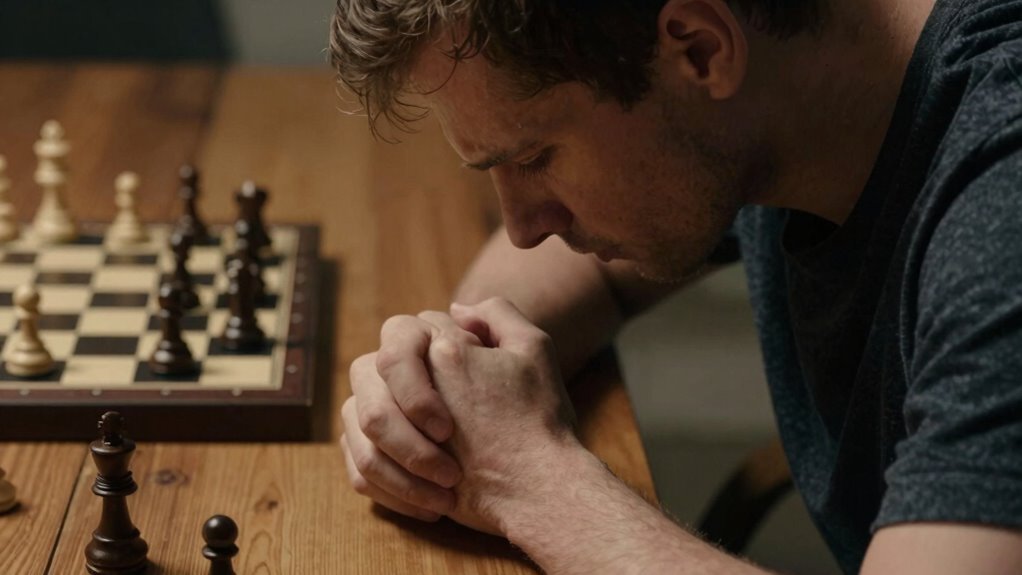

After a bad tactical decision, it’s important to accept the setback without harsh self-criticism. Take deep breaths to gain emotional distance and see the situation objectively. Reflect honestly on what went wrong to learn and improve your strategy. Practice self-compassion, recognizing that recovery is gradual, and focus on activities that restore your mental energy. Developing resilience and reframing the experience as a growth opportunity help you bounce back faster—continue exploring to strengthen your mental recovery process.
Key Takeaways
- Accept the mistake without self-criticism and detach emotionally to view the situation objectively.
- Analyze the decision to identify lessons and areas for improvement.
- Reframe the experience as a growth opportunity, focusing on lessons learned.
- Practice self-compassion and engage in restorative activities to rebuild mental energy.
- Develop resilience by managing reactions and maintaining focus on long-term goals.

Making a bad tactical decision can feel like a blow to your confidence, but it’s essential to remember that setbacks are a natural part of growth. When things go wrong, your immediate instinct might be to dwell on what went wrong or to second-guess your abilities. Instead, focus on a mindset adjustment that emphasizes learning rather than blame. Recognize that everyone makes mistakes, and these moments are opportunities to develop your emotional resilience.
Your first step is to accept the situation without harsh self-criticism. It’s easy to spiral into frustration or self-doubt, but doing so only hampers your ability to move forward. Take a deep breath and detach emotionally from the mistake. This helps you see the situation more objectively and prevents emotions from clouding your judgment. Remember, emotional resilience is about bouncing back, not avoiding failure. It’s about managing your reactions and staying focused on the bigger picture.
Accept setbacks without harsh self-criticism to see clearly and build emotional resilience for future growth.
Once you’ve gained some emotional distance, analyze what happened. Ask yourself what led to the decision and what you can learn from it. Be honest but kind to yourself — this isn’t about blame but about growth. If you identify a specific mistake, develop a plan to improve your decision-making process. This might involve gathering more information, consulting with others, or practicing different strategies. Taking proactive steps reinforces your confidence and helps you feel more prepared next time. Recognizing the importance of biodiversity and sustainable practices can also inspire you to adapt and grow from setbacks, knowing that resilience is key to long-term success. Incorporating continuous learning into your approach can further enhance your ability to adapt and overcome challenges.
It’s also helpful to reframe the experience as a stepping stone rather than a setback. Instead of viewing the mistake as a failure, see it as a lesson learned. This shift in perspective can boost your emotional resilience because it aligns your mindset with growth-focused thinking. When you approach setbacks this way, you build a mental toughness that allows you to recover faster and face future challenges with greater confidence. Additionally, understanding the learning process involved in setbacks can help you stay motivated and committed to continuous improvement.
Finally, give yourself some grace. Recovery isn’t immediate, and it’s okay to feel disappointed temporarily. Engage in activities that restore your mental energy, whether that’s taking a walk, practicing mindfulness, or discussing your thoughts with a trusted teammate or mentor. Developing an awareness of your emotional responses can further support your resilience, enabling you to handle setbacks more effectively. Over time, with a conscious mindset adjustment and emotional resilience, you’ll find yourself not only recovering but also becoming stronger after each mistake. Every experience is a chance to refine your skills and deepen your understanding, keeping you resilient and ready for the next challenge.

Mindful Reset 52 Mindfulness Cards for Stress Relief & Everyday Calm, 60-Second Self Care Prompt Deck for Gratitude, Grounding & Meditation, Wellness Gifts for Women and Men
𝐑𝐄𝐒𝐄𝐓 𝐘𝐎𝐔𝐑 𝐌𝐈𝐍𝐃 𝐈𝐍 𝟔𝟎 𝐒𝐄𝐂𝐎𝐍𝐃𝐒 – A simple, screen-free way to disconnect after a high-demand workday or…
As an affiliate, we earn on qualifying purchases.
As an affiliate, we earn on qualifying purchases.
Frequently Asked Questions
How Long Does It Typically Take to Recover Mentally?
Recovery time varies depending on your emotional resilience and confidence rebuilding efforts. Usually, it takes a few hours to a few days to regain mental clarity after a bad decision. Focus on reflecting calmly, learning from the mistake, and practicing self-compassion. By maintaining emotional resilience and actively rebuilding your confidence, you’ll bounce back more quickly, turning setbacks into growth opportunities. Remember, patience and persistence are key to a swift recovery.
Should I Discuss My Mistake With Teammates or Coaches?
A problem shared is a problem halved, so discussing your mistake with teammates or coaches helps you move forward. Good team communication fosters trust, and seeking coach feedback shows your commitment to improvement. Be honest about what went wrong, listen to advice, and focus on learning from the experience. This openness not only clears your mind but also strengthens team bonds, turning setbacks into opportunities for growth.
Can Mental Recovery Improve Future Decision-Making?
Yes, mental recovery can improve your future decision-making. By practicing mindfulness techniques, you stay present and reduce stress, helping you stay focused under pressure. Visualization strategies allow you to mentally rehearse positive outcomes, boosting confidence and clarity. Combining these approaches helps you reset quickly after mistakes, learn from them, and make better tactical decisions in the future. Consistent mental recovery practices sharpen your overall game.
Is It Helpful to Analyze the Mistake Immediately?
Yes, immediate reflection can be helpful, but it’s crucial to balance it with emotional processing. Right after a mistake, analyze what went wrong to learn, but don’t dwell on it emotionally. Allow yourself a moment to process feelings so you stay calm and focused. This approach helps you gain clarity quickly, prevents overwhelm, and prepares you to make better decisions in the future.
What Mental Exercises Aid Recovery After a Bad Decision?
To recover mentally after a bad decision, try mindfulness techniques like deep breathing and grounding exercises to calm your mind. Visualization strategies also help; imagine yourself handling future situations confidently and successfully. Focus on the learning opportunity rather than blame. These mental exercises boost resilience, improve your focus, and help you regain confidence quickly, so you’re prepared to move forward with a clear and positive mindset.

52-Week Mental Health Journal: Guided Prompts and Self-Reflection to Reduce Stress and Improve Well-Being
As an affiliate, we earn on qualifying purchases.
As an affiliate, we earn on qualifying purchases.
Conclusion
Remember, a bad decision is just a stumble on your path, not the end of the journey. Keep your head high and learn from the misstep like a sailor adjusting the sails after a gust. Every setback is an opportunity to grow stronger and wiser. Trust in your resilience—you’re the captain of your own ship. With time and reflection, you’ll navigate through the storm and come out even more prepared for calmer seas ahead.

DIY Stress Ball Making Kit,Create Anxiety Relief Toys,15PCS Stress Ball Making Kit Stress Balls, Transparent Blank Skins with Air Pump & Expander Tool for Pressure Squishy Balls for Adult (1 Set)
【Easily Filled with a Variety of Materials】The open outer shell allows for adding sand, beads or sparkly fillers,…
As an affiliate, we earn on qualifying purchases.
As an affiliate, we earn on qualifying purchases.

ajdvart Mindfulness Breathing Exercise Poster, Calm Down Corner & Classroom Decor, Breathing Exercise Poster for Therapy Office & Mental Health Wall Art Educational Tool Unframed Canvas 8.5"x11"
8.5"x11" Unframed 3 Canvas Poster: High-quality canvas with a soft matte finish, this poster is built to last….
As an affiliate, we earn on qualifying purchases.
As an affiliate, we earn on qualifying purchases.