Personal Locator Beacons are essential for your safety during remote soaring flights. When activated, they transmit your distress signal via satellite and provide precise GPS coordinates, helping rescue teams find you quickly. They work in areas with no cell coverage and in harsh weather, ensuring you’re always protected. By adding a PLB to your safety gear, you greatly improve your chances of swift rescue. Want to discover more about how they transform your safety? Keep exploring.
Key Takeaways
- PLBs provide rapid emergency signaling in remote soaring areas lacking cell coverage.
- They transmit precise GPS coordinates to rescue teams, reducing response times.
- Satellite communication ensures reliable operation in harsh weather conditions.
- Durable and easy-to-use PLBs enhance overall safety during long, isolated flights.
- They complement other safety measures, ensuring quick rescue and peace of mind for pilots.
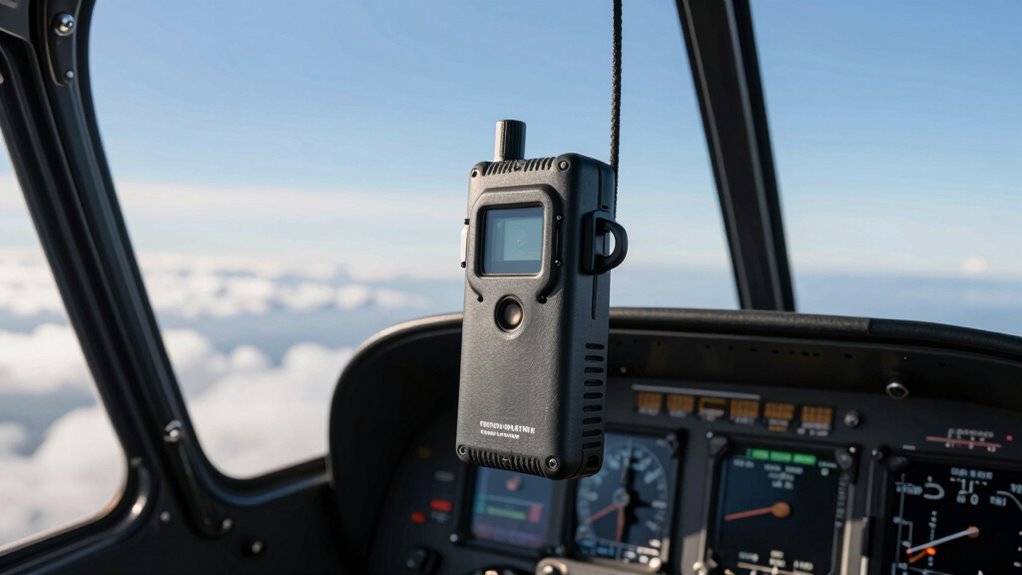
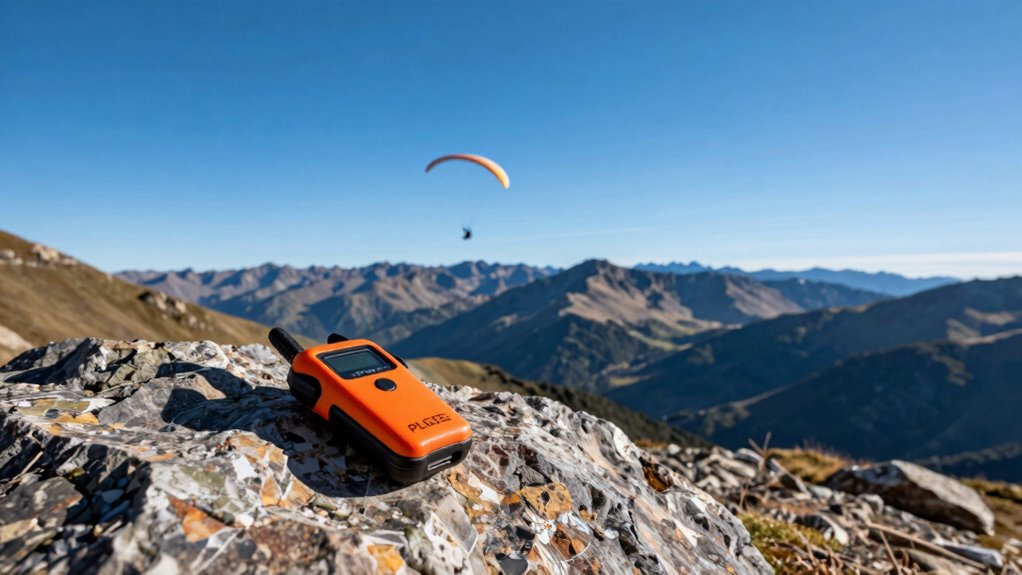
Have you ever wondered how pilots stay safe when soaring in remote or challenging areas? It’s a question that’s top of mind for many pilots who venture into vast, open skies where help isn’t always just a radio call away. That’s where personal locator beacons (PLBs) come into play, serving as critical safety devices that can make the difference between a quick rescue and a prolonged ordeal. These compact devices are designed for emergency signaling, allowing you to alert rescue services instantly if you find yourself in trouble. When you activate a PLB, it transmits a distress signal via satellite, which is then received by rescue agencies worldwide. This immediate emergency signaling capability drastically reduces response times, especially in areas where traditional communication methods like cell phones might not work.
GPS technology is a core feature of modern PLBs, and it profoundly enhances their effectiveness. When you activate a beacon, it not only sends an emergency signal but also transmits your precise location. This accurate positioning information speeds up rescue efforts because it helps search teams pinpoint your exact whereabouts without delays. Imagine flying over rugged mountains or remote wilderness; knowing that your beacon can relay your coordinates in real-time provides peace of mind, ensuring you’re not left to be found by chance. The integration of GPS technology into PLBs means that rescue teams don’t have to rely solely on last known locations or visual sightings—they can track your position via satellite, making rescues faster and more efficient. Having a reliable emergency signal significantly enhances safety during solo or remote flights. Additionally, understanding satellite communication technology can help pilots better appreciate the capabilities of these devices in remote settings. Moreover, the weather resistance of modern PLBs ensures they function reliably in harsh conditions, which is vital for soaring pilots who often encounter unpredictable weather.
Furthermore, ongoing advancements in technology are making PLBs more durable and easier to use, even in harsh environments. For soaring pilots, safety isn’t just about avoiding trouble—it’s about being prepared for the unexpected. Having a comprehensive safety plan that includes a personal locator beacon is a crucial part of responsible aviation practices. Although you hope never to need it, having a personal locator beacon onboard is a smart precaution. It works seamlessly with your other safety gear, providing an added layer of security during long flights over isolated areas. When an emergency occurs, activating your PLB ensures that you’re not alone, even in the most remote locations. Rescue agencies can receive your distress signal and find you swiftly, thanks to the combined power of emergency signaling and GPS technology. This integration of advanced technology and reliable alert systems transforms how pilots approach safety in soaring activities, giving you confidence to focus on enjoying your flight, knowing that help is just a beacon away.

McMurdo FastFind 220 Personal Locator Beacon – US Programming
- Pre-programmed for US registration: Registered with US Search and Rescue
- Worldwide functionality: Operates globally, US contact first
- Optional international registration: Reprogramming available for other countries
As an affiliate, we earn on qualifying purchases.
As an affiliate, we earn on qualifying purchases.
Frequently Asked Questions
How Long Do Personal Locator Beacons Typically Last on a Single Charge?
Personal Locator Beacons typically last between 24 to 48 hours on a single charge, depending on the device and its battery life. To maximize their longevity, you should practice good power management by turning the beacon off when not in use and keeping it in a cool, dry place. Regularly check and recharge the battery to guarantee it’s ready if an emergency arises.
Are There Legal Requirements for Carrying a Personal Locator Beacon While Soaring?
Legal compliance and regulatory standards vary by country, but generally, you’re not legally required to carry a personal locator beacon (PLB) while soaring. However, many authorities recommend it for safety and emergency preparedness. It’s wise to check local regulations and airline or soaring club policies before flying. Carrying a PLB can enhance safety, guarantee you’re prepared for emergencies, and often aligns with best practices even if not legally mandated.
How Accurately Can a Personal Locator Beacon Pinpoint Your Location?
Think of your Personal Locator Beacon as a lighthouse guiding rescuers through stormy seas. It uses satellite communication to transmit your exact location, usually pinpointing within a few meters. Signal accuracy depends on satellite coverage and terrain, but generally, it offers a reliable, precise fix. So, when you’re soaring, your beacon guarantees that rescuers can find you swiftly, even in the most challenging environments.
Can Personal Locator Beacons Be Used Underwater or in Extreme Weather?
Personal locator beacons aren’t designed for underwater signaling or extreme weather durability. They work best on land or in the air, transmitting distress signals via satellite. In water, they won’t activate or send signals, so you need specialized underwater beacons. During extreme weather, some models may withstand harsh conditions, but generally, personal locator beacons are built for durability in tough environments, though not specifically for underwater use.
What Is the Process for Activating a Personal Locator Beacon in an Emergency?
In an emergency, you should activate your personal locator beacon (PLB) by opening the protective cover and pressing the activation button. Your device will then automatically transmit a distress signal, initiating emergency procedures. Make certain the beacon is properly registered beforehand. Once activated, the PLB transmits a signal that is received by rescue authorities, helping them locate you quickly through signal transmission, increasing your chances of rescue in critical situations.
Conclusion
In soaring, a Personal Locator Beacon can be your lifeline, offering reassurance in emergencies. Just like a compass guides your flight, this device guides rescue teams to your location when you’re most vulnerable. While the sky offers freedom, it also demands responsibility. With a PLB, you balance adventure with safety, turning a potential tragedy into a story of resilience. Embrace this technology, and let your passion for flying soar safely alongside peace of mind.