
As a pilot, you need to understand that layering is key to staying warm and safe in cold weather. Start with a moisture-wicking base layer to keep sweat away and maintain core warmth. Add an insulating mid-layer, like fleece or down, for extra heat, and top it with a windproof, water-resistant outer shell. Don’t forget insulated gloves, a hat, and footwear to protect extremities. Mastering these layers guarantees you’re prepared for any winter flight, and you’ll discover more tips below.

Get travel and outdoor gear delivered free with Prime
- Fast, free delivery on millions of items
- Prime Video, Amazon Music and more included
- Member-only deals all year
Key Takeaways
- Use moisture-wicking base layers to keep sweat away and maintain core warmth during flight.
- Add insulating mid-layers like fleece or down for adjustable warmth based on weather conditions.
- Wear windproof, water-resistant outer shells to protect against wind chill, snow, and rain.
- Equip extremities with insulated gloves, hats, and warm footwear to prevent heat loss.
- Proper layering enhances safety, alertness, and emergency readiness in cold-weather flying environments.
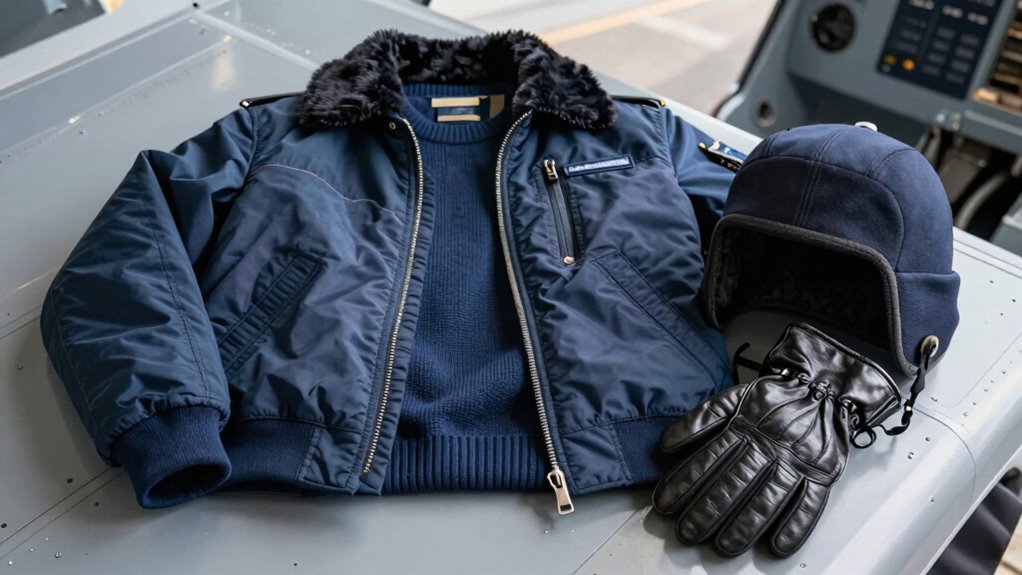
When flying in cold weather, having the right gear can make all the difference in maintaining safety, comfort, and focus. As a pilot, your ability to stay warm directly impacts your alertness and decision-making, both essential for aviation safety. Proper weather preparedness involves understanding how to layer effectively, ensuring you’re protected from the elements without sacrificing mobility or safety. Cold temperatures can quickly impair your body’s functions if you’re not dressed correctly, so knowing what layers to wear is essential for staying focused during your flight.
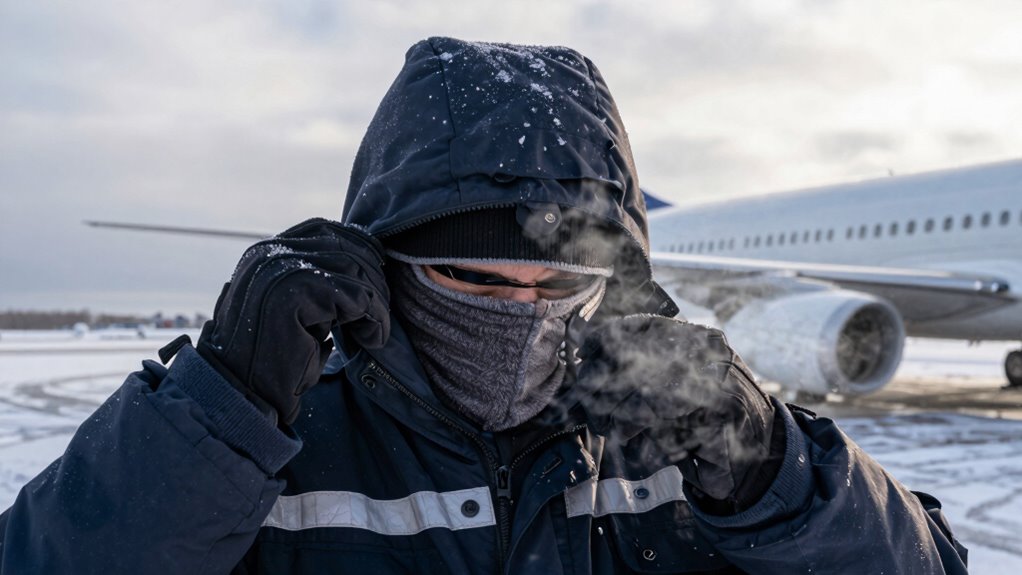
Start with a moisture-wicking base layer that fits snugly against your skin. This layer pulls sweat away from your body, preventing chills caused by dampness, which can be dangerous at altitude. Choose materials like merino wool or synthetic fabrics designed for cold weather, as they offer insulation without bulk. A good base layer is your first line of defense and helps you maintain core warmth, which is *essential* for overall safety. Next, add an insulating mid-layer that traps body heat. Fleeces, down or synthetic insulations work well here, providing a buffer against the cold while allowing some breathability to prevent overheating. This layer should be adjustable, so you can remove or add as your activity level or weather conditions change. Incorporating layering techniques can further optimize your warmth and mobility in variable conditions.
Over these, a windproof and water-resistant outer shell is *essential*. It protects you from wind chill, snow, or rain, which can rapidly decrease your body temperature if you’re exposed. Look for jackets made from durable, weatherproof materials with sealed seams and sturdy zippers. This outer layer should also allow for freedom of movement, especially if you need to operate controls or move around the cockpit. Remember, your gear should not restrict your ability to perform pre-flight checks or handle emergency procedures comfortably. Incorporating appropriate weather-resistant gear can further enhance your protection against unexpected weather changes. Additionally, understanding how to select gear with proper insulation and waterproofing can help you stay dry and warm during prolonged exposure to winter conditions.
In addition to clothing layers, consider accessories that enhance weather preparedness. Insulated gloves, a warm hat, and a scarf or neck gaiter help prevent heat loss from extremities. Proper headgear is particularly important because a significant amount of body heat escapes through the head. Also, invest in quality footwear that keeps your feet warm and dry, especially if your aircraft involves outdoor movement or pre-flight inspections. Wearing appropriate gear designed specifically for cold weather can significantly improve your comfort and safety during winter flights. Being aware of regulations related to cold-weather gear can ensure compliance and optimal safety practices during winter operations.
When it comes to aviation safety, never underestimate the importance of weather preparedness. Cold-weather gear isn’t just about comfort; it’s about ensuring you stay alert, responsive, and capable of handling any situation that might arise. By layering appropriately, you create a reliable barrier against the elements, so your focus remains on flying safely and efficiently, no matter how low temperatures drop outside. Properly prepared, you can confidently navigate cold-weather flights, maintaining safety and performance throughout your journey.
Products Worth Considering

GoPro MAX Waterproof 360 and Traditional Action Camera with Touch Screen, 5.6K Video, 16.6MP Photos, Live Streaming, Stabilization

GoPro MAX2 Waterproof 360 and Traditional Action Camera with Touch Screen

GoPro Hero12 Black Waterproof Action Camera with 5.3K60 Video and 27MP Photos
As an affiliate, we earn on qualifying purchases.
Frequently Asked Questions
How Do Cold-Weather Gear Layers Affect Pilot Mobility?
Cold-weather gear layers can impact your mobility if they lack layer flexibility or have too much insulation. When layers are flexible, you move freely, ensuring safe operation of controls. A proper insulation balance keeps you warm without restricting movement. You should choose layered gear that adapts to temperature changes and allows you to perform maneuvers comfortably, maintaining safety and efficiency during flights in cold environments.
Are Specific Materials Better for Aviation Cold-Weather Clothing?
They say, “You get what you pay for,” and in cold-weather gear, choosing the right materials matters. Opt for thermal insulation fabrics like wool or fleece to stay warm, and moisture-wicking materials such as synthetic fibers or merino wool to keep dry. These materials improve comfort and safety by maintaining body temperature and preventing moisture buildup, essential for pilots working in freezing conditions.
How Should Pilots Adjust Gear Layers During Flight?
During flight, you should adjust your gear layers by adding or removing items based on thermal insulation needs and moisture management. Keep an eye on your comfort, removing layers if you start to overheat, and add insulation if you feel cold. Use moisture-wicking fabrics to stay dry, and consider lightweight, breathable layers that allow flexibility and temperature regulation. Regular adjustments help maintain ideal comfort and safety throughout your flight.
What Are the Best Storage Options for Cold-Weather Gear?
You should store your cold-weather gear in insulated, waterproof storage containers to guarantee insulation effectiveness and protect against moisture. Hard-shell containers or heavy-duty plastic bins with tight-fitting lids work well, preventing gear degradation. Avoid soft bags that may trap moisture or compress insulation. Proper storage ensures gear stays dry, retains warmth, and remains ready for your next flight, ultimately enhancing safety and comfort in cold conditions.
How Does Layering Impact Communication Equipment Use?
Layering can impact your communication equipment use by causing interference or reduced signal clarity due to gear insulation properties. When you wear multiple layers, especially thick or insulated ones, they may block or weaken radio signals, making communication harder. To prevent this, guarantee your gear accommodates your communication devices, and consider using specialized headsets or microphones designed for layered clothing. This way, you maintain clear communication without sacrificing warmth or comfort.
Conclusion
Just as explorers once braved icy frontiers with layered defenses, you too can conquer the cold skies with the right gear. Remember, staying warm isn’t just comfort — it’s your safety, your edge, your shield against the harsh winter winds. Equip yourself wisely, layer thoughtfully, and embrace the chill like a seasoned aviator. With proper gear, you’ll soar through the cold, confident and prepared, ready to face whatever winter throws your way.