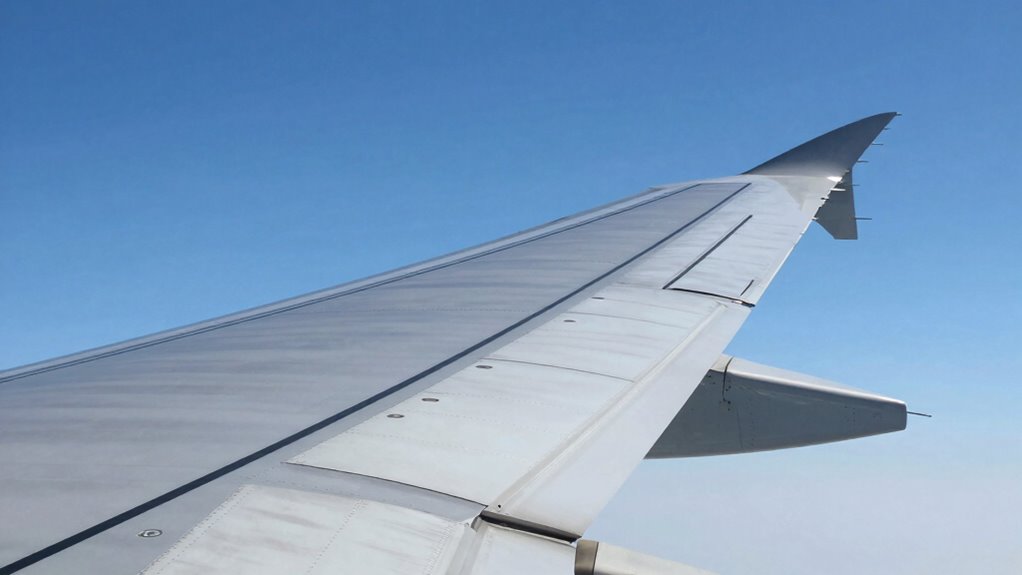

New composite designs support lighter, stronger aircraft by integrating high-strength fibers like carbon or fiberglass into advanced manufacturing processes such as automated fiber placement and resin transfer molding. These techniques allow you to optimize fiber orientation and create complex shapes without adding weight. The result is structures that resist fatigue, improve fuel efficiency, and increase payload capacity. If you want to discover how these innovations are transforming aerospace design, keep exploring the details behind these cutting-edge developments.
Listen free for 30 days with Audible
Thousands of audiobooks and originals — cancel anytime.
As an affiliate, we earn on qualifying purchases.
Key Takeaways
- Innovative fiber orientations and layering techniques optimize load distribution, increasing strength while reducing weight.
- Advanced manufacturing methods enable complex, lightweight structures with precise fiber placement for enhanced durability.
- Material innovations allow for stronger, lighter composites that resist fatigue and damage more effectively.
- Tailored fiber reinforcement throughout components improves structural integrity without adding weight.
- Integration of new composite designs supports aerodynamic efficiency, reducing fuel consumption and enhancing performance.
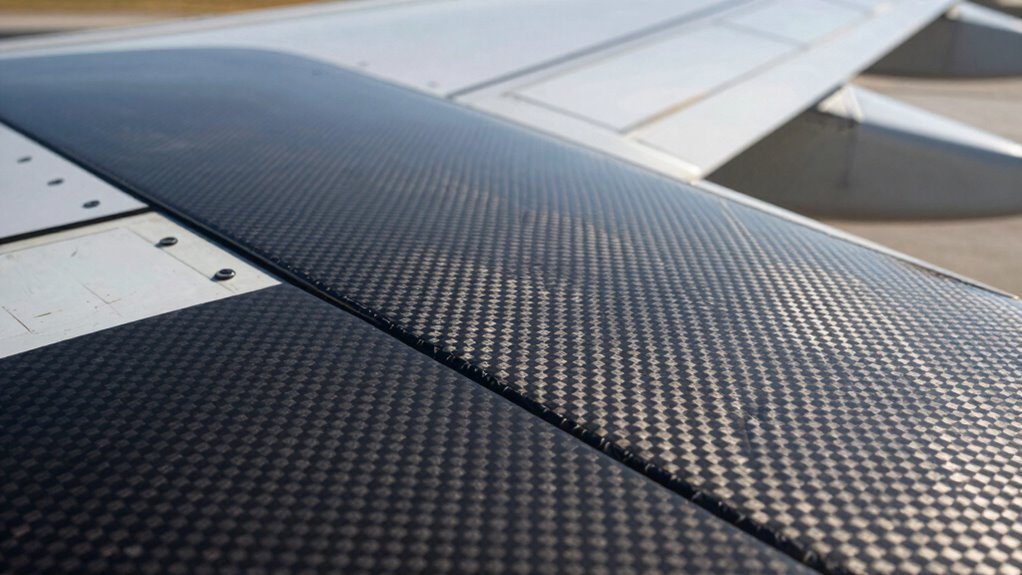
Composite materials have revolutionized aircraft design by offering a way to make planes lighter and stronger than traditional metals. This transformation largely hinges on advancements in fiber reinforcement, which involves embedding high-strength fibers like carbon or fiberglass into a polymer matrix. These fibers act as the primary load-bearing elements, providing exceptional strength and stiffness while maintaining low weight. When combined with innovative manufacturing techniques, fiber reinforcement allows engineers to craft complex, aerodynamic structures that were previously impossible or impractical with metal. You’ll find that the precise orientation and layering of fibers during manufacturing directly influence the aircraft’s performance, durability, and safety, making the design process both an art and a science. Additionally, fiber orientation plays a critical role in optimizing the strength and resilience of composite components. Modern manufacturing techniques have markedly enhanced the capabilities of composite materials. Techniques like resin transfer molding (RTM), automated fiber placement (AFP), and filament winding enable you to produce highly customized and intricate parts with minimal waste. These methods allow for better control over fiber alignment, resulting in components that maximize strength in critical stress areas. For example, AFP uses robotic systems to lay down fibers precisely where they’re needed, reducing manufacturing time and ensuring uniform quality. Such techniques also facilitate the creation of complex shapes without the need for extensive machining or assembly, which not only shortens production cycles but also reduces weight. The ability to tailor fiber reinforcement throughout the component means you can design aircraft that are both lighter and more resilient. advanced manufacturing techniques like these contribute to improved manufacturing efficiency and the overall quality of the final structures. The integration of fiber reinforcement through cutting-edge manufacturing ensures consistent quality, which is vital for aerospace applications where safety is paramount. Incorporating innovative materials further enhances the performance characteristics of composite structures, allowing for even more optimized designs. The synergy between fiber reinforcement and advanced manufacturing techniques provides you with the tools to push the boundaries of aircraft performance. Lighter aircraft consume less fuel, have increased payload capacities, and exhibit improved maneuverability. Stronger structures resist fatigue and damage, extending the lifespan of the aircraft and enhancing safety. You can incorporate composite materials into critical load-bearing parts, such as wings and fuselage sections, without adding unnecessary weight. The process of integrating fiber reinforcement through cutting-edge manufacturing ensures consistent quality, which is vital for aerospace applications where safety is paramount.
As an affiliate, we earn on qualifying purchases.
Frequently Asked Questions
How Do Composite Materials Impact Aircraft Maintenance Schedules?
Composite materials improve your aircraft’s maintenance schedules by enhancing structural integrity and fatigue resistance. You’ll find that these materials reduce the frequency of inspections and repairs because they’re less prone to cracking and corrosion compared to traditional metals. This means fewer downtime periods and cost savings. By choosing composites, you’re ensuring your aircraft remains strong and reliable, with maintenance demands that are more predictable and manageable over its lifespan.
Are Composites More Cost-Effective Than Traditional Materials Long-Term?
Composites are often more cost-effective long-term because their material longevity reduces the need for frequent repairs and replacements. While initial costs may be higher, the cost comparison favors composites over time, thanks to their durability and lighter weight, which improves fuel efficiency. You’ll find that the reduced maintenance and longer lifespan make composites a smarter investment, especially as aircraft designs aim for enhanced performance and sustainability.
What Environmental Factors Affect Composite Durability in Aircraft?
You should be aware that environmental factors like UV degradation and moisture absorption greatly affect composite durability in aircraft. UV rays can break down resin components over time, weakening the material, while moisture absorption causes swelling and reduces structural integrity. To combat this, manufacturers incorporate UV-resistant coatings and moisture barriers. Regular inspections ensure these protective measures remain effective, helping your aircraft maintain strength and longevity in various environmental conditions.
How Are Composite Materials Recycled or Disposed Of?
You might wonder how composite materials are recycled or disposed of. Recycling challenges include the complex nature of composites, making separation difficult. Disposal methods often involve mechanical grinding to create debris for use in other applications or incineration with energy recovery. Some manufacturers are exploring chemical recycling to break down composites into reusable components, but widespread adoption remains limited due to technical and economic hurdles.
Do Composites Influence Aircraft Repair Techniques Significantly?
Yes, composites markedly influence aircraft repair techniques. You need to focus on composite bonding, which guarantees proper adhesion during repairs, and monitor material aging, as it affects the strength and safety of the aircraft. These factors require specialized skills and tools, making repairs more complex than traditional methods. You must stay updated on new techniques to maintain structural integrity and safety, especially as composite materials continue to evolve.
Conclusion
As you embrace these innovative composite designs, you’re channeling the spirit of Daedalus himself, crafting wings that are both lighter and stronger. Just as Icarus dared to reach new heights with ingenuity, you push the boundaries of aerospace engineering, making aircraft more efficient and resilient. These advancements, like the wings of myth, elevate your craft, allowing you to soar further while carrying less weight—proof that human ingenuity continues to redefine the skies.
Labor Day sales Picks
labor day deals
As an affiliate, we earn on qualifying purchases.