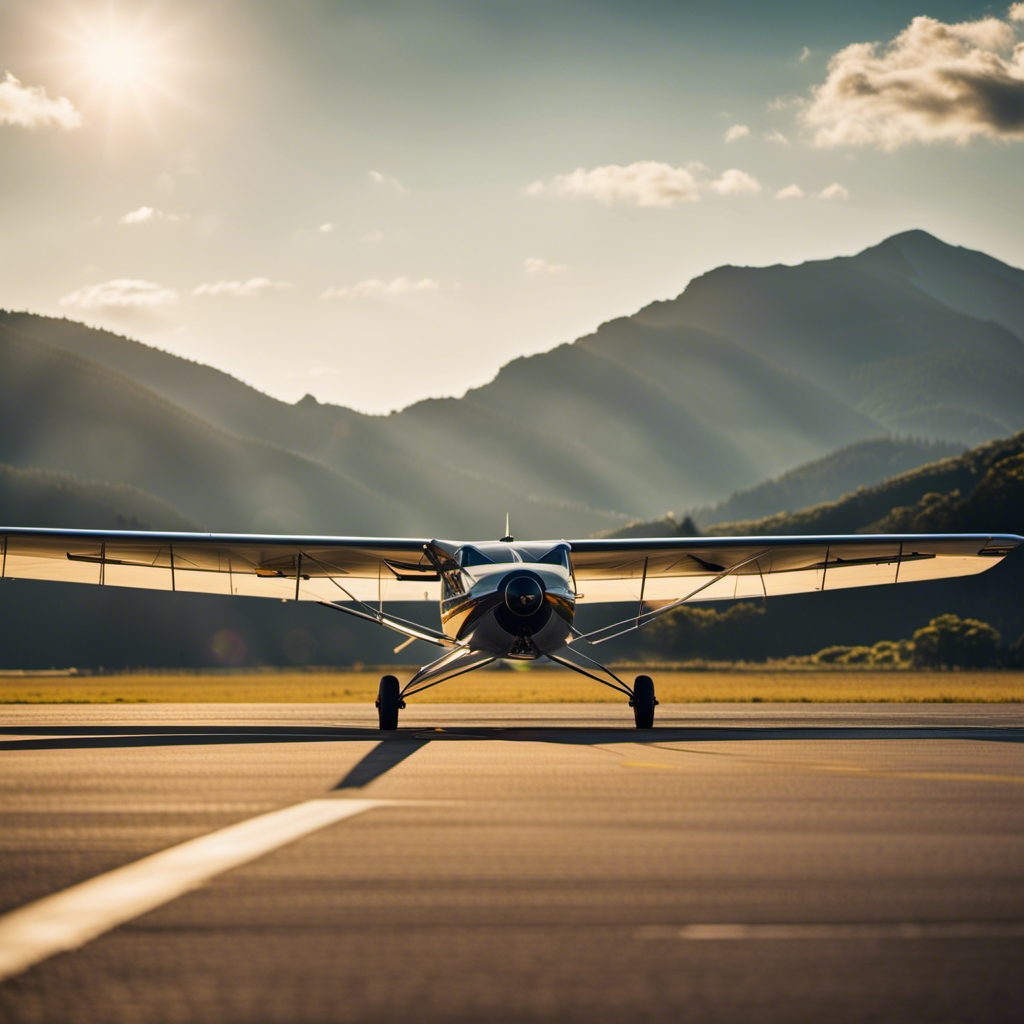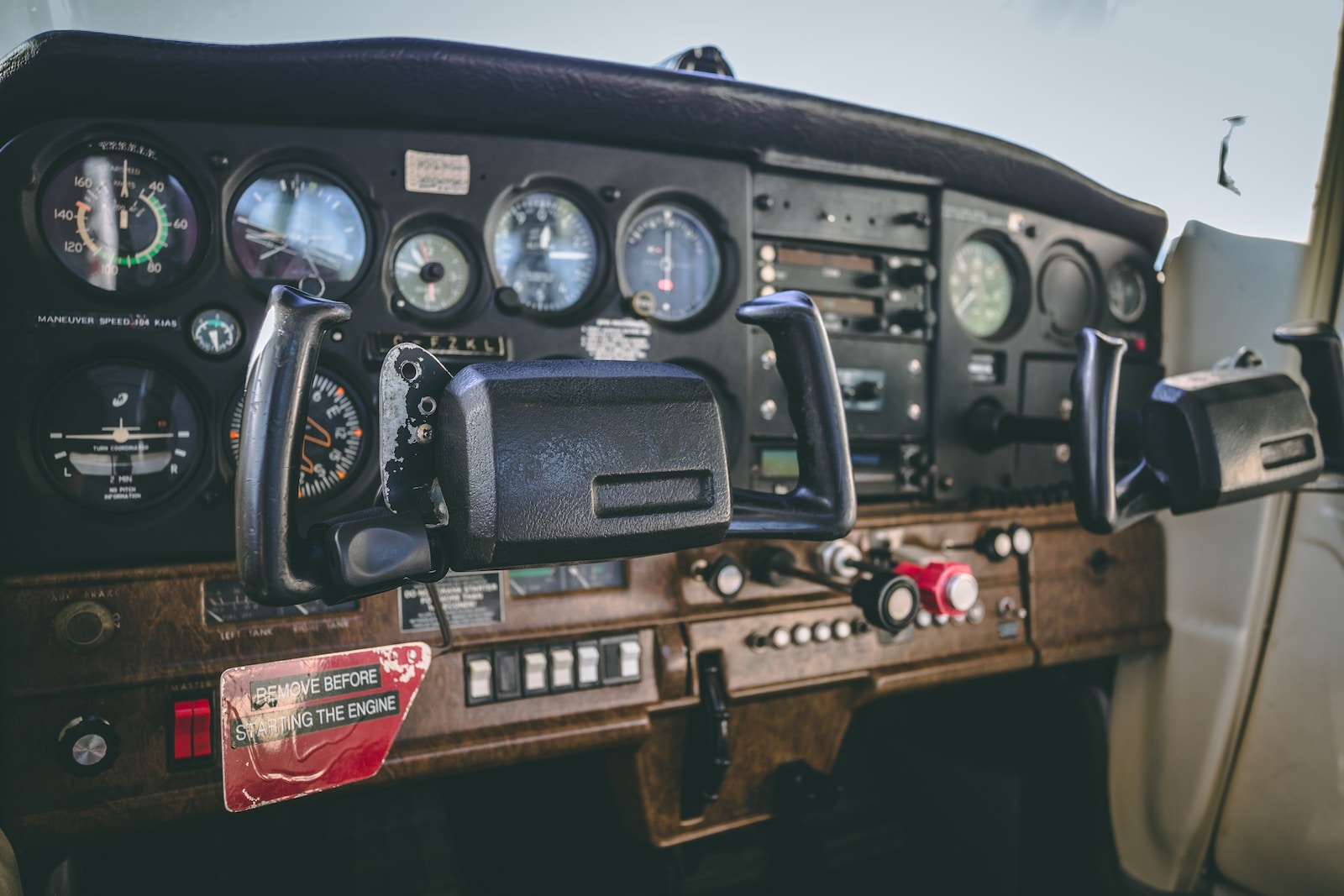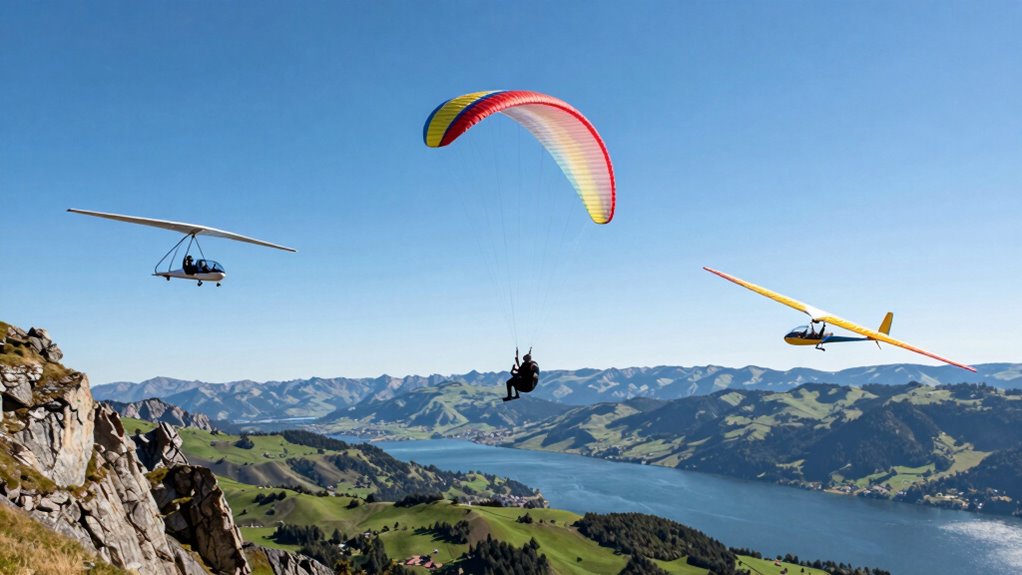

To choose between gliding, hang gliding, and paragliding, consider your comfort level, experience, and desire for control or ease. If you want serene, extended flights, gliding may suit you, but it requires specialized skills. Hang gliding offers more control with a rigid frame, demanding thorough training. Paragliding is beginner-friendly, lightweight, and easy to set up, perfect for less experienced thrill-seekers. Continue exploring to find out which activity matches your adventure style and safety needs.
Open a free Amazon Business account
Business pricing, bulk buying and tax-exempt orders.
As an affiliate, we earn on qualifying purchases.
Key Takeaways
- Assess your experience level and comfort with aircraft controls and safety procedures.
- Consider the portability and setup ease of the equipment suited to beginners or frequent flyers.
- Evaluate weather conditions and location requirements for each activity’s safety and feasibility.
- Match your preferred flying style—serene gliding, rigid frame hang gliding, or lightweight paragliding.
- Ensure proper training and certification to safely participate in your chosen aerial activity.
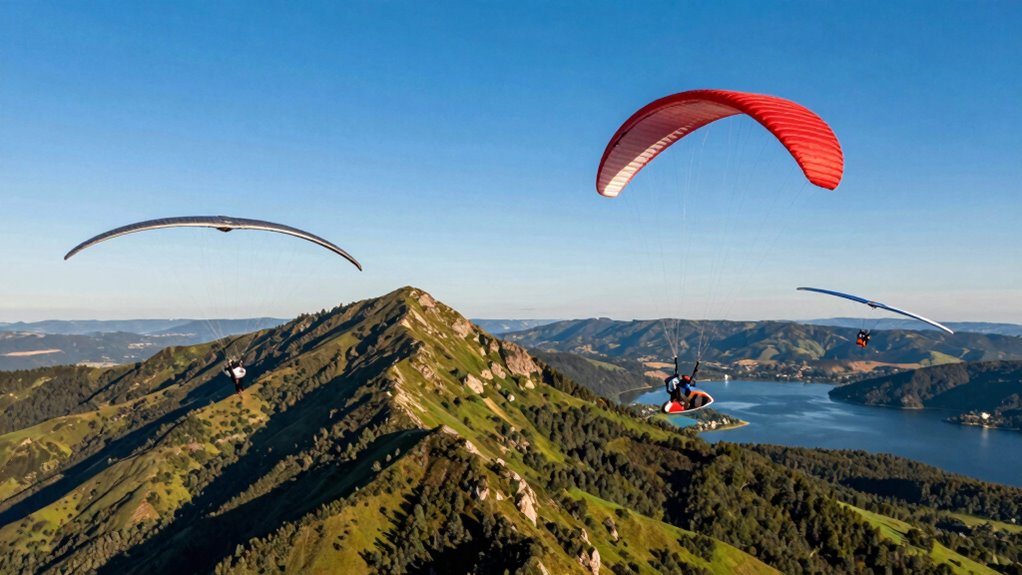
If you’re interested in experiencing the thrill of flight, choosing between gliding, hang gliding, and paragliding can seem overwhelming, but understanding their differences helps you make an informed decision. Each activity offers unique experiences, but your choices should prioritize aerial safety and the equipment comparison to match your skill level and comfort. Gliding, or soaring in a glider, involves aircraft that rely on thermal currents and wind patterns, often from a fixed-wing craft to enjoy long, peaceful flights. It’s ideal if you’re seeking a serene, extended experience and are comfortable with aircraft controls that require a pilot’s certification. Hang gliding features a flexible frame with a wing-shaped structure, where you’re suspended beneath the wing in a harness. This sport demands more physical control and offers a sense of direct connection with your environment, but it also involves rigorous safety measures, such as proper harnesses and helmet use. Paragliding involves a lightweight, fabric wing that you launch by running off a slope or from a takeoff point, with the pilot controlling direction and speed through brake handles and weight shifting. Its equipment comparison shows that paragliding gear is generally more portable and easier to set up, making it accessible for beginners. Additionally, understanding the equipment comparison can help you choose gear that best suits your needs and experience level. When choosing, consider how each activity aligns with your comfort level regarding aerial safety. Gliding often involves complex weather considerations and the need for experienced pilots or instructors, especially for solo flights, to ensure safety. Hang gliding, with its more exposed pilot position, demands thorough training to handle the physical aspects and emergency procedures. Paragliding, however, is often recommended for beginners due to its forgiving equipment and straightforward launch techniques, provided you receive proper instruction. The weather conditions play a crucial role in the safety and success of each activity, emphasizing the importance of proper training and preparation. It’s also beneficial to familiarize yourself with the weather patterns typical in your chosen flying location to better anticipate safe flying windows. Moreover, understanding the equipment maintenance required for each activity can help you ensure safety and longevity of your gear. All three activities require a solid understanding of weather conditions, proper gear, and adherence to safety protocols. Before jumping into any of them, taking lessons from certified instructors ensures you’re aware of the safety procedures necessary to minimize risks. To further enhance safety, many organizations emphasize the importance of training and certification, which can significantly reduce the risk of accidents. Ultimately, your choice depends on your adventurous spirit, physical comfort, and how much you value ease of access versus technical control. By weighing these factors alongside aerial safety considerations and equipment comparison, you can confidently select the flight experience that best suits your desires and safety standards.
As an affiliate, we earn on qualifying purchases.
Frequently Asked Questions
What Are the Initial Costs for Each Activity?
The initial costs for gliding, hang gliding, and paragliding vary, but a clear cost comparison helps you decide. Gliding often requires higher equipment essentials, including a glider and tow system, costing several thousand dollars. Hang gliding needs an initial investment in a sturdy hang glider, usually between $3,000 and $7,000. Paragliding is more affordable initially, with gear costing around $2,500 to $5,000. Your choice depends on your budget and commitment.
Which Activity Is Safest for Beginners?
Paragliding is generally the safest activity for beginners because it offers more control and stability, especially with proper safety training. It emphasizes emergency procedures, which help you respond confidently to unexpected situations. Hang gliding and gliding involve higher speeds and more complex equipment, making them riskier for newcomers. Always guarantee thorough safety training and understanding of emergency procedures before trying any of these activities to maximize safety.
How Do Weather Conditions Affect Each Sport Differently?
Weather conditions profoundly impact each sport differently. In gliding, calm, stable air enhances equipment performance and safety, while turbulence can be dangerous. Hang gliding thrives in moderate winds, but strong gusts reduce control and increase risks. Paragliding is highly weather-dependent; light winds and clear skies improve equipment performance, but sudden weather changes can cause accidents. Always check forecasts and understand how weather impacts your chosen sport before taking flight.
Are There Age Restrictions for Gliding, Hang Gliding, or Paragliding?
Think of flying as a journey through a vast, open sky. Age restrictions vary: many programs accept teens with parental consent, while some require participants to be over 16 or 18. Certification requirements guarantee safety and skill, regardless of age. If you’re curious about your eligibility, check specific regulations for each sport; your passion for flight can often be matched with the right certification and age guidelines, opening the door to your adventure.
What Equipment Is Required for Each Activity?
For each activity, you need specific equipment. Gliding requires a glider, helmet, and harness, while hang gliding demands a sturdy hang glider, helmet, and protective gear. Paragliding involves a parachute-like wing, harness, helmet, and reserve parachute. Always perform equipment maintenance regularly and prioritize safety gear selection to guarantee your safety. Properly maintained gear and the right safety equipment make your experience safer and more enjoyable in all three activities.
Conclusion
No matter which adventure you pick—gliding, hang gliding, or paragliding—you’re stepping into a world where the sky becomes your playground. Imagine holding a compass, knowing each choice offers a unique path—like a bird charting its flight. I once watched a novice take off, trembling but enthusiastic, and soar like an eagle. That’s the magic: choosing your flight, embracing the thrill, and discovering that the sky isn’t the limit—it’s just the beginning.
Back to school Picks
back to school
As an affiliate, we earn on qualifying purchases.