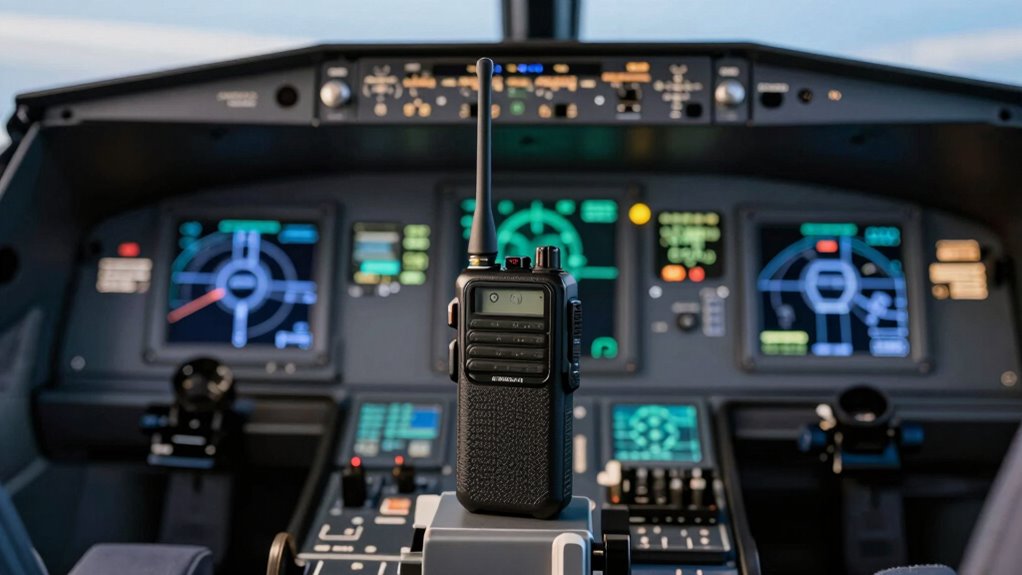

A portable aviation radio is essential even in modern cockpits because it offers a reliable backup during system failures or emergencies. It guarantees you can stay connected with air traffic control, rescue teams, or other aircraft, especially in remote or challenging environments. Its durability, ease of use, and independent power source make it a critical safety tool. If you want to understand how it enhances your safety and mission success, keep exploring its advantages.

Get travel and outdoor gear delivered free with Prime
- Fast, free delivery on millions of items
- Prime Video, Amazon Music and more included
- Member-only deals all year
Key Takeaways
- Acts as a reliable backup communication tool during cockpit system failures or electrical issues.
- Ensures continuous contact with air traffic control, rescue services, and other aircraft in remote areas.
- Operates independently with its own power source, maintaining functionality when onboard systems fail.
- Offers versatile, easy-to-use communication options with rugged design for challenging environments.
- Enhances overall safety by providing critical emergency communication capabilities beyond modern cockpit systems.

A portable aviation radio is an indispensable tool for pilots and aviation enthusiasts alike, providing reliable communication capabilities in a compact, lightweight design. Even in modern cockpits filled with advanced digital systems, having a portable radio on hand can be a game-changer, especially during emergencies. While cockpit radios are powerful and integrated, they aren’t always accessible in every situation. That’s where a portable aviation radio shines, offering a backup communication method that can be relied on when the unexpected happens.
One of the main reasons a portable radio matters is its role in emergency communication. In case of cockpit system failure, electrical issues, or if you find yourself outside the aircraft, this device becomes your lifeline. It allows you to connect with air traffic control, rescue services, or other aircraft, guaranteeing you can relay your position, intentions, or request assistance without delay. During an emergency, every second counts, and having a dedicated, easily accessible radio can make the difference between a safe landing and a dangerous situation. Its portability means you can quickly move to a vantage point or reach an area with better signal reception, which can be essential in remote or mountainous terrains. Additionally, a portable radio’s signal reliability ensures consistent communication even in challenging environments, further emphasizing its importance.
Signal reliability is another key factor that makes a portable aviation radio indispensable. Modern cockpit radios often depend on complex systems and power sources that might fail or be compromised. A portable radio operates independently, often with its own power source, so you’re less vulnerable to system malfunctions. Its design prioritizes signal clarity and strength, ensuring you maintain contact even in challenging environments. This consistency in signal reliability provides peace of mind, knowing that you can communicate regardless of the situation or location. Whether you’re flying over dense forests or open waters, a portable radio helps bridge communication gaps that could otherwise jeopardize safety. Moreover, advancements in radio technology have improved the durability and performance of these devices, making them even more reliable in critical moments. These technological improvements include better noise reduction and digital features that enhance clarity and ease of use. Additionally, modern radios are often designed with rugged construction to withstand the demanding conditions of aviation environments, further ensuring ongoing functionality when it’s needed most.
Furthermore, a portable aviation radio is versatile and easy to use, making it a practical addition to your safety gear. It’s built to withstand the rigors of aviation environments—resistant to shock, vibration, and sometimes even water. Its intuitive controls enable quick operation, so you’re not fumbling in stressful moments. As technology advances, these radios also incorporate features like multiple frequency channels, noise reduction, and digital display readouts, all designed to enhance your communication experience. Its durability ensures that it remains functional even in harsh conditions, making it a reliable tool during long flights or remote expeditions.
In essence, even with the sophisticated technology onboard, a portable aviation radio remains an essential safety tool. It guarantees that emergency communication is always within reach and that signal reliability isn’t compromised when it matters most. Having this device onboard isn’t just a matter of convenience; it’s a critical backup that can help you navigate the unexpected with confidence.
As an affiliate, we earn on qualifying purchases.
Frequently Asked Questions
How Long Does a Portable Aviation Radio’s Battery Typically Last?
A portable aviation radio’s battery typically lasts between 8 to 12 hours, depending on usage and model. To maximize battery life, you should use effective power management features, like turning off the radio when not in use and lowering brightness levels. Regularly check the battery status before flights, and carry a backup power source if needed. Proper maintenance guarantees reliable communication during your flight, especially when in remote areas.
Are Portable Radios Certified for Official Air Traffic Communication?
Imagine a lifeline in your hand—portable radios aren’t certified for official air traffic communication, so they don’t meet regulatory compliance or certification standards necessary for official use. While they’re invaluable for backup or coordination, you can’t rely on them for official air traffic control communication. Always use certified, approved radios to guarantee safety, legality, and clear communication under strict certification standards.
Can Portable Radios Operate on Different Frequency Bands?
Yes, portable radios can operate on different frequency bands, but it depends on their design and specifications. You should check their frequency compatibility to guarantee they match the required communication channels. Keep in mind that signal range varies, so some radios might offer limited coverage. Choosing a portable radio with broad frequency compatibility and a strong signal range ensures reliable communication, especially during emergencies or in remote areas where cockpit radios might not reach.
What’s the Best Way to Secure a Portable Radio in the Cockpit?
Think of your portable radio like a lifeline—securely mounted, it’s your safety net. Use a sturdy radio mounting bracket designed for aviation, ensuring a secure attachment that withstands turbulence. Avoid loose cords or makeshift solutions. Regularly check the mounting to confirm it’s tight and in good condition. Proper radio mounting keeps your communication reliable and accessible, even in the most turbulent conditions, much like a safety harness in rough weather.
How Do Portable Radios Perform in Extreme Weather Conditions?
Portable radios generally perform well in extreme weather conditions if they have good weather resistance. They’re designed to withstand moisture, cold, and heat, maintaining signal reliability even in harsh environments. You should confirm your radio’s weatherproof features are rated appropriately, and keep antennas clear of snow or ice. Properly maintained, these radios stay dependable, providing critical communication when you need it most, regardless of challenging weather.
Conclusion
A portable aviation radio is like a lifeline that keeps you connected amidst the chaos of modern cockpits. It’s your reliable safety net, ready to catch you when traditional systems falter. Don’t underestimate its importance—think of it as your secret weapon, always within reach, ensuring you’re never truly alone in the skies. When every second counts, this compact device becomes your steadfast companion, turning potential chaos into confidence.
Fall Picks
fall essentials
As an affiliate, we earn on qualifying purchases.