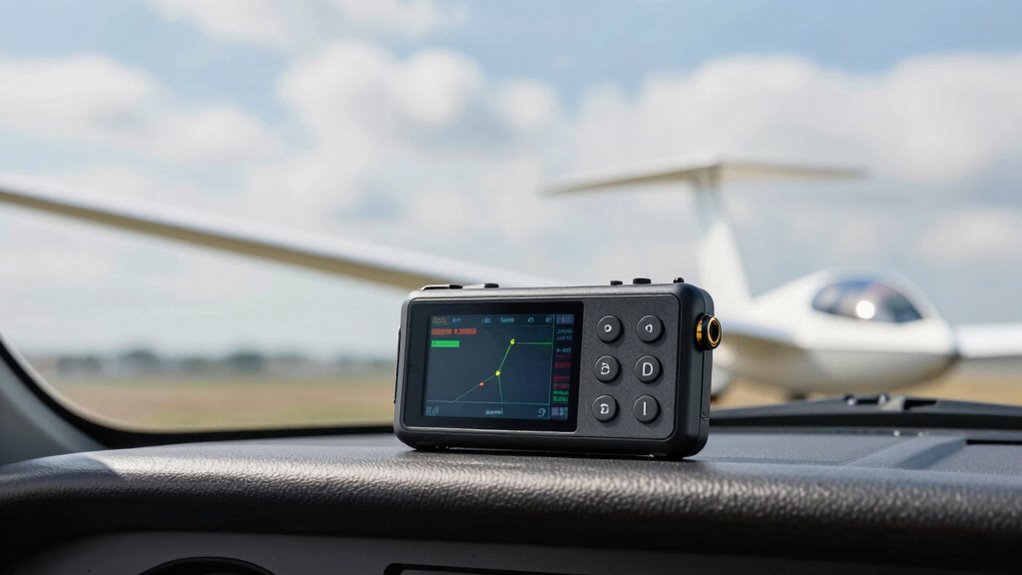

A portable ADS-B receiver helps you spot traffic and weather in real-time, improving safety and decision-making during your flight. It works best within line of sight and can show nearby aircraft and weather hazards, but it’s not foolproof—terrain or remote areas can limit coverage, especially for aircraft without ADS-B Out. It’s a helpful supplement, yet you still need good visual awareness. Want to learn more about optimizing its use? Keep exploring for valuable tips.

Get travel and outdoor gear delivered free with Prime
- Fast, free delivery on millions of items
- Prime Video, Amazon Music and more included
- Member-only deals all year
Key Takeaways
- Enhances safety by providing real-time traffic and weather data, but is limited to coverage areas with ground stations or line of sight.
- Cannot detect aircraft without ADS-B Out or provide comprehensive traffic info in remote regions.
- Serves as a supplementary tool, not a replacement for visual lookout and traditional situational awareness.
- Weather data accuracy depends on feed quality and may not reflect all hazardous conditions.
- Battery life and terrain can limit device use, requiring careful planning during flights.
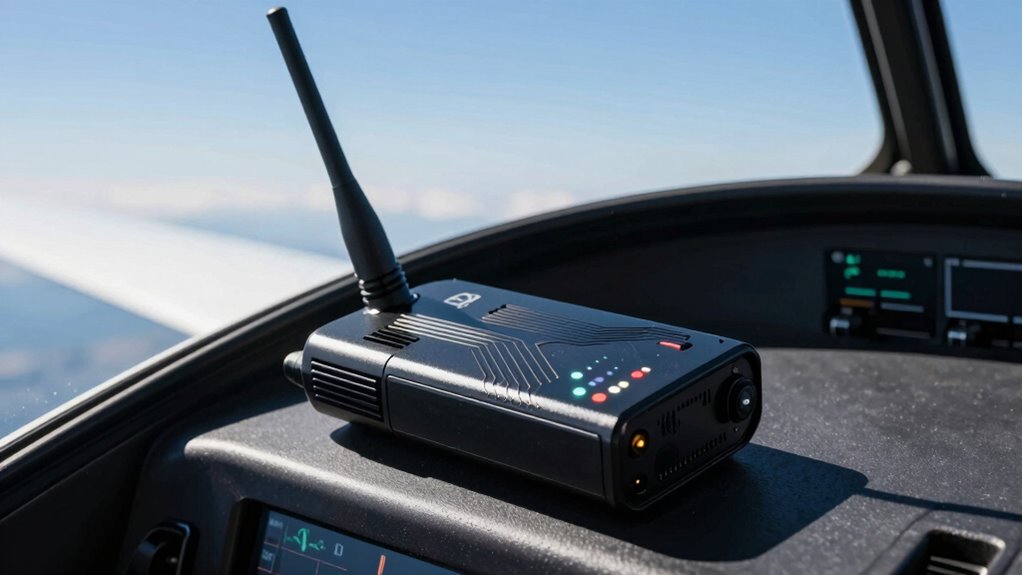
For glider pilots seeking to enhance safety and situational awareness, a portable ADS-B receiver offers a practical solution. This device can significantly improve your ability to see and be seen by other aircraft, especially in busy airspace. One of its key benefits is weather integration. Many portable ADS-B units can display real-time weather data, such as precipitation, wind shear, and storm activity. This information helps you make better decisions about when to fly and where to steer clear of hazardous conditions. With this feature, you’re less likely to encounter surprises that could compromise your safety. Additionally, it’s important to understand the signal range limitations, which can vary depending on terrain and altitude. While portable ADS-B receivers have a decent signal range—often covering several miles—you need to understand their limitations. They work best when you’re within line of sight of other aircraft equipped with ADS-B Out or ground stations. As a glider pilot, your altitude and terrain can influence how far the signal reaches. If you’re flying low or in mountainous terrain, the signal range might be reduced, meaning you could miss out on some traffic information. It’s important to remember that these devices are supplementary tools, not replacements for visual lookout or traditional airspace awareness techniques. Being aware of coverage limitations helps ensure you don’t over-rely on the technology in challenging environments.
However, a portable ADS-B receiver cannot do everything. It won’t provide comprehensive traffic data in remote areas where ground stations are sparse. In such cases, the device’s signal range becomes a limiting factor. It also won’t alert you to aircraft that aren’t equipped with ADS-B Out or lack transponders, so you still need to maintain visual separation and use good lookout practices. Weather data, while helpful, relies on the coverage and accuracy of the integrated weather feeds; they may not be as detailed or as timely as official meteorological reports. Additionally, battery life can restrict how long you can rely on your receiver during a flight, especially if you forget to recharge or carry spare batteries.
Products Worth Considering

GoPro HERO Compact Waterproof 4K Action Camera

DJI Osmo Action 4 Standard Combo Waterproof Action Camera

Bose QuietComfort True Wireless Earbuds with Active Noise Cancellation, Black
As an affiliate, we earn on qualifying purchases.
Frequently Asked Questions
Can a Portable ADS-B Receiver Detect All Aircraft Types?
A portable ADS-B receiver can detect most aircraft types transmitting ADS-B signals, but it might not catch all, especially older or non-ADS-B equipped aircraft. Aircraft detection can be affected by signal interference, obstructions, or distance, which may limit its effectiveness. While it provides valuable real-time data for glider pilots, you should remain cautious, as some aircraft may still go unnoticed due to these limitations.
How Does Weather Affect ADS-B Signal Reception?
Weather interference can considerably impact your ADS-B signal reception. Rain, snow, or thunderstorms cause signal degradation, making it harder to detect nearby aircraft. You might notice gaps or delays in received data during adverse weather, which can be critical for safety. Always stay alert, especially in bad weather, as these conditions can mask aircraft or reduce your system’s reliability, emphasizing the need for visual lookout and cautious flying.
Is Installation of a Portable ADS-B Receiver Complicated?
Installing a portable ADS-B receiver is generally straightforward. You follow simple installation procedures, like attaching the device to your glider or cockpit, and guarantee it’s powered correctly. Compatibility with your aircraft’s systems is essential, so check device compatibility beforehand. Most receivers come with clear instructions or app-guided setup, making the process quick. You don’t need advanced technical skills, just a bit of patience to confirm proper placement and connection.
What Is the Typical Battery Life of These Devices?
You’re probably wondering about battery life—well, it varies, but most portable ADS-B receivers offer around 6 to 8 hours of battery longevity. Power consumption plays a big role, as devices with higher consumption drain batteries faster. To get the most out of your device, keep it in power-saving mode or carry a portable charger. It’s all about balancing usage and ensuring your receiver stays powered through your flight.
Are Portable ADS-B Receivers Legal for All Flying Regions?
Portable ADS-B receivers are generally legal in many regions, but you need to check regional restrictions and guarantee regulatory compliance before flying. Laws vary by country and sometimes by specific airspace, so it’s your responsibility to verify whether these devices are permitted where you plan to operate. Always stay updated on local regulations to avoid violations, and remember that compliance is key to safe, legal flying with your portable ADS-B receiver.
Conclusion
A portable ADS-B receiver is like a trusty compass on your flight, guiding you with real-time traffic awareness and safety alerts. It can’t replace experience or good judgment, but it can help you navigate the skies with confidence. Think of it as your wingman, always there to support and inform. With this tool, your gliding journey becomes safer and more enjoyable—turning the vast sky into a well-lit highway, rather than an unknown wilderness.