TL;DR
Tuscany’s sky has unexpectedly turned milky, prompting widespread curiosity. Authorities and scientists are investigating the cause, which remains unconfirmed. The phenomenon has sparked significant public interest.
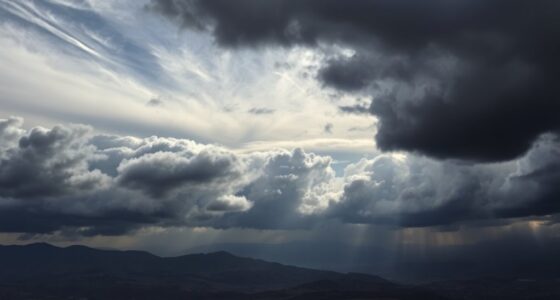
The sky over Tuscany has unexpectedly turned a milky, opaque color, baffling residents, tourists, and scientists alike. Authorities confirmed the phenomenon on April 25, 2024, and are currently investigating the cause, which remains unconfirmed. This unusual sky coloration has attracted widespread attention due to its suddenness and the lack of an immediate explanation, making it a notable environmental and atmospheric event.
Multiple reports from residents across Tuscany indicate that the sky changed from its usual clear or partly cloudy state to a dense, milky hue starting late April 2024. Local weather agencies and environmental scientists have initiated investigations but have not yet identified a definitive cause. Initial hypotheses include atmospheric pollution, natural aerosol accumulation, or unusual weather patterns, but no conclusive evidence supports any of these theories at this stage.
Satellite imagery and air quality measurements are being analyzed to determine if particulate matter, chemical pollutants, or other atmospheric anomalies are responsible. Some experts suggest that the phenomenon could be linked to recent weather conditions, such as high humidity or temperature inversions, which can cause aerosol particles to scatter light differently. However, the exact mechanism remains under review, and officials caution that the cause is still uncertain.
The event has prompted increased public interest, with many searching for explanations online and social media posts going viral. Authorities have issued advisories urging residents and visitors to stay informed through official channels and to avoid unnecessary outdoor activities if air quality deteriorates further. No immediate health alerts have been issued, but ongoing monitoring continues.
Implications for Environmental and Atmospheric Monitoring
The sudden change in sky coloration raises questions about local atmospheric health and environmental conditions. If pollution or chemical pollutants are involved, it could indicate larger environmental issues that require attention. The phenomenon also highlights the importance of atmospheric monitoring and rapid response to unusual environmental events, which can have implications for public health and safety.
Understanding the cause is essential for assessing potential risks, especially if the event is linked to pollution or industrial activity. The event also underscores the need for improved air quality management and the importance of scientific research in identifying and addressing environmental anomalies before they become widespread or hazardous.
As an affiliate, we earn on qualifying purchases.
Recent Environmental Changes and Historical Sky Phenomena in Tuscany
Tuscany is known for its scenic landscapes and generally stable weather patterns. However, similar atmospheric phenomena have occurred in the past, often linked to natural or human-made factors such as pollution episodes, dust storms, or weather anomalies. Historically, episodes of unusual sky coloration, including haze or fog, have been documented but rarely with such intensity or suddenness.
Recent months have seen increased concern over air quality in parts of Italy, driven by industrial activity, traffic emissions, and climate-related weather patterns. The current event is notable because it appears to be a localized, short-term phenomenon without an immediately identifiable cause, which has prompted scientific curiosity and public concern alike. Authorities have been cautious, emphasizing that investigations are ongoing and that no definitive link to pollution or other hazards has been established.
Environmental experts continue to analyze data from weather stations, satellite images, and air quality sensors to determine if recent environmental changes could be responsible for the milky sky. The phenomenon’s sudden appearance and widespread reports make it a significant case for ongoing atmospheric research.
Unconfirmed Causes and Ongoing Investigations
It is not yet clear what exactly caused the milky sky in Tuscany. Theories range from pollution and aerosols to weather-related phenomena, but no conclusive evidence has been announced. Investigations are still in progress, and scientists are awaiting detailed analysis of atmospheric data, which may take days or weeks.
Some local residents and online commentators have speculated about industrial emissions or natural dust, but these claims remain unverified at this stage. Officials emphasize that the phenomenon could be due to a combination of factors, and further research is needed to confirm the root cause.
Further Scientific Analysis and Public Updates Expected
Authorities and scientists will continue to analyze atmospheric data, satellite imagery, and pollution levels over the coming days. Updates are expected as more information becomes available, and officials will determine whether the phenomenon poses any health or environmental risks.
Public advisories may be issued if air quality deteriorates further, and researchers hope to publish preliminary findings within the next week. The event also prompts ongoing monitoring of atmospheric conditions in Tuscany and surrounding regions.
Key Questions
Is the milky sky dangerous for residents or tourists?
Currently, there are no reports of health risks associated with the phenomenon. Authorities are monitoring air quality and will issue alerts if necessary.
Could this be caused by pollution or industrial emissions?
This is one of the leading hypotheses, but no definitive evidence has been confirmed. Investigations are ongoing to determine if pollution is involved.
How long will the milky appearance last?
The duration is uncertain. Scientists are analyzing atmospheric data to predict whether the phenomenon is temporary or could persist for days.
Has a similar event occurred in Tuscany before?
While atmospheric anomalies like haze or fog have occurred historically, a sudden, widespread milky sky like this is rare and unusual for the region.
What should residents do while investigations continue?
Residents are advised to stay informed through official updates and avoid outdoor activities if air quality worsens. No immediate health risk has been confirmed at this stage.
Source: rss