
TL;DR

Get travel and outdoor gear delivered free with Prime
- Fast, free delivery on millions of items
- Prime Video, Amazon Music and more included
- Member-only deals all year
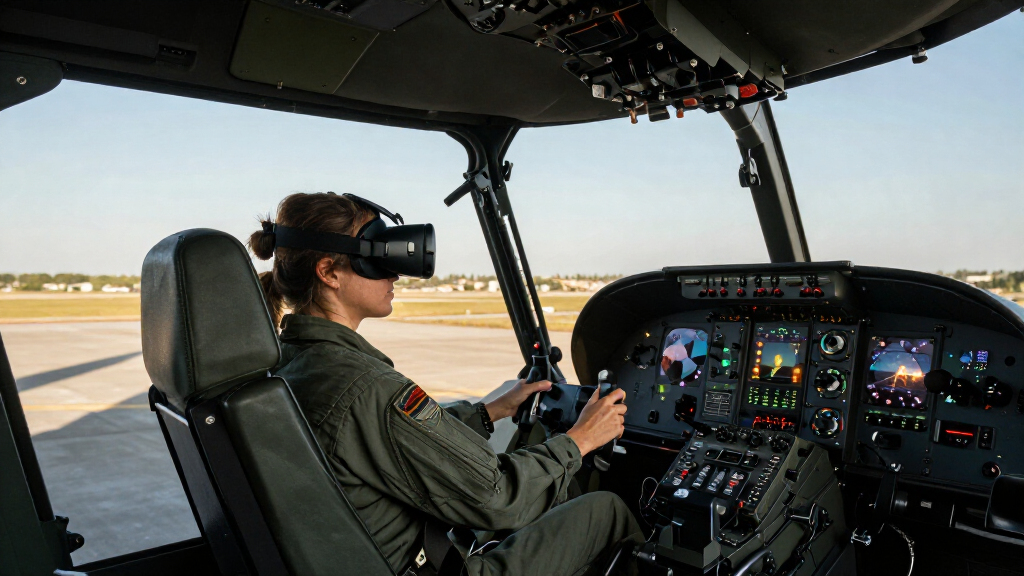
Army pilots are trying virtual reality to help them stay more alert during flight, according to the headline-level report. Details about the system, testing conditions and any measured effect were not available, so the effort’s results and scope remain unclear.
Army pilots are trying virtual reality as a tool to help them stay more alert in flight, according to a report whose available details do not describe the system or the testing. The development points to an effort to examine whether immersive technology can support attention in an aviation setting, but no results or performance data are available in the report provided.
The reported development is that Army pilots are testing virtual reality with the stated aim of maintaining alertness during flight. The headline does not identify which Army unit is involved, how many pilots are participating, or whether the technology is used in an aircraft, in ground-based training, or in another setting linked to flight operations.
There is also no description of the VR equipment, what pilots do while using it, or how alertness is measured. The available information does not say whether the effort is a formal study, an operational trial or an early-stage evaluation. It likewise provides no findings on whether the approach has improved alertness, reduced fatigue, or changed flight performance.
That distinction matters: the reported aim is not evidence that the technology works. Without details on the test design, duration, comparison group or outcome measures, readers cannot assess the strength of any conclusion. The report establishes that pilots are trying the approach, but not that it has been adopted as standard practice or shown to make flights safer.
Army Pilots Try Virtual Reality to Stay More Alert in Flight
Army pilots are reportedly testing virtual reality with the aim of supporting alertness. The available report offers no details about the system, the testing conditions or measured results.
The development
A report says Army pilots are trying virtual reality as a way to help them stay alert during flight. The headline identifies the intended purpose, but the available information does not explain how the effort works.
Support alertness
Maintaining attention matters in aviation. The report does not say whether the effort targets fatigue, situational awareness or another aspect of alertness.
Where VR fits is unclear
Testing could relate to training, preparation, simulation or flight operations. No setting is specified, and these uses carry different benefits and safety considerations.
No outcomes provided
There are no reported findings, performance measures or comparisons with existing practices. Trying the approach is not evidence that it improves alertness.
What the report does not establish
The available text provides only a headline-level account. Key details needed to understand the trial’s scope and significance are absent.
Who: No Army unit, program, named team or number of participating pilots is identified.
What: The equipment, VR experience and activities performed by pilots are not described.
Where: It is not clear whether testing takes place in an aircraft, simulator or on the ground.
How well: No measures, baseline, comparison group, duration or results are reported.
What next: There is no timeline for findings, expansion or a decision about broader use.
Safety: Possible distraction, workload, equipment limits and safety review are not addressed.
What would make the claim assessable?
Before judging whether VR could contribute to flight safety, readers need basic information about the trial and how its results are evaluated.
Describe the trial
Identify the system, participants, setting and purpose.
Explain the measures
Define how alertness and flight-related outcomes are assessed.
Report comparisons
Show results against a baseline or another approach.
Clarify safety limits
Explain oversight, operational constraints and any risks.
Key questions
What are Army pilots testing?
Virtual reality intended to help pilots stay alert in flight. The report does not describe the system or how it is used.
Has VR been shown to improve alertness?
No results are provided. The report does not establish improved alertness or flight performance.
Are pilots wearing VR headsets while flying?
That is not specified. Testing could occur in several settings, and the available account does not identify one.
When will more information be available?
No timeline for further details, findings or a wider-use decision is given.
Testing Alertness Tools for Flight
Alertness is relevant to aviation because pilots must sustain attention while managing demanding tasks. A tool intended to support that attention could be of interest to military aviation, but its value depends on evidence about how it works under realistic conditions and whether it helps without adding distraction or workload.
Virtual reality may offer a way to simulate or support training, but the report does not explain whether that is the purpose here. If the trial concerns preparation before a mission, it would differ from technology used during flight. That distinction affects both the potential benefit and the safety questions, including whether a headset or immersive display could interfere with a pilot’s awareness of the aircraft and surroundings.
For now, the news is the existence of an effort to test the idea, not proof of a new fatigue countermeasure. Pilots, military planners and the public would need more information about evaluation criteria and results before judging whether the approach can contribute to flight safety.
Products Worth Considering

DJI Osmo Pocket 4 Gimbal Camera Pro Kit, 18-Piece Bundle

Amazon Kindle Paperwhite (2024), 16 GB, 7-inch Display, Jade

DJI Osmo Pocket 3 Filter Bundle – Vlogging Camera with 1 CMOS Sensor and 4K/120fps
As an affiliate, we earn on qualifying purchases.
What the Report Establishes
The report’s available text consists only of the headline, which says Army pilots are trying VR to stay more alert in flight. It supplies no publication date, named program, agency statement, research paper or direct account from a pilot. As a result, the scope and status of the trial cannot be independently described from the material provided.
The headline frames alertness as the intended purpose, but it does not establish whether the pilots are using VR during flight or as part of preparation, training or evaluation on the ground. Those are materially different uses. Nor does it say whether the trial addresses fatigue, attention, situational awareness or another factor related to alertness.
No timeline or earlier milestone is included. There is no confirmed schedule for expanding the test, publishing findings or deciding whether to use the technology more broadly. The account therefore supports only a narrow description: Army pilots are trying a VR-related approach intended to help them remain alert while flying.
Key Trial Details Are Missing
The central unanswered question is whether the trial produces a measurable benefit. No results, performance measures or comparison with existing practices are reported. It is also unknown how many pilots are involved, which unit is conducting the work, how long testing has been underway, and whether the effort has formal research oversight.
The testing environment is not specified. It is unclear whether VR is used in an aircraft, in a simulator or in another setting, and the report does not explain what pilots experience through the system. There is no information about possible side effects, operational constraints, equipment requirements or whether the technology could distract users.
No official or pilot is quoted in the available material, and there is no stated Army position on whether the work could lead to wider use. These gaps mean the report should not be read as confirmation that VR has improved alertness or flight safety.
Evidence Needed Before Wider Use
The next meaningful update would be details from the Army or the team conducting the trial: the system being tested, the setting, the number of participants and the measures used to evaluate alertness. Any reported findings would also need to explain how the results were assessed and whether pilots were compared with a baseline or another approach.
If the effort continues, information about safety review and operational limits would help clarify whether VR is intended for training, preparation or use closer to flight operations. No publication date, decision point or expansion plan is given, so the timing of further information is unknown. Until more details emerge, the confirmed development remains a test of an idea rather than evidence of an established aviation tool.
Source: rss
Key Questions
What are Army pilots testing?
They are trying virtual reality as a tool intended to help them stay alert in flight. The available report does not describe the system or how it is used.
Has VR been shown to improve pilot alertness?
No results are provided. The report describes a trial or test, but does not establish that VR improved alertness or flight performance.
Are pilots wearing VR headsets while flying?
That is not specified. The technology could be used in different settings, but the available information does not say whether testing takes place in an aircraft, a simulator or on the ground.
When will the Army release more information?
No timeline is given for further details, findings or a decision about wider use.
Source: news.google.com