
When communicating with air traffic control as a glider pilot, use clear, concise phraseology such as stating, “Glider X, entering the pattern,” and acknowledge instructions with “Wilco.” Always listen carefully before transmitting, speak steadily, and repeat messages if unsure. Proper etiquette includes using standard phrases like “say again” or “stand by,” which help maintain safety and clarity in shared airspace. Continuing will help you master essential communication procedures for safe glider operations.
Key Takeaways
- Use standard phraseology like “Wilco” for acknowledgment and “say again” for clarification.
- Clearly identify your aircraft before transmitting, e.g., “Glider X, entering the pattern.”
- Maintain concise, steady communication to convey intentions, position, and traffic updates effectively.
- Respond promptly to ATC traffic advisories and instructions to ensure situational awareness.
- Adhere to proper radio etiquette and consistent use of the glider frequency for safety and clarity.
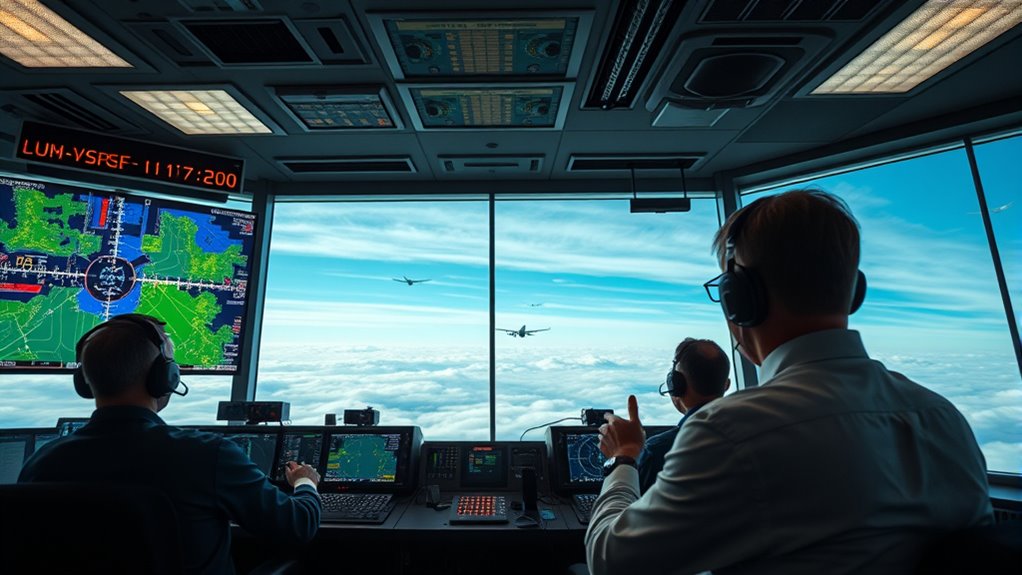
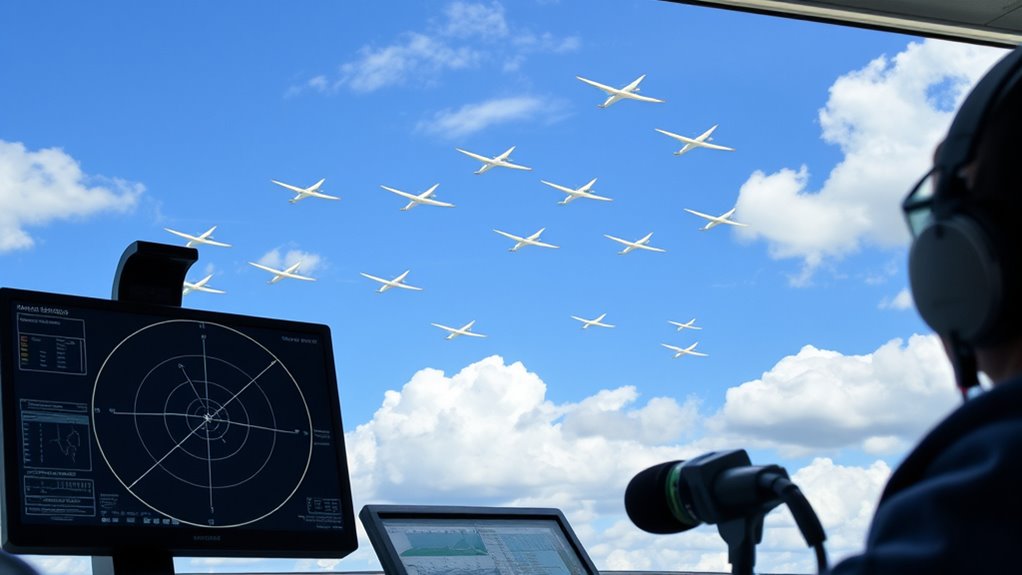
Have you ever wondered how airplanes stay safely separated in busy skies? It’s a combination of precise coordination, clear communication, and strict procedures. When it comes to gliders, the process is just as important, especially since they often operate at lower altitudes and can blend into the airspace alongside powered aircraft. To guarantee safety, gliders use specific communication procedures and maintain a designated glider frequency, which is essential for effective coordination with air traffic control (ATC) and other pilots. This dedicated frequency allows gliders to stay in touch with ATC and receive updates on traffic, weather, and any airspace restrictions that might affect their flight. Knowing and using the correct glider frequency is necessary; it acts as a direct line for pilots to communicate their position, intentions, and any emergencies, reducing the risk of collision or miscommunication.
When you’re operating as a glider pilot, understanding the proper communication procedures on the glider frequency is key. You’ll start by listening carefully to the traffic before attempting to transmit, making sure your message is clear and concise. When you need to communicate, you’ll typically begin with your aircraft identification, followed by your message. For example, you might say, “Glider X, entering the pattern,” or “Glider X, climbing to 3,500 feet.” This standardized phraseology helps ATC and other pilots quickly understand your intentions. It’s important to speak clearly and at a steady pace, avoiding unnecessary chatter that could clutter the frequency. If you’re unsure whether your message was received, it’s wise to repeat it, especially when making position reports or requesting clearance.
Additionally, maintaining a proper radio etiquette and familiarity with standard phraseology ensures clear and professional communication. In busy airspace, you’ll also need to be aware of communication procedures for traffic advisories and conflict avoidance. ATC will provide you with traffic updates and instructions, and it’s your responsibility to respond appropriately. You should acknowledge all instructions, even if just with a simple “Wilco” (will comply), to confirm that you received and understood. Using standard phraseology like “roger” for acknowledgment and “say again” for clarification helps keep communications clear. Remember, maintaining situational awareness through continuous listening and accurate reporting on the glider frequency ensures everyone stays safe. When pilots adhere to these communication procedures, they foster a safer and more organized environment in the busy skies shared with powered aircraft. Your careful use of the glider frequency and adherence to proper phraseology are essential in creating a seamless flow of information, ultimately keeping all airspace users safe.
Top picks for "traffic control communication"
Open Amazon search results for this keyword.
As an affiliate, we earn on qualifying purchases.
Frequently Asked Questions
How Do Glider Pilots Request Priority in Busy Airspace?
You request priority in busy airspace management by clearly communicating your need for priority requests to ATC. Use concise, specific phraseology like “Request priority due to [reason],” and provide your position, altitude, and intentions. Be polite and ready to follow instructions. Your proactive and clear communication helps ATC understand your situation, enabling them to allocate priority effectively and guarantee safe, efficient handling of your glider amid busy airspace.
Are There Specific Phraseologies for Emergency Situations Involving Gliders?
In emergency situations involving gliders, you should use clear, concise phraseology to communicate urgency. State “Emergency, emergency” immediately, then specify the nature of the problem, such as “loss of control” or “engine failure.” Follow with your intentions, like “requesting priority” or “immediate landing.” Stick to standard emergency protocols and emphasize communication clarity, ensuring ATC understands the severity and can assist you effectively.
How Do Controllers Differentiate Between Gliders and Powered Aircraft?
You can differentiate gliders from powered aircraft using visual identifiers like their wingspan and lack of engine noise. Controllers also rely on transponder codes, which are often distinct for gliders—typically 7000 in many regions—compared to powered aircraft. These visual cues and transponder codes help you quickly identify gliders during communication, ensuring safe separation and appropriate instructions. Always stay alert for these identifiers to maintain safety in the airspace.
What Are Standard Procedures for Coordination Between Glider and Powered Flight?
Imagine coordinating glider launch procedures like a relay race; clear communication guarantees smooth handoffs. You should establish visual and radio contact, share intentions, and monitor each other’s positions. Use precise phraseology for cross-country navigation techniques, such as reporting altitude changes or course adjustments. Maintaining situational awareness and confirming mutual understanding prevents conflicts, just like teammates working seamlessly. This teamwork ensures safe, efficient operations between gliders and powered aircraft.
How Is Altitude Separation Maintained With Slow-Moving Gliders?
You maintain altitude separation with slow-moving gliders through effective altitude management and speed coordination. You guarantee the glider stays at a designated altitude, allowing faster aircraft to pass safely underneath or above. Using clear instructions, you adjust the glider’s speed to match traffic flow, preventing conflicts. Consistent communication and precise spacing help you keep safe separation, ensuring smooth traffic flow and avoiding potential conflicts with other aircraft.
Conclusion
Mastering clear phraseology in glider communication isn’t just about following rules; it’s about building trust and safety in the sky. When you speak with precision, you create a symphony of understanding that keeps everyone secure. Remember, your words are the wings that carry safety and efficiency—without them, the sky becomes a vast, uncertain sea. So, embrace clarity, for in your communication lies the power to elevate safety and confidence for all.