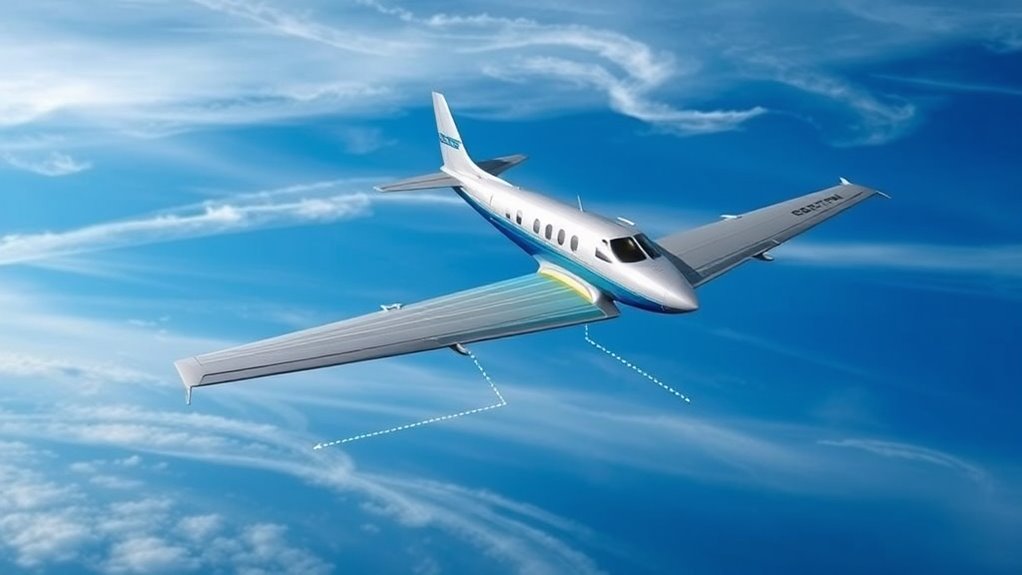

Understanding basic aerodynamics helps you control your aircraft and fly safely. You’ll learn how wings generate lift by manipulating airflow through shape, angle, and speed. Recognize how pressure differences above and below the wings create that upward force. Adjusting your pitch, power, and attitude affects airflow and lift. External factors like wind and turbulence also influence flight. Mastering these principles boosts your confidence. Keep exploring, and you’ll develop a solid foundation for safe, efficient flying.
Key Takeaways
- Lift is generated by wing shape and airflow manipulation, counteracting gravity for sustained flight.
- Airflow splits at the wing’s leading edge, with faster flow over the curved top creating pressure differences.
- Increasing the angle of attack increases lift until airflow separation causes a stall.
- External factors like wind and turbulence can disrupt airflow, affecting lift and aircraft stability.
- Mastering control of speed, pitch, and attitude helps pilots maintain smooth airflow and safe flight.
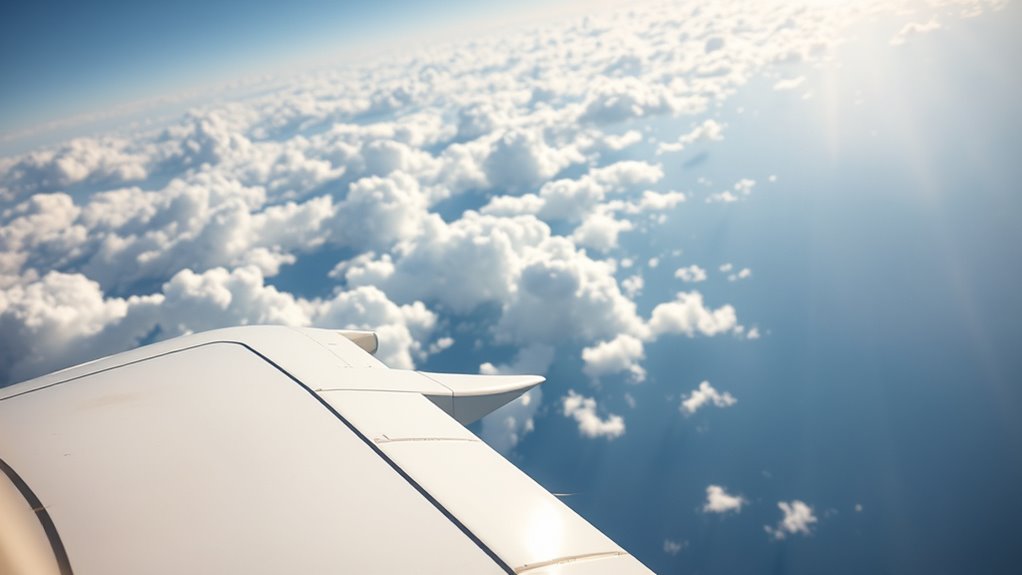
Have you ever wondered how airplanes stay in the air? The secret lies in understanding wing lift and airflow patterns. When you think about it, lift is the force that counteracts gravity and keeps the plane soaring. It all begins with the shape of the wings, which are designed to manipulate airflow around them. As the plane accelerates down the runway, air begins to flow over and under the wings. The wing’s shape, especially the curved upper surface, causes the air above to move faster than the air below. This difference in airflow speeds creates a pressure difference, with lower pressure on top and higher pressure underneath, resulting in lift. This is explained by Bernoulli’s principle, but it’s just one part of the story. The way air moves around the wings—its airflow patterns—plays a vital role in generating and maintaining lift.
When airflow hits the leading edge of the wing, it splits into two streams: one flowing above and one below the wing. The airflow pattern over the top is usually faster and more streamlined due to the wing’s curvature. This acceleration causes the pressure above the wing to drop, while the pressure underneath remains higher. The pressure difference produces an upward force—lift—that opposes the weight of the aircraft. But airflow isn’t always smooth; it can become turbulent, especially at higher speeds or angles of attack. Understanding these airflow patterns helps you anticipate how different maneuvers or weather conditions will affect lift and stability.
As a pilot-in-training, you need to grasp that wing lift isn’t just about the shape of the wings but also about controlling airflow. When you increase the angle of attack—the angle between the wing and the oncoming air—you change the airflow pattern. A higher angle can increase lift up to a point, but too much can cause airflow separation and stall. Conversely, reducing the angle decreases lift but improves airflow smoothness. The key is maintaining an ideal airflow pattern over the wings by adjusting pitch, speed, and angle. Wind, turbulence, and other atmospheric conditions all influence airflow patterns, so staying aware of how these factors affect lift is essential for safe flying.
In essence, understanding wing lift and airflow patterns gives you the tools to control your aircraft confidently. By manipulating speed, angle, and attitude, you can shape the airflow around your wings, ensuring smooth, sustained flight. It’s a dance between the wing’s design and the air’s behavior—one that you, as a pilot, learn to master with practice and attention to detail. Grasping these fundamental principles will help you fly more safely and efficiently, turning complex aerodynamics into an intuitive part of your flying skills.
Frequently Asked Questions
How Do Weather Conditions Affect Aerodynamics During Flight?
Weather conditions considerably impact your aircraft’s aerodynamics. Weather patterns like turbulence and storms can cause unpredictable airflow, making control harder. Wind shear, a sudden change in wind speed or direction, can disrupt lift and stability, especially during takeoff and landing. You need to stay alert to these conditions, adjusting your flight path and speed accordingly to maintain safe and efficient aerodynamics throughout your flight.
What Are Common Aerodynamic Mistakes Made by Beginner Pilots?
You often make aerodynamic mistakes like not maintaining stall awareness and mishandling control surfaces. For example, pulling back too hard on the yoke or stick can lead to an aerodynamic stall, especially at low speeds. You might also over-control or neglect smooth, coordinated movements of your control surfaces, which affects stability. To avoid this, stay aware of your airspeed, practice gentle control inputs, and always monitor your stall margins.
How Does Aircraft Weight Impact Aerodynamic Performance?
When you realize that aircraft weight directly influences lift force and drag resistance, it’s like life’s balance. Heavier weight reduces lift efficiency and increases drag, making your aircraft work harder. You might notice slower acceleration, longer takeoff rolls, or decreased maneuverability. By understanding this, you learn to manage weight properly, ensuring your plane remains responsive and efficient, ultimately helping you fly safer and more confidently through the skies.
What Role Does Angle of Attack Play in Stall Prevention?
You play a vital role in stall prevention by monitoring your aircraft’s angle of attack. Staying below the stall angle, where the lift coefficient peaks, helps maintain sufficient lift. If you increase the angle too much, airflow separates, causing a stall. To avoid this, keep awareness of your aircraft’s attitude and avoid pushing the angle of attack beyond the stall angle, ensuring safe and smooth flight.
How Do Different Aircraft Designs Influence Aerodynamic Efficiency?
Did you know that sleek, streamlined aircraft designs can improve aerodynamic efficiency by up to 30%? Your aircraft’s wing shape and fuselage design are key factors—wider wings generate more lift, while a smooth fuselage reduces drag. Different designs optimize airflow differently, so understanding how these elements interact helps you fly more efficiently. By choosing the right configuration, you maximize performance and fuel economy, making your flight smoother and safer.
Conclusion
So, as you gently navigate the skies, remember that understanding basic aerodynamics is like having a friendly guide by your side. It’ll help you handle your aircraft with confidence and ease, turning those tiny challenges into smooth, graceful flights. Keep practicing, stay curious, and let your passion for flying grow. Before you know it, you’ll be gliding through the clouds with a light heart and a big smile, embracing every adventure that the open sky offers.