

To build better flight notes after each lesson, focus on capturing clear, organized details about aircraft issues, communication, weather, and procedures. Use headings or bullet points to keep it systematic, and be concise but specific. Record any problems immediately and note actions taken. Regularly review your notes to reinforce lessons and identify areas for improvement. Keep refining your system to boost safety and confidence—if you keep at it, you’ll discover even more effective strategies.

Get travel and outdoor gear delivered free with Prime
- Fast, free delivery on millions of items
- Prime Video, Amazon Music and more included
- Member-only deals all year
Key Takeaways
- Categorize notes under clear headings like maintenance, communication, and procedures for easy reference.
- Record specific details and actions taken immediately after each flight to ensure accuracy.
- Use concise bullet points to highlight key observations and lessons learned.
- Review and update notes regularly to reinforce learning and track progress.
- Incorporate both positive outcomes and areas needing improvement for comprehensive review.
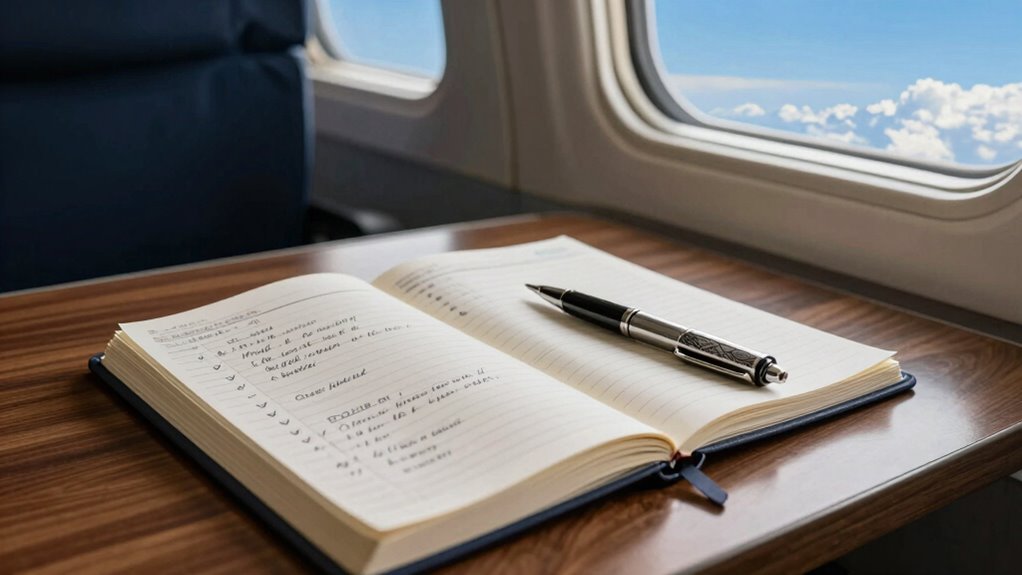
Have you ever wondered why some flight notes help you remember vital details, while others leave you confused? The key lies in how you build and organize your notes after every lesson. Effective flight notes aren’t just a collection of random scribbles—they’re a tool to reinforce what you’ve learned, keep track of aircraft maintenance needs, and improve your pilot communication skills. When you take clear, structured notes, you’ll find it easier to review and prepare for future flights, making every lesson more productive.
Start by jotting down the most important details immediately after your flight. Focus on aircraft maintenance issues that came up during the lesson. Did you notice any unusual noises, vibrations, or warning indicators? Record these observations precisely, including any actions you or the crew took. These notes can alert you to potential mechanical issues before they become serious, and they help ensure proper follow-up with maintenance teams. Clear documentation of aircraft maintenance concerns also reduces confusion during pre-flight checks and contributes to safer flights overall. Recognizing the significance of aircraft maintenance in flight safety can help you develop better habits for post-flight notes.
Record aircraft maintenance issues immediately to prevent serious problems and ensure safer, more efficient pre-flight checks.
Next, pay attention to your pilot communication. Note how your exchanges with air traffic control, instructors, or crew members went. Did you have trouble understanding instructions? Were there specific phrases or terminology that caused confusion? Writing down effective communication strategies can help you improve your clarity and confidence. Use your notes to highlight moments where communication was successful or where misunderstandings occurred, so you can reflect on how to be more precise next time. This ongoing self-evaluation sharpens your pilot communication skills, which are vital for smooth operations and safety. Incorporating effective communication techniques into your notes can also serve as a quick reference during future flights to reinforce best practices. Additionally, reviewing these notes aligned with training modules can support your ongoing learning and skill development.
Organize your notes logically. Use headings or bullet points for different categories—aircraft maintenance, communications, weather, and flight procedures. This structure makes it easier to review key points quickly. Be concise but detailed enough to jog your memory later. For example, instead of writing “check engine,” specify what exactly you observed or need to verify, like “oil level slightly low—schedule maintenance check.” This level of detail ensures you won’t forget the context or the specific action needed. Developing a systematic approach to note organization can significantly enhance your retention and understanding of all flight-related aspects.
Finally, review your notes regularly. After each flight, spend a few minutes revisiting what you recorded. This habit helps cement important lessons and insights, making your future flights safer and more efficient. Incorporating effective note-taking techniques into your routine can greatly enhance your learning process. Over time, you’ll develop a personalized system that captures the nuances of aircraft maintenance and pilot communication, ultimately boosting your confidence and competence as a pilot. Good notes aren’t just about remembering—they’re about continuous improvement and ensuring every flight is better than the last.
As an affiliate, we earn on qualifying purchases.
Frequently Asked Questions
How Often Should I Review My Flight Notes?
You should review your flight notes regularly, ideally after each lesson and at least once a week. Consistent review boosts aviation safety and reinforces your learning, building pilot confidence. When you revisit your notes, you identify areas for improvement and solidify key concepts. This habit helps you stay prepared, confident, and safety-conscious, ensuring you’re always ready for your next flight. Regular review is essential for continuous growth as a pilot.
What Tools Are Best for Organizing Flight Notes?
You should use digital tools like Evernote or Notion for organizing your flight notes, which help you keep track of aircraft maintenance details and flight planning information efficiently. These platforms allow you to categorize notes, attach images, and search easily. For handwritten notes, consider using binders with labeled sections. Combining digital and paper methods guarantees quick access to critical data, making your post-flight reviews more effective and streamlining your overall flight preparation process.
How Detailed Should My Flight Notes Be?
Think of your flight notes as a cockpit instrument panel—each detail guides your safety and performance. Keep your notes detailed enough to include essential aviation terminology, key flight safety protocols, and specific observations. Avoid clutter by highlighting important points like weather conditions or engine performance. Precise, well-structured notes guarantee you can quickly reference indispensable information, enhancing safety and confidence during future flights.
Can I Customize Flight Notes for Different Aircraft?
Yes, you can definitely customize your flight notes for different aircraft. Aircraft customization allows you to tailor your notes to each specific model, highlighting unique controls, systems, and procedures. Note personalization helps you focus on the details that matter most for each aircraft type, making your study more efficient and effective. By adapting your notes, you guarantee you’re well-prepared, confident, and safe, no matter which aircraft you’re flying.
What’s the Best Way to Share Flight Notes With Instructors?
Sharing your flight notes with instructors is as easy as a click. Use a cloud-based platform or email, making sure your notes include vital details like aircraft maintenance insights and emergency procedures. This way, instructors can review and provide feedback quickly, ensuring your safety and learning progress. Keeping notes organized and accessible helps prevent mishaps and boosts your confidence, making each flight safer and more productive.
Conclusion
Remember, the key to better flight notes is consistency and clarity—you might be surprised how a simple tweak, like noting a small correction, can lead to bigger improvements. Sometimes, it’s the overlooked details that make all the difference, almost like fate guiding you to better habits. Keep refining your notes after each lesson, and you’ll find yourself flying smoother and more confident every time. It’s no coincidence that better notes lead to better flying.
Halloween Picks
halloween
As an affiliate, we earn on qualifying purchases.