
TL;DR
A 2019 analysis by Transport & Environment said Carnival Corporation’s cruise ships emitted nearly 10 times as much sulphur oxide near European coasts in 2017 as Europe’s 260 million cars. The comparison concerns emissions in that year and region; the source does not establish current emissions or provide a full methodology in the material cited here.
A 2019 analysis by Transport & Environment (T&E) said Carnival Corporation’s cruise ships emitted nearly 10 times more sulphur oxides around European coasts in 2017 than the region’s 260 million passenger cars. The finding focused attention on cruise-ship air pollution and calls for stricter rules; it is a comparison for 2017, not a current emissions estimate.

Get travel and outdoor gear delivered free with Prime
- Fast, free delivery on millions of items
- Prime Video, Amazon Music and more included
- Member-only deals all year
The analysis named Carnival, described in the report as the world’s largest cruise operator, as the biggest cruise-sector source of sulphur oxide among the companies it compared. T&E said Royal Caribbean Cruises ranked second, with emissions around European coasts about four times those of Europe’s car fleet. The supplied report summary does not include the underlying emission totals or a detailed account of how the comparison was calculated.
Sulphur oxides, or SOx, can form sulphate aerosols, which the report says raise health risks and contribute to acidification in land and water environments. T&E also estimated that cruise ships’ nitrogen oxide emissions in Europe were equivalent to about 15% of passenger-car NOx emissions in a year. That is a separate pollutant comparison and should not be confused with the SOx finding.
The report identified Spain, Italy and Greece as the countries most exposed to cruise-ship SOx emissions in absolute terms, followed closely by France and Norway. It listed Barcelona, Palma de Mallorca and Venice as the most affected port cities, then Civitavecchia near Rome and Southampton. The source attributes the pattern to cruise tourism and, in some areas, less stringent marine-fuel sulphur standards.
Cruise Pollution Near Busy Ports
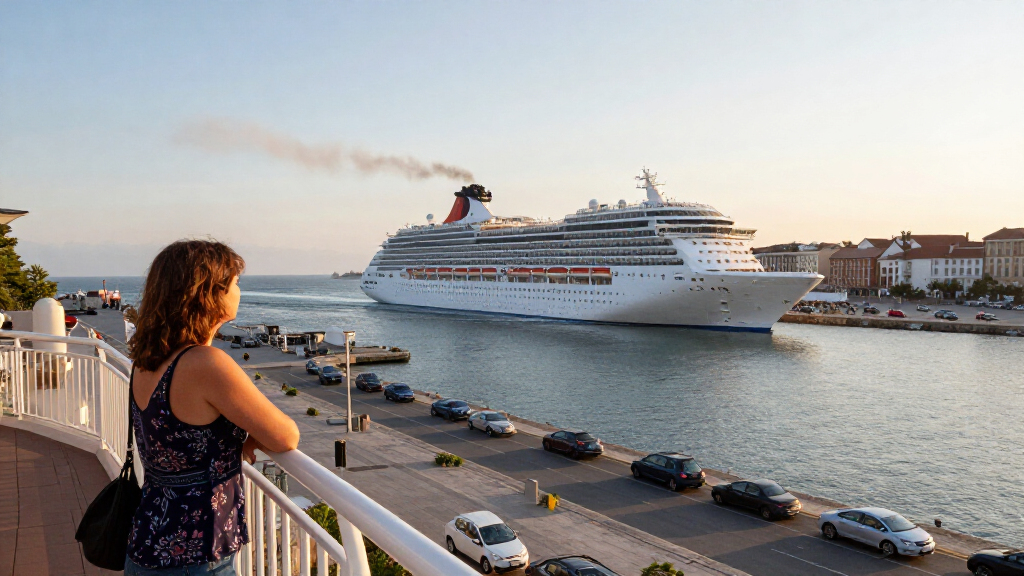
The findings matter because cruise ships can emit pollution close to populated coastlines and ports, where residents, workers and passengers may be exposed. The report’s comparisons put the cruise sector’s contribution alongside a familiar source of air pollution, cars, but they do not mean that every ship, city or time period has the same emissions profile.
T&E argued that governments should apply stronger standards to ships, including zero-emission requirements at ports and expanded emission control areas. Such measures could affect cruise operators’ fuel choices, onboard equipment and access to shore-side electricity. The analysis itself is evidence of a reported emissions comparison, not proof that any particular policy was adopted or that the proposed measures would produce a specified health outcome.
Products Worth Considering

GoPro Fluid Pro AI 3-Axis Gimbal Stabilizer with AI Tracking and Fill Light

GoPro HERO8 Black Waterproof Action Camera

GoPro LIT HERO Waterproof Action Camera with Built-In Light
As an affiliate, we earn on qualifying purchases.
The 2017 Emissions Comparison
The claim appeared in a 2019 Ecohustler article describing a new analysis from Transport & Environment, a sustainable transport group. Ecohustler also said it had raised ship-pollution concerns at Carnival’s annual shareholder meeting in April. The material provided does not identify the exact publication date of the analysis or specify the year of that meeting.
The report compared emissions from cruise vessels around European coasts in 2017 with emissions from all 260 million European passenger cars. It also highlighted Marseille, where T&E said 57 cruise ships emitted almost as much NOx as one-quarter of the city’s 340,000 passenger cars. The report’s recommendations included extending emission control areas beyond the North and Baltic Seas and English Channel, and regulating NOx from existing ships that it said were exempt from applicable standards.
Limits of the Reported Figures
The source material does not provide the report’s full methodology, emissions inventories, uncertainty ranges or the precise geographic boundary used for “around European coasts.” It also does not give absolute SOx totals, so the comparison cannot be independently reconstructed from the figures supplied. The finding should be read as T&E’s analysis of 2017 emissions, not as a verified measure of present-day pollution.
It is also unclear from the cited material what rules have since changed, how Carnival’s emissions have developed, or whether the companies or regulators responded to the report. The article’s characterization of marine fuel standards is a claim in the source and may vary by location and time.
Policy Steps Proposed by T&E
T&E called on European governments to establish zero-emission standards at ports, extend emission control areas to other European seas and regulate NOx emissions from existing ships. The group also pointed to shore-side electricity, batteries for shorter routes and hydrogen as technologies that could reduce ship emissions.
The supplied source does not report a scheduled decision, implementation date or subsequent government action. Readers seeking the current status should check official European and national regulatory information and later emissions data, rather than treating the 2017 comparison as a present-day assessment.
Key Questions
What did the report say Carnival emitted?
T&E said Carnival Corporation’s ships emitted nearly 10 times as much SOx around European coasts in 2017 as Europe’s passenger-car fleet.
Does the figure describe Carnival’s current emissions?
No. The comparison concerns emissions in 2017 and was reported in 2019. The source does not establish Carnival’s current emissions.
Which places did the analysis identify as most affected?
T&E named Spain, Italy and Greece as the most exposed countries in absolute terms, followed by France and Norway. It listed Barcelona, Palma de Mallorca and Venice among the most affected port cities.
What measures did T&E recommend?
The group called for zero-emission standards at ports, wider emission control areas and rules covering NOx emissions from existing ships. It also cited shore-side electricity, batteries and hydrogen as possible technologies.
Source: ecohustler.com