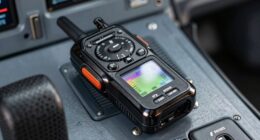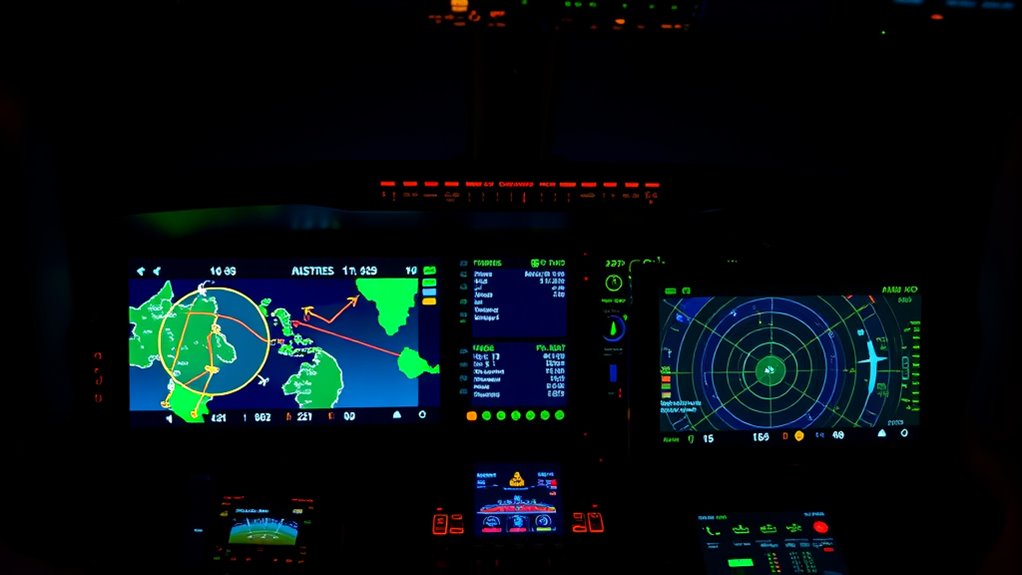

Integrating GPS, Flarm, and ADS-B into your cockpit avionics enhances your situational awareness by providing real-time traffic, terrain, and positioning data all in one system. GPS guarantees accurate location info, while Flarm and ADS-B alert you to nearby aircraft and potential conflicts. This seamless combination keeps you safe, improves navigation, and reduces workload, especially in challenging conditions. Discover how these systems work together to elevate your flying experience as you explore further.
Key Takeaways
- Integrating GPS provides precise positioning data essential for synthetic vision and navigation accuracy.
- Flarm and ADS-B deliver real-time traffic and airspace awareness, enhancing situational safety.
- Combined systems enable automatic route adjustments and collision avoidance in complex environments.
- Data exchange from GPS, Flarm, and ADS-B improves overall cockpit situational awareness and decision-making.
- Seamless integration supports advanced autopilot functions and reduces pilot workload during flights.
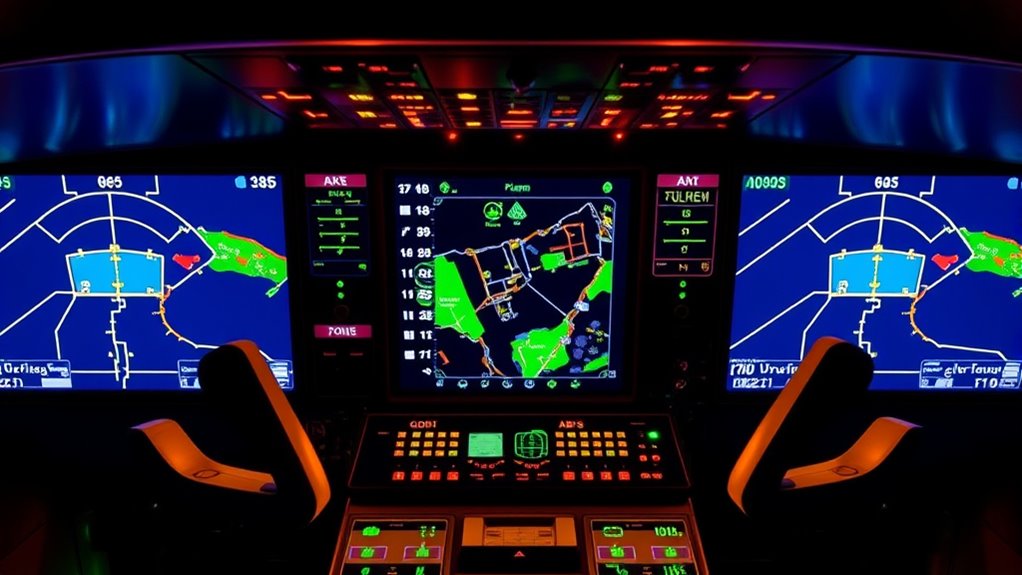
Have you ever wondered how pilots manage to operate complex aircraft with such precision? It all comes down to advanced cockpit avionics that seamlessly integrate various systems to keep everything running smoothly. One of the key innovations is synthetic vision, a technology that creates a virtual, 3D landscape on your display, giving pilots a clear view of terrain, obstacles, and runways even in poor visibility conditions. This high-tech visualization enhances situational awareness, allowing you to navigate confidently through fog, clouds, or darkness. When synthetic vision is paired with autopilot integration, it transforms flying from a manual task into a highly automated process. The autopilot can interpret the synthetic environment, making real-time adjustments to maintain course, altitude, and speed without constant manual input. This combination not only reduces pilot workload but also boosts safety by providing continuous, precise control of the aircraft.
By integrating GPS data with synthetic vision and autopilot systems, you get an extensive picture of your flight environment. GPS provides accurate positioning, which feeds into the synthetic vision system to generate an up-to-date, realistic view of your surroundings. The autopilot then uses this information to execute complex flight paths automatically, whether you’re following a predetermined route or making adjustments on the fly. This synergy minimizes errors and enhances efficiency, especially during long flights or in challenging weather conditions. The integration also allows for features like terrain awareness and warning systems, alerting you if you’re approaching an obstacle or deviating from your planned route. These systems work together to create a safer, more reliable flying experience, empowering you to focus on overall flight management rather than constant manual control.
Furthermore, systems such as Flarm, ADS-B, and other traffic awareness tools are woven into this network, providing real-time data about nearby aircraft and airspace activity. This extensive data exchange ensures you’re always aware of potential conflicts and can respond proactively. The seamless integration of these systems with cockpit avionics is a game-changer, giving pilots enhanced control and confidence. As technology advances, the cockpit becomes increasingly intuitive, with synthetic vision and autopilot integration forming the backbone of modern flight decks. These innovations reduce workload, improve safety margins, and deliver a smoother, more efficient flight experience. Ultimately, they’re designed to support you in making smarter decisions faster, keeping you and your aircraft safer as you navigate the skies.
aviation GPS navigation system
As an affiliate, we earn on qualifying purchases.
As an affiliate, we earn on qualifying purchases.
Frequently Asked Questions
How Do GPS, Flarm, and ADS-B Data Interact in a Cockpit System?
You receive GPS, Flarm, and ADS-B data simultaneously, which your cockpit system integrates to provide thorough situational awareness. This data interaction enhances navigation and collision avoidance. The system encrypts signals to guarantee data privacy and prevent hacking. By combining these sources, you get real-time airspace information, making your flight safer. Always trust the encryption to keep your data secure while benefiting from seamless, integrated avionics.
What Are the Installation Requirements for Integrating These Systems?
You need to guarantee hardware compatibility by choosing systems that integrate seamlessly, avoiding costly upgrades later. Confirm power supply requirements match your aircraft’s electrical system to prevent malfunctions. Proper installation involves secure mounting, proper wiring, and grounding for reliable data exchange. Don’t forget to verify that your cockpit’s existing hardware supports the new GPS, Flarm, and ADS-B units to ensure smooth integration and safe operation.
How Do These Systems Improve Overall Flight Safety?
You enhance flight safety by relying on GPS, Flarm, and ADS-B systems to provide real-time situational awareness. They alert you to nearby aircraft and potential conflicts, helping you avoid collisions. Proper pilot training guarantees you understand emergency protocols if systems fail. These integrated systems support better decision-making, reduce risks, and keep you informed, making your flights safer and more efficient.
Are There Compatibility Issues Between Different Avionics Brands?
You might wonder if different avionics brands can work seamlessly together. Generally, brand interoperability can pose compatibility issues, but many manufacturers aim for standards that guarantee smooth integration. Always check for regulatory compliance and compatibility before installing new systems. While some quirks may arise, modern avionics endeavor to keep everything synchronized, so your focus remains on flying safely. Stay informed, and you’ll minimize surprises during upgrades or upgrades.
What Are Future Developments in Cockpit Avionics Integration?
Future cockpit avionics integration will likely feature augmented reality overlays, providing you with real-time data directly on your windshield for better situational awareness. Artificial intelligence will enhance system responsiveness, automating routine tasks and predicting maintenance needs. You can expect seamless connectivity between GPS, Flarm, and ADS-B, making navigation safer and more efficient. These advancements aim to simplify pilot workload while increasing safety and precision during flights.
ADS-B traffic awareness receiver
As an affiliate, we earn on qualifying purchases.
As an affiliate, we earn on qualifying purchases.
Conclusion
As you weave GPS, Flarm, and ADS-B into your cockpit, you’re orchestrating a symphony of clarity and safety. This integration isn’t just technology—it’s your vigilant co-pilot, guiding you through the skies with seamless precision. With each signal harmonizing into a unified chorus, you gain the confidence to navigate boldly. Embrace this digital dance, where innovation and intuition meet, turning complex skies into a melody of trust and adventure.
synthetic vision cockpit display
As an affiliate, we earn on qualifying purchases.
As an affiliate, we earn on qualifying purchases.
aircraft autopilot system with synthetic vision
As an affiliate, we earn on qualifying purchases.
As an affiliate, we earn on qualifying purchases.