Cold air aloft boosts thermal strength and makes wind shear more pronounced, creating a highly energetic soaring environment. As cold air interacts with warm ground surfaces, it generates reliable thermals and sharp wind changes that you can exploit for longer, higher flights. These conditions improve forecast accuracy and help you plan better strategies. If you keep exploring, you’ll discover how these factors turn challenging conditions into excellent soaring opportunities.
Key Takeaways
- Cold air enhances thermal strength and predictability by increasing temperature gradients and surface heating interactions.
- It amplifies wind shear, causing rapid wind changes that can be exploited for lift and turbulence.
- Cold air conditions lead to more vigorous thermals, extending soaring time and flight range.
- Visual cues like cumulus clouds become more reliable indicators of active thermals in cold air environments.
- Recognizing cold air effects allows for optimized flight planning, better forecast accuracy, and strategic positioning.

Understanding how aloof cold air influences soaring conditions is essential for pilots and enthusiasts alike. Cold air aloft can dramatically improve your flying experience by fostering stronger thermals and creating more dynamic lift opportunities. When cold air moves into a region, it often sets the stage for enhanced thermal development. As the colder air interacts with warmer ground surfaces, it heats unevenly, leading to rising columns of warm air—what pilots call thermals. These thermals become more vigorous and predictable when cold air is present overhead, providing reliable lift that extends your soaring time and range. Recognizing the signs of thermal development in these conditions allows you to optimize your flight path, gain altitude efficiently, and enjoy longer glides.
Cold air aloft creates stronger, more predictable thermals, boosting lift and extending your soaring flight.
But cold air doesn’t just increase thermal strength; it also influences wind shear, a critical factor in soaring forecasts. Wind shear occurs when wind speed or direction changes rapidly over a short distance, especially near the ground or at different altitudes. Cold air can intensify wind shear because of temperature contrasts and varying pressure systems. As cold air descends or shifts, it can cause sudden changes in wind velocity, which might be perceived as turbulence or sudden lift. While wind shear can be challenging, understanding its patterns helps you anticipate shifts in lift and turbulence, allowing you to adjust your flight path proactively. Additionally, cold air can create localized turbulence that, if understood, can be used to your advantage by positioning yourself in the most favorable lift zones. Recognizing the thermal patterns associated with cold air helps pilots better anticipate these shifts and optimize their routes accordingly.
In conditions with cold air aloft, you’ll notice that thermal development tends to be more energetic, especially during peak sunlight hours when the ground heats unevenly. You should look for signs like cumulus clouds forming at higher altitudes, indicating active thermals. These clouds act as visual cues, helping you locate areas of rising warm air that are often stronger and more consistent in cold-air conditions. The presence of temperature gradients often amplifies these thermals, making them more predictable and easier to find. Moreover, the interaction between cold air and surface heating can sometimes lead to localized turbulence, which, if understood, can be used to your advantage by positioning yourself in the most favorable lift zones. The key is to learn to read these subtle signs and adapt accordingly. Recognizing the influence of pressure systems on wind patterns can further enhance your ability to forecast lift conditions accurately.
Being aware of how cold air impacts both thermal development and wind shear empowers you to plan your soaring strategy more effectively. You can identify ideal times and locations for launching or gaining altitude, avoid turbulent areas when necessary, and extend your flight duration by exploiting the enhanced lift provided by cold air aloft. Ultimately, understanding these factors transforms challenging conditions into opportunities for longer, more efficient soaring, making your experience more exhilarating and rewarding.
thermals glider pilot gliding soaring t shirt
Lightweight, Classic fit, Double-needle sleeve and bottom hem
As an affiliate, we earn on qualifying purchases.
As an affiliate, we earn on qualifying purchases.
Frequently Asked Questions
How Does Cold Air Aloft Vary Seasonally?
You’ll notice cold air aloft varies seasonally with the jet stream shifting position and strength. During winter, the jet stream dips south, bringing colder air and often creating a temperature inversion that enhances soaring conditions. In summer, the jet stream moves north, reducing cold air aloft and decreasing lift potential. This seasonal change directly impacts soaring forecasts, making cold air aloft more pronounced in winter and less so in summer.
Can Localized Cold Pockets Impact Soaring Conditions?
Localized cold pockets can profoundly impact soaring conditions by creating thermal inversions and wind shear. You might notice these cold zones trapping warm air below, causing sudden lift or turbulence. Sharp temperature differences lead to unpredictable winds and turbulence, challenging your flight. Recognizing these pockets helps you anticipate lift changes and avoid turbulence, making your soaring experience safer and more efficient. Stay alert to temperature gradients and wind shifts caused by cold pockets.
What Tools Best Predict Cold Air Aloft for Soaring?
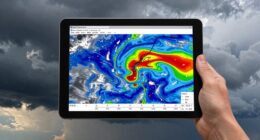
You should rely on weather modeling tools like computer simulations and forecast charts to predict cold air aloft. These tools analyze atmospheric stability, revealing temperature gradients and vertical temperature profiles that indicate colder air at higher altitudes. By monitoring these forecasts, you can anticipate enhanced soaring conditions, as cold air aloft often creates the lift needed for longer, more sustained flights.
How Quickly Can Cold Air Aloft Change Forecast Accuracy?
Oh, sure, cold air aloft can change forecasts faster than you can say “temperature inversion,” making your soaring predictions feel like a wild rollercoaster ride. Wind shear shifts and temperature shifts can occur overnight, turning calm skies into turbulence zones. So, if you rely on outdated data, your forecast could be as accurate as a weather crystal ball, leaving you unprepared for sudden shifts in cold air aloft.
Are There Specific Geographic Areas More Affected by Cold Aloft?
You’ll find that altitude impacts and geographic variability play significant roles in how cold air aloft affects forecasting. Mountainous regions, especially near high elevations, experience more pronounced cold air impacts, boosting soaring conditions. Conversely, flatter or coastal areas see less influence. So, your forecasting accuracy depends heavily on the specific geographic area, with altitude impacts being more noticeable in rugged terrains, making some regions more affected by cold aloft than others.

BTMETER Anemometer Handheld Wind Speed Meter, BT-816B Mini Digital Air Flow Meter with LCD Backlight/Wind Chill & Temp, Max/Avg/Current Mode to Measure Air Flow Velocity for Sailing Drone Golf HVAC
✅【Highly Accurate Digital Wind Meter】Portable Wind measure device with a sensitive temperature sensor & 7 smooth fan shaft…
As an affiliate, we earn on qualifying purchases.
As an affiliate, we earn on qualifying purchases.
Conclusion
Understanding how cold air aloft can supercharge your soaring forecast helps you better anticipate lift and plan your flights. Some might think colder air means less lift, but in reality, it often creates stronger thermals and better conditions for soaring. Don’t overlook the significance of aloft temperatures—embrace them as a tool to enhance your flying experience. With this knowledge, you’ll approach each flight with greater confidence, maximizing your time in the sky despite the chill above.

HF96 Thermal Camera with Laser Pointer, Intelligent Scene Detection, Super Resolution 240 x 240, -4°F~1022°F, Thermal Imaging Camera 96 x 96 IR Resolution, 25 HZ Infrared Camera, 11h Runtime
【Intelligent Scene Recognition with IntellFault】HF96 features HSFTOOLS' unique IntellFault technology for automated scene detection. Powered by deep learning,…
As an affiliate, we earn on qualifying purchases.
As an affiliate, we earn on qualifying purchases.

ASA Flight Planner Pad
Weight: 0.75 lbs
As an affiliate, we earn on qualifying purchases.
As an affiliate, we earn on qualifying purchases.