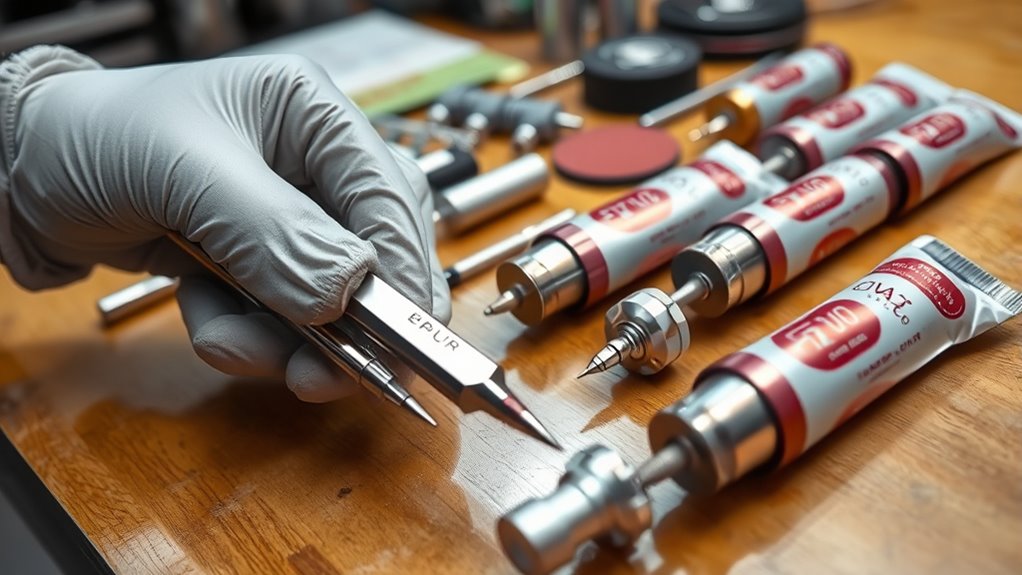

To maintain composite repairs effectively, you should have surface prep tools like abrasive pads, wire brushes, grinding, and sanding tools to verify proper adhesion. Use brushes, spatulas, and dispensers for precise adhesive application and clamps to hold parts during curing. Regularly inspect surfaces for cracks or corrosion and keep safety gear handy. Proper tool maintenance, including cleaning and calibration, extends tool life and guarantees quality results—continue to explore more essential techniques for durable repairs.
Key Takeaways
- Regularly inspect and calibrate surface preparation, adhesive application, and inspection tools for accuracy and effectiveness.
- Maintain cleanliness and proper storage of abrasive pads, brushes, and grinding tools to prevent contamination.
- Replace worn or damaged tools promptly to ensure consistent repair quality and safety.
- Follow manufacturer guidelines for cleaning and maintaining tools to extend their lifespan.
- Implement safety protocols and use protective equipment during tool handling and maintenance activities.
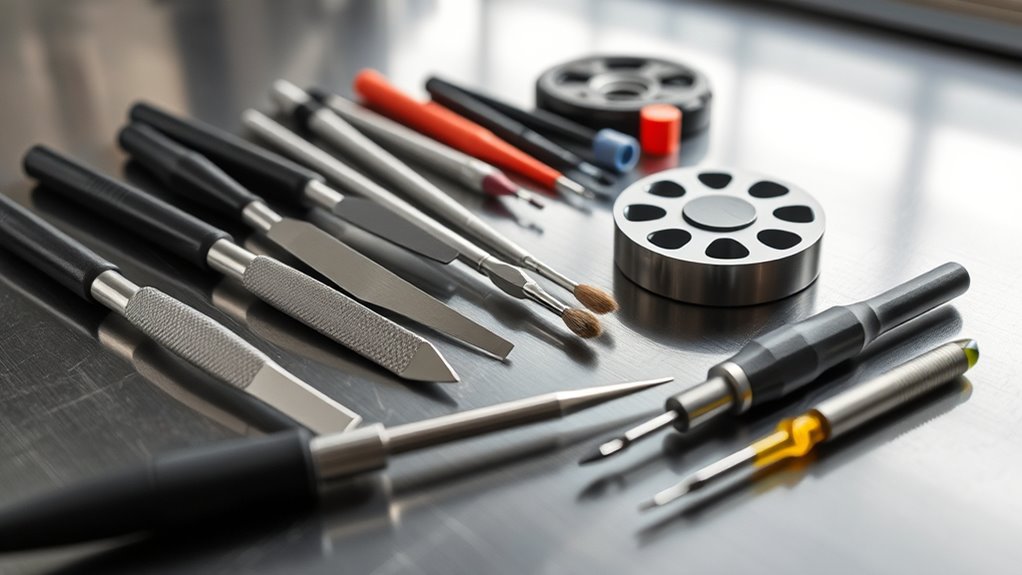
Effective maintenance tools are essential for guaranteeing the quality and longevity of composite repairs. When you’re working on restoring damaged components, proper tools help you achieve a seamless, durable fix. Two critical aspects of successful composite repairs are adhesive application and surface preparation. Focusing on these areas with the right tools makes all the difference in the durability and strength of your repair.
Begin with surface preparation. Before applying any adhesive, you need a clean, roughened surface to ensure maximum bonding. Use abrasive pads, wire brushes, or grinding tools to remove dirt, grease, and any loose material. A clean surface promotes better adhesion and reduces the risk of future failure. For more precise work, you might employ a sander or a rotary tool fitted with appropriate attachments to create a uniform profile. Proper surface preparation not only improves adhesion but also helps you identify any underlying issues like cracks or corrosion that need addressing before the repair. Always follow manufacturer guidelines for surface cleanliness and roughness levels, as these specifications are designed to maximize bond strength. Utilizing adhesive application tools ensures even coverage and enhances bonding quality.
When it comes to adhesive application, your choice of tools is just as important as the adhesive itself. Use a brush, spatula, or notched trowel to apply the adhesive evenly across the prepared surface. Consistent application ensures that there are no air pockets or thin spots, which could weaken the bond. For larger or more complex repairs, consider using a dispenser or a syringe to distribute adhesive precisely and avoid waste. During application, work methodically to spread the adhesive smoothly, avoiding excess that could squeeze out or create uneven surfaces. Once the adhesive is applied, clamp or support the parts as recommended to maintain proper pressure until it cures. Proper adhesive application techniques, combined with thorough surface preparation, are crucial for achieving a strong, long-lasting bond.
In addition to these core tools, having a clean workspace and proper safety equipment — gloves, masks, and eye protection — ensures you work efficiently and safely. Regularly inspecting and maintaining your tools guarantees they remain sharp and effective, which directly impacts the quality of your repairs. When you prioritize proper surface preparation and precise adhesive application, your composite repairs will stand the test of time, providing reliable performance and structural integrity. These foundational steps, supported by the right tools, make your repair process smoother, more effective, and ultimately more successful.
Frequently Asked Questions
What Safety Equipment Is Recommended When Handling Composite Repair Tools?
When handling composite repair tools, you should wear personal protective gear to guarantee handling safety. Use gloves to protect your hands from sharp edges and chemicals, safety glasses to prevent debris or dust from entering your eyes, and a dust mask if working with powders or fumes. Always follow safety protocols, stay alert, and handle tools carefully to avoid injuries. Proper safety gear minimizes risks, making your repair process safer and more efficient.
How Do I Choose the Right Tools for Different Composite Materials?
You should select tools based on material compatibility and tool versatility. Check that the tools you choose are suitable for the specific composite material you’re working with, such as carbon fiber or fiberglass. Opt for versatile tools that can handle various tasks like cutting, sanding, and bonding. This guarantees efficiency and prevents damage, making your repair process smoother and more effective. Always match the tool specifications with your material for best results.
Are There Environmentally Friendly Maintenance Tools Available for Composites?
Yes, eco-friendly maintenance tools for composites do exist. You can choose biodegradable abrasives that effectively clean surfaces without harming the environment. Additionally, eco-friendly solvents are available, reducing harmful chemical use during repairs. These tools prove that you don’t have to compromise quality for sustainability. By selecting biodegradable abrasives and eco-friendly solvents, you’re supporting environmentally responsible practices while maintaining your composite materials efficiently.
How Often Should Maintenance Tools Be Calibrated or Inspected?
You should calibrate your maintenance tools regularly, typically every 6 to 12 months, depending on usage and manufacturer recommendations. Inspection intervals are vital; you should check tools before each use to guarantee accuracy and safety. Consistent calibration frequency and routine inspections help maintain tool precision, preventing errors during composite repairs. Always follow specific guidelines provided by the tool manufacturer to keep your tools in prime condition and assure reliable results.
Can Basic Household Tools Be Used for Small Composite Repairs?
You might find that household tools can work for small repairs, but they often lack the precision needed for composite materials. Coincidentally, many people discover that using basic household tools for small repairs saves time and money, yet may compromise the repair’s durability. For essential results, specialized composite repair tools are recommended, especially when accuracy and strength are vital. So, weigh the complexity of your project before relying solely on household tools.
Conclusion
Maintaining your composite repairs is vital for longevity and safety. With the right tools, you can guarantee a smooth, durable fix every time. Did you know that over 70% of composite repair failures are due to improper maintenance? Staying proactive with proper tools and techniques can greatly reduce this risk. Keep your repairs in top shape by investing in quality tools and following best practices—your aircraft’s safety depends on it.