
Convergence zones form where different air or water masses meet, creating distinct weather patterns and landscapes. For example, the Intertropical Convergence Zone (ITCZ) near the equator causes heavy rainfall and thunderstorms. In South Asia, monsoon convergence brings seasonal rains. Ocean currents like Benguela and Humboldt create nutrient-rich upwelling zones, while mountain ranges induce heavy precipitation through orographic lifting. Explore more examples to understand how these zones shape our climate and environment.
Key Takeaways
- Convergence zones form where contrasting air masses or currents meet, causing uplift, cloud formation, and intense weather patterns.
- The Intertropical Convergence Zone (ITCZ) is a global example where trade winds from both hemispheres converge, producing tropical thunderstorms.
- South Asia’s monsoon convergence occurs when moist oceanic air meets dry land air, driving seasonal heavy rainfall and low-pressure systems.
- Oceanic convergence zones, like the Benguela and Humboldt currents, create upwelling zones rich in nutrients, supporting fisheries and marine life.
- Mountain-induced convergence, such as the orographic effect in the Pacific Northwest, causes heavy precipitation on windward slopes where moist air rises over mountains.
The Formation of Convergence Zones and Their Key Characteristics

Convergence zones form when two or more air masses with different temperatures and humidity levels meet and interact. This meeting causes the air to be forced upward along pressure systems, creating low-pressure areas at the surface. As the air rises, it cools and condenses, leading to cloud formation and intense weather patterns like thunderstorms. These zones are characterized by persistent cloud cover, heavy rainfall, and shifting wind directions. The interaction of different pressure systems intensifies the convergence, making the weather more unstable. You’ll often see convergence zones at boundaries between tropical and temperate air masses or along frontal systems. Understanding these key characteristics helps predict weather changes, as the interaction of pressure systems and air masses drives the development of storms and other dynamic weather patterns. Additionally, the formation of convergence zones is closely tied to specific pressure gradients and atmospheric disturbances that amplify their effects.
The Intertropical Convergence Zone (ITCZ) and Its Global Impact

Have you ever wondered how the Earth’s climate remains so dynamic near the equator? The answer lies in the Intertropical Convergence Zone (ITCZ). This zone is where trade winds from both hemispheres meet, causing warm, moist air to rise and create frequent thunderstorms. As the ITCZ shifts throughout the year, it modulates global weather patterns, influencing rainfall in tropical regions and affecting monsoon seasons. Its position determines the distribution of rainfall and droughts, impacting agriculture and ecosystems worldwide. The ITCZ’s movement also plays a vital role in climate modulation, contributing to the variability of weather systems across continents. Additionally, the convergence of atmospheric currents within the ITCZ is a key driver of tropical cyclone formation. Understanding this convergence zone helps explain how interconnected Earth’s climate systems are and highlights its significant role in shaping global weather patterns.
The Monsoon Convergence in South Asia: A Case Study
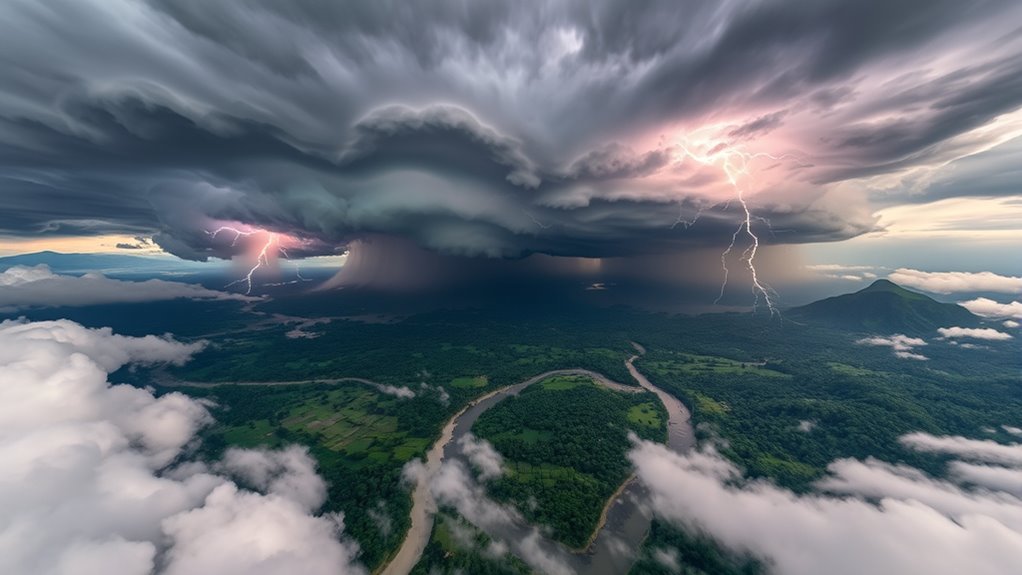
The monsoon convergence in South Asia is a powerful climatic phenomenon that dramatically influences the region’s weather patterns each year. It results from complex monsoon dynamics where moist oceanic air masses meet land-based dry air, causing intense uplift. This convergence drives the seasonal monsoon, bringing heavy regional rainfall essential for agriculture and water resources. You’ll notice that the monsoon onset varies each year, depending on factors like temperature gradients and atmospheric pressure differences. As the moist air converges over the Indian subcontinent, it forms a low-pressure zone, intensifying rainfall episodes. This process directly impacts millions of lives, shaping ecosystems and economies. Understanding these monsoon dynamics helps explain the variability and intensity of regional rainfall, highlighting the importance of convergence zones for South Asia’s climate. Climate variability plays a significant role in how these patterns develop and affect the region.
Oceanic Convergence: The Role of the Benguela and Humboldt Currents

Oceanic currents play a crucial role in shaping regional climates, especially through their interactions and convergence zones. The Benguela and Humboldt currents are key examples, as their current interactions create significant upwelling phenomena. When these cold currents meet warmer waters, they cause nutrient-rich waters to rise to the surface, fueling productive fisheries and supporting diverse marine life. This convergence zone influences local weather patterns, often bringing arid conditions inland while maintaining moist coastal environments. The upwelling phenomena here are driven by the interaction of these currents with the wind and coastline, creating a dynamic and essential ecosystem. Understanding how these current interactions lead to oceanic convergence zones helps explain regional climate effects and the ecological richness along the coasts of southwestern Africa and western South America. Additionally, dynamic interactions between currents are vital for maintaining the health and productivity of marine ecosystems in these regions.
Mountain-Influenced Convergence: The Orographic Effect in the Pacific Northwest
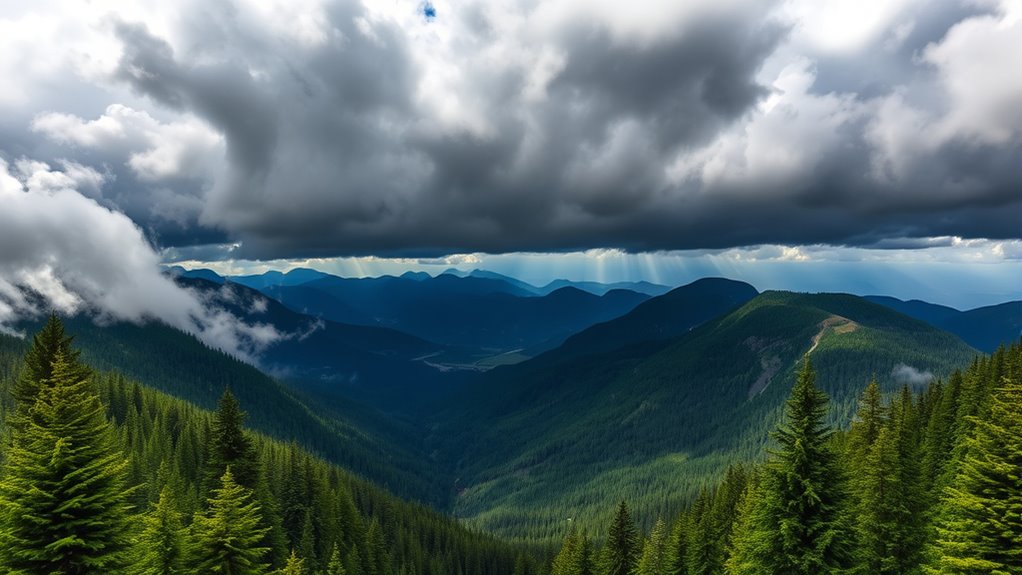
Mountains in the Pacific Northwest considerably influence local weather patterns through the orographic effect. When moist air from the Pacific Ocean encounters these mountains, it undergoes orographic lifting, forcing it upward. As the air rises, it cools, leading to condensation and cloud formation. This process results in heavy Pacific precipitation on the windward slopes, creating lush landscapes. You’ll notice that these mountains act as natural barriers, dramatically increasing rainfall in certain areas while leaving others drier on the leeward side. This convergence of moist air and mountain terrain intensifies local weather patterns, shaping ecosystems and influencing water resources. The orographic effect is a key factor in the region’s distinct wet and dry zones, with mountains playing a central role in this convergence process. Understanding the orographic effect helps explain why the Pacific Northwest experiences such distinct wet and dry zones, with mountains playing a central role in this convergence process.
Frequently Asked Questions
How Do Convergence Zones Affect Local Agriculture and Ecosystems?
You might notice that convergence zones markedly influence local agriculture and ecosystems. They cause agricultural impacts by bringing consistent moisture, which boosts crop growth, or droughts, which hinder it. Ecosystem changes occur as new plant and animal species adapt to altered conditions. These zones can create fertile lands or challenging environments, shaping the diversity and productivity of your local landscape. Understanding these effects helps you better manage agriculture and conserve ecosystems effectively.
What Are the Long-Term Climate Implications of Persistent Convergence Zones?
You might wonder how persistent convergence zones influence the long-term climate. They can heighten climate variability by creating localized weather extremes and disrupting atmospheric circulation patterns. Over time, this may lead to shifts in regional rainfall and temperature trends, impacting ecosystems and human activities. As convergence zones persist, they could intensify climate instability, making it harder to predict weather, adapt agricultural practices, and maintain ecological balance in affected areas.
How Do Human Activities Influence the Formation of Convergence Zones?
You influence the formation of convergence zones through activities like urban expansion and pollution impact. When cities grow, they alter local heat and moisture patterns, potentially shifting convergence zones. Pollution from vehicles and industries can change atmospheric conditions, intensifying or disrupting these zones. Your actions can consequently affect weather patterns and climate dynamics, highlighting the importance of sustainable practices to minimize negative impacts on natural convergence processes.
Can Convergence Zones Shift Due to Climate Change?
Have you wondered if climate change can make convergence zones shift? It’s possible because climate variability affects atmospheric circulation patterns, which in turn influence the location of convergence zones. As global temperatures rise and weather patterns become more unpredictable, these zones may move or change intensity. This shift can impact regional weather, ecosystems, and human activities, highlighting the importance of understanding climate effects on atmospheric dynamics for future planning.
What Role Do Convergence Zones Play in Extreme Weather Events?
You should know that convergence zones are essential in storm formation and shaping weather patterns. When air masses meet in these zones, they cause intense upward movement, leading to thunderstorms and other extreme weather events. These zones act as focal points for energy and moisture, often triggering severe storms. Recognizing their role helps you understand how they contribute to unpredictable and extreme weather patterns, especially during changing climate conditions.
Conclusion
Understanding convergence zones is like unraveling nature’s intricate tapestry, where different forces weave together to create climate patterns. By studying examples from the ITCZ, monsoons, ocean currents, and mountain effects, you see how these zones shape weather and ecosystems globally. They’re as essential as the heartbeat of the Earth, guiding weather systems much like a compass directs a traveler. Grasping these zones helps you appreciate the interconnectedness of our planet’s dynamic climate system.