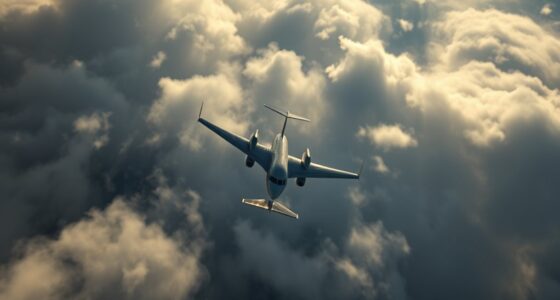
Dynamic soaring lets you harness energy from atmospheric wind gradients, which are variations in wind speed with altitude. By climbing into faster-moving air and then turning downward, you can convert this wind energy into forward motion, reducing your effort. Birds and aircraft use this technique to stay aloft for hours with minimal energy. To understand how this complex motion works and how you can apply similar principles, keep exploring the fascinating mechanics behind wind energy extraction.

Get travel and outdoor gear delivered free with Prime
- Fast, free delivery on millions of items
- Prime Video, Amazon Music and more included
- Member-only deals all year
Key Takeaways
- Dynamic soaring exploits vertical wind speed differences to extract energy, enabling birds to sustain long flights without flapping.
- Birds ascend into faster-moving air, gaining kinetic energy before turning and gliding downward to convert this energy into forward motion.
- Wing designs with high aspect ratios optimize lift and minimize drag, facilitating efficient energy extraction from wind gradients.
- The flight cycle involves climbing, turning, and descending to continuously harvest atmospheric energy with minimal effort.
- This process allows seabirds and predators to perform energy-efficient, long-distance flights by harnessing natural wind energy.
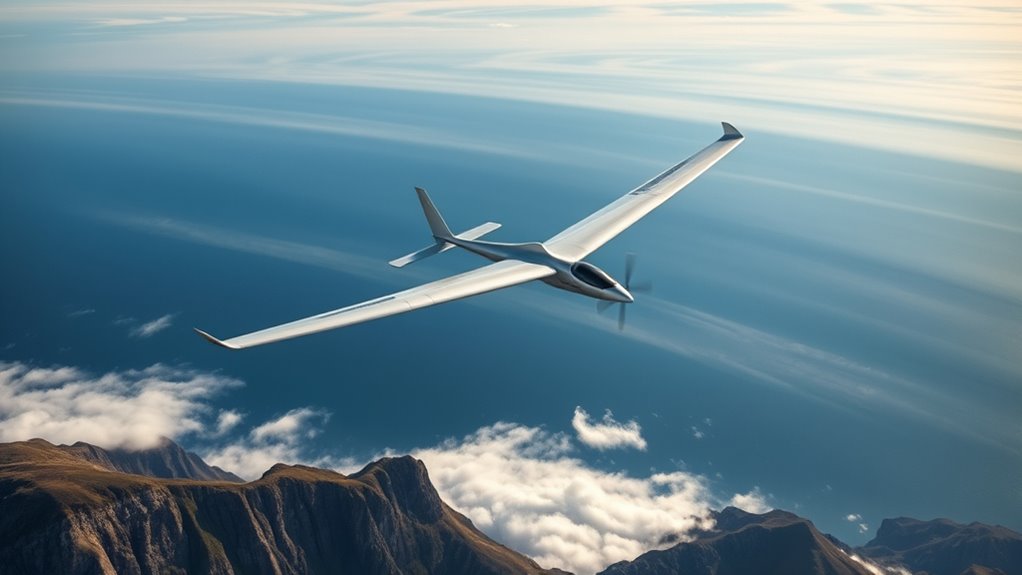
Have you ever wondered how some birds stay aloft for hours without flapping their wings? It all comes down to mastering flight mechanics and efficiently extracting energy from their environment. These birds utilize a remarkable technique called dynamic soaring, allowing them to harness energy from wind gradients and sustain long flights with minimal effort. Instead of flapping tirelessly, they exploit natural atmospheric conditions to keep themselves aloft, transforming what seems like passive gliding into an active process of energy extraction.
When you observe a seabird or a high-flying predator performing dynamic soaring, you’re witnessing a sophisticated interaction with the wind. The key lies in understanding how wind gradients work — the variation of wind speed with altitude. Typically, wind flows faster higher up in the atmosphere, creating a vertical difference in wind velocity. As the bird ascends into the faster-moving air, it gains kinetic energy. Then, by turning and gliding downward along a curved path, it converts this excess energy into forward motion. This cycle repeats, allowing the bird to gain altitude again and repeat the process.
This process depends heavily on precise flight mechanics. The bird’s wings are built for efficiency, with a high aspect ratio that minimizes drag and maximizes lift. As it climbs into the wind gradient, it uses subtle adjustments to its wing angle and body position to optimize energy extraction. When it turns downward, it reduces resistance and accelerates, gaining ground without flapping. Each glide exploits the energy differential in the wind, maintaining altitude or gaining height with minimal expenditure of muscular effort. Understanding wind gradients helps explain how these flight strategies are so effective and energy-efficient.
Your understanding of flight mechanics reveals why this strategy is so effective. Instead of burning energy through flapping, the bird continually converts environmental energy into forward momentum. This process allows for sustained flight over great distances with a tiny fraction of the energy that would otherwise be required. In essence, these birds act like natural gliders or helicopters, seamlessly blending their anatomy with atmospheric currents to maximize efficiency. The cycle of climbing, turning, descending, and repeating creates a continuous loop of energy extraction from the wind, enabling them to soar for hours.
As an affiliate, we earn on qualifying purchases.
Frequently Asked Questions
How Do Birds Learn to Perform Dynamic Soaring?
You learn to perform dynamic soaring by observing bird flight mechanics and practicing soaring flight patterns. Birds instinctively use wind gradients, gaining speed by repeatedly climbing and diving along air currents. Over time, they refine their movements, balancing energy efficiency and control. Your focus should be on understanding how to exploit wind shifts and mastering precise maneuvers, enabling you to harness wind energy much like birds do with their natural soaring techniques.
What Are the Main Challenges in Designing Soaring Aircraft?
You face challenges in designing soaring aircraft by balancing aerodynamic optimization with structural resilience. To maximize lift and minimize drag, you must carefully shape wings and control surfaces, ensuring efficient energy use. At the same time, you need strong materials and construction techniques to withstand intense aerodynamic forces during high-altitude maneuvers. Managing these factors together helps you create aircraft capable of sustained, energy-efficient soaring without compromising safety or performance.
Can Dynamic Soaring Be Used for Renewable Energy Generation?
Yes, dynamic soaring can be used for renewable energy generation. Studies show that wind energy accounts for about 6% of global electricity, and advanced flight mechanics could boost efficiency. By mimicking bird flight, you could develop turbines or energy-harvesting drones that exploit wind gradients. This approach offers a promising, eco-friendly way to capture high-altitude wind energy, potentially providing a steady power source with minimal environmental impact.
How Does Wind Turbulence Affect Dynamic Soaring Efficiency?
Wind turbulence and shear can profoundly reduce dynamic soaring efficiency. When turbulence effects increase, your aircraft or energy system struggles to maintain ideal flight paths, causing energy loss. Wind shear causes unpredictable changes in wind speed and direction, making it harder to exploit wind gradients effectively. To maximize efficiency, you need to carefully monitor turbulence effects and adjust your soaring techniques accordingly, ensuring stable conditions for harnessing wind energy.
Are There Specific Geographic Locations Ideal for Dynamic Soaring?
You should focus on geographic hotspots and wind gradient zones for peak dynamic soaring. Locations like coastal cliffs, mountain ridges, and open ocean areas often feature strong, consistent wind gradients that boost efficiency. These zones provide the ideal conditions for harnessing wind energy, allowing you to maximize lift and sustain longer flights. By choosing these specific sites, you improve your chances of achieving successful, energy-efficient dynamic soaring.
Conclusion
As you glide effortlessly through the sky, it feels like nature’s secret is revealing itself—wind gradients whispering their energy just as you catch a sudden gust. You realize that, by harnessing these invisible currents, you’re riding a hidden force that’s always there, waiting for you to find it. It’s as if the wind itself conspires with you, turning an ordinary flight into a dance of discovery, where every lift becomes a fleeting gift from the sky.
Fall Picks
fall essentials
As an affiliate, we earn on qualifying purchases.