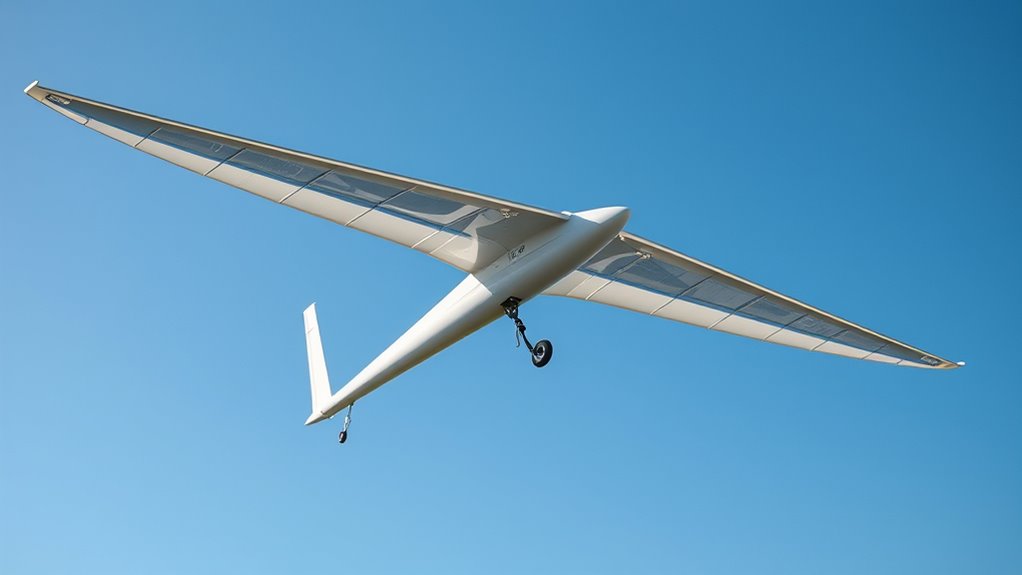

Electric self-launching gliders use an onboard electric motor and battery to take off independently, eliminating the need for external helpers like tow planes. The motor’s efficiency and the battery’s capacity directly affect flight duration, climb rate, and maneuverability. To guarantee safety, it’s essential to monitor the battery’s condition and use reliable components. If you want to understand how these systems optimize performance and stay safe during flight, there’s more to explore.
Key Takeaways
- Electric self-launching gliders use an onboard motor and battery to achieve independent takeoff without external assistance.
- Battery capacity influences flight duration, with larger capacities providing longer soaring times but adding weight and size.
- Motor efficiency determines energy use and climb performance, impacting overall flight safety and control.
- Proper system design ensures smooth acceleration, stable cruise, and efficient energy consumption during all flight phases.
- Safety measures include reliable battery management, protection against overcharging and overheating, and regular maintenance checks.

Electric self-launching gliders are revolutionizing the way enthusiasts enjoy soaring flights by combining traditional gliding with modern electric propulsion. This innovation allows you to take off independently without needing a tow plane or external assistance, offering greater flexibility and convenience. At the heart of this system lies the battery capacity, which determines how much energy your glider can store and, consequently, how far and long you can fly. A higher battery capacity means you can enjoy longer flights, but it also adds weight and size to your glider. Finding the right balance is vital to maximize performance without compromising maneuverability. Additionally, motor efficiency plays a pivotal role in how effectively your glider uses its stored energy. An efficient motor converts electrical energy into thrust with minimal losses, meaning you can extend your flying time and achieve better climb rates. When selecting a motor, look for high efficiency ratings, as this directly impacts your flight experience, especially during extended soaring sessions.
The integration of electric motors into gliders isn’t just about power; it’s about optimizing performance. A well-designed system ensures smooth acceleration during takeoff, reliable climbing capabilities, and stable cruise flight. You’ll notice that motor efficiency directly influences how much energy is consumed during these phases. A highly efficient motor allows you to make the most of your battery capacity, reducing the need for frequent recharges and increasing your overall flying time. It’s worth investing in quality components because they better translate your battery’s energy into effective thrust, giving you more control and confidence during flight.
Safety considerations come into focus when dealing with high-capacity batteries and powerful motors. You must make certain your battery is properly protected against overcharging, overheating, and physical damage. Using a reliable battery management system (BMS) is vital to monitor voltage levels and prevent dangerous situations. Similarly, choosing a motor with proven efficiency and durability reduces the risk of failure mid-flight. Regular maintenance and pre-flight checks help identify potential issues before they become hazards, ensuring your flights stay safe and enjoyable. Remember, the safer your setup is, the more you can relax and focus on flying rather than worrying about technical failures.
Frequently Asked Questions
What Are the Legal Regulations for Electric Self-Launching Gliders?
You need to follow legal restrictions and pilot licensing requirements for electric self-launching gliders. Regulations vary by country, but generally, you must register your glider and obtain a pilot license if it exceeds certain weight or performance limits. Always check local aviation authorities’ rules to make certain of compliance. Staying informed about legal restrictions helps you fly safely and legally, avoiding penalties or accidents.
How Long Is the Typical Flight Duration for These Gliders?
Your typical flight duration for an electric self-launching glider depends on your battery life and flight endurance, usually lasting between 10 to 30 minutes. Factors like battery capacity, weather, and glider weight influence how long you can stay airborne. To maximize your flight time, confirm your battery is fully charged and monitor your energy consumption. With proper planning, you can enjoy extended flights and better performance during your soaring experience.
Can Electric Self-Launching Gliders Be Used in All Weather Conditions?
You can’t expect electric self-launching gliders to work in all weather conditions. They’re limited by weather constraints like wind, rain, and snow, which can affect safety and performance. Visibility concerns are also vital; poor visibility makes flying risky. So, it’s best to hold off during storms, heavy rain, or fog. When the weather’s clear, you’ll enjoy smooth flights, but always check forecasts before heading out.
What Maintenance Is Required for the Electric Motor?
You need to regularly check your electric motor for smooth operation. Keep an eye on battery maintenance by ensuring the batteries are charged properly and stored in a cool, dry place. Also, perform motor lubrication as recommended by the manufacturer to prevent wear and overheating. These steps help maintain peak performance, extend your glider’s lifespan, and ensure safe flights every time.
Are There Environmental Impacts Associated With These Gliders?
You should consider that electric self-launching gliders can have some environmental impacts. Their environmental footprint includes energy use that may rely on non-renewable sources, and their noise and movement could disrupt local wildlife. While they are generally eco-friendlier than traditional motorized aircraft, it’s wise to minimize flights near sensitive habitats to reduce wildlife disruption and lessen your overall environmental impact.
Conclusion
Electric self-launching gliders offer a convenient and eco-friendly way to take flight, eliminating the need for traditional tow planes. With over 80% of pilots reporting increased confidence and safety when using electric launches, it’s clear these gliders are transforming soaring experiences. As technology advances, expect even more reliable and efficient options. Embrace the future of gliding and enjoy safer, greener flights—your next adventure could be just a charge away.