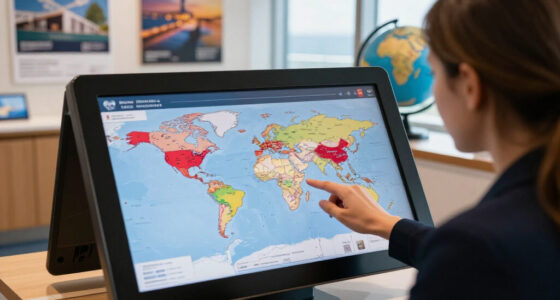
In flatland soaring, your success depends on noticing small weather details like subtle cloud formations and tiny wind shifts. These cues reveal lift sources such as thermals or signs of turbulence, helping you make safer and more efficient decisions. Even minor changes can impact your flight path or safety, making constant awareness essential. Pay close attention to these small clues, and you’ll find more ways to improve your flight strategy and safety in these vast, featureless landscapes.

Get travel and outdoor gear delivered free with Prime
- Fast, free delivery on millions of items
- Prime Video, Amazon Music and more included
- Member-only deals all year
Key Takeaways
- Small weather variations significantly influence lift availability and flight safety in featureless flatlands.
- Cloud formations signal thermals and atmospheric stability, guiding soaring strategies.
- Wind shear can cause sudden turbulence, requiring vigilant interpretation for safe control.
- Recognizing subtle weather cues helps pilots optimize lift use and avoid hazards.
- Developing skills to read tiny environmental changes enhances decision-making and flight success.
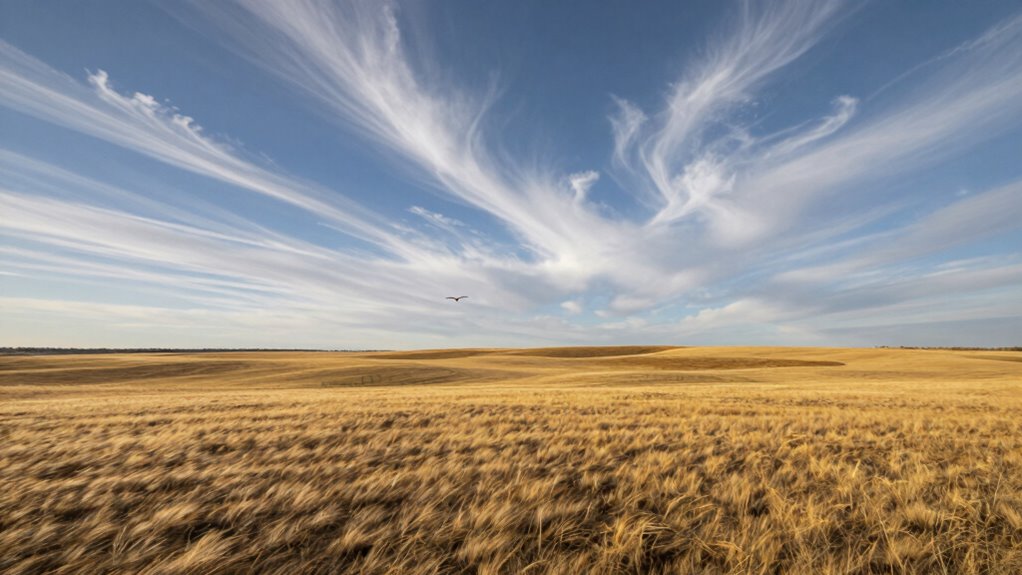
Understanding the weather is essential for successful flatland soaring, where the absence of terrain features means pilots rely heavily on atmospheric conditions. Unlike mountainous areas, flatlands lack the obvious lift sources like ridges or thermals, so you need to pay close attention to subtle weather patterns. Small variations, such as cloud formation, can signal the presence of lift or turbulence, making your ability to interpret these clues crucial. For instance, cumulus clouds forming in a consistent pattern often indicate thermals that you can use to gain altitude. Recognizing these signs allows you to plan your flight path and stay within safe, productive zones. Observing atmospheric stability helps you anticipate the behavior of the weather and adjust your strategy accordingly.
Wind shear is another critical factor that influences your flight in flatlands. It refers to sudden changes in wind speed or direction over a short distance, which can cause abrupt shifts in your aircraft’s attitude or altitude. Even minor wind shear can make controlling your glider more challenging, especially when flying low or near the ground. Spotting signs of wind shear—like abrupt shifts in wind direction or sudden turbulence—helps you adjust your approach and avoid dangerous situations. In flatlands, where there are no natural barriers to break up wind flow, wind shear often results from temperature differences between the ground and the air above or from atmospheric instability.
Cloud formation also offers vital information about the atmospheric stability and potential lift zones. Fair-weather cumulus clouds suggest stable conditions, but growing or towering clouds indicate increasing instability and stronger thermal activity. If you observe clouds that are rapidly developing or changing shape, it might mean stronger thermals and more lift, but also increased turbulence. On the other hand, a lack of cloud cover can signify stable, less supportive conditions for soaring. By understanding these cloud cues, you can decide whether to stay in a particular area or look for better lift elsewhere.
In flatland soaring, these small weather details—cloud formation, wind shear, and subtle atmospheric signs—become your best tools for staying aloft and flying safely. You need to be constantly observant, interpreting the environment quickly and accurately. Even minor shifts in wind or cloud patterns can make the difference between a smooth flight and a challenging, unsafe situation. By honing your skills in reading these small but critical weather cues, you improve your ability to make smart decisions, maximize your lift, and enjoy longer, safer flights across the flatlands.
As an affiliate, we earn on qualifying purchases.
Frequently Asked Questions
How Do Small Weather Changes Impact Soaring Altitude?
Small weather changes, like microclimate effects and temperature gradients, considerably impact your soaring altitude. Slight shifts in temperature can create or eliminate lift zones, affecting your ascent. Microclimate effects, such as localized wind shifts, influence where and when you find rising air. By paying close attention to these subtle weather details, you can optimize your altitude and stay airborne longer, making your flight more efficient and enjoyable.
What Instruments Best Detect Subtle Weather Variations?
Imagine you’re a modern-day Leonardo, using the best tools to detect microclimate patterns. You’ll want a variometer to sense tiny altitude changes and a wind meter for wind shear detection. These instruments help you spot subtle weather variations that impact soaring. Their real-time data guides your decisions, ensuring you stay aloft longer by understanding the delicate nuances of microclimates that influence your flight path and altitude.
How Often Do Weather Forecasts Miss Small-Scale Details?
Weather forecasts often miss small-scale details because microclimate influences and cloud formation nuances are challenging to predict accurately. You might find that forecasts overlook subtle variations, especially in flatland areas where local conditions can change rapidly. These small weather details, like shifts in wind or temperature, can profoundly impact soaring conditions. As a result, relying solely on forecasts isn’t enough; you need to observe the environment closely for the best flying experience.
Can Small Weather Shifts Suddenly End a Soaring Flight?
Absolutely, tiny shifts can bring your soaring dreams crashing down—literally. Microclimate effects and thermal nuances can change the sky’s mood in seconds, leaving you stranded or diving unexpectedly. One gust, a subtle shift in the breeze, or a sudden drop in thermal lift can end your flight faster than you can say “wind shear.” So yes, those small weather details are the sneaky villains of flatland soaring.
Are There Specific Times When Small Weather Details Are Most Crucial?
You’ll find small weather details most vital during early mornings and late afternoons when microclimate influences and wind shear effects are strongest. These subtle changes can markedly impact lift and turbulence, making precise observations essential for safe soaring. By paying close attention to microclimate influences and wind shear effects during these times, you can better anticipate shifts in weather conditions, optimizing your flight strategy and safety.
Conclusion
You now see how tiny weather details can make or break your flatland soaring experience. Even a slight change in wind direction or temperature can significantly impact your flight. Curiously, studies show that pilots who pay close attention to these small details are 30% more likely to enjoy longer, more successful flights. So next time you’re up there, remember: it’s those subtle weather nuances that truly determine your soaring adventure’s outcome. Stay observant and fly smart!
Halloween Picks
halloween
As an affiliate, we earn on qualifying purchases.