
In busy airspace, a good lookout involves continuously scanning your entire cockpit window using systematic sweeps across different sectors, keeping your head moving smoothly without jerks, and avoiding fixation on one spot. Stay vigilant by listening to radio calls and recognizing visual cues for nearby traffic, all while employing technology tools like collision avoidance systems. Clear communication and understanding traffic rules help reduce risks. Keep applying these habits, and you’ll learn how to master effective traffic management in complex environments.

Get travel and outdoor gear delivered free with Prime
- Fast, free delivery on millions of items
- Prime Video, Amazon Music and more included
- Member-only deals all year
Key Takeaways
- Use systematic visual scanning across all cockpit sectors, avoiding fixations and maintaining smooth head movement.
- Continuously listen for radio calls and auditory cues to stay aware of nearby traffic.
- Communicate clearly and promptly using standardized phraseology to coordinate intentions and confirm traffic information.
- Incorporate technology like collision avoidance systems to supplement visual detection in dense traffic.
- Maintain ongoing vigilance by updating mental traffic pictures and anticipating potential conflicts proactively.
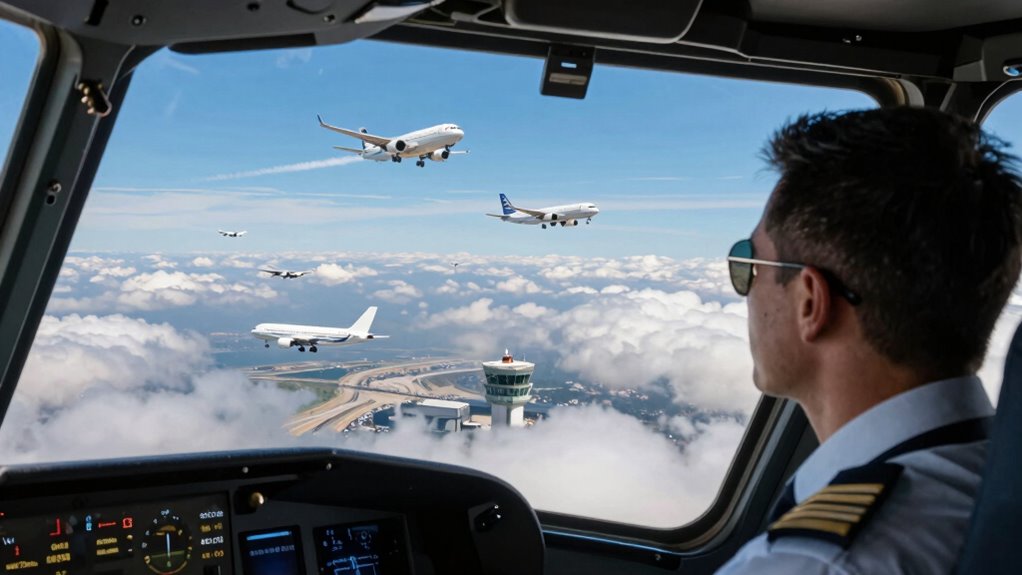
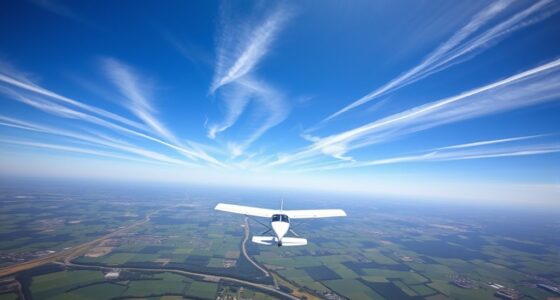
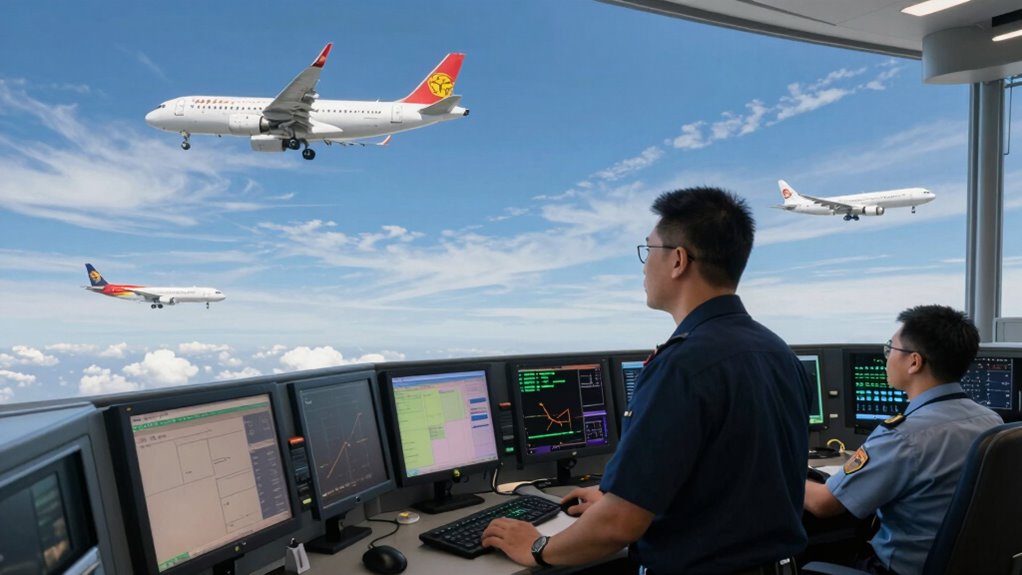
Managing busy airspace requires more than just relying on instruments; it demands a vigilant lookout technique. As a pilot, your ability to spot other aircraft quickly and accurately becomes essential to maintaining safety. This means you need to develop a disciplined approach to visual scanning—systematically sweeping your eyes across the entire cockpit window to detect potential conflicts. Keep your head moving smoothly, not jerking, and avoid fixating on one spot too long, which can cause you to miss approaching traffic. Instead, divide your visual field into sectors and check each one methodically. Incorporating effective communication protocols is equally important. When you spot another aircraft or potential hazard, you should promptly and clearly communicate your position and intentions to air traffic control and other pilots using standardized phraseology. This reduces misunderstandings and guarantees everyone is on the same page, especially in congested skies.
Good lookout technique also involves constant awareness of the environment around you. Scan for traffic not only visually but also listen for radio calls from other pilots or controllers that could alert you to nearby aircraft. Remember, visual scanning isn’t a one-time check; it’s an ongoing process. Continuously update your mental picture of the traffic situation, especially when maneuvering or changing altitude. This ongoing vigilance helps you anticipate potential conflicts before they develop into dangerous situations. Developing situational awareness is a crucial part of maintaining safety in busy airspace, enabling pilots to better predict and respond to traffic movements. Maintaining a systematic scanning pattern can greatly improve your chances of early detection. Additionally, understanding the rules of traffic separation ensures you can better interpret and react to traffic patterns, reducing the risk of conflicts. Staying current on airspace regulations and procedures can further enhance your ability to manage traffic effectively.
In practice, effective communication protocols involve more than just talking; they require active listening and confirmation. When another aircraft reports its position, acknowledge it clearly, and repeat critical information if needed to confirm understanding. This proactive exchange reduces the risk of miscommunication, which is especially important in busy airspace where multiple aircraft are maneuvering simultaneously. Additionally, integrating technology tools such as collision avoidance systems can provide an extra layer of safety, especially in dense traffic scenarios.
aviation collision avoidance systems
As an affiliate, we earn on qualifying purchases.
As an affiliate, we earn on qualifying purchases.
Frequently Asked Questions
How Often Should I Update My Lookout During Flight?
You should update your lookout continuously during flight, especially in busy airspace. Use visual scanning regularly to spot other aircraft, obstacles, and changes in your environment. This ongoing process helps you make timely decisions, avoiding potential conflicts. Don’t let your guard down—frequent updates guarantee you stay aware of your surroundings, improve your decision-making, and maintain safety. Stay vigilant and keep your lookout active at all times.
What Equipment Assists With Effective Lookout in Busy Airspace?
You can enhance your lookout in busy airspace with equipment like radar, TCAS, and GPS, which support visual scanning and instrument monitoring. Radar helps spot distant aircraft, while TCAS provides collision alerts, and GPS guarantees accurate navigation. Always combine this equipment with active visual scanning, regularly checking your instruments, and staying alert to surrounding traffic. This integrated approach keeps you aware and safe amid dense airspace activity.
How Do Weather Conditions Impact Lookout Techniques?
Weather hazards and visibility challenges can turn your lookout into a foggy window, making it harder to spot other aircraft. Rain, fog, or snow obscure your view like a thick curtain, requiring you to rely more on instruments and heightened awareness. In such conditions, you must sharpen your vigilance, scan more frequently, and trust your equipment. Clear communication and extra caution become your guiding stars through the stormy maze of busy airspace.
What Are Common Lookout Mistakes to Avoid?
You should avoid common lookout mistakes like neglecting thorough visual scanning and losing situational awareness. Don’t focus too narrowly on a single area; instead, scan systematically to catch everything around you. Resist the urge to become complacent, especially in busy airspace. Always stay alert, rotate your gaze, and maintain a clear picture of your environment. These habits help prevent accidents and guarantee you’re prepared for any unexpected changes.
How Does Crew Coordination Enhance Lookout Effectiveness?
Did you know that effective crew coordination improves lookout success by up to 30%? When you prioritize clear crew communication, everyone stays aware of potential hazards. Visual scanning becomes more thorough as team members share observations and confirm sightings. This collaborative approach reduces missed targets, helps prevent collisions, and guarantees safer navigation. By working together, you create a proactive environment where constant vigilance and shared responsibility keep the airspace safer for everyone.
Conclusion
In busy airspace, your lookout technique is your lighthouse in a fog of chaos, guiding you safely through the chaos. Stay vigilant, scan thoroughly, and communicate clearly with others. Like a skilled shepherd tending their flock, your sharp eyes and quick decisions keep everyone safe, preventing collisions from lurking just beyond sight. Mastering this skill turns the unpredictable sky into a well-choreographed dance, where your vigilance is the steady beat that keeps all safely in step.
Fall Picks
fall essentials
As an affiliate, we earn on qualifying purchases.