
Ground handling equipment like towbars, dollies, and wingtip wheels are crucial for safely moving aircraft on the ground. Towbars connect vehicles to aircraft for towing, while dollies transport luggage and cargo efficiently. Wingtip wheels assist with aircraft maneuvering during parking and pushback. Regular inspection, maintenance, and proper handling guarantee safety and prevent delays. To learn how these tools keep airport operations smooth and secure, continue exploring their roles and upkeep essentials.
Key Takeaways
- Towbars connect ground vehicles to aircraft for safe and efficient towing operations, requiring regular inspection for cracks and corrosion.
- Dollies facilitate the transport of luggage, cargo, and aircraft parts, with maintenance focusing on wheels, brakes, and structural integrity.
- Wingtip wheels assist in aircraft maneuvering during parking and pushback, demanding routine checks of tires, air pressure, and steering mechanisms.
- Proper maintenance and alignment of ground support equipment prevent accidents, equipment failure, and operational delays.
- Regular inspections and timely repairs of towbars, dollies, and wingtip wheels ensure safety, longevity, and optimal airport efficiency.
Have you ever wondered what keeps an airport running smoothly behind the scenes? It’s the ground handling equipment that plays a crucial role in ensuring aircraft are safely and efficiently moved on the ground. When it comes to aircraft safety, ground support tools like towbars, dollies, and wingtip wheels are essential. They help prevent accidents, damage, and delays by allowing precise control during aircraft movements. To maintain this level of safety, strict maintenance procedures are followed to keep all equipment in top condition. Regular inspections, lubrication, and timely repairs are part of these procedures, ensuring that each piece functions properly when needed.
Ground support equipment ensures safe, efficient aircraft movement through strict maintenance and regular inspections.
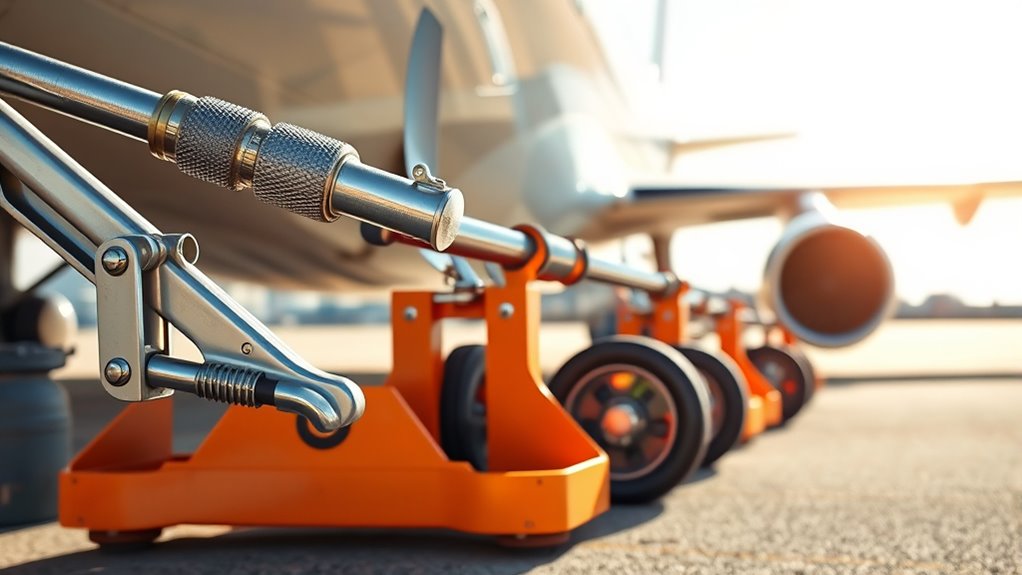
Towbars are the backbone of aircraft towing operations. These sturdy connectors link ground vehicles to aircraft, allowing pilots or ground operators to move planes without starting the engines. Because they handle large loads and are used often, their maintenance is critical. Daily checks include inspecting for cracks, corrosion, or any signs of wear that could compromise safety. Proper attachment and alignment are vital to prevent accidental detachment, which could cause damage or injury. When you use towbars, you rely on the integrity of their construction, which is why maintenance procedures emphasize thorough inspections and timely replacements. Additionally, understanding the materials used in towbars can help improve their longevity and safety.
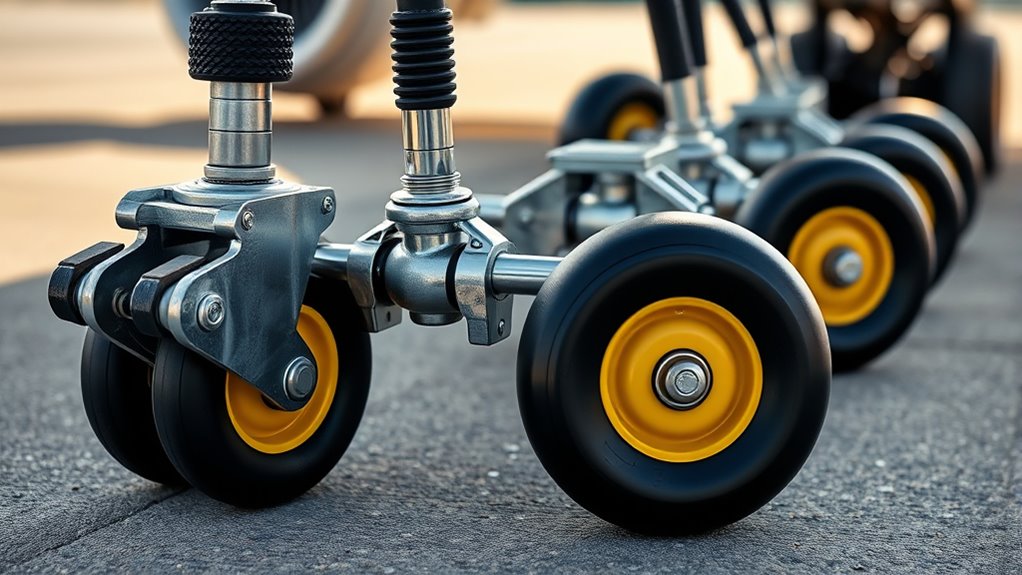
Dollies, on the other hand, are wheeled carts designed to transport luggage, cargo, or even aircraft parts. They’re versatile tools that help facilitate quick and safe handling of items, reducing manual effort and risk of injury. For aircraft, specialized dollies move cargo containers or service equipment. Their maintenance involves checking wheel functionality, brake systems, and the structural integrity of the platform itself. Regular lubrication of moving parts ensures smooth operation, and any worn-out components are promptly replaced to avoid operational hiccups. When used correctly, dollies help maintain aircraft safety by minimizing the chance of accidents during loading or unloading.
Wingtip wheels are small, yet crucial, devices that help maneuver aircraft smoothly during parking or pushback. These wheels attach near the wingtips and aid in steering, especially during tight turns. Because they are in constant contact with the ground and often exposed to harsh conditions, their maintenance is vital. Routine checks involve inspecting for tire wear, checking the air pressure, and ensuring the steering mechanisms are responsive. Proper maintenance procedures help prevent wheel failure, which could lead to costly delays or damage to the aircraft. When you understand how vital these components are, you realize that diligent upkeep and adherence to safety standards directly impact the overall efficiency and safety of airport operations. Regularly monitoring equipment condition ensures continued safety and optimal performance across all ground support tools.
Frequently Asked Questions
What Are the Maintenance Requirements for Towbars and Dollies?
You should regularly inspect your towbars and dollies for hydraulic issues, ensuring hydraulic systems are functioning smoothly and leaks are absent. Prevent corrosion by cleaning the equipment after use and applying protective coatings as needed. Keep an eye out for rust or damage, and perform routine maintenance checks. Proper storage also helps avoid unnecessary wear, ensuring your ground handling equipment remains reliable and safe for daily operations.
How Do Wingtip Wheels Improve Aircraft Ground Handling?
Wingtip wheels considerably improve aircraft ground handling by enhancing maneuverability. When you use wingtip wheels, you gain better control during taxiing, especially in tight spaces or congested areas. They reduce the risk of wingtip damage and allow smoother turns, making ground operations safer and more efficient. With wingtip wheels, you can handle aircraft more precisely, minimizing strain on crew and equipment while ensuring safer ground movements.
Are There Safety Standards for Ground Handling Equipment?
You might think safety standards are optional, but they’re not. Yes, there are strict safety regulations and certification standards for ground handling equipment. These guarantee that towbars, dollies, and wingtip wheels operate safely, reducing accidents. Always verify that your equipment meets these standards before use. Following safety regulations not only protects personnel but also keeps aircraft and ground operations running smoothly and efficiently.
What Are the Compatibility Considerations for Different Aircraft Models?
When considering compatibility, you need to match ground handling equipment with the aircraft’s weight and ground clearance. Heavier aircraft require sturdier towbars and dollies, while aircraft with low ground clearance need equipment designed to prevent damage to wingtips and undercarriage. Always verify the equipment’s specifications against the aircraft model to guarantee safe handling. Proper matching reduces risks and ensures efficient, safe ground operations.
How Can Equipment Be Customized for Specific Airline Needs?
While it’s wise to explore airline-specific equipment options, you can achieve ground handling customization by tailoring towbar lengths, dollies, and wingtip wheels to your fleet’s unique needs. Collaborate closely with manufacturers to integrate features like ergonomic designs or specialized adapters, ensuring seamless compatibility. This approach enhances operational efficiency, safety, and comfort, making your ground handling processes smoother and more aligned with your airline’s operational goals.
Conclusion
With the right ground handling equipment like towbars, dollies, and wingtip wheels, you’re the conductor guiding a symphony of aircraft movements. These tools are the unsung heroes that keep operations smooth and safe, turning chaos into harmony. Remember, just as a compass points you in the right direction, this equipment directs your efficiency and safety on the tarmac. Embrace them, and you’ll navigate ground handling with the confidence of a captain steering through calm skies.