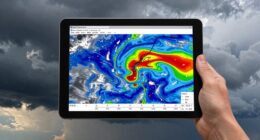
Gust fronts and line storms form when warm, moist air rises rapidly, creating thunderstorms with towering cloud structures. As the storm’s downdrafts cool and force out cold air, gust fronts develop, causing sudden wind shifts and temperature drops. These outflows can trigger more storms and microbursts due to strong wind shear and atmospheric instability. Understanding how these elements interact helps you grasp the science behind these intense weather events—stay tuned to learn more about their fascinating dynamics.
Key Takeaways
- Gust fronts form when cold, dense air from storm downdrafts rapidly advances into warm, moist air ahead.
- Line storms develop through interactions between rising warm air and cold outflows, organizing into elongated storm lines.
- Strong updrafts and microphysical processes within storms sustain their intensity and potential for severe weather.
- Detecting gust fronts involves observing sharp temperature drops, wind shifts, and radar signatures indicating outflow boundaries.
- Understanding storm microphysics and atmospheric conditions helps explain the energy release and development of line storms.

Cobra RAD 480i Laser Radar Detector – Long Range Detection, Bluetooth, Apple CarPlay and Android Auto Compatible, LaserEye Front and Rear Detection, Digital Signal Processing, Black
Front and Rear Detection – Cobra’s new LaserEye technology detects signals from both the front and rear of…
As an affiliate, we earn on qualifying purchases.
As an affiliate, we earn on qualifying purchases.
The Formation of Thunderstorm Cells

Thunderstorm cells form when warm, moist air rises rapidly into the atmosphere, creating an unstable environment. As this air ascends, it fuels storm energy, powering the development of cloud structures. The rising air causes cloud dynamics to intensify, leading to the formation of towering cumulonimbus clouds. These clouds grow taller as they draw in more moisture and energy, which increases the storm’s potential strength. You’ll notice that the initial rise of warm air sets the stage for convection, allowing storm cells to organize and develop. The interaction between warm, moist surface air and cooler upper layers creates the perfect conditions for storm energy to accumulate. This process is essential for the birth of thunderstorm cells, setting the foundation for more complex weather phenomena. Additionally, the presence of unstable atmospheric conditions supports sustained convection, further intensifying storm development.

BTMETER Anemometer Handheld Wind Speed Meter, BT-816B Mini Digital Air Flow Meter with LCD Backlight/Wind Chill & Temp, Max/Avg/Current Mode to Measure Air Flow Velocity for Sailing Drone Golf HVAC
✅【Highly Accurate Digital Wind Meter】Portable Wind measure device with a sensitive temperature sensor & 7 smooth fan shaft…
As an affiliate, we earn on qualifying purchases.
As an affiliate, we earn on qualifying purchases.
How Cold Air Outflows Create Gust Fronts

When a storm’s updraft weakens, cold air from the storm’s downdraft rushes outward into the surrounding air, creating a gust front. This outflow forms a boundary marked by a sudden drop in temperature and wind speed increase. As the cold air pushes ahead, it interacts with warm, moist surface air, leading to rapid uplift and sometimes severe weather. Cold pool dynamics drive this process, as the cold air pools near the surface, spreading out rapidly. These gust fronts can produce microburst hazards, where intense, localized downdrafts cause damaging winds. Understanding how cold air outflows generate gust fronts helps you anticipate sudden wind shifts and potential microbursts, especially in severe weather conditions. Recognizing these signs enhances safety during thunderstorms. Additionally, the formation of gust fronts is closely linked to the cold pool that develops beneath the storm, which influences the strength and movement of the outflow boundary.

AcuRite Iris (5-in-1) Professional Weather Station with LCD Display and Lightning Detection (01022M)
Real-Time Weather Conditions: Receive readings for indoor outdoor temperature and humidity, wind speed/direction, barometric pressure, and rainfall directly…
As an affiliate, we earn on qualifying purchases.
As an affiliate, we earn on qualifying purchases.
The Dynamics of Line Storms and Their Structure

Understanding how line storms form helps you grasp their complex structure and behavior. You’ll see how gust fronts influence storm development and how their organization varies. This foundation sets the stage for exploring the mechanics behind these powerful weather systems. Incorporating expert insights and accurate soundscapes enhances the understanding of storm dynamics.
Line Storm Formation Mechanics
Line storms develop through a complex interaction of atmospheric conditions that organize thunderstorms into long, continuous lines. This structure forms when warm, moist air rises and interacts with cold, dry air, creating a corridor for storm development. As these storms grow, their mechanics involve:
- Rapid updrafts that sustain and extend the line, often leading to microburst formation, which causes sudden, intense downdrafts.
- Colliding air masses that produce strong shear, helping the line maintain cohesion.
- Embedded supercells that develop hail, as strong updrafts loft water droplets into freezing zones.
- Continuous surface inflow feeding the storm line, fueling its persistence and intensity.
- The presence of strong wind shear enhances the organization and longevity of line storms, enabling them to produce severe weather over extended periods.
This combination of factors results in a dynamic, organized line of storms capable of producing severe weather events.
Gust Front Development
Gust fronts form as the leading edge of cool, dense air rushing out from a line storm encounters the warmer, moist air ahead. This rapid outflow creates a sharp temperature and humidity contrast, fueling the storm’s strength. As the gust front advances, it can trigger microburst impacts—powerful downdrafts that hit the ground with destructive force, posing serious hazards. These microbursts can cause sudden, damaging winds that topple trees, flip vehicles, and threaten lives. The gust front’s intensity varies, but its rapid movement and gusts can be unpredictable. Recognizing gust front hazards is essential for safety, as the sudden wind shifts and microburst impacts often occur without warning. Staying alert to these features helps you avoid the most dangerous aspects of line storms. Additionally, understanding appliance safety and being prepared can help protect you during severe weather events.
Storm Structure Variability
Have you ever noticed how some storms appear organized and linear, while others seem chaotic and disorganized? Storm structure variability depends on factors like cloud microphysics and atmospheric chemistry. These influence how storms develop and evolve. For example:
- Changes in cloud microphysics alter precipitation types, shaping storm shape.
- Variations in atmospheric chemistry affect electrification, impacting storm intensity.
- Wind shear can stretch or cluster storms, creating different structures.
- Humidity levels influence storm organization and longevity.
This variability determines whether a line storm remains a tight, cohesive line or breaks into multiple segments. Such differences impact gust front behavior and storm severity, making understanding these dynamics essential for accurate forecasting and safety measures. Recognizing these elements helps you better interpret storm behavior and potential risks.
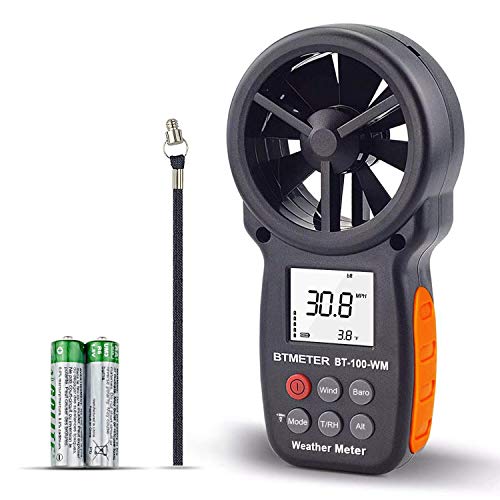
BTMETER Digital Anemometer Barometer Handheld, for Wind Speed Temperature Wind Chill Tester w/Humidity, Altitude, Barometric Pressure Meter for Climbing Drone HVAC CFM BT-100WM
➤【MULTIFUNCTION ANEMOMETER】BT-100WM wind speed gauge meter measures not only Wind Speed, Wind Temp, Wind Chill Indicator, but also…
As an affiliate, we earn on qualifying purchases.
As an affiliate, we earn on qualifying purchases.
Atmospheric Conditions Contributing to Severe Storms
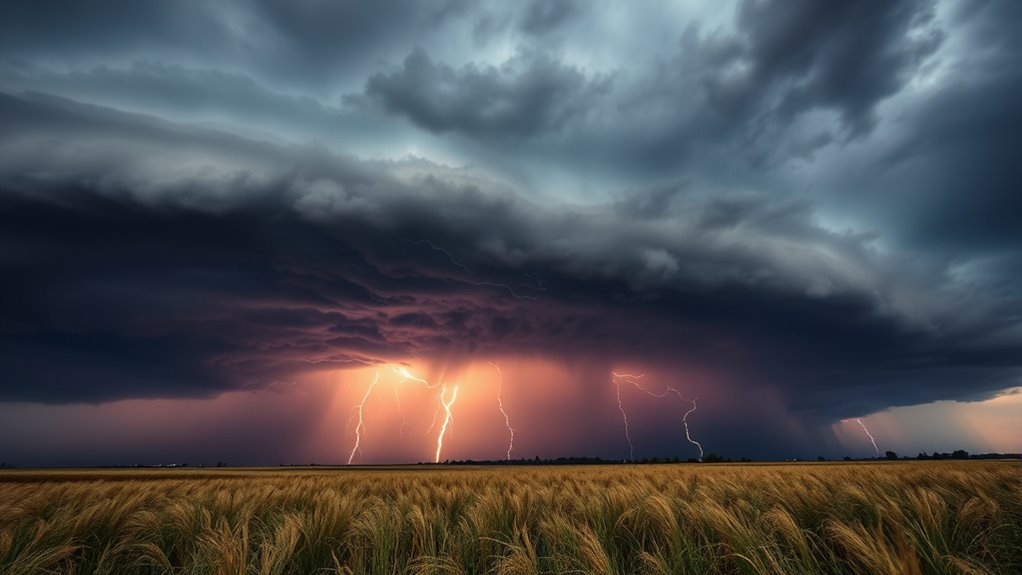
Severe storms typically form when specific atmospheric conditions come together, creating an environment conducive to intense weather activity. You need the right precipitation patterns—warm, moist air rising and interacting with cooler air aloft—to fuel storm development. Cloud microphysics also play a pivotal role, as the processes of condensation, droplet formation, and ice crystal growth determine the storm’s strength and structure. When moisture condenses into large, heavy droplets, it releases energy that sustains and intensifies the storm. Additionally, if the atmosphere supports vigorous updrafts, these microphysical processes become more efficient, leading to more powerful storms. Understanding how precipitation patterns and cloud microphysics work together helps explain why some environments produce severe storms while others remain calm. Recognizing the importance of dog names can also reflect the personality or appearance of the storm chaser or meteorologist involved in storm tracking.
The Role of Wind Shear and Instability in Storm Development
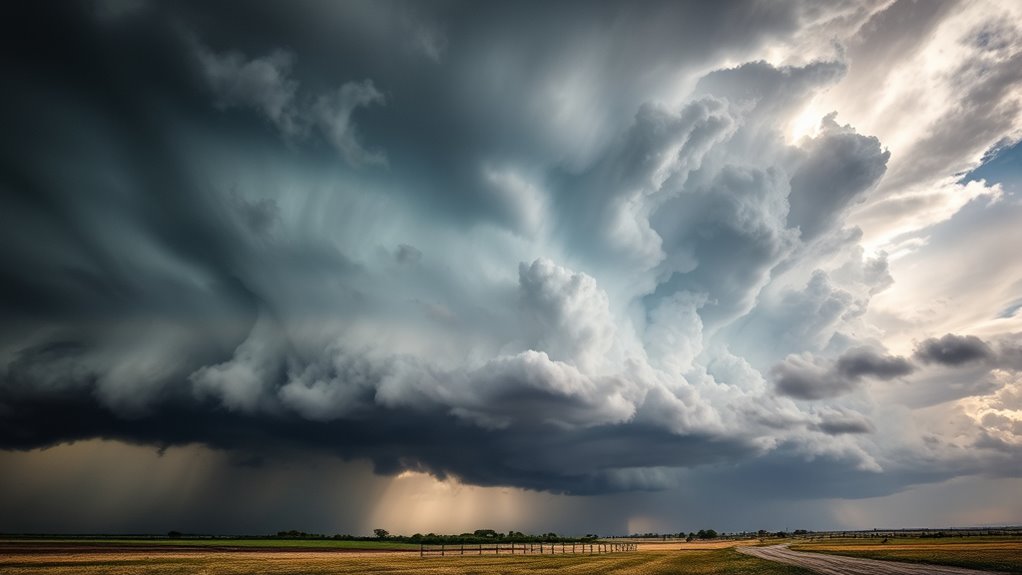
Wind shear and atmospheric instability are crucial factors that influence storm development. They create the environment needed for powerful storms to form and intensify. Here’s how they work: 1. Strong wind shear tilts storm updrafts, helping them stay organized and increasing the chance of tornado genesis. 2. Instability causes warm, moist air to rise rapidly, fueling storm growth and supporting hail formation. 3. The combination of shear and instability fosters rotating updrafts, which can produce supercells capable of tornadic activity. 4. These conditions also promote strong downdrafts and gust fronts, intensifying line storms. Additionally, the presence of narcissistic behaviors in some atmospheric patterns can influence storm severity by disrupting typical airflow dynamics.
Monitoring and Predicting Gust Fronts and Line Storms
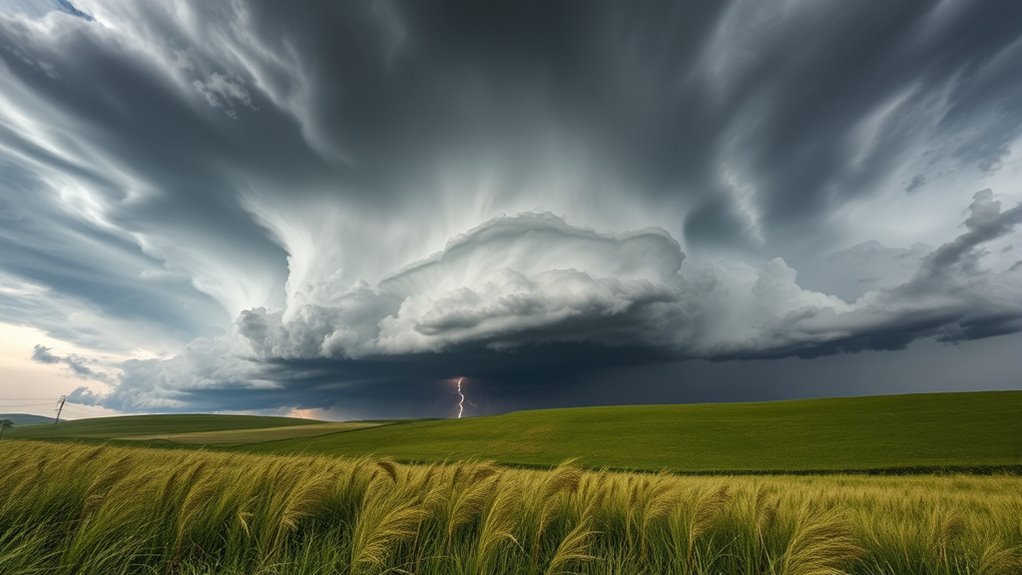
To monitor and forecast gust fronts and line storms effectively, you depend on advanced satellite and radar tools that provide real-time data. Recognizing weather patterns early helps you stay ahead of developing storms, enabling timely warnings. Implementing early warning systems ensures you can alert others quickly and accurately before severe weather hits.
Satellite and Radar Tools
Satellite and radar tools play a crucial role in monitoring and predicting gust fronts and line storms, allowing meteorologists to track these dynamic weather features in real time. You can observe how satellite imagery provides a broad view of cloud formations and storm development from space. Radar technology, on the other hand, offers detailed information on precipitation intensity and movement. Specifically, it helps you to:
- Detect approaching storm lines and their speed
- Identify gust front boundaries through sharp shifts in wind patterns
- Track storm growth and movement with real-time updates
- Analyze cloud tops and precipitation to assess storm severity
Weather Pattern Recognition
Recognizing weather patterns that signal gust fronts and line storms is essential for accurate forecasting. You observe changes in cloud formations, such as arc-shaped clouds or shelf clouds, which often indicate an approaching gust front. Microclimate effects, like urban heat, can intensify local convection, making storms more unpredictable. Monitoring temperature differences, wind shifts, and cloud build-up helps in early detection. Here’s a quick overview:
| Feature | Indicator | Effect |
|---|---|---|
| Microclimate Effects | Urban heat pockets intensify convection | Faster storm development |
| Cloud Formation | Shelf or arc clouds | Signals gust front approach |
| Temperature Gradient | Sharp temperature drops ahead of storms | Indicates storm’s arrival |
| Wind Shift | Sudden changes in wind direction | Signifies gust front passage |
| Precipitation Patterns | Rapidly increasing rain intensity | Confirms storm strengthening |
Being aware of weather variability can help meteorologists better anticipate these events.
Early Warning Systems
Early warning systems play a crucial role in detecting gust fronts and line storms before they reach their peak intensity. You rely on technology and observations that track microclimate variations and atmospheric chemistry changes. These systems analyze:
- Real-time weather radar data to spot storm formation and movement
- Satellite imagery revealing storm structure and microclimate shifts
- Ground-based sensors monitoring temperature, humidity, and wind shifts
- Atmospheric chemistry readings indicating changes in pollutants and aerosols that influence storm development
A comprehensive understanding of angel number soulmate patterns can also enhance prediction accuracy and provide valuable insights into impending love-related events.
Frequently Asked Questions
How Do Gust Fronts Influence Local Weather Conditions?
Gust fronts critically impact local weather by bringing sudden changes in conditions. As they move, microburst dynamics can cause powerful downdrafts, leading to localized strong winds. Wind shear effects become more pronounced, creating abrupt shifts in wind direction and speed. You might notice a rapid drop in temperature, increased wind intensity, or even a sudden storm development. These changes can impact your safety, especially during severe weather events, making gust fronts essential to monitor.
Can Gust Fronts Occur Without Thunderstorm Formation?
You might think gust fronts only occur with storms, but they can happen without storm formation. Gust front dynamics involve cool air rushing out from a weather boundary, creating a sudden wind shift. These outflows can develop independently, especially in stable conditions or when a dying storm’s remnants move through. So, yes, gust fronts can occur even if a full storm doesn’t form, affecting local weather unexpectedly.
What Is the Typical Lifespan of a Line Storm?
A line storm usually lasts between 30 minutes to a few hours, but storm longevity depends on environmental factors like available moisture, wind shear, and instability. You might notice storms persist longer if these conditions remain favorable, or weaken quickly if they change. Your awareness of these factors helps you understand why some line storms are brief while others can last for extended periods, impacting your planning and safety.
How Do Terrain and Geography Affect Storm Development?
Terrain and geography considerably impact storm development. Mountain influences can force moist air upward, triggering storms, while valleys funnel winds, intensifying them. Urban heat increases surface temperatures, promoting convection and storm formation. You’ll notice that areas near mountains often see more severe storms due to orographic lift, and cities with high heat islands tend to experience localized storm development. These geographical factors shape how and where storms develop and intensify.
Are There Specific Signs Indicating an Imminent Gust Front?
You sense it before it arrives: a sudden drop in temperature, a shift in wind direction, or a distant rumble. These atmospheric cues are your clues for storm prediction, signaling an imminent gust front. Look for darkening skies and rapidly changing weather patterns. Recognizing these signs early can help you stay safe, as the gust front’s arrival often comes with fierce winds and sudden storms.
Conclusion
Think of the atmosphere as a grand orchestra, where gust fronts and line storms are powerful movements shaping the sky’s symphony. By understanding the science behind these phenomena, you become a skilled conductor, predicting the tumult before it unfolds. Staying alert and informed allows you to navigate the storm’s rhythm safely, turning chaos into harmony. Remember, with knowledge, you can read the sky’s melody and respond wisely to nature’s thunderous performance.