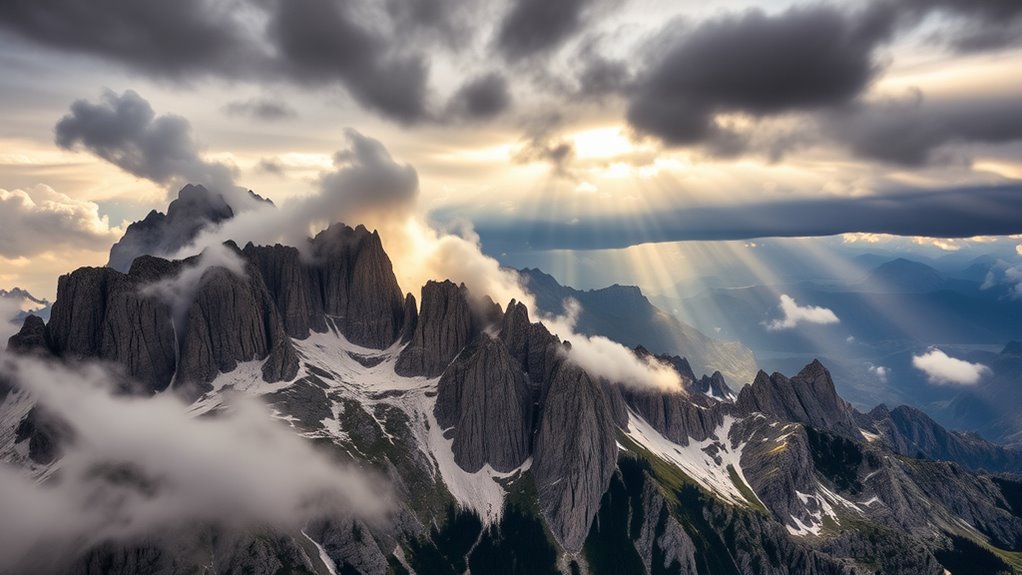

When soaring in the Italian Dolomites, you face rapid weather changes and hazards like avalanches on steep slopes, unstable snowpack, and sudden storms with lightning and strong winds. Weather can shift quickly from clear skies to thunderstorms, making safety essential. Always monitor forecasts, watch for signs of instability, and seek shelter if storms approach. Understanding these conditions can greatly enhance your safety and experience, and there’s much more to learn about traversing these breathtaking peaks safely.
Key Takeaways
- The Dolomites experience rapid weather changes, including sudden storms, thunderstorms, and high winds, especially in spring and winter.
- Avalanche risk increases after heavy snowfall or temperature shifts, requiring careful snow and weather condition assessments.
- Lightning strikes are common during storms, posing hazards on exposed ridges and summits; sheltering is essential.
- Mountain weather can shift quickly from clear skies to dangerous conditions, making real-time monitoring crucial.
- Proper gear, weather forecasts, and awareness of signs of instability help mitigate hazards while exploring the region.
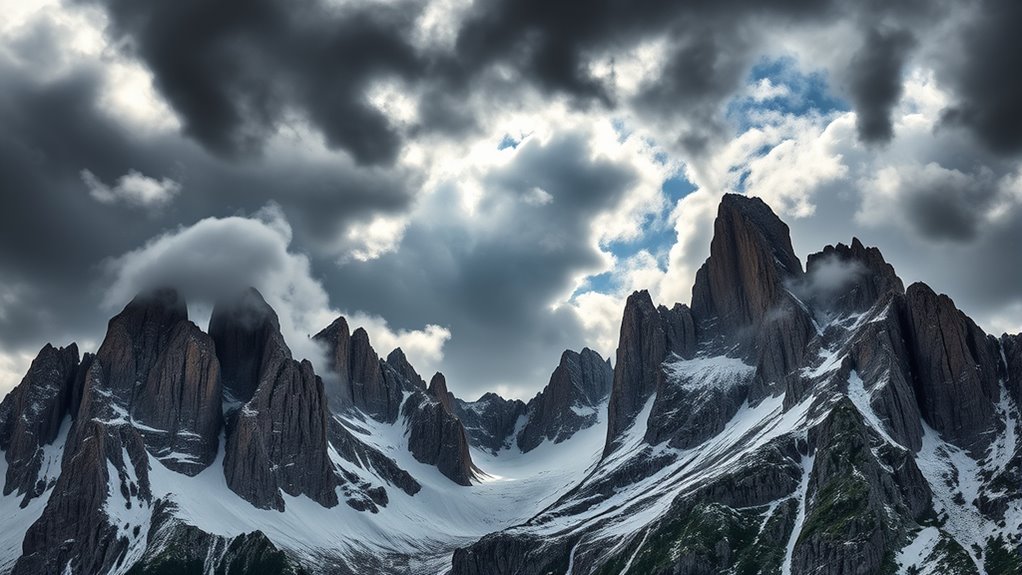
The Italian Dolomites are a stunning mountain range that attract countless outdoor enthusiasts each year, but their beauty comes with inherent weather risks. One of the most serious dangers you need to be aware of is the avalanches risk. When snow accumulates on the steep slopes, especially after heavy snowfall or rapid temperature changes, the terrain becomes unstable. If you’re venturing into backcountry areas, a sudden shift in weather can trigger an avalanche without warning. It’s essential to check recent snow conditions and avalanche forecasts before your trip. Carrying proper safety equipment such as a transceiver, probe, and shovel can be lifesaving. Recognizing signs of instability, like cracking snow or recent avalanches elsewhere, can help you avoid high-risk zones. Remember, even if you’re experienced, the mountain’s unpredictable nature can surprise you, making caution a priority. Being aware of mountain hazards is crucial for safe exploration. Sudden storms are another hazard you’ll encounter in the Dolomites. Weather can shift rapidly, especially during spring and winter, catching hikers and climbers off guard. A clear morning can quickly turn into a thunderstorm, bringing heavy rain, lightning, and strong winds. These storms reduce visibility, making navigation difficult and increasing the risk of falls or losing your way. Lightning strikes are particularly dangerous on exposed ridges and summits. To stay safe, always monitor weather forecasts and be prepared to seek shelter at the first sign of an approaching storm. It’s wise to plan your ascent to avoid the afternoon hours when storms tend to develop. If caught in a sudden storm, avoid exposed areas, seek shelter in a sturdy cabin or deep gully, and wait for the weather to pass. Remember, the Dolomites’ high elevations amplify the severity of these storms, so never underestimate their power.
Understanding these weather hazards means you can better prepare yourself for the conditions you’ll face in the Dolomites. Always check the latest forecasts, carry appropriate gear, and stay alert to the signs of changing weather. Avalanches risk and sudden storms can turn an exhilarating adventure into a dangerous ordeal if you’re not cautious. Respect the mountain environment, listen to local advice, and never push your limits in questionable conditions. Your safety depends on your awareness and preparedness, ensuring you can enjoy the breathtaking beauty of the Dolomites while minimizing risks.
Frequently Asked Questions
What Is the Best Season for Flying in the Dolomites?
You’ll find spring and early summer the best seasons for flying in the Dolomites. During this time, seasonal wind patterns are usually stable, providing good thermal activity for soaring. You’ll also notice mountain cloud formation forming predictably, creating ideal conditions for cross-country flights. Avoid late summer when thunderstorms and unpredictable weather can occur, making flying riskier. So, plan your trip from late spring to early summer for ideal flying conditions.
How Do Local Weather Forecasts Differ From Global Models?
Back in the day, weather forecasts relied heavily on guesswork, but today, local forecasts differ from global models by capturing microclimate variations more precisely. You’ll find local forecasts offer better forecast accuracy, especially for mountain flying, because they consider terrain effects and localized weather patterns. This means you get more reliable info on sudden changes, helping you plan your flight safely and avoid surprises amid the Dolomites’ unpredictable weather.
Are There Specific Times of Day With Higher Weather Risks?
You should be most cautious during the afternoon and early evening when daily weather fluctuations often bring increased risk. Morning generally offers more stable conditions, making it safer for soaring activities. As the day progresses, the sun heats the terrain, causing air to become more turbulent and increasing the chances of sudden weather changes. Always check updated forecasts and be prepared for these shifts, especially during late afternoon and evening.
How Quickly Can Weather Conditions Change Unexpectedly?
Like a thief in the night, unexpected weather shifts can strike suddenly, turning clear skies into stormy chaos within minutes. Rapid weather changes are common in the Dolomites, and you might feel the calm before the storm vanish instantly. Always stay alert, checking weather updates regularly, because conditions can change faster than you can blink. Being prepared helps you navigate these unpredictable skies safely and confidently.
What Emergency Procedures Are Recommended During Sudden Weather Shifts?
When sudden weather shifts occur, follow emergency protocols immediately. Quickly check weather alerts on your device, and if conditions worsen, descend to a safer altitude or land as soon as possible. Stay calm, communicate your situation to others, and prioritize safety. Keep an eye on the sky for signs of changing weather, and always have an emergency plan ready so you can respond swiftly and effectively during unexpected weather changes.
Conclusion
As you explore the stunning Italian Dolomites, remember that weather patterns can change rapidly, posing risks like avalanches and storms. Did you know that over 70% of accidents in the region are weather-related? Staying informed and prepared helps you enjoy the breathtaking scenery safely. Always check the latest forecasts before venturing out, and trust your instincts—your safety depends on it. Adventure awaits, but caution keeps it memorable for all the right reasons.