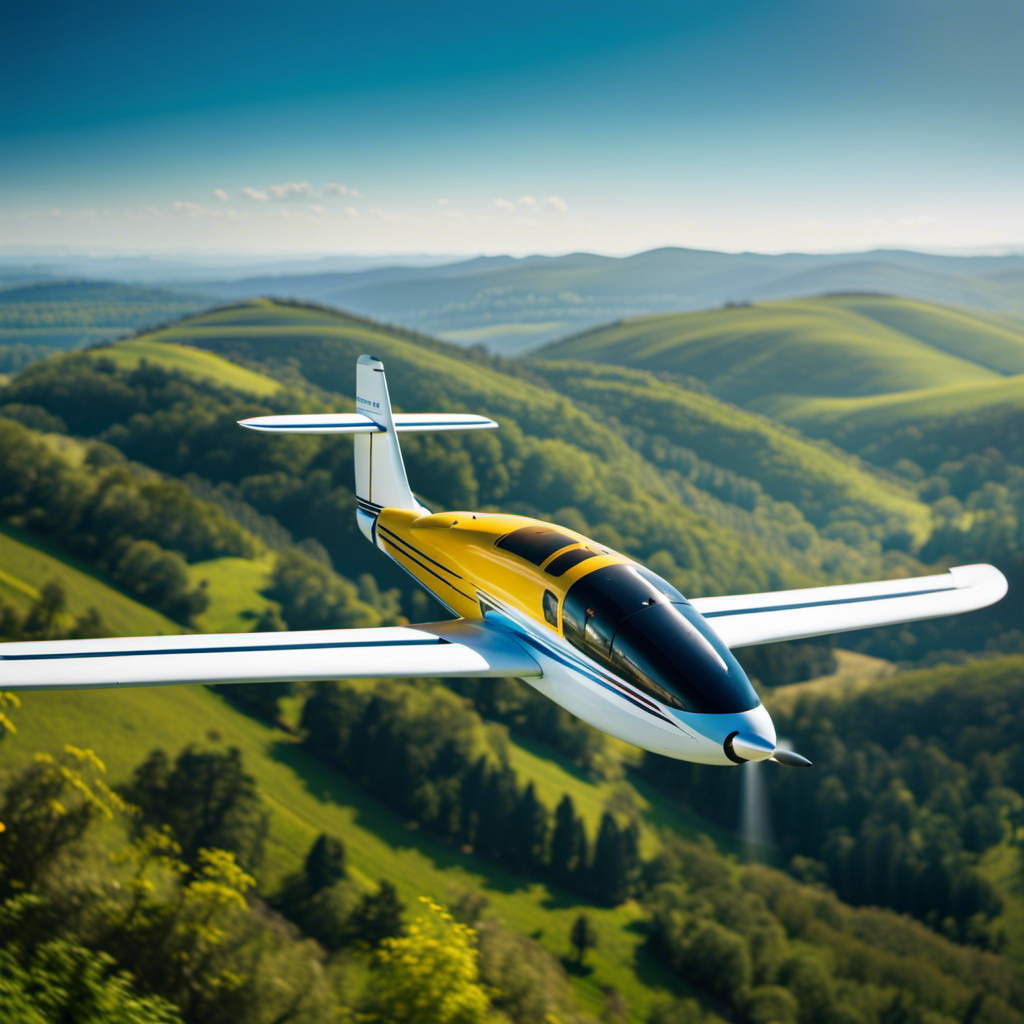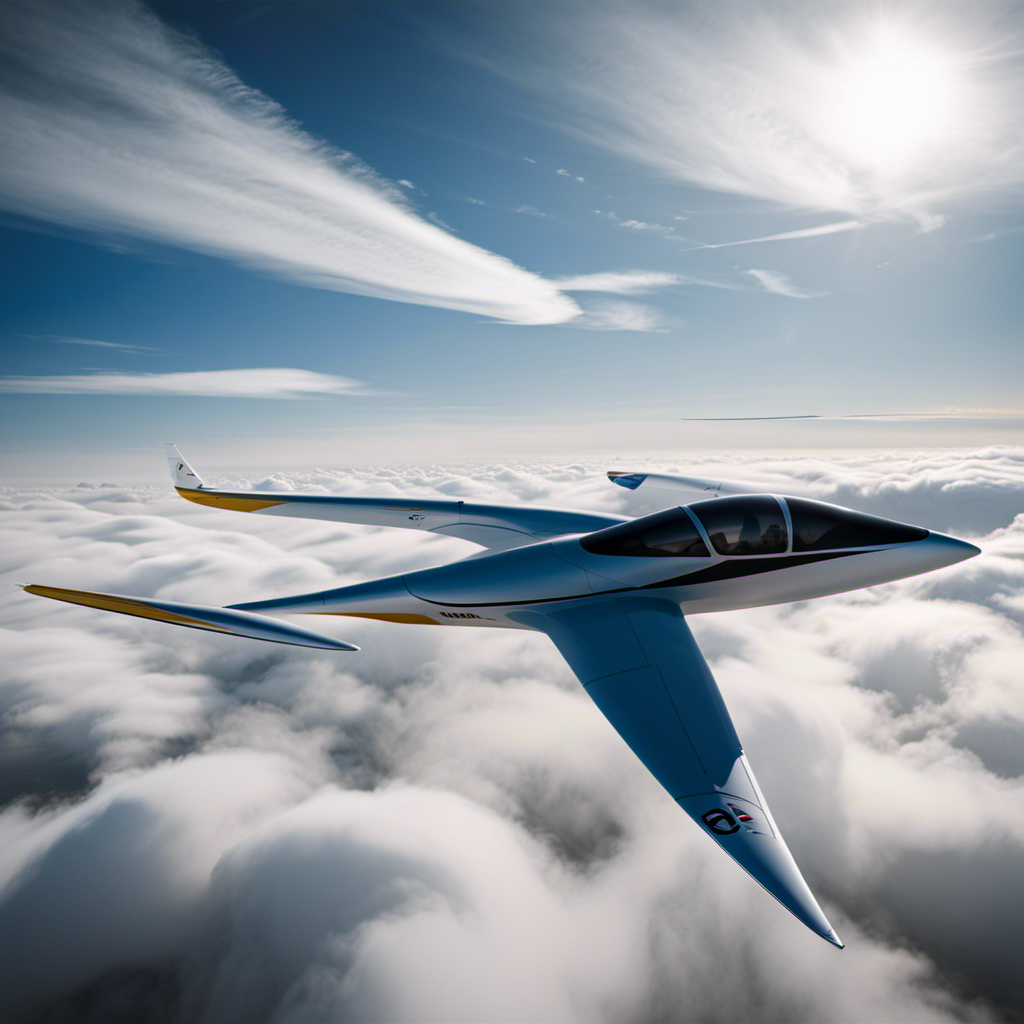

Think of lift as a force that helps an airplane rise, kind of like a surfer catching a wave to stay afloat, while drag acts like wind resistance slowing you down when you walk or ride a bike. Both forces interact, so you might feel drag pushing back against you, and lift pushing you up, similar to balancing on a wave. Continue exploring these everyday examples to see how they shape flight and movement around you.
Key Takeaways
- Lift is the upward force generated by airflow over wings, similar to a surfer riding a wave that pushes them upward.
- Drag is resistance that slows objects down, like feeling wind pushing against your face when cycling fast.
- Increasing speed amplifies drag, requiring more force to maintain movement, just like a motorcycle battling wind resistance.
- Proper wing angles and streamlined shapes reduce drag and optimize lift, akin to wearing aerodynamic gear for cycling.
- Balancing lift and drag ensures stable flight or movement, comparable to how surfers and motorcyclists manage forces for smooth riding.
How Airplanes Use Lift to Stay Aloft
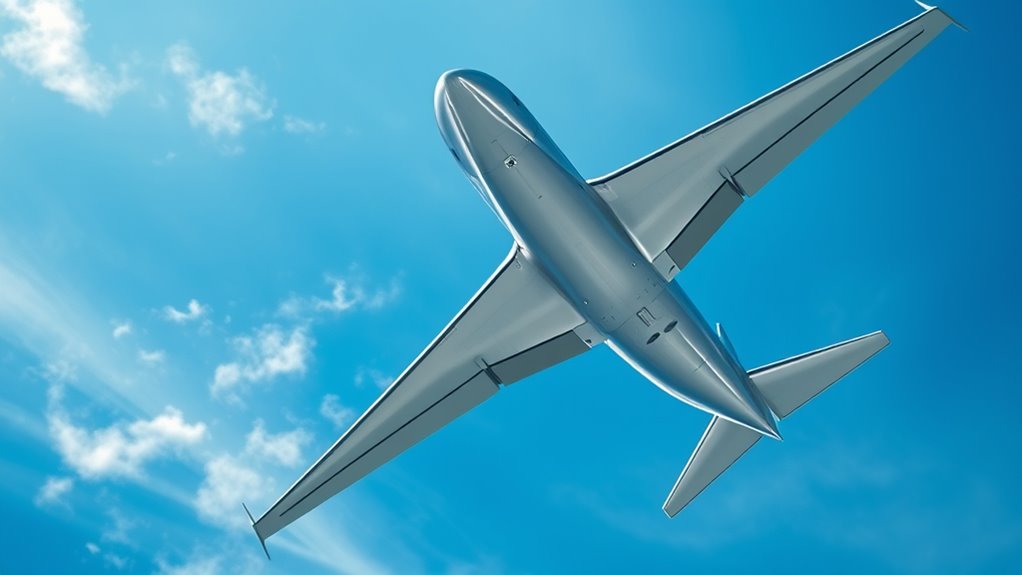
When an airplane takes off, it relies on the principles of lift to stay in the air. Lift is generated mainly by the airplane’s airfoil shape, which means its wings are curved on top and flatter on the bottom. This design causes air to move faster over the top, creating lower pressure there, compared to the bottom. As a result, an upward force pushes the plane upward. The wing angle, or angle of attack, also plays a pivotal role. By tilting the wings slightly upward, you increase lift. But if you tilt too much, it can cause drag or stall. So, adjusting the wing angle carefully helps the aircraft generate enough lift to become airborne and stay in flight. Additionally, the airflow around the wings is essential in creating the lift force.
The Force of Drag and Its Effect on Movement

The force of drag acts as a resistance that opposes the forward motion of an object moving through a fluid, such as air. This drag results from air resistance and frictional force, slowing your movement. As you push forward, the faster you go, the greater the air resistance becomes, making it harder to maintain speed. Understanding this helps you see why objects need engines or extra force to overcome drag. Additionally, designing objects with aerodynamic efficiency can significantly reduce drag and improve performance.
Comparing Lift to a Surfer Riding a Wave

Lift is a force that acts perpendicular to the direction of motion, helping an object stay aloft or move upward through a fluid. Think of a surfer riding a wave—wave dynamics create a push that lifts and guides the surfboard. As you ride, you rely on the wave’s shape and energy, similar to how lift works on an airplane wing. The stability of your surfboard depends on balancing these forces, just like an aircraft maintains altitude. When you find the right spot on the wave, you harness its lift to glide smoothly, avoiding tipping over. This analogy shows how lift isn’t just about going up—it’s about using the fluid’s movement to stay balanced and move forward efficiently. Understanding lift helps explain how pilots keep airplanes safely in the air and how the forces interact during flight.
Visualizing Drag as a Resistance You Feel When Walking

As you walk, you can feel resistance pushing back against your movement—that’s drag in action. This air resistance is like a force that makes walking effort harder the faster you go. It’s similar to feeling wind against your face, which adds to the difficulty of moving forward. To understand this better:
- The faster you walk, the more air resistance you encounter.
- Air resistance acts opposite to your direction, requiring extra effort.
- This resistance is what we call drag, a force that slows down objects moving through air.
Balancing Lift and Drag: A Motorcycle Riding Through Wind
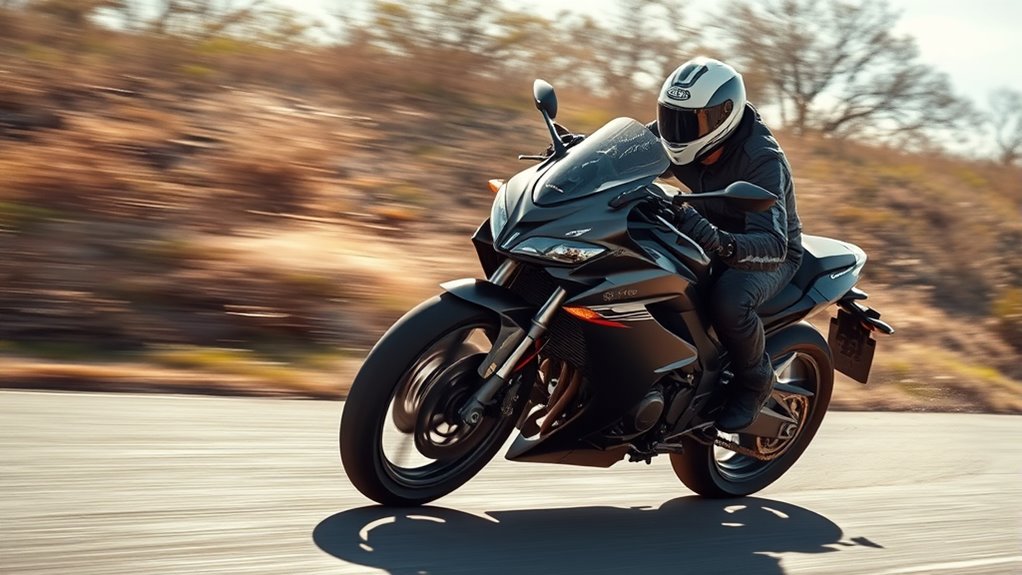
When riding a motorcycle through the wind, you feel the forces of lift and drag working together to affect your ride. Lift can help keep you stable at higher speeds, but too much increases the risk of losing control. Drag, or wind resistance, slows you down and makes riding harder. To maintain aerodynamic efficiency, you need to find a balance where your bike minimizes drag while managing lift. A streamlined helmet, fairings, and riding position reduce wind resistance, making your ride smoother and more efficient. If your setup creates too much lift, you might feel unstable, but if drag is too high, you’ll struggle against wind resistance. Adjusting your posture and bike’s aerodynamics helps you optimize this balance for a safer, more effortless ride through the wind. Proper tuning of your motorcycle’s aerodynamic components can further improve performance and stability on the road.
Frequently Asked Questions
How Do Different Aircraft Designs Influence Lift and Drag?
Different aircraft designs markedly influence lift and drag. You’ll notice that wing shape determines how air flows over the plane, affecting lift and drag forces. Fuselage design also plays a role by either reducing air resistance or increasing it. When you compare sleek, streamlined aircraft with bulkier ones, the streamlined models usually generate less drag and better lift, making them more efficient for flight.
Can Lift and Drag Be Controlled During Flight?
Yes, you can control lift and drag during flight by adjusting control surfaces like ailerons, elevators, and rudders. These surfaces change the aircraft’s angle and shape, allowing you to increase or decrease lift and drag as needed. However, you must consider aerodynamic trade-offs, since increasing lift might also increase drag. Properly managing these controls helps you maintain stability, optimize performance, and respond effectively to changing flight conditions.
How Do Weather Conditions Affect Lift and Drag?
Weather conditions like turbulence effects and wind shear can considerably impact lift and drag during flight. You might feel sudden bumps or shifts, which disrupt the smooth airflow over the wings. Wind shear, a rapid change in wind speed or direction, can reduce lift unexpectedly or increase drag, making flying less stable. Pilots adjust controls and rely on weather data to counteract these effects, ensuring a safer and smoother journey.
What Materials Reduce Drag in Modern Vehicles?
You can reduce drag in modern vehicles by choosing materials with low material stiffness and applying aerodynamic coatings. These coatings smooth out surfaces, minimizing air resistance. Using lightweight, flexible materials helps streamline the shape, cutting drag further. When you select materials designed for aerodynamics, you improve efficiency and speed, making your vehicle more aerodynamic and reducing fuel consumption.
Are There Any Natural Phenomena That Involve Lift and Drag?
You’ll find natural phenomena like bird flight and insect aerodynamics involve lift and drag. Birds generate lift with their wings to stay aloft, just like planes do, while insects use rapid wing beats to manipulate airflow, creating lift and overcoming drag. These processes show how nature uses lift and drag to achieve movement and stability, demonstrating that these forces are essential for many creatures’ flight capabilities.
Conclusion
Understanding lift and drag helps you see how airplanes stay in the sky and how objects move through air. Did you know that airplane wings generate enough lift to support their weight with just a few pounds of pressure? This shows how powerful and efficient these forces are. When you grasp these basics, you’ll appreciate the incredible engineering behind flight and the everyday objects that navigate our windy world. It’s a fascinating reminder of physics in action all around you.