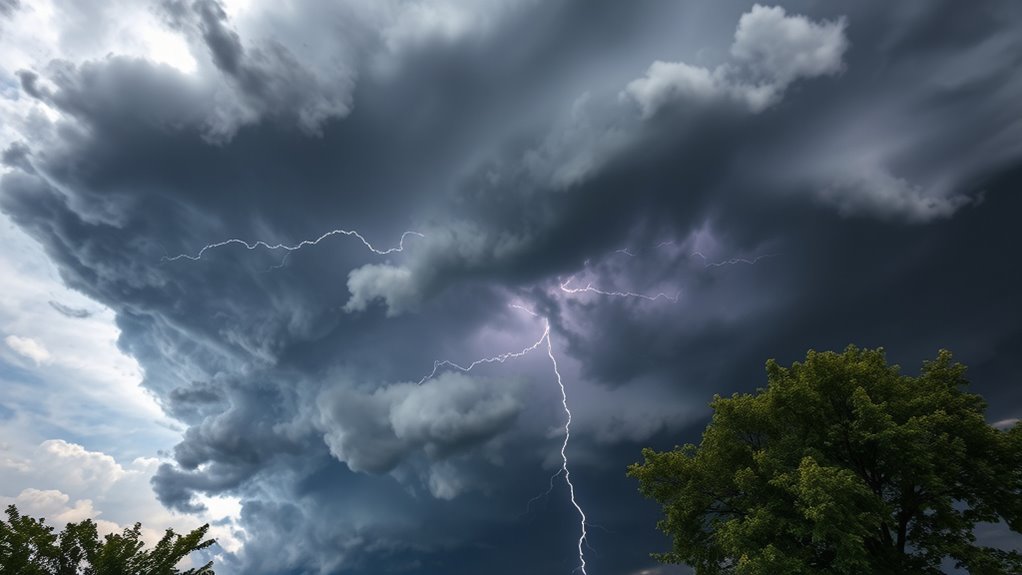

To spot microbursts early, watch for unusual cloud formations like towering cumulonimbus and darkening skies with anvil shapes. Pay attention to sudden wind shifts and rapid changes in wind speed, often accompanied by a quick drop in temperature. Notice if the storm’s calm suddenly turns eerily quiet, signaling an imminent gust or wind reversal. Recognizing these signs helps you act fast—keep exploring to learn more about other vital warning cues.

Get travel and outdoor gear delivered free — and shop member deals
- Fast, free delivery on millions of items
- Access to Prime Big Deal Days deals on October 6–7
- Prime Video, Amazon Music and more included
Key Takeaways
- Watch for sudden darkening skies and towering cumulonimbus clouds indicating imminent microburst activity.
- Monitor rapid changes in wind speed and direction, especially sharp gusts and wind shear signs.
- Notice abrupt temperature drops and lowering cloud bases as indicators of strong downdrafts.
- Observe the calm before the storm, followed by sudden gusts and wind reversals signaling microburst development.
- Look for lightning, hail formation, and rapid cloud growth as signs of intensifying storm conditions.
Recognizing Unusual Cloud Formations

Recognizing unusual cloud formations is key to spotting potential weather hazards like microbursts. When you see cloud patterns that don’t look typical, pay close attention. Unusual cloud formations often include towering, rapidly developing cumulonimbus clouds, which can signal severe weather. Watch for sudden sky color changes—darker, ominous hues or an unusual tint may indicate turbulence ahead. These visual cues can warn you of impending microbursts, especially if the clouds appear to be rapidly intensifying or spreading out in unexpected ways. Being alert to these signs allows you to prepare or seek shelter before dangerous wind gusts arrive. Recognizing severe weather signs can help you stay safe and respond promptly during sudden storm developments. Remember, early recognition of these cloud features can make a critical difference in staying safe during severe weather events.
Monitoring Rapid Changes in Wind Speed

You can spot sudden wind spikes by closely monitoring real-time data from weather stations and radar. These rapid changes can signal an approaching microburst, so quick detection is vital. Staying alert to these fluctuations helps you respond promptly and stay safe. Recognizing weather monitoring techniques can further enhance your ability to anticipate such events.
Detecting Sudden Wind Spikes
How can meteorologists quickly identify sudden wind spikes that signal microbursts? They rely on real-time data from Doppler radar and weather stations to catch rapid wind speed increases. These tools detect sharp changes, giving early warnings for microburst safety. Additionally, water park facilities often monitor wind conditions to protect visitors during severe weather events. Here’s a quick look at key indicators:
| Signal Type | Description |
|---|---|
| Doppler Radar | Tracks sudden wind shifts |
| Wind Anemometers | Measure quick gusts |
| Weather Satellites | Spot rapid cloud and wind changes |
| Ground Sensors | Detect localized wind spikes |
| Pilot Reports | Provide on-the-ground observations |
Monitoring these signs helps weather forecasting teams react swiftly, preventing disaster. Recognizing sudden wind spikes early ensures safety and minimizes damage during microbursts.
Utilizing Real-Time Data
Real-time data plays a crucial role in monitoring rapid changes in wind speed that indicate microbursts. By analyzing weather patterns in real-time, you can detect sudden shifts that signal an imminent microburst. Using advanced data visualization techniques, such as dynamic graphs and heat maps, allows you to interpret complex wind data quickly and accurately. These tools help identify patterns and pinpoint areas where wind speeds are increasing sharply. Continuous monitoring with high-frequency sensors ensures you don’t miss critical fluctuations. Integrating real-time data into your weather pattern analysis enhances your ability to anticipate microbursts before they cause damage. High-frequency sensors are essential for capturing rapid wind speed changes with precision. Staying alert to these rapid changes empowers you to make timely decisions, providing essential safety warnings and potentially saving lives and property.
Noticing Sudden Drop in Temperature

When you notice a sudden drop in temperature, it’s often a sign of rapid cooling indicators associated with microbursts. Unusual weather patterns, like sharp temperature decreases, can alert you to potential storm activity. Recognizing these signs helps you stay prepared for sudden weather changes. Wave and wind dynamics can intensify during microbursts, further impacting the environment.
Rapid Cooling Indicators
A sudden drop in temperature is a key sign that a microburst is occurring or imminent. You’ll notice rapid cooling, often accompanied by significant temperature fluctuations. This cooling results from the rapid downward movement of cold air, causing dew point drops and sudden shifts in local conditions. To better understand these signs, consider this table:
| Indicator | What it Means |
|---|---|
| Sharp temperature drops | Rapid cooling signals microburst activity. |
| Dew point drops | Indicates moist air is cooling quickly. |
| Sudden wind shifts | Air rushing downward causes strong gusts. |
| Cloud base lowering | Clouds descend rapidly as cooling continues. |
Stay alert for these signs, as they can help you identify a microburst before it becomes dangerous. Additionally, understanding atmospheric conditions can enhance prediction accuracy and safety measures.
Unusual Weather Patterns
Unusual weather patterns often catch your attention when you notice a sudden drop in temperature, signaling that something unexpected is happening in the atmosphere. This change can indicate shifting weather fronts or the start of severe storms. Recognizing these signs helps in hurricane preparedness and understanding climate change effects that lead to more erratic weather. Pay attention to:
- Rapid temperature fluctuations within hours
- Sudden gusts of cold wind
- Unseasonal thunderstorms or hail
- Unexpected weather shifts in normally stable seasons
- High-pressure systems can also contribute to sudden temperature drops and weather variations.
These patterns can precede microbursts or other severe weather events. Staying alert to these signs allows you to act quickly, protecting yourself and your property from unpredictable weather caused by climate change effects. Spotting unusual weather early is key to staying safe.
Observing Darkening and Anvil-Shaped Clouds
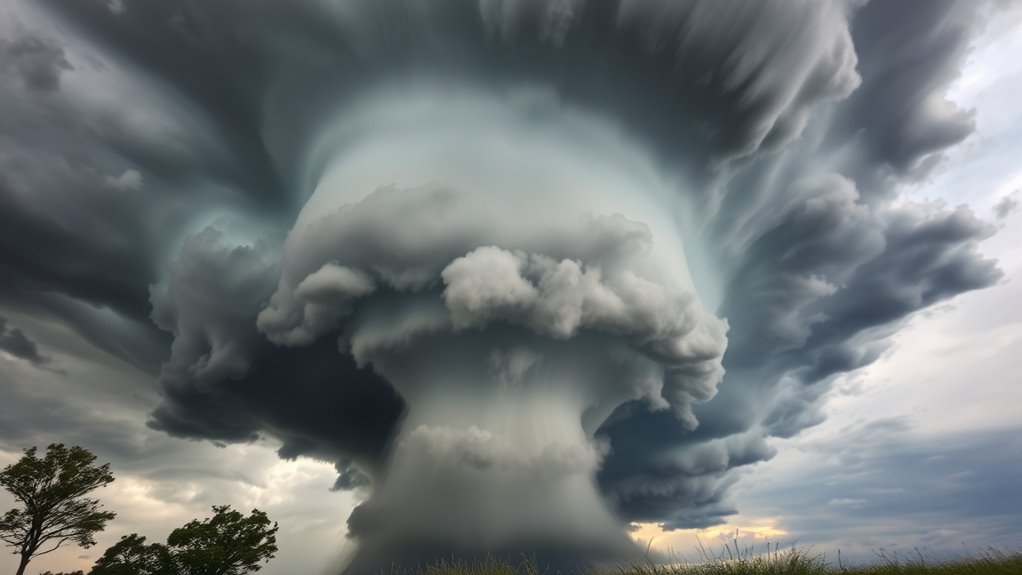
Have you ever noticed clouds darkening suddenly and taking on a distinct anvil shape? This is a clear sign of rapidly developing storm activity. Darkening skies indicate increasing cloud density and moisture, often signaling an approaching storm. Look for anvil clouds—large, flat-topped formations that spread out at the top of a cumulonimbus cloud. These clouds form when the storm reaches its peak height and the air spreads out horizontally. Anvil clouds are a visual cue that a severe weather system, like a microburst, could be imminent. When you see darkening skies accompanied by anvil-shaped clouds, stay alert. These signs suggest powerful updrafts and instability in the atmosphere, making it critical to monitor weather updates and prepare for sudden, intense weather changes. Recognizing these cloud patterns can help you spot severe weather early and stay safe.
Identifying Rapid Shifts in Wind Direction

You can spot rapid shifts in wind direction by watching for sudden reversals or quick changes in wind speed. Pay attention to sky signs like swirling clouds or shifts in cloud patterns that often accompany these movements. Recognizing these indicators helps you anticipate microbursts before they fully develop. Incorporating an understanding of powerful persuasive words can also aid in effectively communicating weather warnings and safety information to the public.
Sudden Wind Reversals
Sudden wind reversals are rapid shifts in wind direction that can occur unexpectedly during a microburst. Recognizing this sign is vital, as it often catches people off guard. Many microburst myths suggest these shifts are rare, but history shows they happen frequently in severe storms. To spot a sudden wind reversal, watch for:
- Sharp, immediate changes in wind direction—sometimes 180 degrees in seconds
- Fluctuations in wind speed accompanying the shifts
- Visual cues like swirling debris or dust being blown in opposite directions
- Overall storm behavior indicating instability, contradicting microburst myths of calm skies beforehand
- Awareness of storm dynamics can help you better understand the likelihood of wind reversals during severe weather events.
Understanding the microburst history helps you realize these reversals aren’t anomalies but common warning signs to heed before danger strikes. Stay alert, and don’t dismiss sudden directional changes.
Changes in Wind Speed
How can you identify rapid shifts in wind speed during a microburst? You’ll notice sudden increases in wind velocity caused by wind shear, which creates sharp differences in wind speed over a short distance. As gust fronts approach, they often bring a rapid surge of strong winds that can sharply change in intensity. These gusts may suddenly accelerate or decelerate, signaling intense wind shear associated with the microburst. Pay attention to the sudden loud gusts or a rapid jump in wind speed on your instruments. Such abrupt changes are dangerous signs that a microburst may be forming or ongoing. Recognizing these rapid shifts early can help you react quickly and avoid the dangerous consequences of intense wind shear and gust fronts.
Sky and Cloud Indicators
Have you ever noticed the sky suddenly shifting as clouds change direction? Rapid wind shifts often signal microburst formation. Look for these key indicators:
- Clouds abruptly moving in different directions, especially near the horizon.
- The appearance of towering cumulonimbus clouds, which can indicate hail formation.
- A temperature inversion creating a cap that traps moisture, leading to sudden gusts.
- Sharp changes in wind speed and direction close to the ground, often accompanied by a lull before a strong gust.
These signs suggest unstable conditions that can lead to microbursts. Pay attention to shifting cloud patterns and temperature layers—both are critical for early warning. Recognizing these sky and cloud indicators helps you spot microbursts before they strike.
Watching for Sudden Calm Before the Storm

Before a microburst strikes, you might notice an eerie quietness that catches your attention. This sudden calm often surprises people, but it’s a key sign to watch for. Many microburst myths suggest storms always build with loud thunder and heavy rain, but history shows they can develop swiftly with little warning. That silence isn’t just an absence of noise; it’s a signal that intense weather is imminent. Being aware of this calm allows you to prepare quickly, as microbursts can occur unexpectedly. Recognizing this quiet period helps you avoid danger and stay safe. Remember, microburst history highlights their unpredictable nature—sometimes, the calm before the storm is your only warning. Stay alert and act swiftly when you notice that strange quietness.
Detecting Lightning Activity and Storm Development

Lightning activity is often the clearest sign that a storm is developing or intensifying. Spotting cloud-to-ground lightning can signal rapid storm growth, especially when paired with other signs. To better understand storm development, look for:
- Frequent lightning strikes indicating strong electrical activity.
- Sudden hail formation, as updrafts grow intense enough to suspend hailstones.
- Rapid cloud growth and darkening skies, showing convective activity.
- Changes in wind patterns and a sharp drop in temperature, suggesting storm strengthening.
Monitoring cloud-to-ground lightning helps you anticipate severe weather, including hail formation and microbursts. Recognizing these signs early can give you vital time to seek shelter and stay safe during a developing storm.
Understanding the Role of Weather Radar and Satellite Data

Weather radar and satellite data are vital tools for tracking storm development and intensity. Satellite imagery provides a bird’s-eye view of cloud formations, helping you spot early signs of severe weather, including microbursts. Weather radar detects precipitation patterns and wind shifts within storms, offering real-time insights. These tools improve weather prediction by identifying rapid storm intensification and the potential for dangerous microbursts. Satellites can monitor cloud top temperatures and movement, giving clues about storm strength and direction. Radar data reveals wind shear and gust fronts that signal microburst formation. By combining satellite imagery with radar observations, you gain an exhaustive understanding of storm behavior, enabling you to anticipate microbursts more accurately and act swiftly to protect yourself.
Interpreting Local Weather Reports and Alerts

Interpreting local weather reports and alerts is essential for staying informed about imminent weather hazards. Accurate interpretation helps you recognize microburst signs early and avoid danger. Be aware that microburst myths can lead to misconceptions, so rely on credible sources. Keep in mind that weather forecast accuracy varies, especially with sudden events like microbursts. To improve your understanding, consider these key points:
- Check for specific alerts like severe weather warnings or microburst advisories.
- Monitor real-time updates from trusted weather services.
- Understand radar and satellite data to identify rapid wind changes.
- Beware of microburst myths that downplay their severity or liken them to regular thunderstorms.
Preparing Safety Measures When Microburst Signs Appear

When signs of an approaching microburst become evident, taking immediate safety measures can considerably reduce your risk of injury or damage. Prioritize microburst safety by quickly seeking shelter in a sturdy, enclosed structure away from windows and outdoor objects. If you’re driving, safely pull over, avoid stopping under trees or bridges, and stay inside your vehicle until the storm passes. Emergency preparedness involves having an emergency kit ready, including flashlights, water, and first aid supplies. Stay informed through weather alerts and listen for updates. Avoid using electronics that could be damaged by power surges. By acting swiftly and following safety protocols, you minimize potential harm. Remember, quick response and preparedness are essential to weathering microburst events safely.
Frequently Asked Questions
How Long Do Microbursts Typically Last Once They Begin?
Once a microburst begins, its duration variability usually ranges from just a few seconds up to 10 minutes, though most last around 5 to 10 minutes. During this time, you should watch for warning signs like sudden wind shifts, heavy rain, and intense gusts. Recognizing these warning signs early can help you stay safe, as microbursts can develop and dissipate quickly, making timely awareness essential.
Can Microbursts Occur During Winter or in Cold Weather?
Yes, winter microbursts and cold weather microbursts can occur, though they’re less common than in warm weather. These microbursts happen when sudden, intense downdrafts develop in cold conditions, often associated with winter storms or cold fronts. You should stay alert during winter weather, especially if thunderstorms or rapidly changing conditions appear, as these microbursts can cause damage even in colder temperatures.
Are Microbursts More Common in Certain Geographic Regions?
Imagine microbursts as sudden storms that favor certain regions like a mischievous sprite sticking to its favorite haunts. You’ll find them more common in areas with specific regional patterns, especially where climate influence creates the perfect recipe of warm, moist air meeting cool, dry air. These weather quirks thrive in places like the central U.S. and southeastern states, making some regions more prone to these intense, fleeting gusts.
What Is the Difference Between a Microburst and a Tornado?
You might wonder how a microburst differs from a tornado. Microbursts involve sudden, intense downdrafts with high wind speeds that create damaging wind patterns over a small area, often causing straight-line wind damage. Tornadoes, on the other hand, are rotating columns of air with a visible funnel, producing more erratic and destructive storm intensity. Both can be dangerous, but their wind patterns and formation processes set them apart markedly.
How Can Pilots Best Prepare for Microburst Encounters?
Did you know that microbursts cause over 60% of all wind-related aircraft accidents? To prepare, you should rely on weather radar updates and stay alert to rapid wind shifts. Pilot training emphasizes recognizing microburst signs and executing timely escape maneuvers. Regular simulator practice helps you stay calm and react effectively. Staying informed and trained is your best defense against microburst encounters, ensuring safety during critical moments.
Conclusion
By recognizing these signs early, you can react before a microburst hits—like catching a warning sign before a storm breaks loose. Stay alert to changing clouds, wind shifts, and sudden temperature drops, and keep an eye on weather updates. Being prepared is your best defense, turning potential chaos into safety. Remember, spotting the signs is like reading the weather’s secret code—decode it quickly, and you can stay safe when nature’s fury approaches.
Halloween Picks
halloween
As an affiliate, we earn on qualifying purchases.