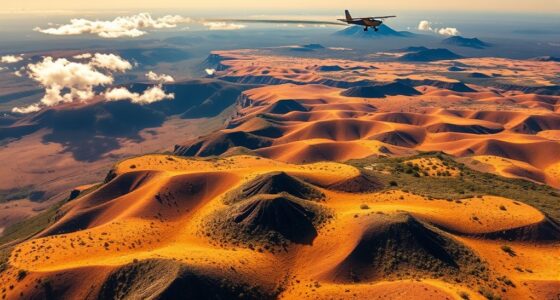
In the New Zealand Alps, you can harness ridge lift by flying just ahead of the peaks to catch rising air, while wave lift allows you to gain altitude by maintaining steady, level flight within mountain wave formations. Convergence zones create powerful lifting areas where different airflow streams meet. Mastering these techniques lets you soar higher and longer. To access the full potential of Alpine soaring, explore how understanding weather patterns and pilot skills make all the difference.
Key Takeaways
- Exploit ridge lift by flying close to peaks with smooth control to maximize lift and flight duration.
- Utilize wave lift by maintaining steady, level attitudes to soar high above mountainous terrain.
- Recognize convergence zones where opposing winds meet, creating strong lift for extended soaring.
- Understand local weather patterns and wind shifts to anticipate and optimize lift sources.
- Use high-performance gliders and precise pilot techniques for safety and efficiency in challenging mountain conditions.
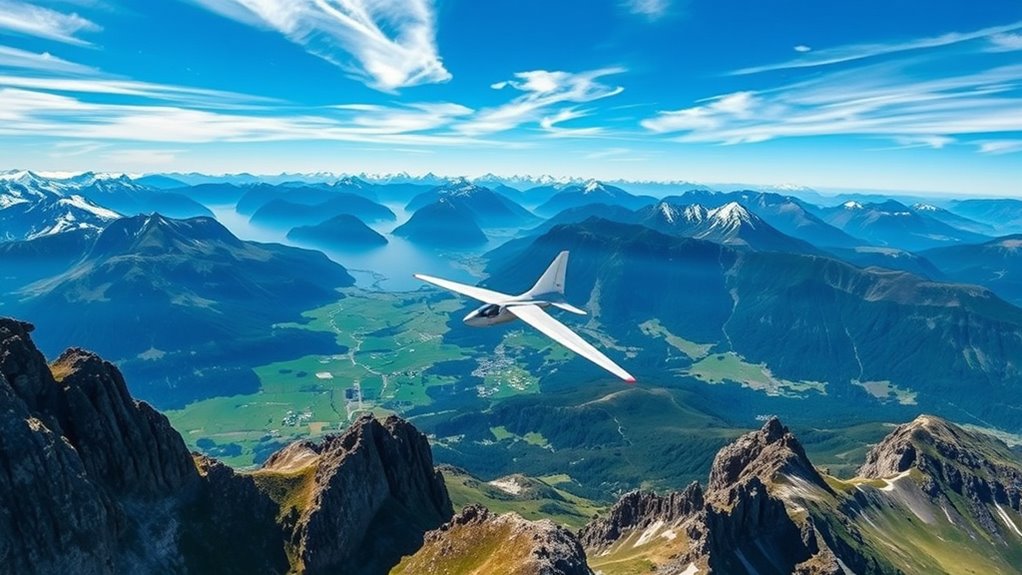
Have you ever wondered what it’s like to soar above the breathtaking peaks of the New Zealand Alps? As you glide through the crisp mountain air, the thrill of riding thermal currents and ridge lift becomes undeniable. Your success depends heavily on understanding glider performance and applying precise pilot techniques. The rugged terrain offers unique opportunities to harness natural lift sources, but it also demands skill and attentiveness. With the right approach, you can maximize your flight time and enjoy the majestic scenery from an unbeatable vantage point.
Soar above New Zealand’s peaks by mastering glider performance and pilot techniques to harness mountain lift sources.
In this environment, your glider’s performance is essential. A well-maintained, high-performance sailplane responds swiftly to your inputs, allowing you to exploit subtle lift cues with agility. Powerful maneuvering helps you stay within the strongest rising air, whether it’s ridge lift or wave. As you approach a mountain ridge, you’ll want to trim the glider for optimum glide ratio, maintaining a steady speed that balances lift gains with energy conservation. When encountering wave lift, your ability to adapt quickly becomes fundamental. You’ll need to keep your altitude steady while searching for smooth, persistent wave formations that can carry you hundreds of meters higher. Your pilot techniques—such as precise control inputs, careful circling, and effective use of instruments—are key to capitalizing on these lift sources.
Ridge soaring in the Alps requires a keen eye for wind direction and speed. You’ll often find yourself flying just ahead of the ridge, angling your glider to intercept the lift band. Smooth, coordinated control inputs help you maintain your position without wasting energy. As conditions change, you might need to adjust your bank angle or speed to stay within the strongest lift zone. When working with wave, you’ll often adopt a steady, level attitude, using your knowledge of the terrain and weather patterns to anticipate where the air will be most buoyant. Your ability to read the landscape and interpret wind patterns makes all the difference. Good pilot techniques involve continuous scanning, adjusting your glide path, and staying alert for shifts in lift strength. Additionally, practicing mindful decluttering of your cockpit and instruments can help improve focus and decision-making during complex soaring maneuvers.
Ultimately, soaring in the New Zealand Alps is about harmony between your skills, your glider’s capabilities, and the environment. With proper understanding of glider performance and refined pilot techniques, you’ll find yourself effortlessly riding the mountain currents, feeling the pure exhilaration of flying high above some of the world’s most stunning peaks. It’s a mastery of technique and an appreciation for nature’s power that turns a flight into an unforgettable adventure.
Top picks for "soar zealand alps"
Open Amazon search results for this keyword.
As an affiliate, we earn on qualifying purchases.
Frequently Asked Questions
What Are the Best Times of Year for Soaring in the New Zealand Alps?
You’ll find the best times of year for soaring in the New Zealand Alps during the Southern Hemisphere’s spring and summer, from November to February. During this seasonal window, you experience ideal conditions like strong thermals, stable weather, and clear skies. These conditions create perfect opportunities for ridge, wave, and convergence soaring, giving you the thrill of riding the mountain winds and maximizing your flying experience.
Are There Specific Skills Required for Challenging Alpine Ridge Soaring?
Imagine you’re steering a steep alpine ridge, where precise mountain guidance is crucial. You need advanced skills like thermalling techniques to stay aloft and handle turbulence. Challenging alpine ridge soaring requires strong situational awareness, quick decision-making, and mastery of dynamic air currents. For instance, understanding how to read wind shifts and lift patterns helps you maintain control and safety in complex conditions, making the experience both thrilling and safer.
What Safety Precautions Should Pilots Take in This Environment?
You should prioritize safety by conducting thorough equipment checks before your flight, ensuring everything functions correctly. Be prepared for emergencies by carrying essential gear like a radio, first aid kit, and emergency locator. Always stay aware of weather conditions, and have a plan for rapid descent if needed. Keeping emergency preparedness in mind and verifying your equipment helps you navigate the challenging alpine environment safely.
How Do Weather Patterns Influence Soaring Conditions in the Alps?
You might think weather patterns are unpredictable, but mountain meteorology shows they greatly influence soaring conditions. In the Alps, atmospheric stability determines if lift is reliable; unstable air boosts thermals, while stable conditions favor wave and ridge soaring. Wind direction, speed, and temperature gradients create dynamic lift zones. By understanding these patterns, you can anticipate the best times for soaring, making your flight safer and more enjoyable.
Are There Guided Tours or Training Programs Available for Beginners?
Yes, you can find guided tours and training programs designed specifically for beginners. Many operators offer beginner tours that include thorough instruction and safety briefings, helping you gain confidence in soaring conditions. These training programs are perfect if you’re new to gliding or flying in the Alps, providing hands-on experience under expert supervision. Book early to secure your spot and guarantee a memorable, safe introduction to alpine soaring adventures.
Conclusion
So, as you chase those perfect thermals and daring ridge lifts, remember that the wild New Zealand Alps remind you how little control you truly have. Despite all your skills and planning, nature’s whims can turn soaring into a humbling dance. Ironically, it’s in surrendering to these unpredictable forces that you find the real freedom. So go ahead, embrace the chaos—after all, it’s the wildest rides that leave the biggest stories.