Flying over Patagonia’s rugged peaks lets you harness natural lift phenomena like thermal currents and ridge lift to extend your soaring experience. By positioning yourself correctly, you can tap into rising warm air and steady updrafts along mountain ridges, gaining altitude with minimal effort. The stunning landscape of glaciers, peaks, and valleys provides an awe-inspiring backdrop. Keep exploring to discover detailed techniques and safety tips that will elevate your mountain and wave flying adventure.
Key Takeaways
- Patagonia’s rugged peaks provide ideal conditions for wave and mountain flying, offering breathtaking scenery and technical challenges.
- Thermal currents and ridge lift enable extended soaring by utilizing natural updrafts over ridges and peaks.
- Effective techniques include identifying thermals via clouds and birds, and flying close to ridges to maximize lift safely.
- Mastering landscape observation and precise flying skills is essential for safely exploiting wave and mountain phenomena.
- Safety considerations involve respecting natural forces, understanding environmental risks, and preparedness for variable mountain weather.
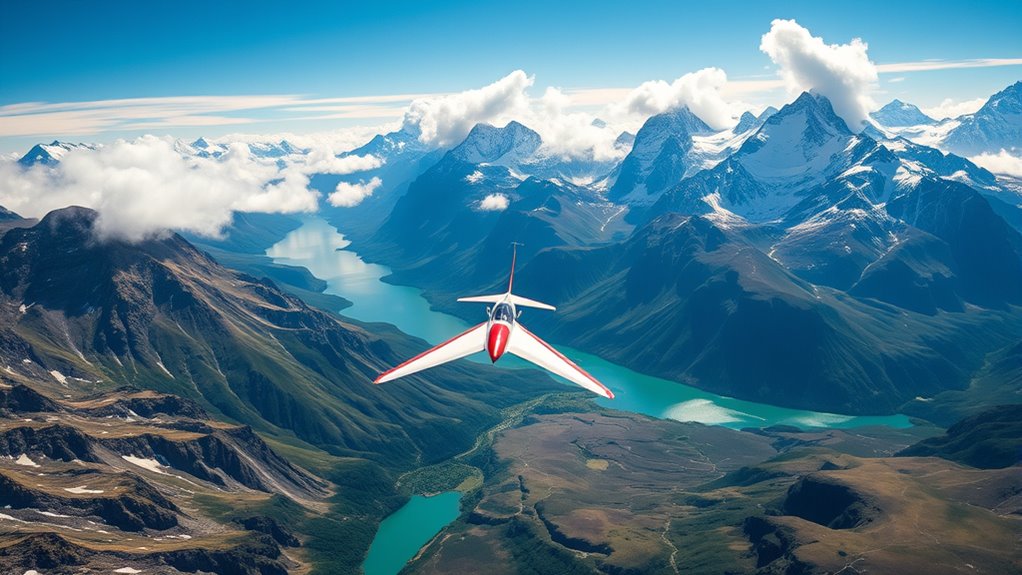
Have you ever wondered what it’s like to soar above one of the most breathtaking mountain ranges in the world? When flying over the rugged peaks of Patagonia in the Andes, you’ll quickly discover that the landscape offers more than just stunning scenery—it provides incredible opportunities for wave and mountain flying. One of the key elements that make this possible is the presence of thermal currents and ridge lift, natural phenomena that pilots harness to stay aloft longer and cover more ground without relying solely on engine power.
As you navigate this majestic terrain, you’ll notice how thermal currents are your silent allies. These rising columns of warm air form when the sun heats the earth’s surface unevenly, especially over rocky ridges and exposed slopes. When you position your aircraft correctly, you can tap into these thermal updrafts to gain altitude. The sensation of climbing effortlessly under the power of thermal currents is exhilarating, giving you a sense of connection with nature’s energy. To do this effectively, you need to observe the landscape carefully—looking for signs like cumulus clouds forming over peaks or birds circling, both indicators of active thermals nearby. Once you identify these rising air pockets, you can adjust your course to stay within them, extending your flight time and enjoying spectacular views from higher altitudes.
Ridge lift, on the other hand, is a more predictable and consistent source of lift along the mountain ridges themselves. As wind blows against the steep slopes, it’s forced upward, creating a steady updraft along the ridgeline. You’ll want to fly parallel to the mountains, maintaining a safe distance to avoid turbulence but close enough to feel the lift’s strength. When executed correctly, ridge lift can propel you upward smoothly, allowing you to soar along the mountain’s edge with minimal effort. This technique is especially useful when crossing large sections of the Andes, as it minimizes fuel consumption while maximizing your time in the air. It also offers breathtaking views—flying close enough to the ridges, you’ll feel immersed in the rugged landscape, with glaciers, peaks, and valleys stretching out beneath you.
Mastering thermal currents and ridge lift transforms your flight into a dynamic dance with the mountains. It requires keen observation, precise flying skills, and respect for the environment’s power. But once you harness these natural lift sources, soaring the Andes becomes an unforgettable adventure—an experience that blends technical mastery with awe-inspiring beauty. As you glide effortlessly on currents shaped by the mountain’s majesty, you’ll realize that Patagonia’s skies are truly a playground for pilots who seek to connect with nature’s raw energy. Additionally, understanding AI safety measures and the vulnerabilities of modern technology can help ensure your safety and preparedness during your high-altitude adventure.

Flight Outfitters Bush Pilot Survival Kit
As an affiliate, we earn on qualifying purchases.
As an affiliate, we earn on qualifying purchases.
Frequently Asked Questions
What Are the Best Seasons for Flying in Patagonia?
You should plan your flight in Patagonia during late spring (November to December) or early autumn (March to April). During these seasons, the seasonal weather is more stable, making flying safer and more enjoyable. Plus, you’ll avoid the tourist peaks of summer and high season, which can make logistics more challenging. Flying in these shoulder seasons offers better conditions for mountain and wave flying while giving you a more peaceful experience.
How Do Pilots Handle Sudden Weather Changes in the Andes?
The weather in the Andes can change faster than lightning, so you must stay vigilant. You handle sudden shifts by closely monitoring altitude effects and weather updates, adjusting your route as needed. Always follow emergency procedures, such as descending to safer altitudes and communicating with air traffic control. Staying prepared and adaptable helps you navigate these unpredictable conditions safely, ensuring your flight remains controlled despite nature’s fierce surprises.
What Safety Precautions Are Essential for High-Altitude Mountain Flying?
When flying at high altitudes, you need to prioritize altitude awareness and equipment preparedness. Always monitor your altitude closely, using reliable instruments, to avoid dangerous zones. Make sure your aircraft’s equipment is fully functional, including oxygen systems and weather radios. Prepare for sudden weather shifts by having emergency plans in place, and stay alert for wind shear or turbulence. These precautions help you navigate safely through the challenging mountain environment.
Are Special Licenses Required for Soaring in Patagonia?
You don’t need a special license for soaring in Patagonia, but your pilot certification must meet regional regulations. Notably, over 90% of pilots flying in such challenging environments hold advanced certifications, ensuring safety and expertise. Always verify local rules before your flight, as different countries within the region may have specific requirements. Being well-prepared with proper certification guarantees you enjoy the breathtaking scenery confidently and safely.
How Do Local Wildlife and Terrain Affect Flight Planning?
You need to take into account wildlife migration patterns and terrain navigation when planning your flight. Migrating animals can suddenly cross your path, so stay alert and adjust your route accordingly. The rugged terrain demands careful navigation, especially in mountainous areas where wind currents and weather can change rapidly. By understanding these factors, you can guarantee a safer, more enjoyable flight while respecting the local environment and avoiding wildlife disturbances.

Klein Tools TI250 Rechargeable Thermal Imaging Camera, Camera Displays Over 19,200 Pixels with 3 Color Palettes, High / Low Temperature Points
HIGH RESOLUTION: Thermal Imager with over 19,200 pixels enables accurate troubleshooting of hot and cold spots for comprehensive…
As an affiliate, we earn on qualifying purchases.
As an affiliate, we earn on qualifying purchases.
Conclusion
So, aren’t you tempted to experience the thrill of soaring above Patagonia’s breathtaking peaks? With every wave and mountain ride, you’ll discover a world where nature’s power and beauty collide. So go ahead—embrace the challenge, feel the rush, and let the Andes elevate your spirit. After all, isn’t life about chasing those unforgettable moments that leave you breathless and inspired? Your adventure above the clouds awaits—are you ready to take flight?
mountain ridge lift flying equipment
As an affiliate, we earn on qualifying purchases.
As an affiliate, we earn on qualifying purchases.

Engines are for Sissies Segelflug Soaring Glider Sailplane Tee, Gliding Decal Sticker – Sticker Graphic – Auto, Wall, Laptop, Cell, Truck Sticker for Windows, Cars, Trucks
As an affiliate, we earn on qualifying purchases.
As an affiliate, we earn on qualifying purchases.