TL;DR

Get travel and outdoor gear delivered free with Prime
- Fast, free delivery on millions of items
- Prime Video, Amazon Music and more included
- Member-only deals all year
Portable camping hammocks are lightweight fabric beds suspended between secure anchors, often trees, but the hammock body is only one part of a camping sleep system. Compare the full weight of suspension, rain and bug protection, and insulation, then check site rules and test your setup before relying on it overnight.
A hammock body can weigh less than a tent, then rain, mosquitoes, and cold air turn that tidy pack into a full sleep system. That difference catches many first-time hammock campers by surprise because the lightest item in the setup is also the most visible one.
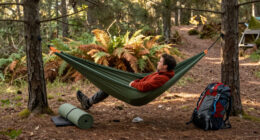
Portable camping hammocks are lightweight fabric beds that hang between two secure anchor points, often trees. You can use one to rest at camp or sleep overnight, but comfort depends on how you hang it, what you bring for shelter and warmth, and whether the site allows it. These pieces work together: a hammock that fits well can still be a poor choice if you cannot protect it from the weather or hang it safely where you plan to camp.
This guide helps you compare complete setups, choose a hammock that fits, and make a safer campsite choice. For instance, if you expect a breezy night after a warm afternoon, you’ll want insulation beneath you even if your sleeping bag feels cozy at home. Check current manufacturer guidance and local camping rules before your trip, since product limits and site policies determine what a practical setup can be.
Compare a hammock with a tent by weighing the complete setup, including suspension, shelter, bug protection, and insulation.
Check the maker’s size guidance and capacity; a longer hammock can give you room to lie diagonally.
Use compatible, wide straps on healthy trees, hang low, and avoid hazards overhead, underfoot, and near water.
Insulate beneath your body with an underquilt or suitable pad because air can carry heat away under a hammock.
Check site rules and practice your setup in safe conditions before relying on it overnight.
Compare the complete sleep system before you pack
Portable camping hammocks work best when you compare the weight and bulk of the entire sleeping setup, not just the fabric bed. Add the suspension, rain shelter, insect protection, and insulation you need for the forecast. The full kit can weigh more than you expect, much like a tiny umbrella looks light until you add its stand and rain boots. This matters because a comparison that leaves out essential pieces can make a hammock seem more efficient than it will be on the trail.
For example, a summer camper in a dry, sheltered campground may pack a hammock, straps, and a compact bug net. A backpacker expecting rain and cold will likely need a tarp and insulation too. Those conditions change both the total weight and the space the kit takes up, so compare like with like: a hammock sleep system for the same conditions as a tent system. A lighter body alone is not a meaningful saving if the full setup is heavier or less suited to the trip.
| Part | What it does | When it matters |
|---|---|---|
| Hammock and suspension | Supports you between suitable anchors | Every setup |
| Tarp | Blocks rain and can reduce wind exposure | Wet or exposed forecasts |
| Bug net | Keeps insects away while you rest | Insect-heavy locations or seasons |
| Underquilt or suitable pad | Insulates beneath your body | Cool, breezy, or cold nights |
Before buying, lay the pieces together and check their packed sizes. A supposedly lighter hammock may lose its advantage if its weather gear fills half your pack. Think through which items are essential for your expected conditions and which you can leave behind; that tradeoff should follow the forecast and site, not a product’s smallest advertised weight. Look for compatible components and make sure the manufacturer’s instructions cover how you plan to use them.
Products Worth Considering

Bose QuietComfort 45 SE Wireless Noise-Cancelling Over-Ear Headphones

Travelpro Crew Classic Compact Softside Carry-On Luggage, Blue, 20-Inch

DJI Mini 5 Pro Fly More Combo with DJI RC 2
As an affiliate, we earn on qualifying purchases.
Pick a size that lets you lie comfortably
Portable camping hammocks feel comfortable when their length, width, and capacity suit your body and let you lie at a diagonal. The maker’s recommended height and weight limits are the best place to start. A longer hammock often gives you more room to shift diagonally, which can make your body feel flatter than lying straight down the middle. That flatter position can reduce the curved posture some sleepers find uncomfortable, but fit still varies from person to person.
Imagine settling in after a day on the trail: if your shoulders bunch up and your feet point toward the fabric’s edge, the hammock may be too short or your position may need adjusting. A diagonal lay spreads your body across the hammock at an angle, reducing the tight curve that some people find uncomfortable. Practicing this at home helps you tell whether a problem comes from your position or from a hammock that does not give you enough room.
Check the stated capacity as well as the dimensions. A model advertised for two people may hold their combined weight within its rating, but sharing a narrow hammock can feel like trying to balance on a swinging bench. The rating tells you about the stated load limit; it does not guarantee that two people will have enough space to sleep comfortably. Two separate hammocks are often a more comfortable choice for a pair traveling together, though that means carrying two setups and finding suitable anchors for both.
- Compare length and width with the manufacturer’s fit guidance.
- Check the load limit and count the weight of everyone using it.
- Practice the diagonal position somewhere safe before your overnight trip.
As a practical example, if you’re tall and want to sleep diagonally, a longer model may be a better fit than a compact lounging hammock. Check the size chart rather than relying on product photos; fabric can look roomy while hanging empty. Your choice affects more than comfort: if you cannot settle into a stable position, you may sleep poorly or keep adjusting the setup overnight.
Choose anchors and a setup that lower fall and tree risks
Safe hammock setup starts with sound anchors, tree-friendly straps, and a low hanging height that limits fall risk. Look for two healthy, sturdy trees with enough space between them for your hammock and clearance underneath. Avoid dead or damaged trees, small trees, overhead dead branches, steep slopes, and spots beside water or other hazards. Each check addresses a different failure: weak anchors can give way, overhead hazards can fall, and a difficult landing area can make an otherwise minor slip more serious.
Wide straps spread pressure over more bark than thin cord, helping reduce damage to trees. This lowers the pressure concentrated in one narrow line, but does not make a fragile tree suitable or guarantee that hanging is allowed. Follow the hammock and suspension makers’ instructions, and check park or campground rules before attaching anything. Some sites restrict hammocks or allow them only in designated areas; a suitable tree does not automatically make hanging there permitted.
- Check the site: Look above, below, and around your intended sleeping area for hazards.
- Inspect the anchors: Choose sturdy, living trees and use compatible straps.
- Hang low and test gently: Follow the product directions, then ease your weight into the hammock.
- Recheck the setup: Look for strap movement, damage, or a change in the weather before sleeping.
For instance, two trees beside a calm lake may seem ideal, but a sloping bank and wet ground can turn a simple stumble into a serious fall. Move to level ground away from the water, and choose a setup where getting in and out stays easy. If you have children with you, supervise them around the hammock and keep them away from unsafe climbing or swinging. A low setup and clear ground reduce the consequences of a fall, but they cannot make a questionable anchor safe.
Stay warm with insulation beneath you
To stay warm in a hammock, insulate the space beneath your body as well as the top of your sleeping bag. Air moving underneath you can carry away heat, so a mild night can feel surprisingly cold once you settle into the fabric. Your sleeping bag covers you from above; an underquilt or suitable pad protects the underside. If you only add warmer top insulation, you may add weight without addressing the main source of heat loss.
That is why a hammock sleeper can feel chilly even when the air seems comfortable at dinner. A sleeping bag compresses beneath your weight, leaving less insulation between you and the moving air. An underquilt hangs beneath the hammock, while a pad sits inside it; both can work, though some pads slide or feel narrow as you shift. An underquilt can stay aligned under the hammock, while a pad is a familiar option that may take more adjustment to keep in place. Which tradeoff matters more depends on how much you move and what gear you already own.
For a first overnight trip, test your setup on a mild night near home or another safe place. Try getting in, adjusting the pad or underquilt, and settling into your sleeping position before relying on the system in colder weather. This reveals fit and slipping problems while you can still make changes easily. If you wake with a cold back, the problem may be the insulation underneath rather than your sleeping bag.
- Use an underquilt or suitable pad for the conditions you expect.
- Add a tarp when rain or wind exposure calls for shelter.
- Bring top insulation suited to the forecast and your own comfort.
A warm afternoon is not a reliable guide to a cold night. Check the forecast for overnight conditions and avoid testing unfamiliar gear where exposure could put you at risk. The goal is a system that manages both top and underside heat loss, rather than simply packing the warmest sleeping bag you own.
Build a modular kit around your first trip
A good beginner hammock kit starts with a hammock and compatible tree straps, then adds weather protection, insect protection, and insulation to match your destination and season. You don’t need every accessory for every trip, but you do need to understand what each piece does before you leave home. A modular kit lets you adjust for conditions; its tradeoff is that you must check compatibility and decide correctly what to bring.
Think about a weekend at a wooded campground in early summer. If insects are common, a bug net may make the difference between a restful night and an evening of swatting. If rain is in the forecast, bring a tarp. If night temperatures drop or a breeze can reach the underside of the hammock, pack insulation below you. Each addition addresses a specific problem, so the forecast and location help keep the kit useful without carrying gear you do not need.
Many systems now offer modular pieces such as removable bug nets and interchangeable tarps. That flexibility can save pack space over time, but compatibility matters: check that the suspension, hammock, and accessories are designed to work together. Lightweight fabric and compact hardware can help backpackers, but low weight should not replace a suitable capacity, dependable construction, or safe setup. Saving weight is useful only when the remaining kit still covers the conditions you expect.
Use this pre-trip routine to catch problems early:
- Read the manufacturer’s capacity, fit, setup, and care instructions.
- Check stitching, fabric, straps, and hardware for damage or wear.
- Set up and lie in the hammock before leaving, then practice adjusting your insulation.
- Review the forecast and the site’s hammock rules for your destination.
Keeping the kit clean and dry after camping also helps protect its fabric and hardware. Store it according to the maker’s guidance, and replace components that show damage rather than trusting a worn strap on a remote trip. A small check at home can prevent a damaged or mismatched component from becoming a bigger problem when you have fewer options to repair it.
Use the campsite without damaging it
Responsible hammock camping means following local rules, choosing suitable anchors, and leaving the site in good condition. Tree-friendly straps reduce bark pressure compared with thin cord, but they don’t make every tree or campsite appropriate for hanging. Land managers may restrict hammocks to protect vegetation or keep campsites safe. Following those rules helps preserve the site and avoids treating tree condition as the only factor in a safe, acceptable setup.
Before your trip, look up the rules for the specific park, campground, or land manager; policies can differ even between sites in the same region. If a sign or ranger says not to hang there, use an allowed sleeping option. And if trees are too young, damaged, or poorly placed, choose another campsite arrangement rather than stretching the suspension across whatever is available. Planning an alternative matters because a hammock depends on suitable anchors, while a tent or other permitted shelter may work in places where hanging does not.
For example, a designated campsite may have sturdy trees but prohibit straps on them. The considerate choice is to follow that rule and sleep in a permitted spot. Check your equipment before and after use, pack out what you bring, and leave the area as you found it. This protects the campsite for other visitors and makes your equipment more dependable on the next trip.
A comfortable night starts with a site that can safely support your setup and tolerate your presence.
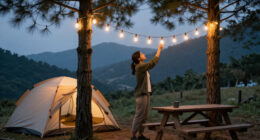
That standard helps protect both you and the next camper. Portable camping hammocks can make a quiet forest evening feel wonderfully simple, but good campsite judgment is what keeps that simplicity from creating a problem for people, trees, or wildlife.
Frequently Asked Questions
Are portable camping hammocks comfortable for sleeping overnight?
Many people sleep comfortably in them once they find the right fit and diagonal position. Comfort also depends on suitable insulation, a good setup, and your personal preference, so test the hammock before a longer trip.
Can you use a camping hammock without trees?
Yes, if you have another purpose-built, secure anchor option, such as a suitable hammock stand. Don’t improvise with weak structures, railings, or anchors whose strength you cannot judge.
Do you need a tarp and bug net?
A tarp helps protect you from rain and can reduce wind exposure; a bug net helps where insects are a concern. Your forecast, location, and season determine which pieces make sense. Neither removes the need to choose a safe campsite.
How can you stay warm in a camping hammock?
Use an underquilt or a suitable pad to insulate beneath your body, along with top insulation suited to the overnight conditions. Test the system in a safe setting before depending on it in cold weather.
Are hammocks allowed at every campground?
No. Rules vary by campground, park, and land manager, and some places restrict where you may hang a hammock or prohibit it altogether. Check the current rules for your specific site before you go.
Conclusion
Choose your hammock around the trip you’ll actually take: the people using it, the overnight forecast, and the campsite rules. Then count every piece of the sleep system, practice the setup, and check the anchors before you settle in.
Get those details right and a hammock can turn two sturdy trees into a quiet bed beneath the night sky. Let the breeze move through the branches, not steal the warmth from underneath you.