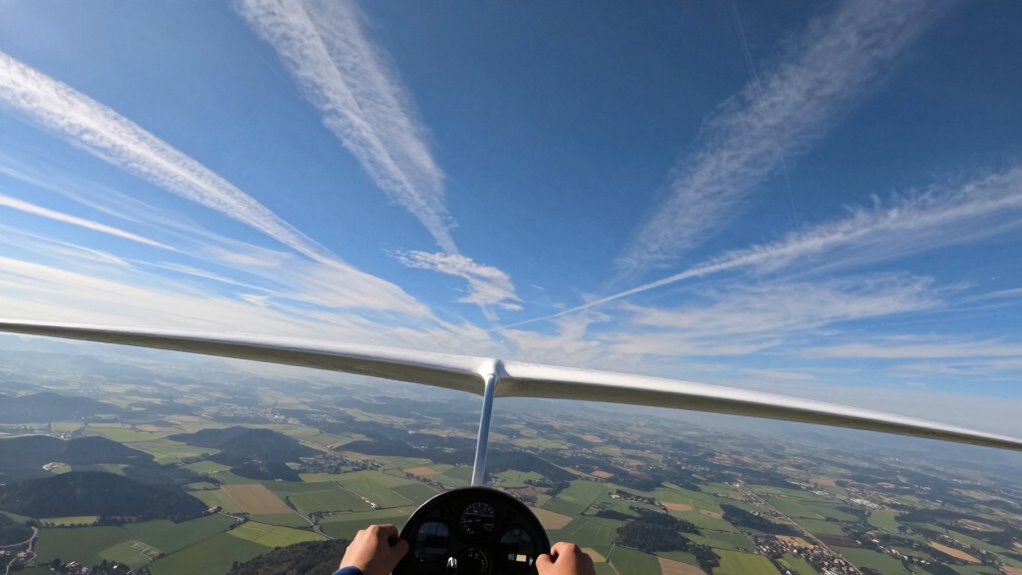
To read the sky effectively while flying your glider, keep a close eye on cloud types and patterns. Look for cumulus clouds, which signal rising air for lift, and avoid overcast skies that show stable, sinking air. Use landmarks and visual cues to stay aware of airspace boundaries and rules. Continuous observation helps you identify turbulence and safe lift zones, making your flight safer and more efficient. Keep exploring to enhance your sky sense even further.

Get travel and outdoor gear delivered free with Prime
- Fast, free delivery on millions of items
- Prime Video, Amazon Music and more included
- Member-only deals all year
Key Takeaways
- Continuously observe cloud types and formations to identify lift sources and avoid turbulence.
- Use landmarks and visual cues to maintain awareness of airspace boundaries and restrictions.
- Combine cloud reading with real-time airspace regulation knowledge for safe navigation.
- Practice quick interpretation of cloud patterns to make timely decisions during flight.
- Maintain situational awareness by monitoring changing sky conditions and adjusting your route accordingly.
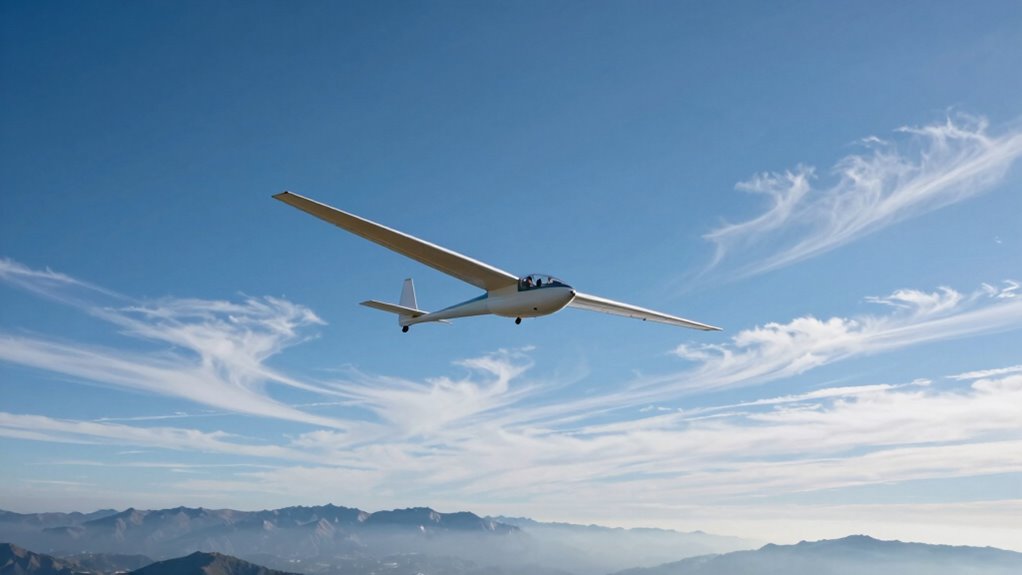
Reading the sky effectively while flying a glider is essential for maintaining altitude, finding lift, and planning your next move. Your ability to interpret cloud formations plays a crucial role in this process. Different types of clouds can signal the presence of rising air currents or, conversely, indicate turbulence or sinking air. For instance, cumulus clouds often mark areas where warm air is rising, providing you with opportunities to catch lift. On the other hand, stratus clouds tend to form in stable, descending air, signaling that it might be time to look elsewhere for better conditions. By understanding these cloud formations, you can anticipate changes in your flight and make smarter decisions, like adjusting your heading or seeking out specific thermals. Developing your knowledge of cloud types can greatly enhance your ability to read the sky accurately.
Reading clouds helps you find lift, avoid turbulence, and plan your glider’s route effectively.
While reading the sky, it’s also vital to keep in mind airspace regulations. These rules govern where you can fly, especially around airports, controlled zones, or restricted areas. Knowing the boundaries of different airspace classifications helps you avoid accidental violations, which can be dangerous and costly. Keep an eye out for visual cues, such as the presence of other aircraft, controlled airspace boundaries marked on your map, or specific landmarks that indicate proximity to airports or restricted zones. Staying aware of these regulations while observing cloud formations ensures you’re flying safely and legally, avoiding conflicts with air traffic control and other pilots. Incorporating airspace rules into your cloud-reading practice enhances overall flight safety.
As you scan the sky, develop a mental picture of how cloud formations relate to your environment. Recognize that towering cumulus clouds often indicate strong thermals that can give your glider a significant lift boost. Conversely, overcast or flat clouds might suggest stable air, where lift is scarce. Use your observations of the sky to plan your route, seeking out areas where the clouds suggest reliable lift sources. At the same time, remain vigilant about airspace restrictions, especially when transitioning between different zones. Developing a visual awareness of cloud patterns** can help you better interpret the sky’s signals and avoid potential hazards. Strengthening your situational awareness through continuous observation and learning can improve your overall flying skills and safety. By combining your knowledge of cloud formations** with awareness of airspace regulations, you can optimize your flight path for safety and efficiency.
Finally, remember that reading the sky is a skill that improves with experience. Practice regularly, stay current on airspace rules, and always observe the cloud patterns and landmarks around you. When you integrate these skills, you’ll gain better control over your glider, prolong your flight, and enjoy the freedom of soaring with confidence.
As an affiliate, we earn on qualifying purchases.
Frequently Asked Questions
What Are Common Signs of Changing Weather Conditions While Flying?
You notice changing weather signs by observing sky color changes, which can indicate shifts in humidity or approaching storms. Watch for alterations in wind patterns, like increased gusts or sudden shifts in direction, signaling unstable conditions. Sharp cloud formations or darkening skies also suggest deteriorating weather. Staying alert to these signs helps you anticipate weather changes, ensuring safer flying by adjusting your course or preparing for possible turbulence.
How Do Different Cloud Types Indicate Lift or Turbulence?
You notice cumulus clouds forming suddenly, signaling strong lift from rising warm air, while wispy cirrus clouds hint at stable, high-altitude conditions. Towering cloud formations often suggest turbulence, especially near storm systems. Wind patterns also play a role — rapid changes can indicate shifting lift or turbulence zones. By observing cloud formation and wind patterns together, you can anticipate lift or turbulence, helping you adjust your flight path confidently and safely.
Can You Read the Sky Effectively During Low Visibility Conditions?
Yes, you can still read the sky effectively during low visibility conditions. Focus on subtle cues like sky color changes, which may hint at upcoming lift or turbulence. Observe bird behavior closely; if they start circling or climbing higher, it often indicates rising air. Pay attention to any faint cloud formations or shifts in wind patterns, even in poor visibility, to help anticipate conditions and maintain safe, smooth flying.
How Do Altitude and Speed Affect Sky Reading Techniques?
Think of altitude and speed as the compass and clock of sky navigation. When you’re high, your aircraft instruments help you interpret distant cloud patterns and celestial cues, making sky reading more precise. Faster speeds make your observations swift but tricky, requiring sharper focus. Low altitude offers clearer ground references, yet demands keen attention to nearby clouds. Balancing these factors sharpens your ability to read the sky effectively, regardless of your aircraft’s pace.
What Safety Precautions Should Be Taken When Observing the Sky Mid-Flight?
When observing the sky mid-flight, prioritize safety by maintaining focus on sky navigation and staying alert to bird behavior, which can signal changing conditions. Keep your hands on the controls, avoid distractions, and monitor your altitude and speed closely. If you notice unusual bird activity, stay cautious and adjust your flight path if needed. Always communicate with your instructor or fellow pilots if you’re uncertain about any observations.
Conclusion
As you continue to read the sky, you’ll find that the subtle whispers of wind and cloud patterns become your trusted guides. Embrace each glide and gentle shift, knowing that every subtle sign is a quiet nudge toward smoother flights. With patience and practice, you’ll dance effortlessly through the sky’s gentle rhythms, savoring the serenity of soaring while mastering the art of reading the sky—turning every flight into a graceful, harmonious experience.
Fall Picks
fall essentials
As an affiliate, we earn on qualifying purchases.