
To build a risk matrix for your next flight, start by identifying potential hazards such as weather issues or mechanical problems. Assess each risk’s likelihood and potential impact, then categorize them from low to critical. Develop strategies to manage these risks and implement safety controls. Regularly monitor and update your matrix as conditions change. This proactive approach helps guarantee safer flying—keep exploring to learn more about creating an effective risk management plan.

Get travel and outdoor gear delivered free with Prime
- Fast, free delivery on millions of items
- Prime Video, Amazon Music and more included
- Member-only deals all year
Key Takeaways
- Identify potential hazards by analyzing weather, mechanical issues, and operational risks before flight.
- Classify risks based on likelihood (Likely, Possible, Unlikely) and assess their impact levels.
- Use a risk matrix grid to plot hazards, combining severity and probability for clear visualization.
- Prioritize high-risk hazards and develop mitigation strategies like maintenance and crew training.
- Regularly review and update the risk matrix to reflect new data, operational changes, and effectiveness of controls.
aircraft pre-flight weather checker
As an affiliate, we earn on qualifying purchases.
As an affiliate, we earn on qualifying purchases.
Understanding the Purpose of a Risk Matrix in Aviation

Have you ever wondered how aviation professionals assess and manage risks effectively? A risk matrix is a essential tool in this process. It helps you visualize potential hazards, evaluate their severity, and determine the likelihood of occurrence. During pilot training, understanding the purpose of a risk matrix sharpens your risk communication skills, enabling clearer discussions about safety concerns with crew members and air traffic control. It provides a structured way to prioritize risks, ensuring that the most critical issues receive prompt attention. By using a risk matrix, you can make informed decisions, reduce uncertainties, and enhance safety. Ultimately, it’s about creating a shared understanding of risks, fostering proactive solutions, and maintaining a safe flying environment for everyone involved. Incorporating risk assessment techniques from various industries can further improve safety protocols and decision-making processes.
Identifying Potential Hazards Before Your Flight
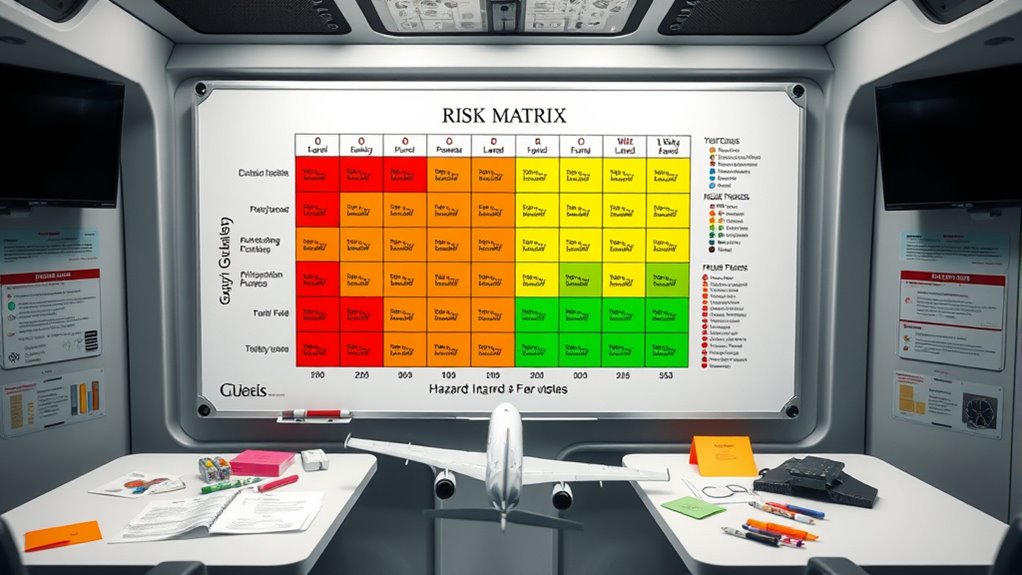
Before your flight, you need to identify potential hazards by checking the weather and inspecting the aircraft. Ensuring favorable conditions and a thorough mechanical review helps you spot issues early. These steps are vital for maintaining safety and avoiding surprises during your flight. Additionally, reviewing flight training costs can help you budget for any unexpected expenses that might arise.
Pre-Flight Weather Checks
To guarantee a safe flight, you need to carefully examine weather conditions well in advance of departure. Start by reviewing weather patterns along your route and at your destination. Look for signs of turbulence, high winds, or storms that could impact your flight. Pay close attention to pilot alerts issued by aviation authorities or weather services, which can warn you of hazardous conditions. Checking updated forecasts helps you identify potential hazards early, allowing you to evaluate your plans if necessary. Keep in mind that weather can change rapidly, so frequent updates are essential. Being aware of seasonal variations can also help you anticipate how weather might influence your flight conditions. By thoroughly assessing these factors before takeoff, you reduce risks and ensure you’re prepared for any weather-related challenges that may arise during your flight.
Mechanical Inspection Procedures
Conducting thorough mechanical inspections is essential for identifying potential hazards that could compromise flight safety. During aircraft maintenance, you should systematically check all critical components, including engines, landing gear, and control surfaces. Follow strict safety protocols to guarantee nothing is overlooked, and verify that all parts are functioning properly. Look for signs of wear, corrosion, or damage that could lead to mechanical failure. Use checklists to guide your inspection process and document any issues found. Address problems promptly, and ensure repairs meet regulatory standards. Regular inspections help prevent in-flight malfunctions and enhance safety. By diligently adhering to safety protocols during aircraft maintenance, you reduce risks and ensure your aircraft is fully prepared for a safe flight.
Assessing the Likelihood of Each Risk
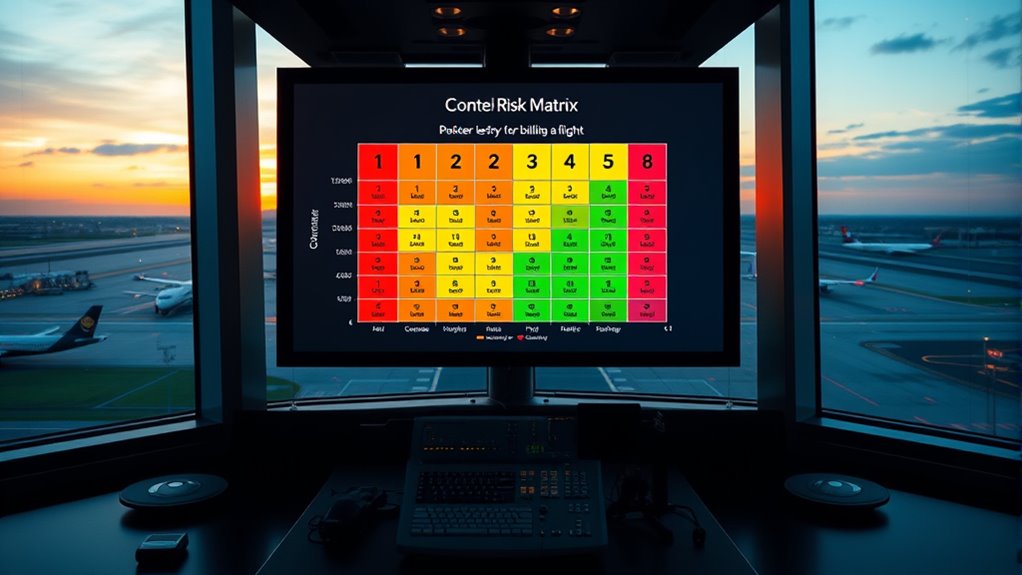
Evaluating the likelihood of each risk involves appraising how probable it is that a particular threat will occur. When considering risks like communication breakdowns, you must gauge factors such as pilot communication clarity and air traffic control responsiveness. Use a simple table to classify risks:
| Risk Type | Likelihood Level |
|---|---|
| Communication failure with ATC | Likely |
| Misinterpretation of signals | Possible |
| Equipment malfunction | Unlikely |
| Weather-related delays | Possible |
| Human error in procedures | Likely |
This helps you prioritize risks based on their probability and ensures you’re prepared to address those most likely to occur, especially in critical areas like pilot communication and air traffic control coordination. Additionally, understanding risk assessment methods can further enhance your preparedness for unforeseen challenges.
Determining the Impact of Possible Hazards

How do you determine the potential impact of a hazard once it’s identified? First, perform a thorough hazard identification to understand how a threat could affect your flight. Then, conduct an impact assessment by considering these key factors:
- Safety: Will this hazard threaten passenger or crew safety?
- Operations: Could it cause delays or disrupt scheduled activities?
- Financial: What costs might arise from dealing with this hazard?
- Reputation: Might it damage your credibility or trustworthiness?
Additionally, recognizing the importance of leadership in managing risks can help develop effective mitigation strategies.
Categorizing Risks Based on Severity and Probability

You need to assess risks by determining both their potential impact and how likely they are to happen. Estimating impact levels helps you understand what’s at stake, while gauging the probability indicates how often the risk might occur. Combining these factors allows you to categorize risks effectively and prioritize your response strategies. Incorporating performance upgrades can influence both the severity and the likelihood of certain risks, making it essential to evaluate modifications carefully.
Assessing Impact Levels
Evaluating impact levels involves categorizing risks based on their potential severity and the likelihood of occurrence. This step is fundamental for an accurate impact assessment and effective risk management. To do this, you should:
- Determine the severity ranking, identifying how serious the outcome could be if the risk occurs.
- Assess the potential impact on safety, costs, schedule, and reputation.
- Assign a level—such as minor, moderate, or critical—to each risk based on its severity.
- Combine severity with the likelihood of occurrence to prioritize risks effectively.
- Incorporate risk management strategies to mitigate potential negative outcomes and enhance decision-making.
Estimating Likelihood of Events
Estimating the likelihood of events involves evaluating how probable it is that a specific risk will occur within a given timeframe. Your risk perception influences how you interpret potential hazards, affecting how seriously you consider different risks. To improve hazard awareness, you need to assess both the severity and probability of each event accurately. Consider historical data, environmental factors, and operational conditions to gauge how often a risk might materialize. This process helps you categorize risks effectively, distinguishing between unlikely and frequent events. By understanding the likelihood, you can prioritize risks more accurately and implement appropriate mitigation strategies. Additionally, understanding relevant subtopics, such as the importance of creating a cozy and functional space, can improve your overall risk management approach. Remember, a clear grasp of hazard awareness and realistic risk perception ensures your risk matrix reflects true probabilities, leading to better decision-making for your flight safety.
Prioritizing Hazards for Mitigation Efforts
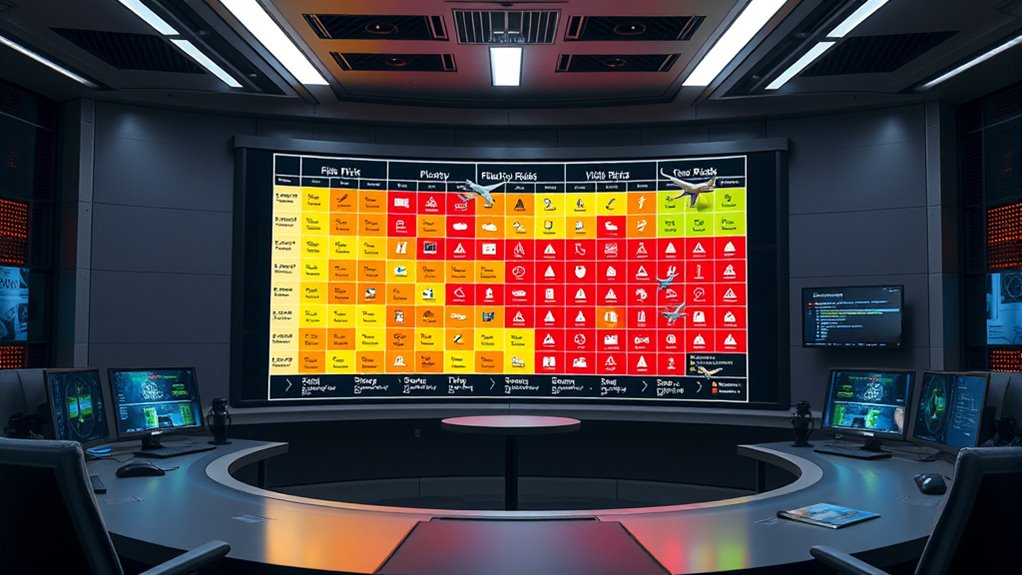
Prioritizing hazards for mitigation efforts involves evaluating each risk based on its likelihood and potential impact. Start by reviewing your hazard identification process to guarantee all risks are considered. Then, use risk prioritization to determine which hazards need immediate attention. To do this effectively, consider these steps:
- Rank hazards by their likelihood of occurrence.
- Assess the potential severity of each hazard’s impact.
- Combine these factors to assign a risk level.
- Focus mitigation efforts on hazards with high likelihood and severe impact.
- Incorporate contrast ratio considerations to better understand how image quality can influence your overall viewing experience and safety during setup.
Developing Strategies to Manage Identified Risks
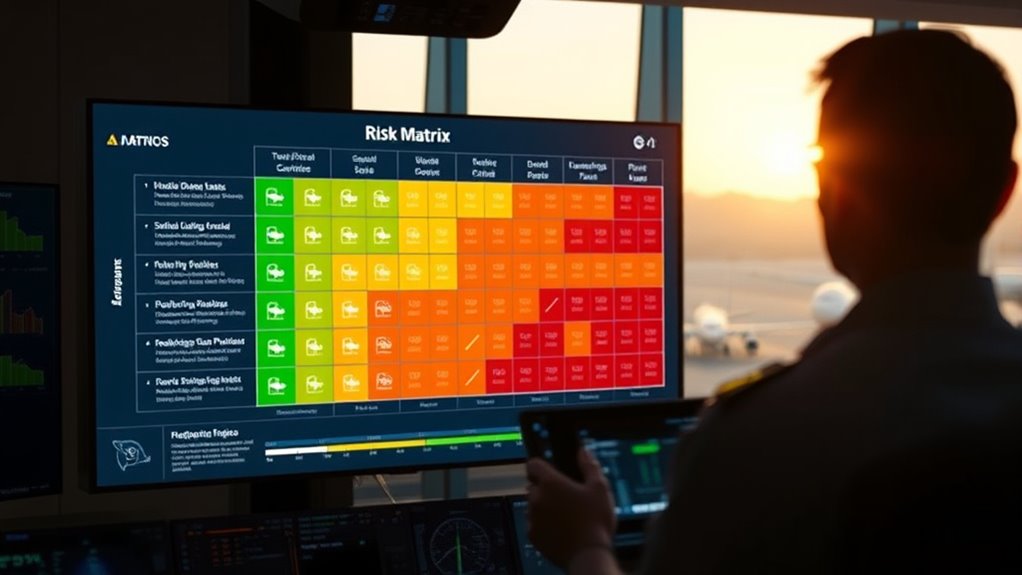
Once you’ve identified the risks, you need to prioritize your responses to address the most critical threats first. Implement preventive measures to reduce the likelihood of risks materializing and set up a system to monitor their effectiveness. Be prepared to adjust your strategies as new information emerges or circumstances change. Incorporating risk assessment tools can help you better understand and address potential challenges proactively.
Prioritize Risk Responses
After risks have been identified and assessed, the next essential step is to develop strategies for managing them effectively. To prioritize risk responses, you should consider:
- Focus on high-impact, high-probability risks first.
- Use risk transfer to shift potential losses, like insurance.
- Apply risk avoidance when a risk’s impact outweighs its benefits.
- Balance mitigation efforts with available resources to optimize safety and cost.
Implement Preventive Measures
Implementing preventive measures is a vital step in managing identified risks effectively. You should focus on strengthening pilot training to guarantee pilots are prepared for potential hazards, reducing the likelihood of errors. Clear risk communication is essential; ensure everyone involved understands the risks and the steps to mitigate them. Use concise briefings and updates to keep all team members informed. Incorporate safety protocols and checklists into daily routines to catch issues early. Regular training sessions reinforce best practices and adapt to new risks. By proactively addressing risks through these strategies, you improve overall safety and reduce the chance of incidents. Remember, prevention is always better than reaction, and effective communication and training are your best tools.
Monitor and Adjust
Monitoring risks and making adjustments are ongoing steps that guarantee your safety measures stay effective over time. Regularly review your navigation planning to identify new hazards or changing conditions. Update your emergency protocols to ensure they address current risks. To stay on top of things:
- Track real-time data to detect emerging issues.
- Reassess your risk levels based on updated information.
- Adjust your navigation planning to avoid detected hazards.
- Train and communicate any protocol changes to your team promptly.
Implementing Controls and Safety Measures
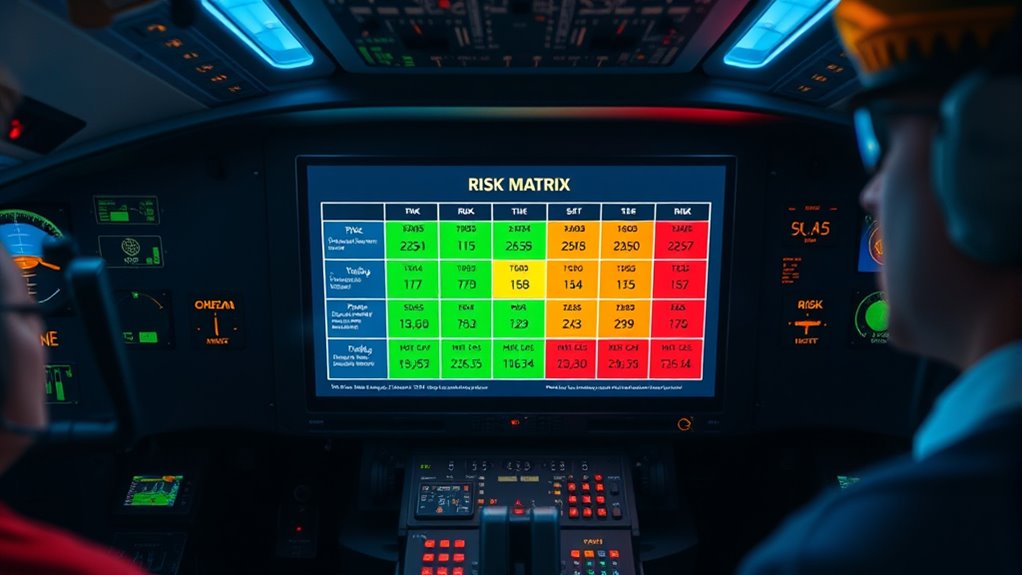
To effectively manage risks identified through a risk matrix, you must prioritize and implement appropriate controls and safety measures. Start by enhancing pilot training to guarantee crew members are prepared for various scenarios, reducing human error. Regular aircraft maintenance is vital for identifying and fixing potential mechanical issues before they escalate. Implement safety protocols and procedures tailored to the specific risks you’ve identified, such as pre-flight checks or emergency response plans. Communicate these controls clearly to all team members, and make sure they understand their roles. By integrating thorough pilot training and diligent aircraft maintenance into your safety plan, you create a strong defense against potential hazards. This proactive approach minimizes risks and promotes safer flights for everyone involved.
Monitoring and Updating the Risk Matrix Over Time
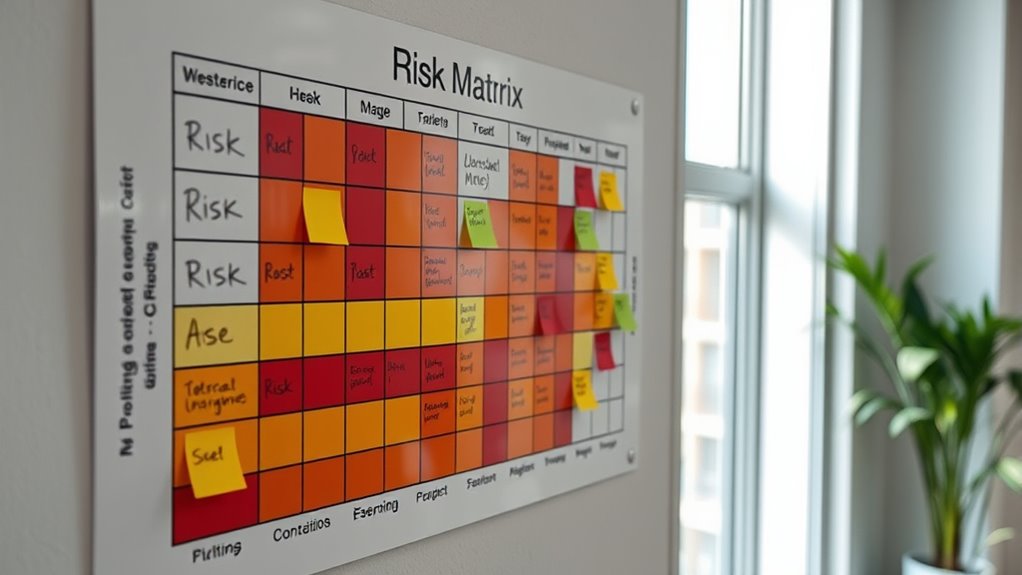
Since risks and operational conditions constantly evolve, regularly reviewing and updating your risk matrix is essential to maintain its effectiveness. This process ensures your risk assessment remains accurate and hazard identification stays current. To do this effectively:
Regularly review and update your risk matrix to ensure ongoing safety and accuracy in hazard identification.
- Reassess risks after significant changes in flight plans or weather conditions.
- Review incident reports and safety feedback to identify new hazards.
- Adjust risk levels based on recent operational data.
- Periodically verify that control measures still mitigate identified risks.
Applying Your Risk Matrix to Improve Flight Safety
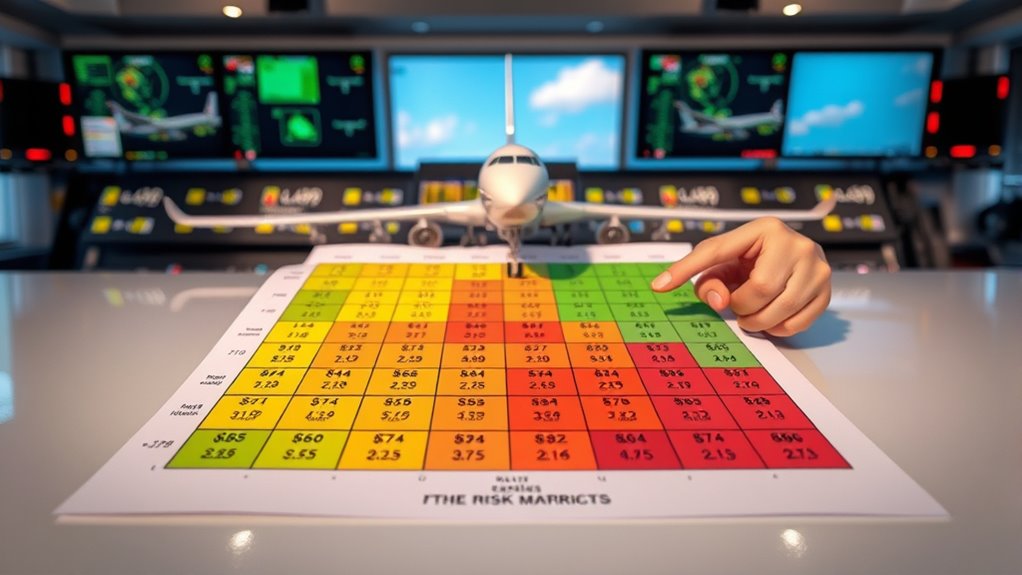
Applying your risk matrix effectively turns your hazard assessments into practical safety improvements. By analyzing risks like crew fatigue, you can identify when fatigue levels threaten flight safety. Implementing targeted measures, such as adjusting schedules or increasing rest periods, reduces this hazard. Your risk matrix also highlights communication protocol weaknesses, prompting updates to make sure clearer, more efficient exchanges among crew members. Regularly reviewing and applying the matrix helps you prioritize safety actions based on risk severity and likelihood. This proactive approach minimizes errors caused by fatigue or miscommunication, enhancing overall flight safety. Remember, the goal is to use your risk matrix as a dynamic tool that guides continuous improvements, ensuring hazards are managed before they escalate into serious incidents.
Frequently Asked Questions
How Often Should I Review and Update My Risk Matrix Before Each Flight?
You should review and update your risk assessment and safety protocols before each flight to guarantee they reflect current conditions. This means evaluating any new risks, weather changes, or equipment issues that could affect safety. Regularly updating your risk matrix helps you stay prepared and responsive. Make it a habit to reassess at least daily or before each flight, so your risk management remains accurate and effective for every journey.
Can a Risk Matrix Be Customized for Different Types of Aircraft?
You can definitely tailor a risk matrix for different aircraft variations by applying tailored customization strategies. Adjust your risk factors based on specific aircraft features, performance capabilities, and operational environments. This guarantees your risk assessment remains accurate and relevant for each aircraft type. By customizing your matrix, you enhance safety measures and decision-making processes, making your risk management more effective regardless of the aircraft you’re flying.
What Tools or Software Can Assist in Creating an Effective Risk Matrix?
Imagine crafting a clear map through turbulent skies—you need reliable tools for your risk assessment. Software like Excel, with customizable templates, helps you visualize hazards and prioritize risks effectively. Specialized software like ARM or RiskWatch streamlines risk evaluation, offering intuitive interfaces for software development and risk analysis. These tools transform complex data into actionable insights, guiding you to make safer, informed decisions for any project or flight plan.
How Do I Balance Risk Mitigation With Operational Efficiency?
Balancing risk assessment with operational efficiency means you prioritize safety without hindering progress. You should identify critical risks and implement safety protocols that mitigate those risks effectively. Use data to evaluate the impact of safety measures on operations, and continuously review processes for improvements. By doing this, you guarantee safety remains paramount while maintaining smooth, efficient operations, ultimately creating a safer, more reliable environment for everyone involved.
Are There Industry Standards for Risk Matrix Thresholds in Aviation?
Think of risk thresholds like a safety net; they catch you before a fall. In aviation, industry standards guide these thresholds, ensuring consistency and safety. While specific numbers vary, organizations like ICAO and FAA set general guidelines for risk levels. You should consult these standards when building your risk matrix, balancing safety and operational efficiency, and tailoring thresholds to your specific flight operations for ideal safety and performance.
Conclusion
By creating and using a risk matrix, you’re like a pilot steering through clouds—staying alert and prepared. It helps you spot hazards early, assess their severity, and take control before they become problems. Regularly updating your matrix keeps safety front and center, ensuring smoother flights. Think of it as your trusted map in the sky, guiding you safely through each journey and making every flight as secure as possible.
Fall Picks
fall essentials
As an affiliate, we earn on qualifying purchases.