
Flight instructors guide you through mastering aircraft systems, emergency procedures, and situational awareness, helping you build confidence and technical skill. They teach troubleshooting, safety routines, and decision-making under pressure, acting as mentors to develop your professionalism and discipline. Their guidance fosters your ability to handle real-world challenges safely and efficiently. By supporting your growth and independence, they prepare you for confident flying. Explore further to discover how their mentorship shapes your journey as a pilot.
Key Takeaways
- Provide technical instruction on aircraft systems, troubleshooting, and safety checks to build foundational knowledge.
- Guide pilots through emergency procedures using simulations to enhance decision-making under stress.
- Foster situational awareness by teaching anticipation, complex maneuver handling, and safety routines.
- Model soft skills such as communication, calmness under pressure, and systematic problem-solving.
- Support overall development, confidence, and professionalism for safe, competent flying in real-world scenarios.
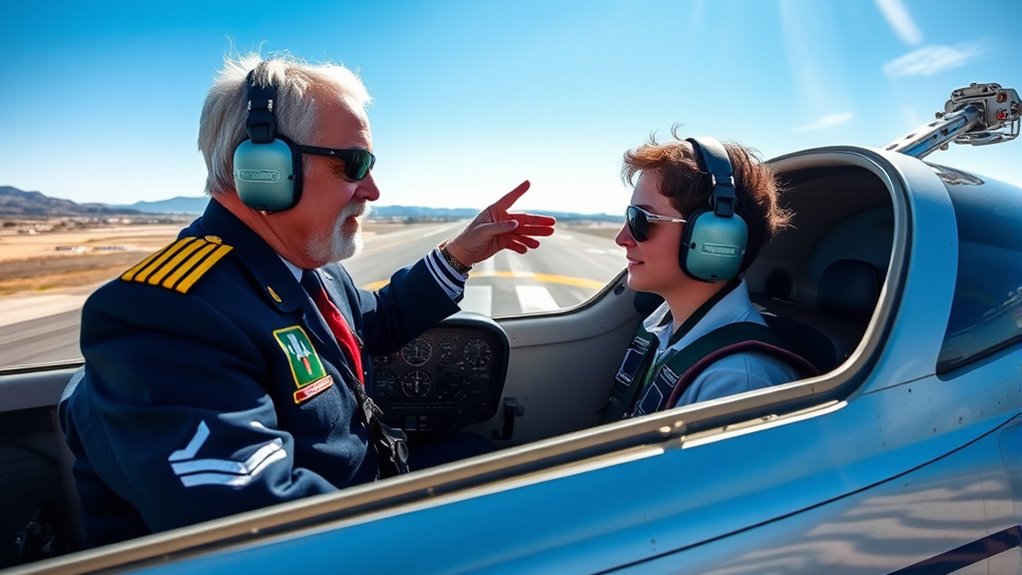
Becoming a skilled pilot isn’t just about mastering technical skills; it also depends heavily on the guidance and mentorship you receive from your flight instructors. They play a crucial role in shaping your understanding of aircraft systems and how to respond confidently during emergency procedures. When you begin your training, your instructor helps you navigate the complex machinery of the aircraft, breaking down the components of engines, avionics, and control surfaces so you can operate them safely and efficiently. They emphasize the importance of understanding aircraft systems thoroughly because this knowledge forms the foundation of safe flying. Knowing how each system works, how to troubleshoot issues, and when to seek assistance can prevent many potential problems in flight.
Your instructor also guides you through emergency procedures, which are critical for your safety and that of your passengers. They don’t just teach you the steps to follow; they ensure you understand the reasoning behind each action. This comprehension helps you stay calm and decisive when real emergencies occur, whether it’s an engine failure, electrical malfunction, or other in-flight issues. Through simulated scenarios, your instructor challenges you to apply emergency procedures confidently, reinforcing your decision-making skills and reducing panic in high-stress situations. They observe how you handle these situations, providing constructive feedback that sharpens your responses and builds your confidence.
Beyond technical expertise, your instructor mentors you in developing situational awareness. They teach you to anticipate potential problems before they escalate, which is essential during complex maneuvers or adverse weather conditions. They also instill discipline in your pre-flight checks, ensuring you methodically review aircraft systems and emergency procedures before every flight. This habit not only enhances safety but also ingrains a professional mindset that will serve you throughout your flying career. Additionally, understanding training methodologies enhances your learning process and prepares you more effectively for real-world scenarios.
Your flight instructor’s mentorship extends into soft skills like communication, decision-making, and risk management. They serve as a role model, demonstrating calmness under pressure and a methodical approach to problem-solving. Their feedback helps you identify areas for improvement, pushing you to be a more competent and confident pilot. As you progress, they encourage you to take on more responsibility, gradually shifting from a learner to a capable aviator prepared to handle whatever challenges come your way. Ultimately, their guidance is instrumental in transforming theoretical knowledge into practical expertise, ensuring you’re well-equipped to fly safely and confidently, no matter what the skies hold.

Microsoft Flight Simulator 2024 User Guide for Beginners: A Step-by-Step Guide to Setup, Controls, Navigation, Aircraft Systems, Career Mode, and Realistic Flight Techniques
As an affiliate, we earn on qualifying purchases.
As an affiliate, we earn on qualifying purchases.
Frequently Asked Questions
How Do Flight Instructors Tailor Training to Individual Student Needs?
You tailor training by creating personalized lesson plans that match each student’s learning style. You assess their strengths, weaknesses, and preferences, then adjust your teaching methods accordingly. Whether a student learns best through hands-on practice, visual aids, or detailed explanations, you adapt your approach to guarantee effective learning. This personalized approach helps students build confidence and skills efficiently, making their flight training more engaging and successful.
What Qualities Make an Effective Flight Instructor?
Imagine a lighthouse guiding ships safely through fog—that’s what makes an effective flight instructor. You excel in clear pilot communication and emphasize safety protocols, building trust and confidence. Your patience, adaptability, and strong knowledge inspire students to learn confidently and handle challenges calmly. By fostering open dialogue and safety consciousness, you create an environment where students thrive, ensuring they become competent, responsible pilots.
How Do Flight Instructors Handle Difficult or Anxious Students?
When handling difficult or anxious students, you focus on boosting their confidence and providing emotional support. You stay calm, patient, and understanding, creating a safe environment where they feel comfortable asking questions. You break tasks into small steps, celebrate progress, and reassure them that mistakes are part of learning. By showing empathy and offering encouragement, you help students overcome anxiety and build the trust needed to succeed in flying.
What Are the Common Challenges Faced by Flight Instructors?
You face frequent frustrations like fluctuating student motivation and the challenge of translating theory into practice. Balancing patience with persistent pressure, you guide students through flight simulator training, helping them build confidence. Managing diverse learning paces, addressing anxiety, and maintaining motivation can be demanding. Staying adaptable, you aim to inspire enthusiasm, ensuring each student progresses safely and successfully toward their flying goals.
How Do Instructors Stay Current With Aviation Regulations and Techniques?
You stay current with aviation regulations and techniques by regularly attending simulation training sessions and leveraging technology integration. These tools help you practice new procedures and stay updated on industry changes efficiently. You also review official updates from regulatory bodies and participate in workshops or seminars. This proactive approach guarantees you’re well-versed in the latest standards, enabling you to provide accurate guidance and maintain your teaching effectiveness.

ASA Student Pilot Kit
Complete Private Pilot Training Kit, includes: flight computer
As an affiliate, we earn on qualifying purchases.
As an affiliate, we earn on qualifying purchases.
Conclusion
As a flight instructor, you’re not just teaching someone to fly—you’re shaping future legends of the skies! Your guidance can turn a nervous beginner into a confident aviator who might someday soar across the world, explore new horizons, and even change lives. Remember, your mentorship isn’t just a job; it’s a legacy that could inspire generations to come. So, hold your head high and keep fueling dreams—because you’re truly the hero behind every successful flight!

Aviation Maintenance Technician Handbook – Powerplant: FAA-H-8083-32B (Color Print)
As an affiliate, we earn on qualifying purchases.
As an affiliate, we earn on qualifying purchases.

The Flight Instructor's Survival Guide: true, witty, insightful stories illustrating the fundamentals of instructing
As an affiliate, we earn on qualifying purchases.
As an affiliate, we earn on qualifying purchases.