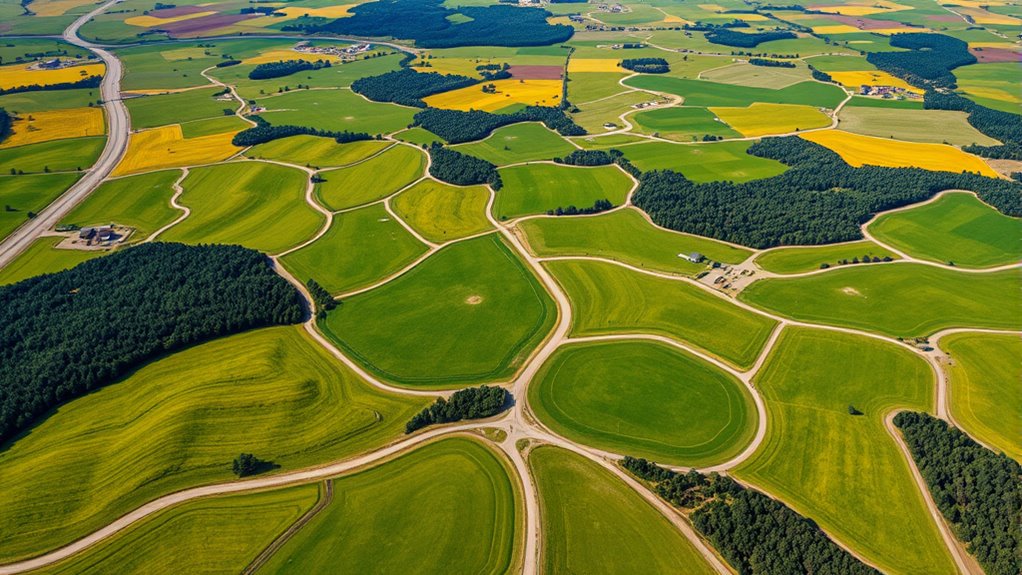

To effectively analyze satellite imagery for cross-country planning, focus on understanding different image types and resolutions to identify land features and land use patterns. Look for water bodies, vegetation, and landforms to assess terrain and suitability. Recognize topographical elements like elevation and slopes, and monitor changes over time to track environmental impacts. Using specialized software can streamline this process, revealing detailed insights that support well-informed planning decisions—if you keep exploring, you’ll uncover even more useful techniques.
Key Takeaways
- Identify land use patterns such as urban areas, water bodies, and forests to inform infrastructure development.
- Analyze terrain features and topography to determine suitable routes and construction zones.
- Detect environmental changes over time, including deforestation, urban expansion, and water resource shifts.
- Use spectral bands and image resolution to distinguish different land features and assess land cover quality.
- Employ software tools for image enhancement, classification, and layering to improve analysis accuracy.
Understanding Satellite Image Types and Resolutions
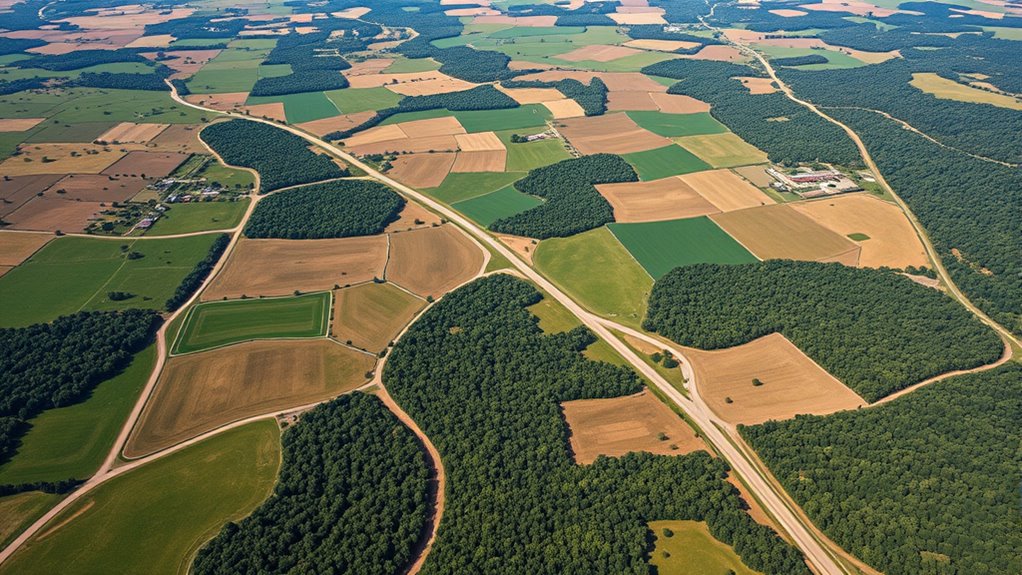
Understanding satellite image types and resolutions is essential for effective planning. Different satellite sensors capture images using various spectral bands, which record specific wavelengths of light beyond visible spectrum, providing diverse information about land features. Image resolution determines how much detail you can see; high-resolution images reveal finer details, while lower-resolution images cover larger areas with less detail. Recognizing the types of satellite images—such as multispectral or panchromatic—helps you select the right data for your project. For instance, multispectral images with multiple spectral bands can identify vegetation health, while panchromatic images offer sharper details. By understanding how spectral bands and image resolution influence image interpretation, you can better analyze land use patterns and make informed planning decisions. Additionally, understanding the contrast ratio of satellite images can help assess the clarity of features in different lighting conditions.
Interpreting Land Features and Land Use Patterns
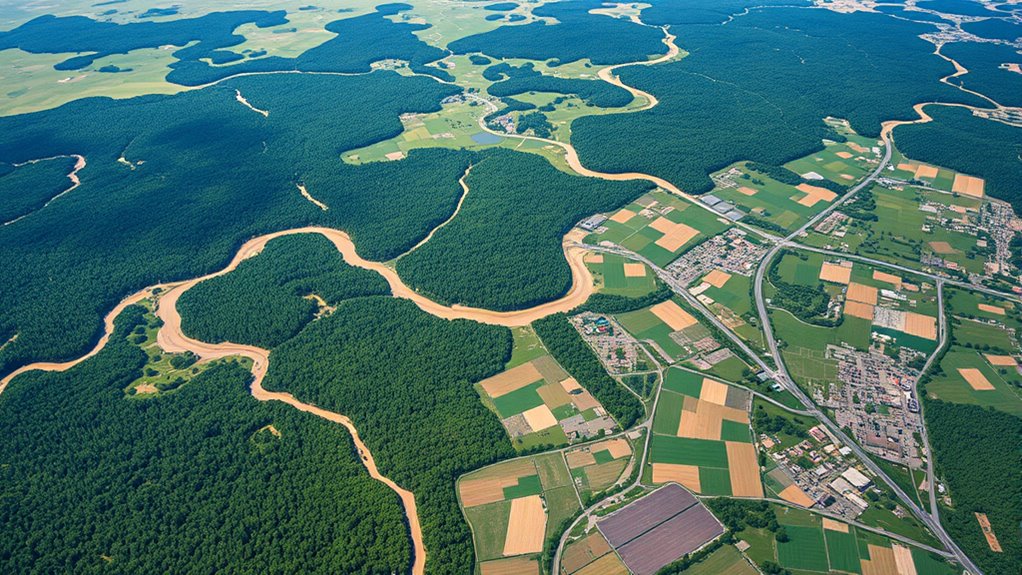
How can you accurately identify and interpret land features and land use patterns from satellite imagery? Focus on variations in color, texture, and shape. Water bodies appear as dark, smooth areas, while soil erosion areas show irregular, lighter patches with exposed soil. Vegetation covers are lush and green, contrasting with barren land. To help interpret these features, see the table below:
| Land Feature | Land Use Pattern | Indicators |
|---|---|---|
| Water bodies | Urban, agricultural, natural | Lakes, rivers, reservoirs |
| Soil erosion | Agricultural land, slopes, vulnerable areas | Exposed soil, gullies |
| Vegetation | Forests, farms, grasslands | Dense green patches |
| Built-up areas | Urban expansion, infrastructure | Dense, geometric shapes |
Understanding these features can aid in land classification and improve planning accuracy.
Identifying Topographical and Geographical Elements
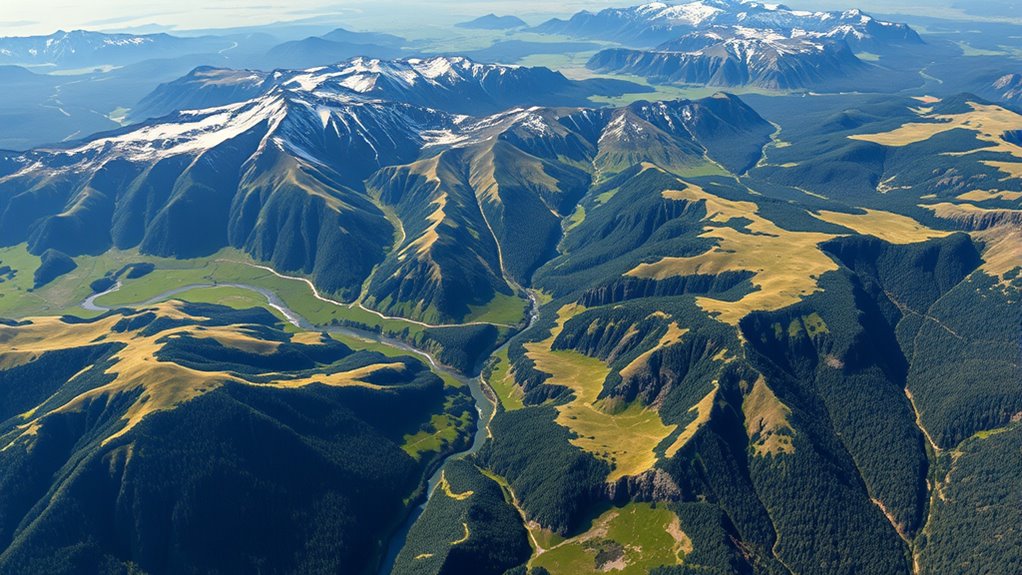
Ever wonder how to distinguish different topographical and geographical features in satellite images? You can do this through terrain classification, which groups landforms based on their visual characteristics. Look for variations in color, texture, and shading to identify features like mountains, valleys, or plains. Elevation modeling enhances your understanding by providing height data, helping you pinpoint highlands or low-lying areas. Combining these techniques allows you to interpret the terrain’s structure accurately. For example, rugged, shadowed regions indicate steep slopes, while flat, uniform areas suggest plains. Recognizing these elements is essential for planning routes, evaluating land suitability, and understanding the landscape’s physical context. Mastering terrain classification and elevation modeling gives you a clearer picture of the terrain’s topographical and geographical features. Additionally, applying vertical storage solutions can help organize geographic data efficiently, making it easier to analyze and interpret.
Detecting Changes and Monitoring Environmental Impact
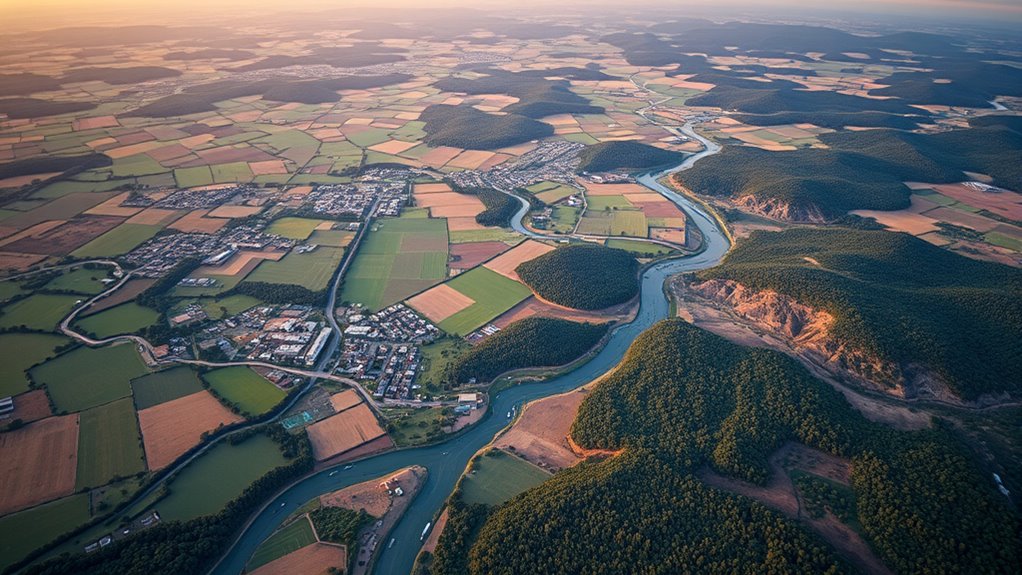
Detecting changes and monitoring environmental impact with satellite imagery involves regularly comparing images over time to identify significant alterations in land cover, vegetation, water bodies, and urban development. This process helps you track urban sprawl, revealing how expanding cities encroach on natural areas. It also aids in deforestation monitoring, allowing you to observe forest loss and habitat destruction. By analyzing these images, you can pinpoint areas experiencing rapid change and assess the ecological consequences. Remote sensing technology enables more precise and efficient data collection, enhancing your ability to make informed decisions. Timely detection of environmental shifts enables you to implement sustainable land use strategies and mitigate negative impacts. Continuous monitoring guarantees you stay informed about landscape evolution, making it easier to balance development needs with conservation efforts. Satellite imagery therefore becomes a crucial tool for proactive cross-country planning and environmental stewardship.
Utilizing Software Tools for Image Analysis
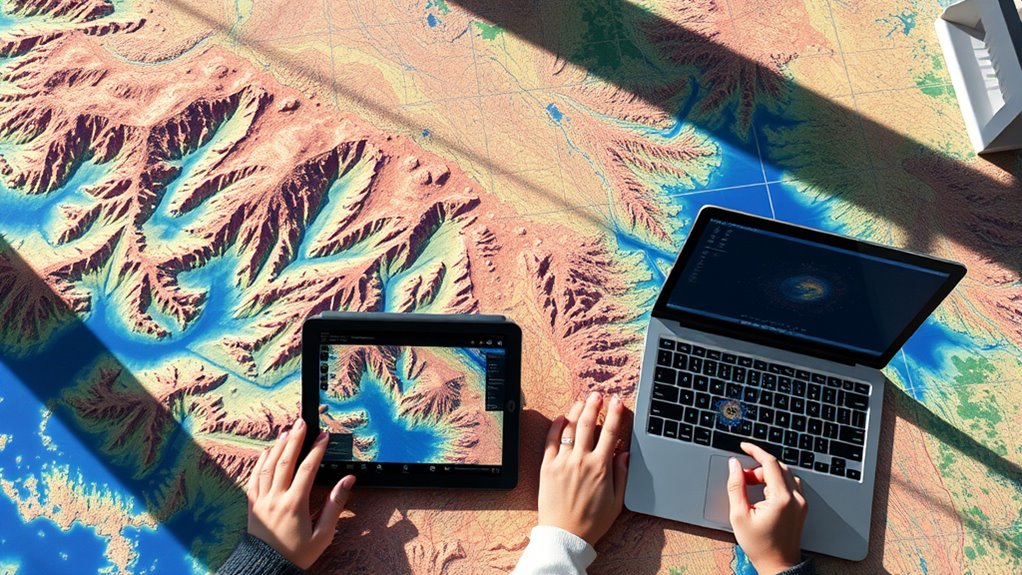
Utilizing software tools for image analysis enhances your ability to interpret satellite imagery efficiently and accurately. These tools allow you to process large volumes of satellite data quickly, revealing critical details that might be missed manually. Image enhancement features improve the clarity of satellite images by adjusting contrast, brightness, and sharpness, making features more distinguishable. With specialized software, you can perform tasks like filtering, layering, and classification, which help identify landforms, vegetation, and infrastructure. These capabilities streamline your analysis, saving time and reducing errors. By leveraging software solutions, you transform raw satellite data into actionable insights. This process empowers you to make informed decisions for cross-country planning, ensuring that your assessments are based on the most precise, up-to-date imagery available. Residency requirements in various regions often impact the availability and scope of analysis for different projects.
Applying Insights to Cross-Country Planning Strategies
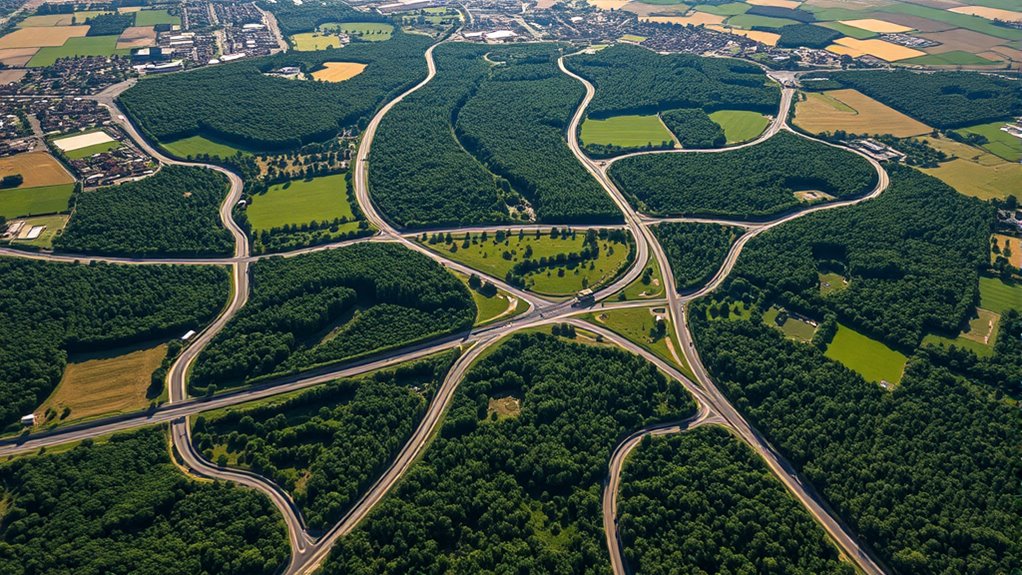
Applying insights from satellite imagery is essential for developing effective cross-country planning strategies. By analyzing urban growth patterns, you can identify areas of rapid development and prioritize infrastructure development accordingly. Satellite data reveals how cities expand into surrounding regions, guiding decisions on transportation networks, utilities, and public services. Recognizing emerging urban centers allows you to allocate resources efficiently and plan for future expansion. Additionally, monitoring infrastructure development helps prevent overbuilding or neglect. You can also detect environmental impacts of urban growth, ensuring sustainable development. Incorporating spatial analysis techniques enhances your ability to interpret satellite data accurately and make informed decisions. Integrating satellite insights into your planning process creates an all-encompassing view of current trends and future needs. This approach allows you to craft strategies that promote balanced growth, improve connectivity, and support resilient, adaptable communities across borders.
Frequently Asked Questions
How Can Satellite Data Be Integrated With Other Geographic Information Systems?
You can enhance your GIS analysis by integrating satellite data with other geographic information systems through data integration techniques. This involves aligning satellite imagery with existing GIS layers, using coordinate systems and metadata for accurate overlay. By combining these datasets, you get an extensive view, enabling better decision-making and analysis. Effective data integration ensures your GIS analysis is more precise, allowing you to leverage satellite insights alongside other spatial information seamlessly.
What Are the Costs Associated With High-Resolution Satellite Imagery Acquisition?
When you acquire high-resolution satellite imagery, you face costs tied to image resolution and data licensing. Higher resolution images provide detailed views but come at a premium, often increasing acquisition expenses. Data licensing fees vary depending on usage rights, restrictions, and provider policies. You should consider these factors to budget effectively, balancing image quality needs with costs, and confirm your licensing aligns with your project’s scope and longevity.
How Do Weather Conditions Affect Satellite Image Clarity and Analysis?
Weather conditions considerably impact satellite image clarity and analysis. Atmospheric interference, such as pollution or moisture, can distort images, reducing detail and accuracy. Cloud cover is a major obstacle, often obscuring the ground and making it difficult to capture clear images. You need to take into account these factors when planning satellite data collection, as they can delay your projects and affect the quality of your analysis.
Can Satellite Imagery Predict Future Land Use Changes Accurately?
Sure, satellite imagery can predict future land use changes, but don’t expect it to be a crystal ball. Land use forecasting and urban expansion models give you a good idea, yet they’re often as reliable as weather forecasts a month ahead—full of surprises. Satellite images help track trends, but predicting exact development patterns remains tricky, especially with unpredictable human decisions and policy shifts.
What Training Is Necessary for Effective Satellite Image Interpretation?
To interpret satellite images effectively, you need training in remote sensing and image analysis. You should learn how to identify land features, understand spectral signatures, and use tools like GIS software. Practical experience in analyzing different types of satellite data helps you recognize patterns and changes over time. This training enables you to make accurate assessments, supporting better land use planning and decision-making.
Conclusion
Think of satellite imagery as your map’s secret language, revealing unseen stories of the land. By learning to read these images, you become a skilled explorer, uncovering hidden patterns and changes across borders. With each insight, you’re crafting a masterful voyage—planning with clarity and foresight. Just as a navigator charts a course through uncharted waters, you’ll steer cross-country strategies confidently, guided by the silent but powerful dialogue of satellite images.