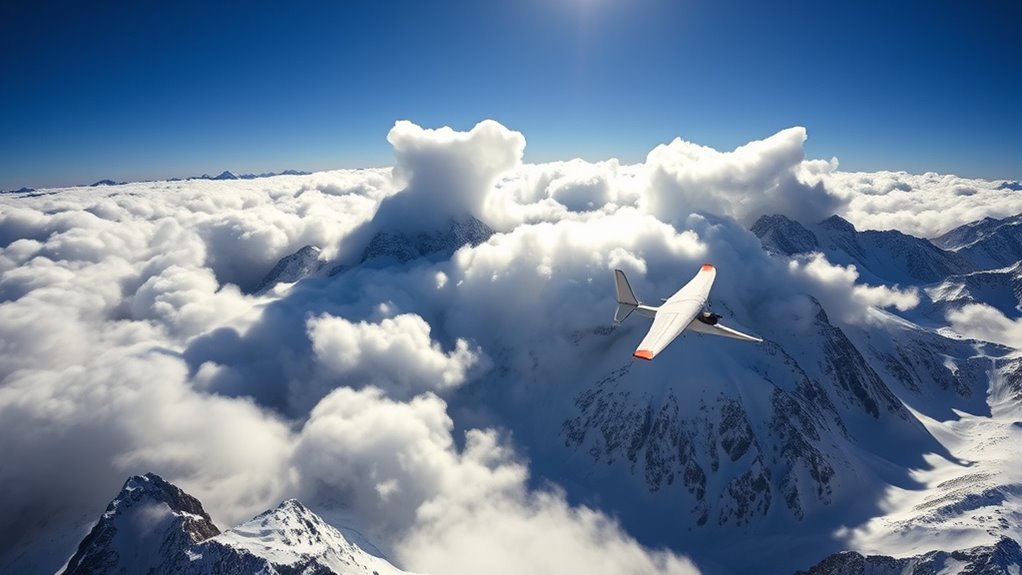
To master wave soaring in the Sierra Nevada, focus on identifying mountain wave hotspots created by atmospheric currents like thermals, ridge lift, and mountain waves. Use your observation skills to find areas where air is oscillating and rising along mountain slopes or over ridges. Exploiting these currents allows you to reach high altitudes and extend your flights markedly. Stay tuned to discover expert tips on locating and utilizing these powerful soaring opportunities efficiently.
Key Takeaways
- Mountain wave hotspots are often found near prominent Sierra Nevada peaks where wind interacts with terrain.
- Exploiting ridge lift and prevailing winds enhances the formation of strong mountain waves for soaring.
- Clear, stable atmospheric conditions with strong winds are ideal for wave soaring in the Sierra Nevada.
- Pilots use visual cues like lenticular clouds and rotor zones to identify effective wave hotspots.
- Mastery of wave dynamics allows for high-altitude, long-duration flights over Sierra Nevada mountain ridges.

Have you ever wondered how glider pilots harness the powerful atmospheric currents over the Sierra Nevada? It’s a fascinating dance with the sky, relying on natural phenomena like thermal currents and ridge lift to stay aloft. These invisible forces are the backbone of wave soaring, allowing pilots to climb to incredible heights and fly long distances without an engine. Understanding how they work is key to mastering this exhilarating form of flight.
Thermal currents are rising columns of warm air that form when the sun heats the ground unevenly. As the earth’s surface warms, pockets of warm air rise, creating thermal updrafts that gliders can use to gain altitude. Over the Sierra Nevada, these thermals are particularly strong during sunny days, especially in the spring and summer. Pilots often seek out areas where the ground is uneven or rocky, as these spots tend to produce more intense thermal activity. By circling within these thermal columns, you can climb several thousand feet in just a few minutes, making long-distance flights possible. Thermal currents are essential for initial altitude gain and for steering the lower parts of mountain wave phenomena.
Thermal currents are warm air rising pockets that help gliders gain altitude during sunny days over the Sierra Nevada.
Ridge lift, on the other hand, occurs when wind blows against the mountain range, forcing air to rise along the slopes. Over the Sierra Nevada, prevailing winds hit the ridges and generate steady lift that gliders can ride along the face of the mountains. This type of lift is often more predictable than thermals, especially on strong wind days, and allows pilots to maintain altitude or gain height along the ridges. When you fly in ridge lift, you’ll find it essential to stay close to the mountain’s edge, where the lift is strongest. It’s a reliable source of altitude, especially when thermals are weak or absent. Both thermal currents and ridge lift are crucial for staying airborne, but they often work together to create the conditions necessary for wave soaring.
In the Sierra Nevada, these atmospheric currents set the stage for mountain wave activity, where air oscillates in a series of rising and sinking waves. By understanding and exploiting thermal currents and ridge lift, you can tap into the mountain wave hotspots that make this region famous among glider pilots. It’s a skillful blend of patience, observation, and precision flying—an exhilarating way to connect with the mountain landscape and harness nature’s incredible power.
Frequently Asked Questions
What Safety Precautions Are Recommended for Mountain Wave Soaring?
When mountain wave soaring, you should always prioritize safety by conducting thorough equipment checks before your flight. Emergency planning is vital; know your escape routes and carry essential safety gear like a radio, GPS, and survival kit. Stay aware of weather conditions, avoid strong turbulence, and communicate your plans with someone on the ground. These precautions help you stay safe and prepared in challenging mountain environments.
How Do Weather Conditions Influence Wave Formation in the Sierra Nevada?
Weather conditions greatly influence wave formation in the Sierra Nevada. You’ll notice that low air pressure systems create the ideal pressure gradient for strong upward air movements, enhancing wave strength. Wind shear, or rapid changes in wind speed and direction with altitude, helps generate and sustain mountain waves. When these conditions align, you’ll experience consistent, powerful wave lift, making soaring more predictable and enjoyable, but always stay alert for changing weather that can affect safety.
Are There Specific Times of Year Best for Wave Soaring in This Area?
You’ll find the best wave soaring in the Sierra Nevada during winter and spring, when seasonal wind patterns create ideal conditions. These peak soaring periods align with strong, consistent winds that generate powerful mountain waves, giving you perfect lift. During these times, you’ll experience the most reliable and exciting soaring, so plan your trips around late winter through early spring to make the most of the mountain wave hotspots.
What Equipment Is Essential for Successful Mountain Wave Flying?
Did you know that proper equipment can increase your safety and success by over 50%? For mountain wave flying, you need reliable glider instrumentation like altimeters and variometers to monitor altitude and lift. Don’t forget emergency gear such as a radio, survival kit, and a personal locator beacon. These tools help you stay aware of your environment and respond quickly, ensuring a safe and enjoyable soaring experience.
Can Beginners Safely Attempt Sierra Nevada Wave Soaring?
Beginners should exercise caution when attempting Sierra Nevada wave soaring. While it can be exhilarating, thermal turbulence and ridge lift can make conditions unpredictable. If you’re new, start with experienced guidance, guarantee you have proper equipment, and familiarize yourself with the terrain. Gradually build your skills in less challenging environments before tackling mountain wave hotspots, always prioritizing safety to enjoy this incredible flying experience.
Conclusion
So, next time you’re soaring over the Sierra Nevada, consider that those stunning mountain waves might just be more than scenic. Some pilots believe these waves create perfect conditions for long, effortless flights, and recent studies suggest that specific terrain features truly amplify these effects. So, trust in the science—and your skills—to harness these powerful updrafts. With the right knowledge, you could turn these mountain waves into your next unforgettable adventure.