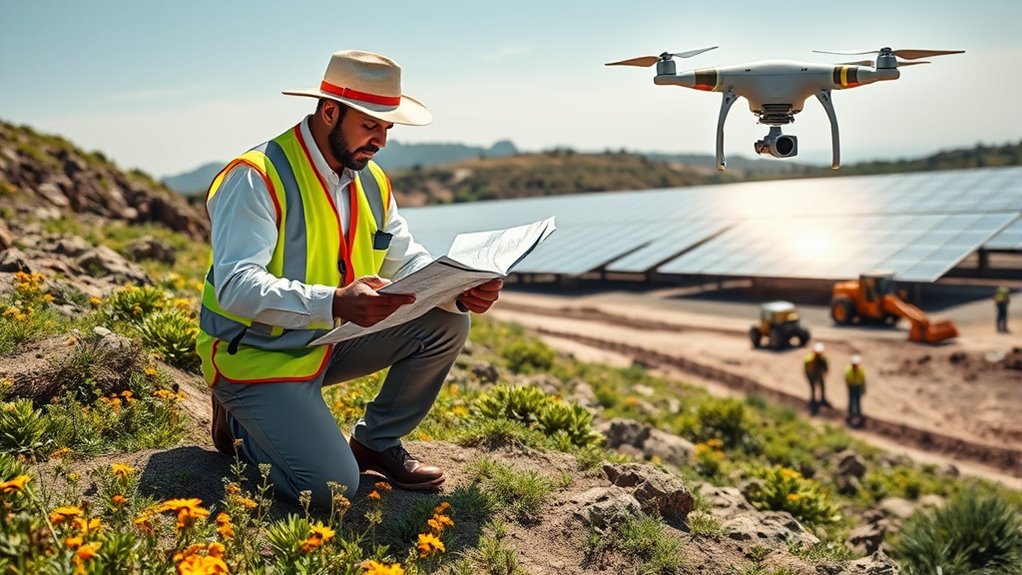

When conducting a site survey for solar farm construction, you need to identify potential hazards early. Assess the terrain, check for shading from trees or structures, and watch out for unstable ground or underground utilities. Follow safety protocols by wearing appropriate PPE and documenting hazards for your team. Ensuring regulatory compliance and planning safe access routes also help prevent accidents. Continuing will give you detailed tips for avoiding common site hazards effectively.

Get travel and outdoor gear delivered free with Prime
- Fast, free delivery on millions of items
- Prime Video, Amazon Music and more included
- Member-only deals all year
Key Takeaways
- Perform thorough hazard identification, including checking for underground utilities and unstable ground, before construction begins.
- Conduct detailed site assessments to detect shading, terrain issues, and physical constraints that could pose safety risks.
- Ensure proper use of PPE and adherence to safety protocols during site surveys to prevent accidents.
- Obtain utility locates early and coordinate with utility companies to avoid damaging underground services.
- Review local regulations and secure necessary permits to ensure compliance and prevent legal hazards during construction.
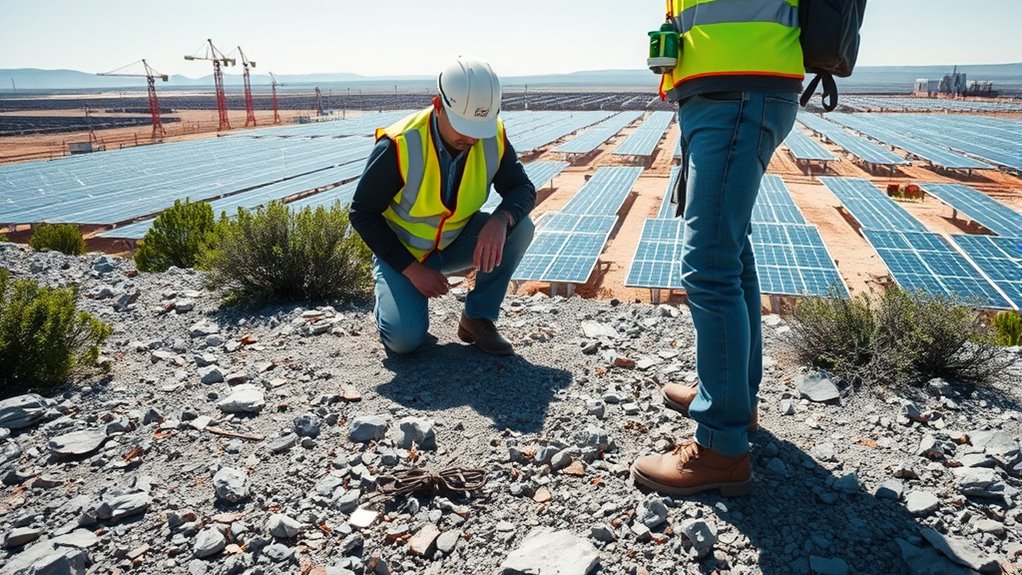
Have you ever wondered how to guarantee a project’s success from the very beginning? It all starts with a thorough site survey. When you’re preparing for solar panel installation, conducting an effective site survey is vital to identify potential hazards and ensure safety. Skipping this step can lead to costly delays, safety incidents, or even project failure. First, you need to assess the terrain, topography, and available space. This helps you determine the best locations for solar panels and guarantees your design will fit the site’s physical constraints. Pay close attention to any slopes, uneven ground, or unstable soil, as these can pose safety risks during installation. You’ll also want to check for shading issues caused by nearby trees, buildings, or other structures, since shading can markedly reduce energy output. A comprehensive site survey also involves documenting your findings and sharing them with your team to facilitate better planning and coordination.
As you gather information, it’s essential to follow strict safety protocols. Safety should be your top priority from start to finish. Always wear appropriate PPE, such as helmets, gloves, and harnesses, especially when working at heights or on uneven surfaces. During your site survey, keep an eye out for hazards like exposed wiring, sharp objects, or unstable ground that could cause injuries. Document these hazards carefully, so your team can plan accordingly. It’s also wise to check for underground utilities like gas lines, water pipes, and electrical cables before any digging or trenching begins. Contact local utility companies early to request utility locates and avoid accidental strikes, which can be dangerous and cause costly delays. Ensuring compliance with regulations and zoning laws is crucial to prevent legal setbacks and ensure safety standards are met.
A thorough site survey isn’t just about identifying hazards—it’s also about planning for the installation process. Consider access points for equipment and materials, and ensure you have clear pathways for transport and worker movement. This reduces the risk of accidents and keeps the project on schedule. Additionally, review local regulations and zoning laws to confirm your solar farm design complies with all safety standards and permits. This proactive approach helps you avoid legal issues that could halt your project.
solar site survey safety equipment
As an affiliate, we earn on qualifying purchases.
As an affiliate, we earn on qualifying purchases.
Frequently Asked Questions
How Do Weather Conditions Impact Site Survey Accuracy?
Weather variability can substantially impact your site survey accuracy by causing unexpected conditions. If the forecast reliability is low, you might face sudden rain, wind, or fog, which obscure visibility and delay data collection. These unpredictable weather changes can lead to inaccurate assessments, so always check multiple forecasts and plan surveys during stable weather periods. Being adaptable ensures more reliable results and minimizes hazards from adverse weather.
What Are the Legal Considerations During Site Surveys?
During site surveys, you need to consider liability concerns and permit requirements to stay compliant. You’re responsible for ensuring your survey activities don’t infringe on property rights or cause damage, which could lead to legal issues. Obtain necessary permits beforehand, document all procedures, and respect privacy laws. Staying aware of local regulations helps prevent legal disputes and liability concerns, ensuring your project proceeds smoothly and responsibly.
How Can Surveyors Identify Hidden Underground Utilities?
Imagine you’re a detective uncovering buried secrets; that’s how you find hidden utilities. You use utility mapping and underground detection tools like ground-penetrating radar and electromagnetic inductive locators. These technologies act as your magnifying glass, revealing the unseen. By carefully analyzing data and cross-referencing existing plans, you can accurately identify underground utilities, avoiding costly accidents and ensuring a safe, efficient site survey.
What Safety Gear Is Essential for Site Survey Teams?
You need essential Personal Protective Equipment like helmets, gloves, high-visibility vests, and steel-toed boots to protect yourself during site surveys. Follow strict Safety Protocols, including hazard awareness and proper equipment usage. Always wear your PPE, stay alert, and communicate with your team to avoid accidents. These precautions guarantee your safety while conducting surveys, especially in potentially hazardous environments like solar farm construction sites.
How to Prioritize Hazards During Initial Site Assessments?
Did you know that 40% of site accidents stem from overlooked hazards? When you start your initial site assessment, prioritize hazards by conducting thorough hazard identification and risk assessment. Focus first on those with the highest potential for injury or damage. By systematically evaluating risks, you guarantee safety measures are tailored effectively, reducing accidents and creating a safer environment for everyone involved.
Conclusion
By paying close attention to hazards during your site survey, you’re fundamentally navigating a minefield with a keen eye and steady hand. Every detail uncovered is like a lantern illuminating hidden dangers, guiding you safely through the shadows. When you stay vigilant and proactive, you transform a potentially treacherous landscape into a well-charted map—your blueprint for safe, successful solar farm construction. Remember, thorough preparation turns uncertainty into a solid foundation for progress.
Halloween Picks
halloween
As an affiliate, we earn on qualifying purchases.