TL;DR
Thanksgiving outdoor dinnerware should balance a festive look with practical needs such as wind, cold, uneven surfaces, and cleanup. Choose food-safe pieces suited to your menu and setting, secure lightweight items, and check care and disposal labels before the meal.
A gust of November wind can send a stack of paper plates skittering across the yard just as the gravy arrives. The right Thanksgiving outdoor dinnerware keeps the meal steady while helping your table feel like a holiday gathering, not a picnic caught in bad weather.

Get travel and outdoor gear delivered free with Prime
- Fast, free delivery on millions of items
- Prime Video, Amazon Music and more included
- Member-only deals all year
Your best choice depends on the guest count, the dishes you plan to serve, and whether your patio is sheltered or exposed. This guide walks you through materials, wind and cold, serving a Thanksgiving menu, and cleanup, with practical steps for a setup that feels welcoming and works in real outdoor conditions.
Choose melamine, enamel, or durable reusable plastic for a lightweight, break-resistant outdoor setup; melamine is generally not microwave-safe.
Use sheltered placement, table weights, napkin holders, lidded cups, and stable trays to manage wind and uneven ground.
Count bowls, cups, serving platters, utensils, and a few extra place settings along with dinner plates.
Check food-contact labels and care instructions instead of guessing from a dish’s appearance.
Confirm local composting rules before relying on compostable tableware.
Choose dinnerware that fits your weather and meal
Thanksgiving outdoor dinnerware works best when its material suits your weather, menu, and cleanup plan. Those choices affect more than how the table looks: they determine how safely guests can carry food, whether dishes can handle the meal’s temperature, and how much work remains afterward. For many outdoor meals, melamine is a practical choice because it is lightweight and resistant to breaking. That makes it easier to carry a full plate across a patio and less likely that one dropped dish will interrupt dinner. The tradeoff is heat: melamine is generally not microwave-safe, so plan to reheat food in appropriate cookware rather than relying on the plates.
Think of dinnerware like shoes for a trail walk: the prettiest pair may not be the one that handles mud and uneven ground. If you have a covered porch and can carry dishes inside carefully, ceramic or stoneware can give the table a traditional feel. Their weight can help them stay put in a light breeze, but that same weight makes a full plate harder to carry, and a fall can chip or break them. They suit a sheltered setup better than a windy lawn, especially when guests have a short route to their seats.
Enamel and reusable plastic are other durable options, but their performance depends on the specific product and its care limits. Whatever you choose, check that dishes are labeled for food contact and read the maker’s instructions. A sturdy-looking plate is not automatically safe for hot food, a microwave, or an oven. For example, if you plan to warm leftover squash, move it to a clearly marked microwave-safe container instead of guessing from the plate’s appearance. Checking labels beforehand also helps you avoid discovering during dinner that a serving dish cannot hold the hot food you prepared.
“Outdoor dinnerware” can mean reusable dishes made for outdoor use, sturdy everyday tableware, or disposable plates and cups. Decide which one you mean before shopping; the best fit for six guests on a covered deck may not make sense for twenty people at an exposed park shelter. Reusable dishes reduce single-use waste, but require transport and washing; disposable ones can simplify cleanup, but need a disposal plan and may be less stable in wind. Match the choice to the actual setting and the amount of cleanup you can manage.
Products Worth Considering

Samsonite Freeform Hardside Carry-On Spinner Luggage, Navy

DJI Osmo Mobile 8 Phone Gimbal with Mic Mini Transmitter, Infinity Black

DJI Mini 3 Drone with 4K Camera and GPS Auto Return
As an affiliate, we earn on qualifying purchases.
Keep plates and napkins from taking flight
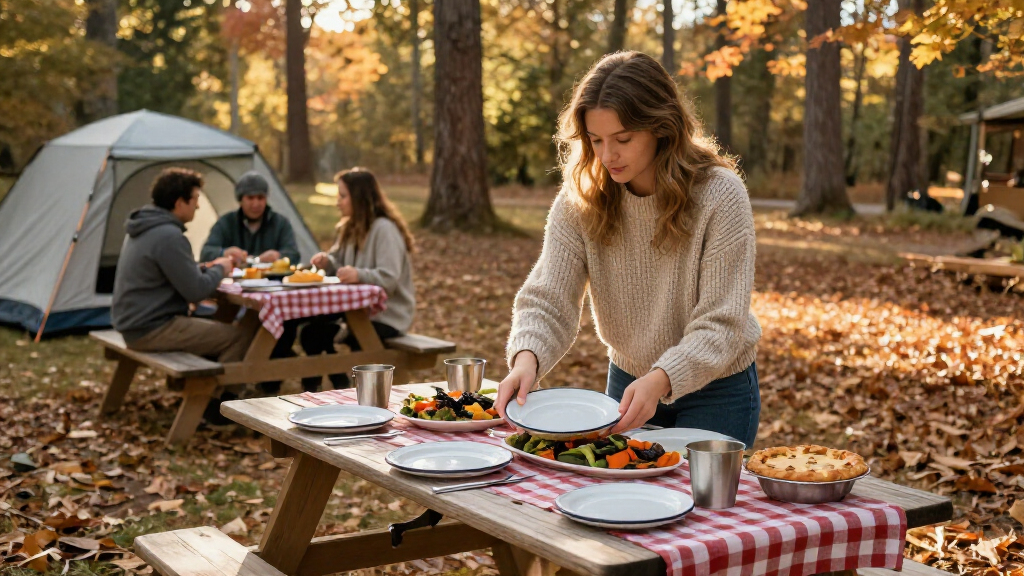
To keep an outdoor Thanksgiving table together in the wind, use stable dishes, secure loose items, and set the table in a sheltered spot. Lightweight plates, cups, napkins, and tablecloth corners can shift with a sudden gust, so plan for them before guests sit down. Napkin holders, table weights, and lidded drinkware each address a different problem: holders keep napkins contained, weights anchor the cloth, and lids reduce spills when drinks are carried or left unattended.
Picture a buffet beside an open lawn: someone reaches for a napkin, the corner of the cloth lifts, and a stack of plates starts sliding. A sheltered wall or porch rail can take the edge off the wind, but it does not make an unstable table safe. A level surface and non-slip serving trays matter too, especially if the ground slopes or the patio has uneven pavers. Wobbly trays can turn a small stumble into spilled food, so test them with the bowls loaded before guests arrive. Keep dishes dry if the air is damp; wet hands and slick surfaces make carrying a full plate harder.
Use this quick setup sequence before guests arrive:
- Place the table on the most level ground you have, with a wall, hedge, or covered area shielding it from wind. This reduces movement at the table and makes serving more predictable.
- Secure the cloth and napkins with corner clips or weights and a holder. Anchoring the cloth also keeps it from dragging dishes along if a gust catches an edge.
- Set out only what guests need, keeping spare plates and serving items in a protected spot. A smaller exposed stack gives the wind fewer things to scatter.
- Check the backup plan so you can move the meal indoors if the weather turns wet or rough. Knowing where food and tableware will go makes a quick change less disruptive.
A little weight and a sheltered location can make a bigger difference than an elaborate centerpiece because they address the movement that causes spills and broken dishes. Keep candles and loose decorations away from places where wind could tip or scatter them.
Match plate sizes and serving pieces to Thanksgiving dishes
For an outdoor Thanksgiving buffet, pick plates that comfortably hold the meal and provide enough bowls, cups, platters, and utensils for guests to serve themselves. A turkey dinner often includes several sides, so a small plate can mean extra trips through the line or a precarious pile of food. The table should balance a festive look with practical needs such as carrying a plate, serving hot dishes, and keeping cold sides apart. Plate size matters especially outside: guests may have to walk to their seats, so a plate that is too small encourages unstable stacks while an oversized one can be awkward to carry.
Try a simple example: for twelve guests, set aside at least twelve dinner plates and cups, then add a few extras for dropped dishes, unexpected visitors, or seconds. Count bowls separately if you are serving soup or a saucy side. Also count serving pieces: one platter for turkey, bowls for stuffing and vegetables, and a labeled utensil for each dish keep the buffet easy to follow. Extra settings provide a buffer when a plate is dropped or someone wants another serving; matching the bowl count to the menu avoids guests balancing wet or saucy food on a crowded dinner plate.
Different plate materials change the experience. Melamine and other sturdy reusable options are easy to carry outdoors, while heavier ceramic can feel substantial but asks guests to move more carefully. For drinks, an insulated mug can keep cider or coffee pleasant on a chilly porch. Store hot food in suitable covered serving dishes or insulated carriers, and bring it out in batches so the buffet does not sit exposed longer than necessary. Serving in batches can preserve the food’s temperature and keep the table less crowded, though it means someone needs to replenish dishes during the meal.
Think through the route from serving table to seat. If guests must cross a damp lawn, a stable tray and easy-to-grip cups help; if they can eat beside the buffet, you might put serving bowls on the main table. A short, clear route reduces the chance of spills, while keeping the buffet close to seating makes it easier for older guests or anyone carrying several dishes. These small choices turn a crowded line into a relaxed meal.
Make durable dishes look festive without fussy decor
You can make practical outdoor dinnerware feel festive by pairing a simple, durable base with autumn-colored napkins, natural textures, and a few personal details. Seasonal style does not require every plate to show a turkey or fall leaves. A solid cream or deep green plate can carry the visual weight while remaining useful for everyday meals.
For instance, set sturdy plates on woven placemats, add rust-colored cloth napkins, and write each guest’s name on a small place card. A wooden serving board for bread adds warmth, while a low centerpiece of gourds or leaves gives the table a seasonal cue without blocking conversation. Those textures bring the colors and feel of autumn to a table that still handles a full plate of turkey and stuffing.
Recent dinnerware trends include reusable melamine and other durable materials in seasonal patterns, as well as neutral pieces that work year-round. If you want thanksgiving outdoor dinnerware you can use beyond November, choose a neutral base and change the mood with napkins, place cards, or a small centerpiece. That approach can mean reusable dishes earn a place at spring lunches and summer cookouts too.
Decor should leave room for serving bowls and guests’ elbows. Skip tall arrangements that block sightlines or loose decorations likely to blow away. On a windy porch, a few secured napkins and a low centerpiece look better—and work better—than a crowded table full of delicate objects.
Cut cleanup time with a realistic reuse or compost plan
Plan cleanup before the meal: reusable dishes need washing and storage, while compostable plates belong in a facility that accepts their material. A “compostable” label does not mean every plate will break down in a backyard compost pile or in ordinary trash. Check the product’s disposal directions and local composting rules before you buy. The disposal route matters because a plate sent to a place that cannot process it may not deliver the waste reduction you expected.
Suppose you host sixteen guests and want to avoid a mountain of single-use plates. Reusable pieces can be gathered into a tub after dinner and washed according to the manufacturer’s dishwasher or hand-washing instructions. Check those instructions before the holiday; a piece that looks durable may still have specific heat or cleaning limits. This can reduce the number of disposable items, but the benefit comes with a practical job: someone must collect, wash, dry, and store a larger set of dishes. Keep damaged or deeply scratched plastic dishes out of food service.
If washing everything at home would be a hassle, compostable products may seem convenient, but their real disposal route matters. Confirm whether your local collection accepts that product and whether it needs commercial composting. Labels and local rules can differ, so the useful check is specific: identify the product material, read its disposal guidance, then ask what your local service accepts. If there is no suitable collection, the product may end up in ordinary waste, so the compostable label alone is not a complete cleanup plan.
Reusable dinnerware reduces the need for single-use tableware, but it does mean carrying, washing, and storing more pieces. Choose based on your actual setup. A covered patio with a nearby kitchen makes washing straightforward; a remote picnic site may call for a different plan and a careful check of local disposal options. Weigh the cleanup effort against the waste and transport involved, then pick the approach you can carry through after guests leave.
Use this quick checklist before guests arrive
Before serving dinner outdoors, check the dishes, table, weather plan, and cleanup route in one short pass. That final look catches the details that are easy to miss while you are seasoning gravy or greeting relatives. A five-minute check can prevent a wobbly buffet, missing serving spoons, or plates that cannot handle the food you plan to serve.
- Count place settings: include plates, cups, and bowls, plus a few spare settings for seconds or surprises.
- Read labels: confirm food-contact suitability, heat limits, and dishwasher or hand-washing instructions.
- Stabilize the table: check the ground, secure cloth corners, and set out napkin holders or weights.
- Stage the serving line: pair every dish with its own utensil and put hot and cold items in suitable serving pieces.
- Protect the meal: keep dishes and serving pieces dry, prepare a sheltered area, and have an indoor backup.
- Plan the end: know where reusable dishes will go or which local service accepts the disposable products you chose.
Imagine guests arriving as a cold drizzle starts. If your plates are stacked under cover, trays are ready, and the indoor table is clear, you can shift plans calmly. Without that preparation, everyone ends up holding a cup while you hunt for a dry place to set it down.
Pay special attention to the serving route on uneven ground. A sturdy plate can still be awkward to carry with a full helping of food, so keep the buffet close to seating and leave a clear path for guests.
Frequently Asked Questions
What dinnerware material works best for Thanksgiving outdoors?
Melamine is a popular choice because it is lightweight and resistant to breaking. Enamel and durable reusable plastic are other options; ceramic and glass can suit a sheltered setting if you can transport them carefully.
Can melamine plates go in the microwave?
Generally, no. Follow the maker’s label and transfer food to microwave-safe cookware before reheating.
Are compostable plates always compostable at home?
No. Some products need a commercial composting facility, and local programs do not all accept the same materials. Check the product directions and your local service before buying.
How do I stop outdoor plates and napkins from blowing away?
Use heavier dishes, napkin holders or weights, lidded cups, and a sheltered table. Secure cloth corners and keep spare and serving items covered so a gust cannot scatter them.
How many place settings should I prepare?
Count one full setting per guest, then add a few extras for unexpected visitors, dropped dishes, or seconds. Include bowls and cups, and count serving platters and utensils separately.
Can I use my regular dinnerware outside?
Yes, if the setting is sheltered and you can carry and wash the dishes safely. Consider the chance of chips or breaks, the weight of a full plate, and whether the ground and table are stable.
Conclusion
Choose dinnerware for the weather and meal you actually have: stable, food-safe pieces; enough room for the sides; and a plan for wind and cleanup. Then add autumn color with napkins or place cards, so the table feels like Thanksgiving without becoming delicate.
When the cider steams and the leaves rustle nearby, the best table is the one where everyone can relax, eat, and pass the gravy without chasing a flying napkin.