Thermals form when the sun unevenly heats Earth’s surface, creating warm air pockets that rise and produce cumulus clouds, helping you spot active thermal zones. Atmospheric waves, such as mountain waves and gravity currents, result from large-scale air oscillations over terrain or temperature contrasts, causing turbulence and sudden winds. Knowing the difference helps you anticipate turbulent spots and plan safer routes. If you want to understand how these phenomena impact flight safety and efficiency, keep exploring these weather patterns.
Key Takeaways
- Thermals are localized rising air currents caused by surface heating, while atmospheric waves are large-scale oscillations in air flow over terrain.
- Thermals often produce cumulus clouds and cause turbulence near the ground; waves occur over mountains, creating rotor clouds and turbulence at higher altitudes.
- Recognizing thermal cloud formations helps pilots identify areas of thermal turbulence, whereas wave patterns indicate potential wind shear and turbulence aloft.
- Thermals are more common over land with uneven heating, while atmospheric waves are associated with stable air flowing over mountain ranges.
- Understanding both phenomena enables pilots to adjust routes and altitudes for safety, comfort, and optimal flight performance.
pilot thermal detection tools
As an affiliate, we earn on qualifying purchases.
As an affiliate, we earn on qualifying purchases.
How Thermals Form and Their Impact on Flight

Thermals form when the sun heats the Earth’s surface unevenly, causing pockets of warm air to rise. As these warm air parcels ascend, they create visible cloud formations known as cumulus clouds, which signal active thermals. This process results in thermal turbulence, which can cause your aircraft to experience sudden bumps and shifts. You’ll notice that thermals are more common over land and areas with bare soil or dry terrain, where surface heating is intense. Understanding how thermals develop helps you anticipate where turbulence might occur, especially during midday when the sun’s heating peaks. Recognizing cloud formation as a sign of active thermals allows you to adjust your altitude or flight path, ensuring safety and a smoother ride through these rising air currents. Additionally, surface heating varies with terrain and time of day, influencing the strength and location of thermals.
mountain wave turbulence warning devices
As an affiliate, we earn on qualifying purchases.
As an affiliate, we earn on qualifying purchases.
Understanding Atmospheric Waves and Their Effects
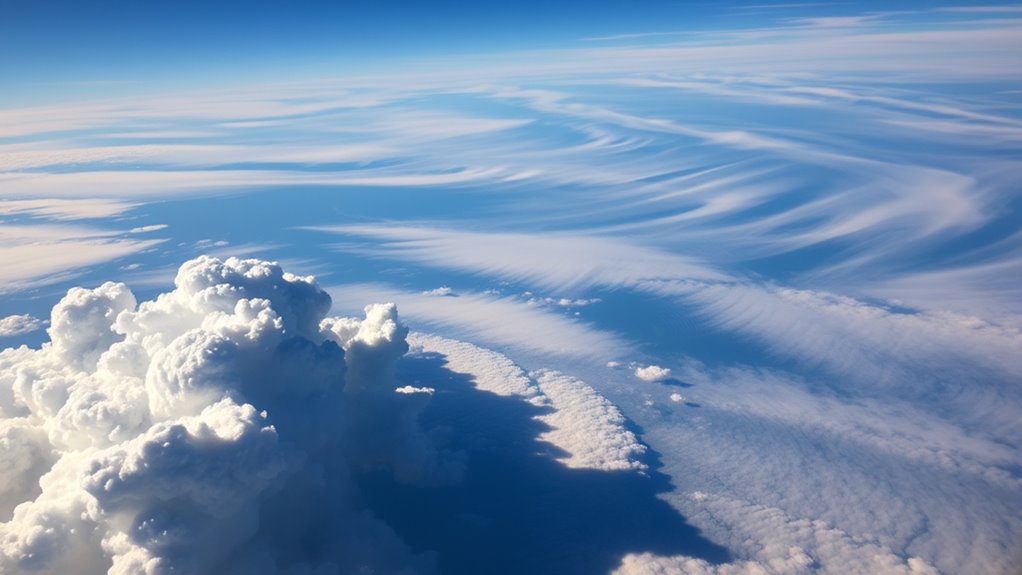
Atmospheric waves are large-scale oscillations in air pressure and wind flow that travel through the atmosphere, often spanning hundreds to thousands of miles. These waves, like mountain waves, occur when stable air flows over mountain ranges, creating powerful upward and downward movements. Mountain waves can cause severe turbulence and even lead to rotor clouds, which pilots must recognize for safety. Gravity currents are another type of atmospheric wave, resulting from denser air flowing beneath lighter air, often triggered by temperature differences or terrain. Understanding these waves helps you anticipate sudden changes in wind speed and direction, especially near mountains or in stable air masses. Recognizing the signs of atmospheric waves allows you to adjust your flight path, ensuring safety and smoother flying conditions. Additionally, being aware of weather pattern effects such as these can aid in planning safer routes and avoiding hazardous areas.

Pocket Guides – Weather Forecasting – Weather Reports – Guide to Weather Forecasting – Ron Codres
Pocket Survival Guide: The pocket guide to weather forecasting is another of those pocket guides – so basic,…
As an affiliate, we earn on qualifying purchases.
As an affiliate, we earn on qualifying purchases.
Frequently Asked Questions
How Can Pilots Predict Thermal Activity Hours in Advance?
To predict thermal activity hours in advance, you can use predictive modeling and thermal forecasting tools. These methods analyze current weather data, surface temperatures, and wind patterns to forecast thermal development. By reviewing satellite images, weather charts, and specialized apps, you gain insights into potential thermal hotspots. This proactive approach helps you plan your flight path, avoid turbulence, and guarantee safer, more efficient flying through anticipated thermal activity.
What Are the Signs of Approaching Atmospheric Waves on the Ground?
When approaching atmospheric waves, look for signs like ground turbulence, which feels rough or choppy, and visible atmospheric ripples, such as ripples on water or irregular cloud patterns. You might also notice sudden changes in wind direction or speed near the surface. These indicators suggest that atmospheric waves are forming or nearby, so you should prepare for potential turbulence and adjust your flight path for safety.
Do Different Aircraft Types Respond Differently to Thermals and Waves?
Different aircraft respond uniquely to thermals and waves based on their stability and wing design. You’ll notice that more stable aircraft handle turbulence better, while those with flexible wings may experience more pronounced movements. Wing design influences how smoothly an aircraft navigates these weather patterns. As a pilot, understanding your aircraft’s stability and wing characteristics helps you anticipate responses, ensuring safer, more comfortable flights through thermally and wave-affected areas.
How Do Weather Fronts Influence Thermal and Wave Formation?
Imagine a tug-of-war where fronts influence thermal formation and wave development. When a cold front advances, it forces warm air upward, creating thermals you feel during flight. Conversely, warm fronts cause gentle lifting, leading to wave formation. You notice these patterns firsthand when flying near front boundaries, as they generate the thermal activity and waves that can impact your altitude and control. Understanding this helps you anticipate weather changes effectively.
Can Thermals or Waves Occur in Winter or Cold Weather Conditions?
You might wonder if winter thermals or waves happen in cold weather. Yes, winter thermals can occur, especially during sunny days when the ground heats up unevenly, creating rising warm air. Cold wave formation can also induce wave patterns in the atmosphere, though they’re less common. Cold air masses can generate stable or turbulent conditions, so pilots should always stay alert to changing weather even in winter conditions.
pilot turbulence safety gear
As an affiliate, we earn on qualifying purchases.
As an affiliate, we earn on qualifying purchases.
Conclusion
Now that you understand how thermals lift you up and how waves can shake your flight, you’re better prepared for the skies. Recognize the signs, respect the patterns, and adapt your flying accordingly. Embrace the knowledge of these weather phenomena, anticipate the challenges, and enjoy a safer, more confident journey. Because when you understand thermals and waves, you’re not just flying—you’re mastering the skies and making every flight an experience worth remembering.