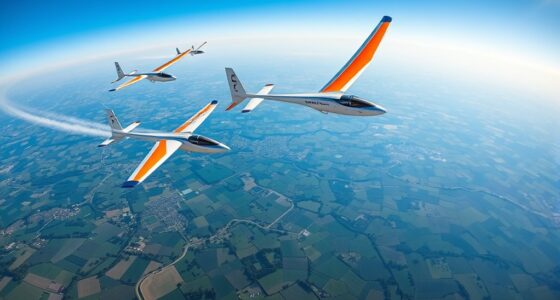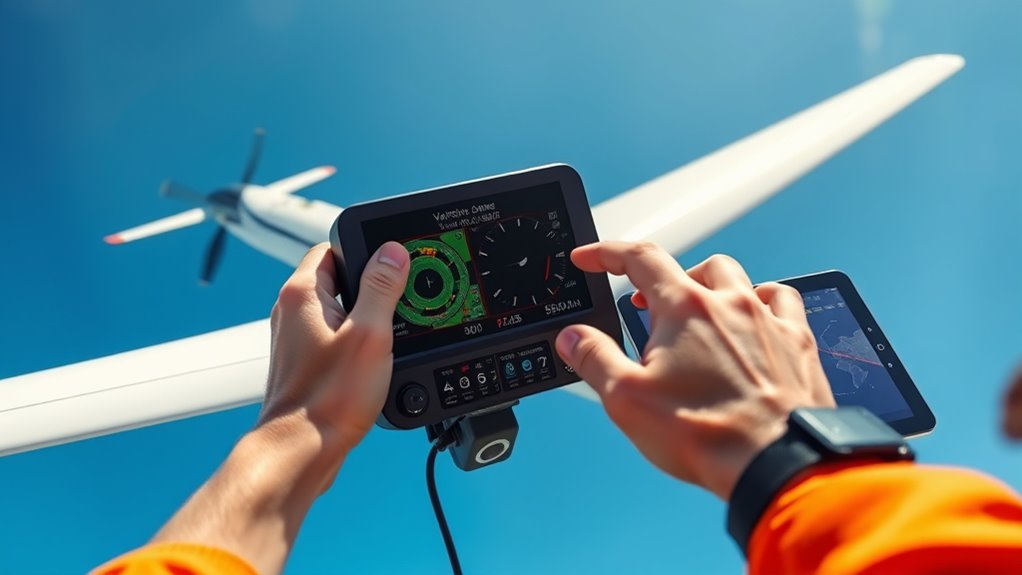

Using speed-to-fly tools like flight computers, variometers, and AI assistance helps you optimize your gliding performance by providing real-time guidance tailored to changing weather conditions. These systems analyze sensors and data inputs to suggest the best speeds for safety and efficiency, automatically adjusting as conditions shift. They reduce your workload and improve decision-making during flight. Want to discover how integrating these tools can make your flights safer and more efficient? Keep exploring for more insights.
Key Takeaways
- Speed-to-fly tools combine flight computers, variometers, and AI to optimize flight speed based on real-time data.
- Weather integration allows these systems to automatically adjust speeds in response to changing atmospheric conditions.
- Auto tuning algorithms learn from flight patterns and weather, refining recommendations for increased accuracy over time.
- Real-time feedback from integrated systems guides pilots with immediate speed adjustments, enhancing safety and efficiency.
- Overall, these tools enable adaptive, environment-aware flying, reducing workload and improving performance in variable weather.

Have you ever wondered how pilots quickly determine the right speed for different flight conditions? It’s a skill that relies heavily on advanced tools like flight computers, variometers, and AI assistance, all working together to optimize your flying experience. Modern speed-to-fly tools are designed to adapt in real-time, taking into account weather integration and auto tuning algorithms to keep you safe and efficient. Weather integration is vital because atmospheric conditions—such as wind, temperature, and air pressure—directly impact the ideal speed. Instead of relying on static charts or manual calculations, these systems continuously monitor the weather data, updating your flight parameters on the fly. For example, if a sudden gust of wind hits, your flight computer automatically recalibrates, suggesting a new speed that accounts for the turbulence. This dynamic adjustment ensures that you maintain control and efficiency without second-guessing your decisions.
Auto tuning algorithms are the backbone of these intelligent systems. They learn from your flight patterns, weather conditions, and aircraft responses to refine their recommendations over time. When you take off, the system begins with default parameters, but as you fly, it gathers data and adjusts the ideal speed settings accordingly. This continuous learning process means that the more you fly, the smarter your tool becomes, offering more precise guidance tailored to your flying style and current conditions. Such auto tuning reduces pilot workload, especially during complex or unpredictable weather scenarios, allowing you to focus more on navigation and less on manual calculations.
In practice, these tools integrate seamlessly into your cockpit, providing clear, real-time feedback. You might see a suggested speed displayed prominently on your flight computer or variometer, updated instantly as weather conditions shift. Some systems even incorporate AI assistance, analyzing vast amounts of weather data and historical flight information to predict upcoming changes, giving you a proactive edge. This integration not only enhances safety but also improves flight efficiency, conserving energy and reducing fatigue. By trusting these intelligent systems, you’re better equipped to handle variable weather and changing conditions with confidence.
Ultimately, the combination of weather integration and auto tuning algorithms in speed-to-fly tools transforms how you approach flying. Instead of static rules or guesswork, you gain access to adaptable, real-time guidance that responds to the environment. This technology empowers you to fly smarter, safer, and more efficiently—no matter what the weather throws your way.
Frequently Asked Questions
How Do Speed-To-Fly Tools Integrate With Other Navigation Systems?
Speed-to-fly tools integrate with other navigation systems by connecting via standard protocols like NMEA or Bluetooth, allowing seamless data sharing. However, you might face integration challenges due to compatibility issues between different devices or software versions. To guarantee smooth operation, verify compatibility beforehand, update firmware regularly, and use reliable interfaces. This way, you keep your navigation system accurate and responsive during your flight.
Can AI Assistance Adapt to Different Weather Conditions Automatically?
Yes, AI assistance can adapt to different weather conditions automatically through weather adaptability features. It analyzes real-time data, like wind, temperature, and turbulence, then adjusts flight strategies accordingly. With AI customization, you get tailored recommendations that optimize your flight path and safety. This dynamic adaptability means you stay responsive to changing weather, helping you make smarter decisions and improve your overall flying experience without manual intervention.
Are There Safety Concerns With Relying Heavily on Flight Computers?
Relying heavily on flight computers can raise safety concerns if you don’t verify manual calibration and hardware redundancy. While these tools provide valuable data, you should regularly calibrate your equipment to avoid inaccuracies. Having redundant hardware means if one system fails, another can take over, keeping you safe. Always stay trained to interpret data manually, so you’re not solely dependent on automation during critical moments.
How Often Should Software Updates Be Performed for Optimal Performance?
You should perform software updates for your flight tools at least every three months to guarantee ideal performance. Studies show that timely software maintenance reduces errors by 30%. Regular update frequency keeps your flight computers, variometers, and AI assistance reliable and secure. Skipping updates can lead to outdated features or vulnerabilities, risking safety and efficiency. Stay proactive to maximize the benefits of your speed-to-fly tools and maintain peak performance.
What Training Is Recommended to Effectively Use These Advanced Tools?
To use these advanced tools effectively, you should undergo thorough pilot certification that covers electronic navigation and emergency procedures. Training should include hands-on practice with flight computers, variometers, and AI assistance systems to guarantee you understand their functions and limitations. Regular refresher courses help maintain proficiency, especially in emergency scenarios, so you’re prepared to rely on these tools safely during critical moments in your flight.
Conclusion
By harnessing speed-to-fly tools, you can unbolt new levels of confidence and efficiency in your soaring experience. Imagine soaring effortlessly, trusting your flight computer and AI assistance to guide you through challenging conditions—like a pilot who, thanks to these tools, successfully navigated a tricky thermal and reached new personal bests. Embrace these technologies, and transform your flying adventures into safer, more exhilarating journeys that push your limits and inspire your passion.