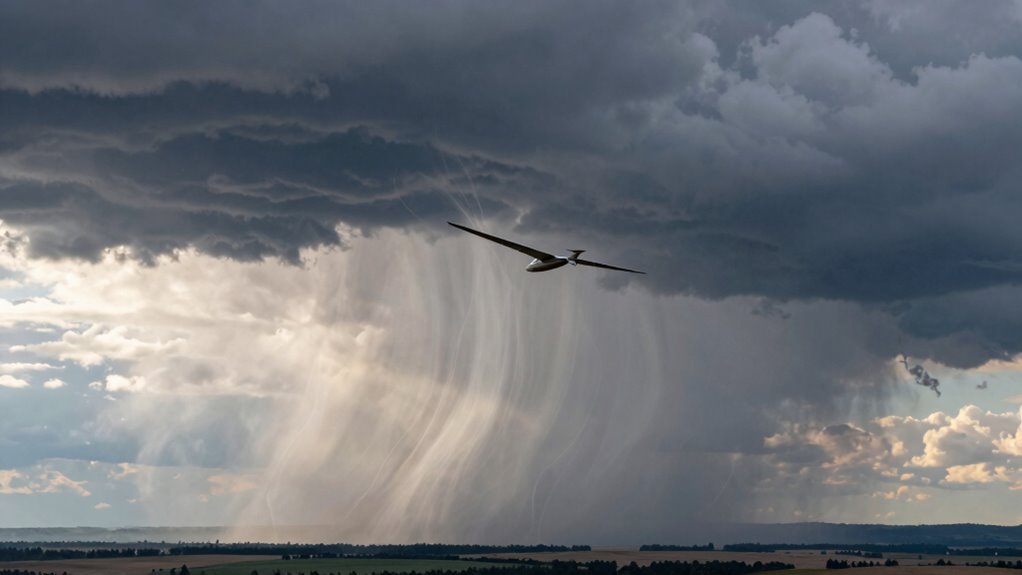

As a glider pilot, you should recognize virga as a sign of changing weather conditions. It indicates moisture from high clouds evaporating before reaching the ground, often signaling dry, stable air beneath. Virga can hint at turbulence or downdrafts, affecting your flight safety. Spotting virga helps you anticipate shifts in lift and turbulence, aiding your planning. If you keep exploring, you’ll discover more about how virga influences weather patterns and your safety strategies.
Key Takeaways
- Virga indicates dry air below moist clouds, signaling potential turbulence and downdrafts for glider flight safety.
- Recognizing virga helps pilots anticipate sudden lift loss or turbulence, aiding in route adjustments.
- Virga from high clouds like cirrus suggests stable upper conditions but dry lower layers.
- Use virga as a visual cue for changing weather, potential wind shifts, and turbulence zones.
- Incorporate virga observations into weather assessments for better planning and safer gliding experiences.
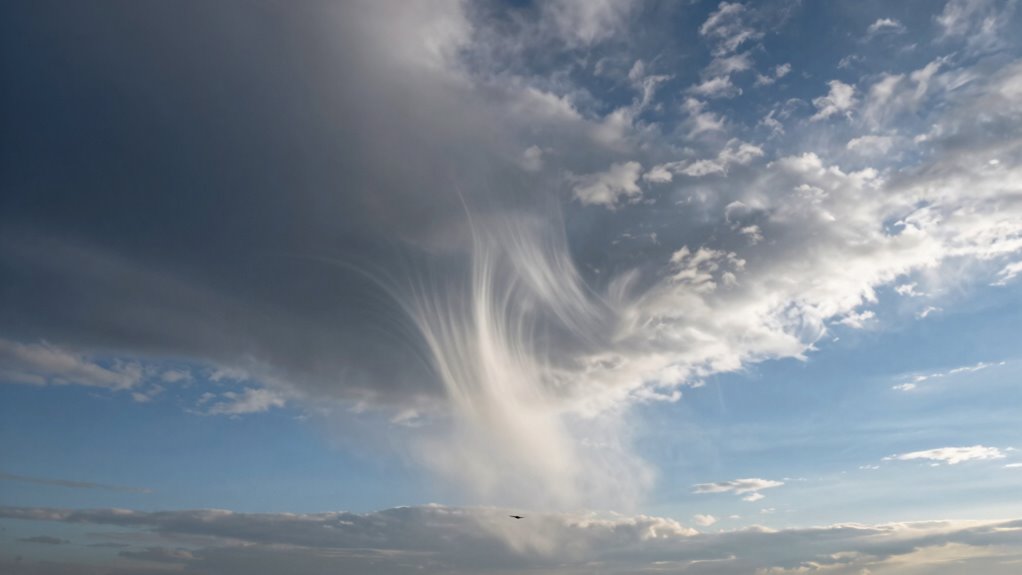
Virga is a weather phenomenon that glider pilots must understand thoroughly, as it can considerably impact flight safety and performance. When you see virga stretching downward from a cloud, it’s essential to recognize what it signifies about cloud formation and the surrounding weather patterns. Virga forms when precipitation begins to fall from a cloud but evaporates or sublimates before reaching the ground. This process often occurs in dry or semi-dry air layers beneath a cloud, creating streaks of precipitation that appear to hang or trail downward. As a pilot, understanding the relationship between cloud formation and weather patterns helps you anticipate potential changes in lift, turbulence, or downdrafts associated with virga.
Cloud formation plays a vital role in how virga develops. Typically, virga emanates from clouds like altostratus, cirrus, or cumulonimbus, which are associated with specific weather systems. For instance, virga often originates from high, thin cirrus clouds, indicating moisture at high altitudes but dry air below. When you observe virga beneath these clouds, it signals that precipitation is falling from higher, moist layers but evaporating before reaching lower altitudes. This evaporation cools the surrounding air, which can cause local downdrafts or turbulence that you need to be prepared for. Recognizing the type of cloud producing virga can help you interpret the current weather patterns and anticipate how they might evolve during your flight. Understanding cloud types is crucial for accurate weather interpretation in this context. Additionally, recognizing the specific altitude layers involved in virga formation can further refine your weather assessments and flight planning.
Furthermore, understanding how virga fits into broader weather patterns helps you make more informed decisions. Virga often indicates a dry, stable air mass beneath a moisture-rich cloud layer, which could suggest that lift might be limited or inconsistent in the vicinity. Conversely, the presence of virga near a weather front may suggest a changing zone where moist air is descending or evaporating. As a glider pilot, you should be alert to changes in wind, lift, and turbulence associated with these patterns. Virga can also act as a visual cue for shifting weather conditions, warning you of potential downdrafts or turbulence areas that might not be immediately obvious. Additionally, understanding the evaporative cooling process involved in virga formation can help you better anticipate turbulence and lift variations during your flight. Recognizing the cloud types involved in virga formation can further refine your weather assessments and flight planning.
In essence, recognizing virga as part of the larger picture of cloud formation and weather patterns enables you to better assess your environment. It’s not just a visual anomaly but a signpost that tells you about the moisture content, stability, and dynamics of the atmosphere. By understanding these connections, you can improve your situational awareness, avoid hazardous areas, and optimize your flight for safety and performance. Being tuned into how virga relates to the broader weather system transforms your approach from reactive to proactive, ensuring you’re better prepared for the challenges that come with flying in variable weather conditions.
glider pilot weather safety gear
As an affiliate, we earn on qualifying purchases.
As an affiliate, we earn on qualifying purchases.
Frequently Asked Questions
How Does Virga Affect Glider Aerodynamics During Flight?
Virga can profoundly impact your glider’s aerodynamics by causing unexpected turbulence and changing wind conditions. As precipitation effects like virga fall from the cloud, they create downward drafts and wind shear, which can reduce lift and increase the risk of sudden stalls. Being aware of virga’s presence helps you anticipate these aerodynamic implications, allowing you to adjust your flight path and maintain better control, especially when approaching or flying near dry, descending precipitation trails.
Can Virga Indicate Upcoming Turbulence or Wind Shear?
Think of virga as your weather crystal ball—yes, it can indicate upcoming turbulence or wind shear. When you see virga, especially with rapid changes in appearance, it’s a sign to watch your forecast interpretation closely. Visibility challenges might increase as virga signals unstable air, which can lead to sudden turbulence. Always stay alert and update your weather info; virga’s a clue that the sky’s more unpredictable than it seems.
What Are the Best Safety Procedures When Approaching Virga?
When approaching virga, you should prioritize safety by actively engaging in virga detection. Look for signs like streaks or wisps beneath cloud bases, indicating dry precipitation. Maintain a safe distance and adjust your glide path accordingly. Keep clear pilot communication, informing others about virga presence and your intentions. Monitor your instruments closely for signs of turbulence or wind shear, and be prepared to alter your course or altitude to avoid sudden changes.
How Can Pilots Differentiate Between Virga and Actual Precipitation?
Ever wondered how to tell virga from real rain? You can differentiate by observing cloud formation and visual cues. Virga appears as streaks or wispy trails beneath a cloud, often tapering off before hitting the ground, unlike actual precipitation which reaches the surface and creates a visible rain shaft. Pay attention to the texture and movement of the cloud, as virga usually disperses quickly, whereas real rain signals more sustained moisture.
Does Virga Impact Thermal Activity for Glider Soaring?
Virga can impact thermal activity for glider soaring because the cloud formation associated with virga involves moisture evaporation, which cools the air below the cloud. This cooling can weaken or disrupt thermal columns, making lift less reliable. As a pilot, you should watch for signs of virga, like streaks beneath clouds, to anticipate changes in thermal activity. Recognizing these patterns helps you plan your flight and optimize your soaring strategy.

Weather Flying, Fifth Edition
As an affiliate, we earn on qualifying purchases.
As an affiliate, we earn on qualifying purchases.
Conclusion
Understanding virga is essential for safe gliding. Did you know that nearly 30% of weather-related incidents involve unexpected virga? Being aware of its signs helps you anticipate turbulence and avoid dangerous situations. So, always keep an eye on the sky and stay informed about local weather patterns. Mastering virga awareness can improve your flying safety and confidence. Remember, knowledge is your best tool for turning tricky weather into a safe, enjoyable flight.

CYA Foldable Navigation Plotter Aviation, Flight Azimuth Plotter for Pilot Students
Pocket-sized accuracy, foldable navigation plotter folds out to a full-size (15 inches).
As an affiliate, we earn on qualifying purchases.
As an affiliate, we earn on qualifying purchases.

Jotron Tron SA20 PLB Personal Locator Beacon | Compact & Lightweight | GPS & Galileo GNSS | 406MHz Emergency Signal | Waterproof | Solas Approved | Programmed for US Registration
US REGISTRATION LISTING – This Jotron Tron SA20 PLB Personal Locator Beacon is programmed to be registered in…
As an affiliate, we earn on qualifying purchases.
As an affiliate, we earn on qualifying purchases.