
Choosing the right solar powered travel lanterns depends on balancing brightness, weight, and charging reliability. The Glocusent 400H stands out as the best overall pick due to its exceptional 400-hour battery life and robust build, making it ideal for extended off-grid trips. For those prioritizing portability, the LuminAID Nova offers unmatched compactness as an inflatable design that weighs almost nothing. However, buyers face a tradeoff: high-lumen models often drain batteries quickly, while ultra-light inflatable options may lack the brightness needed for large spaces. This guide breaks down the specific strengths and weaknesses of each model to help you match your lighting needs to your travel style.

Get travel and outdoor gear delivered free with Prime
- Fast, free delivery on millions of items
- Prime Video, Amazon Music and more included
- Member-only deals all year
Complete the kit


Key Takeaways
- Battery capacity is the single most critical differentiator; models under 2000mAh often fail to provide adequate light through a full night without frequent recharging.
- Inflatable lanterns like the LuminAID Nova offer superior packability but sacrifice durability and maximum brightness compared to rigid plastic or metal housings.
- Solar charging speeds vary wildly; only two models in this lineup charge fully via sun alone within a single day, while most require USB backup for practical use.
- IP65 waterproof ratings have become the standard for reliable travel lanterns, with non-rated models posing a risk during unexpected rain or river crossings.
- Lumen output is not linear with perceived brightness; diffused light sources feel brighter for ambient camping tasks than focused beams of the same lumen count.
| Glocusent 400H Rechargeable Camping Lantern with Solar Charging |  | Best Overall for Versatility | Battery Capacity: 5000mAh | Max Brightness: 1200 lumens (claimed) | Charging Input: USB-C, Solar | VIEW LATEST PRICE | See Our Full Breakdown |
| LuminAID Nova Inflatable Solar LED Lantern |  | Best for Ultralight Travel | Max Brightness: 75 lumens | Battery Life: Up to 24 hours | Charging Input: Solar, Micro-USB | VIEW LATEST PRICE | See Our Full Breakdown |
| Solar Camping Lights Rechargeable Lantern 5000mAh LED, 5 Light Modes, IP65 |  | Best for High Brightness | Max Brightness: 2000 lumens | Battery Capacity: 5000 mAh | Water Resistance: IP65 | VIEW LATEST PRICE | See Our Full Breakdown |
| BioLite Luci Emergency Lantern, Solar Powered, USB-C, Rechargeable | 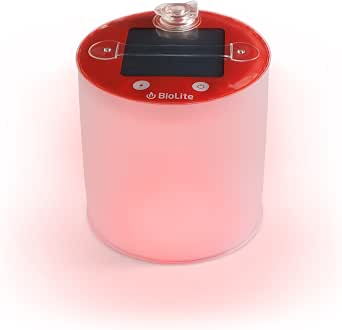 | Best Compact Emergency Light | Max Brightness: 200 lumens | Weight: 80 g (2.8 oz) | Charging Input: USB-C, Solar | VIEW LATEST PRICE | See Our Full Breakdown |
| LuminAID Max 2-in-1 Inflatable Solar LED Camping Lantern and Phone Charger |  | Best Inflatable with Power Bank | Max Brightness: 200 lumens | Phone Charging: 5V, 2.1A | Water Resistance: IP67 | VIEW LATEST PRICE | See Our Full Breakdown |
| Rechargeable Solar Camping Lantern, 5000mAh, 2000 Lumens, IP65 |  | Best for High-Output Versatility | Maximum Light Output: 2000 lumens | Battery Capacity: 5000mAh | Water Resistance: IP65 | VIEW LATEST PRICE | See Our Full Breakdown |
| XTAUTO 4-Pack Collapsible LED Camping Lanterns |  | Best Value Pack | Pack Size: 4 lanterns | Battery Capacity: 1,600 mAh | Battery Life: Up to 25 hours | VIEW LATEST PRICE | See Our Full Breakdown |
| Solar Camping Rechargeable Lantern 5200mAh LED, 6 Light Modes, IP65 Waterproof |  | Best Compact High-Capacity | Battery Capacity: 5200 mAh | Maximum Light Output: 1000 lumens | Weight: 293 g | VIEW LATEST PRICE | See Our Full Breakdown |
| Solar Inflatable LED Lanterns, 2-Pack |  | Best for Packing Efficiency | Quantity: 2 lanterns | Weight: 100 g | Battery Capacity: 1000 mAh | VIEW LATEST PRICE | See Our Full Breakdown |
| Westinghouse 1000-Lumen Solar Camping Lantern |  | Best for Everyday Reliability | Brand: Westinghouse | Maximum Light Output: 1000 lumens | Battery Capacity: 4000mAh | VIEW LATEST PRICE | See Our Full Breakdown |
| E-SHIDAI Rechargeable Solar Flashlight |  | Best for Emergency Preparedness | Brightness: Up to 1,000 lumens | Beam Distance: 2,600 feet (800 meters) | Runtime: Up to 10 hours | VIEW LATEST PRICE | See Our Full Breakdown |
| solar powered travel lantern | Water Resistance | Weight | Battery Capacity | Dimensions |
|---|---|---|---|---|
| Glocusent 400H Rechargeable Ca | IPX5 | 153 g (5.4 oz) | 5000mAh | — |
| LuminAID Nova Inflatable Solar | IP67 | 5.3 ounces | — | 4.75 x 4.75 x 4.75 inches |
| Solar Camping Lights Rechargea | IP65 | 250 g | 5000 mAh | — |
| BioLite Luci Emergency Lantern | IP67 | 80 g (2.8 oz) | — | 1.25 x 1.25 x 1.25 inches |
| LuminAID Max 2-in-1 Inflatable | IP67 | 10 ounces | — | — |
| Rechargeable Solar Camping Lan | IP65 | 8.8 ounces (250g) | 5000mAh | 4.92 x 4.92 x 1.02 inches |
| XTAUTO 4-Pack Collapsible LED | — | — | 1,600 mAh | — |
| Solar Camping Rechargeable Lan | IPX5 | 293 g | 5200 mAh | 100 x 100 x 45 mm |
| Solar Inflatable LED Lanterns | IP55 | 100 g | 1000 mAh | — |
| Westinghouse 1000-Lumen Solar | IPX4 | — | 4000mAh | 4.54 × 4.04 × 7.95 in |
| E-SHIDAI Rechargeable Solar Fl | IPX5 (Splash resistant) | 4.96 ounces | — | 6.88 × 2.28 × 2.28 inches |
More Details on Our Top Picks
Glocusent 400H Rechargeable Camping Lantern with Solar Charging
This lantern stands out for its robust feature set that balances brightness with utility. While the LuminAID Nova prioritizes packability, the Glocusent offers a rigid structure with three color temperatures, allowing you to adjust light warmth for different tasks. Its 5000mAh battery is substantial enough to act as a power bank, a feature the inflatable LuminAID models lack entirely. However, the solar charging time of 40 hours renders it ineffective as a primary power source, serving merely as a trickle charge. You are paying for the reliability of a hard-shell design and the flexibility of USB-C input, which is faster than the micro-USB found on older competitors. It is heavier than the pocket-sized options but provides far more light coverage and durability for basecamp use.
Pros:- USB-C charging is significantly faster than micro-USB alternatives
- Three color temperatures allow for task-specific lighting adjustments
- Built-in power bank functionality adds emergency utility
- IPX5 rating handles rain and splashes effectively
Cons:- Solar charging is too slow (40 hours) to be practical
- Heavier and bulkier than inflatable competitors
- Conflicting brightness specifications may cause confusion
Best for: Campers who need a reliable basecamp light that doubles as an emergency power bank
Not ideal for: Ultralight hikers who cannot spare the 5.4 oz weight for a rigid lantern
- Battery Capacity:5000mAh
- Max Brightness:1200 lumens (claimed)
- Charging Input:USB-C, Solar
- Water Resistance:IPX5
- Weight:153 g (5.4 oz)
- Color Temps:3000K, 4500K, 6000K
- Runtime:Up to 120 hours
Our verdict“Choose this if you want a durable, multi-functional light that can charge your phone, rather than just a lightweight glow.”
LuminAID Nova Inflatable Solar LED Lantern
The LuminAID Nova wins on packability, collapsing to less than an inch thick. Compared to the BioLite Luci, this model offers a larger surface area for solar collection and slightly better light diffusion, though both are inflatable. Its IP67 rating makes it suitable for kayaking or rainy hikes where electronics must stay dry. The tradeoff is raw output; at 75 lumens, it is dimmer than the rigid Glocusent or the Solar Camping Lights model. It is not meant to light up a whole campsite but to provide a soft, ambient glow for a tent interior. The micro-USB port feels dated compared to the USB-C on newer rivals, but the ability to inflate it with a breath makes it uniquely convenient for spontaneous use.
Pros:- Inflatable design collapses to nearly flat
- IP67 waterproof rating allows for submersion and rain
- Dustproof and shatterproof construction
- Lightweight at 5.3 ounces
Cons:- Low max brightness of 75 lumens
- Micro-USB charging port is outdated
- Requires 10 hours of sun for a full solar charge
Best for: Backpackers and travelers who prioritize minimal weight and pack size over brightness
Not ideal for: Group campers who need to illuminate a large area or need a phone charger
- Max Brightness:75 lumens
- Battery Life:Up to 24 hours
- Charging Input:Solar, Micro-USB
- Water Resistance:IP67
- Weight:5.3 ounces
- Dimensions:4.75 x 4.75 x 4.75 inches
- Design:Inflatable
Our verdict“This is the best choice for minimalist packers who need a waterproof ambient light that disappears into a pocket.”
Solar Camping Lights Rechargeable Lantern 5000mAh LED, 5 Light Modes, IP65
If your priority is raw lumens, this model outperforms the LuminAID Max and BioLite Luci significantly. With a claimed 2000 lumens output, it can illuminate a large campsite or work area effectively. The IP65 rating protects against rain and dust, though it falls short of the submersion rating on the LuminAID models. While it lacks the phone-charging capability of the Glocusent, it compensates with a higher lumen-per-dollar value and a robust ABS shell. The 96-hour eco-mode is useful for emergencies where battery conservation is key. However, the marketing claims regarding battery lifespan appear exaggerated, so treat the durability specs with caution. It is heavier than the inflatables but offers a beam that actually reaches the ground.
Pros:- Extremely high brightness output (up to 2000 lumens)
- Long runtime in eco-mode (up to 96 hours)
- Rugged ABS construction with IP65 protection
- Includes SOS strobe for emergencies
Cons:- Marketing claims about battery lifespan seem unrealistic
- Heavier than inflatable alternatives
- Does not function as a phone power bank
Best for: Car campers and workers who need maximum brightness to illuminate large spaces
Not ideal for: Hikers concerned about weight or those needing a reliable phone charger
- Max Brightness:2000 lumens
- Battery Capacity:5000 mAh
- Water Resistance:IP65
- Weight:250 g
- Light Modes:5 modes including SOS
- Eco Runtime:Up to 96 hours
- Material:Powder-coated ABS
Our verdict“Select this lantern if you need to light up a large area and don’t mind carrying extra weight for higher lumens.”
BioLite Luci Emergency Lantern, Solar Powered, USB-C, Rechargeable
The BioLite Luci is designed for ultra-compact storage, measuring just over an inch when deflated. It is significantly smaller than the LuminAID Nova, making it ideal for keeping in a drawer or a small emergency kit. The USB-C port is a modern convenience that the older LuminAID models lack. However, the 200 lumens max output is modest, and the small battery limits runtime to roughly 10 hours on high. It is strictly an emergency or personal light, not a campsite illuminator like the Solar Camping Lights model. The IP67 rating ensures it survives drops into water, a critical feature for disaster preparedness. You are buying this for its ability to be forgotten until needed, not for its performance as a primary light source.
Pros:- Extremely small and lightweight (2.8 oz)
- Modern USB-C charging port
- IP67 waterproof and pressure resistant
- Includes SOS and flashing modes for signaling
Cons:- Short battery life on high settings (10 hours)
- Low brightness compared to rigid lanterns
- Small solar panel requires long charging times
Best for: Preppers and travelers who need a backup light that fits in a pocket or glovebox
Not ideal for: Campers who need to light up a tent or work area for more than a few hours
- Max Brightness:200 lumens
- Weight:80 g (2.8 oz)
- Charging Input:USB-C, Solar
- Water Resistance:IP67
- Dimensions:1.25 x 1.25 x 1.25 inches
- Battery Life:Up to 10 hours
- Material:PVC
Our verdict“This is the ultimate ‘keep in your bag’ light for emergencies where space is at a premium.”
LuminAID Max 2-in-1 Inflatable Solar LED Camping Lantern and Phone Charger
This model bridges the gap between the packability of the LuminAID Nova and the utility of the Glocusent. It adds phone charging capabilities (5V, 2.1A) to the inflatable design, making it a dual-purpose tool. At 200 lumens, it is brighter than the Nova but still dimmer than the rigid Solar Camping Lights. The TPU material is more durable than standard PVC, resisting tears better than the BioLite Luci. However, the solar recharge time of 16–20 hours is lengthy, meaning you should mostly rely on USB charging. It floats when inflated, which is a niche but valuable feature for boaters. This is a great compromise for those who want a soft light that can also revive a dead smartphone.
Pros:- Built-in 5V/2.1A phone charging output
- Durable TPU construction floats in water
- Adjustable brightness up to 200 lumens
- IP67 waterproof and dustproof
Cons:- Slow solar charging (16–20 hours)
- Phone charging speed varies by device
- Heavier than the standard Nova model
Best for: Travelers who want an inflatable lantern that can also charge their mobile devices
Not ideal for: Users who need high-lumen output for large areas or fast solar recharging
- Max Brightness:200 lumens
- Phone Charging:5V, 2.1A
- Water Resistance:IP67
- Weight:10 ounces
- Material:TPU
- Solar Charge Time:16–20 hours
- Design:Inflatable, Collapsible
Our verdict“Pick this if you want the space-saving benefits of an inflatable lantern combined with the security of a phone charger.”
Rechargeable Solar Camping Lantern, 5000mAh, 2000 Lumens, IP65
This lantern stands out for its raw brightness, delivering up to 2000 lumens, which is double the output of the Westinghouse 1000-Lumen Solar Camping Lantern. If your priority is illuminating a large campsite or signaling in an emergency, this model outperforms most competitors in sheer lumen count. The IP65 rating also offers superior protection against dust and rain compared to the IPX4 or IPX5 models in this group, making it a robust choice for unpredictable weather. However, the tradeoff is in charging efficiency; while it has a decent 5000mAh battery, the solar panel replenishes only about 20% per day. This means you cannot rely solely on the sun for full recharges on multi-day trips without a power bank. It also functions as a power bank, a feature shared with the BioLite Luci, but this unit’s higher capacity makes it more useful for charging larger devices.
Pros:- Highest lumen output in this batch at 2000 lumens
- IP65 rating provides strong protection against dust and water jets
- Includes emergency phone charging capability
- Five dimming levels plus red and SOS modes for versatile use
Cons:- Solar charging is slow, adding only about 20% per day
- Plastic build feels less premium than hard-shell competitors
- Runtime claims are not independently verified
Best for: Backpackers or campers who need maximum brightness for large areas and value rugged, dust-proof construction.
Not ideal for: Minimalists or those relying entirely on solar charging, as the slow solar recharge rate requires frequent USB top-ups.
- Maximum Light Output:2000 lumens
- Battery Capacity:5000mAh
- Water Resistance:IP65
- Weight:8.8 ounces (250g)
- Lighting Modes:White, warm, natural, red, SOS
- Charging Methods:Solar, USB
- Dimensions:4.92 x 4.92 x 1.02 inches
Our verdict“Choose this if you prioritize brightness and durability over lightweight portability and fast solar charging.”
XTAUTO 4-Pack Collapsible LED Camping Lanterns
This option is the clear winner for group trips or families needing multiple light sources without buying individual units. Unlike the single-unit Rechargeable Solar Camping Lantern, this pack provides four collapsible lanterns, offering significant cost efficiency per unit. Each lantern features a 360-degree beam, making them ideal for ambient lighting inside a tent or under a canopy. The collapsible design ensures they take up minimal space when packed, a key advantage over the bulkier Westinghouse model. However, the tradeoff is capacity; each unit has a smaller 1,600 mAh battery, meaning they are better suited for short evening use rather than all-night illumination. The description lacks a specific waterproof rating, so I would treat them as splash-resistant only, unlike the explicitly rated Solar Inflatable LED Lanterns.
Pros:- Excellent value with four lanterns included
- Collapsible design saves significant packing space
- 360-degree lighting provides even ambient coverage
- Dual charging via USB and solar offers flexibility
Cons:- Smaller 1,600 mAh battery limits long-duration use
- No specific IP waterproof rating is provided
- Lower brightness compared to high-lumen competitors
Best for: Groups, families, or car campers who need multiple affordable, compact light sources for short-duration evening use.
Not ideal for: Solo hikers or emergency preppers who need a single, high-capacity, independently rated rugged light source.
- Pack Size:4 lanterns
- Battery Capacity:1,600 mAh
- Battery Life:Up to 25 hours
- Beam Angle:360 degrees
- Charging Methods:USB, Solar
- Material:ABS
- Special Features:Collapsible, Flashlight mode
Our verdict“Ideal for anyone needing multiple lights quickly and affordably, provided you don’t require extreme brightness or ruggedness.”
Solar Camping Rechargeable Lantern 5200mAh LED, 6 Light Modes, IP65 Waterproof
This lantern strikes a compelling balance between size and power. At just 293 grams, it is lighter than the Rechargeable Solar Camping Lantern yet packs a larger 5200 mAh battery. This makes it an excellent choice for ultralight hikers who refuse to compromise on battery life. The IPX5 rating handles rain showers well, though it falls short of the dust-proof IP65 rating on the SAMUUN model. It offers 1000 lumens, matching the brightness of the Westinghouse unit but in a more compact, cube-like form factor. A notable drawback is the lack of a specified solar charging time, and the claim of “80 years” battery life is clearly a typo, raising questions about the accuracy of other marketing claims. Still, the fast USB charging mitigates the slow solar recharge issue common in this category.
Pros:- High capacity 5200 mAh battery in a very compact form
- Lightweight at 293g for easy portability
- Fast USB charging reduces reliance on slow solar input
- Six brightness levels and specialized modes for flexibility
Cons:- Solar charging speed is unspecified and likely slow
- Exaggerated marketing claims (e.g., 80-year battery life) reduce trust
- Only one USB port limits simultaneous charging
Best for: Ultralight backpackers who need a high-capacity, compact light that fits easily in a pocket or small pack.
Not ideal for: Those who need a lantern that can also serve as a robust power bank for other devices, as it lacks that feature.
- Battery Capacity:5200 mAh
- Maximum Light Output:1000 lumens
- Weight:293 g
- Water Resistance:IPX5
- Dimensions:100 x 100 x 45 mm
- Light Modes:6 brightness + 5 specialized
- Charging Methods:Solar, USB fast charge
Our verdict“A smart pick for weight-conscious users who want serious battery life without the bulk of larger lanterns.”
Solar Inflatable LED Lanterns, 2-Pack
These inflatable lanterns are the ultimate space-savers. When deflated, they are nearly flat, unlike the rigid XTAUTO 4-Pack or the boxy Solar Camping Rechargeable Lantern. This makes them perfect for stuffing into a jacket pocket or the bottom of a crowded backpack. The IP55 rating offers decent protection against dust and low-pressure water jets, similar to the LuminAID competitors. However, the PVC construction is vulnerable to punctures from rocks or sharp branches, a risk not present with hard-shell ABS models like the Westinghouse. Additionally, the 1000 mAh battery is quite small, offering only about 10 hours of light, and the 8-10 hour solar charge time is long. These are best viewed as backup or emergency lights rather than primary campsite illuminators.
Pros:- Deflates to a near-flat profile for minimal space usage
- Lightweight at 100g per unit
- IP55 rating handles dust and light rain
- Simple low, bright, and SOS modes reduce confusion
Cons:- PVC material is susceptible to punctures and tears
- Long 8-10 hour solar charging time
- Small 1000 mAh battery limits runtime to ~10 hours
Best for: Preppers, emergency kit assemblers, or travelers with zero spare packing space who need backup lighting.
Not ideal for: Rough terrain campers or those needing all-night illumination, as the PVC is fragile and battery life is short.
- Quantity:2 lanterns
- Weight:100 g
- Battery Capacity:1000 mAh
- Water Resistance:IP55
- Charging Time:8–10 hours in sunlight
- Battery Life:10 hours
- Material:PVC
Our verdict“The best choice for emergency kits or tight packing scenarios where space is more critical than ruggedness.”
Westinghouse 1000-Lumen Solar Camping Lantern
This lantern from a known consumer electronics brand offers a straightforward, no-nonsense design. It features USB-C charging, a modern standard that is faster and more universal than the micro-USB ports found on older models like the XTAUTO pack. With 1000 lumens, it matches the brightness of the Solar Camping Rechargeable Lantern but includes a convenient integrated carry handle, making it easier to hang or transport. The IPX4 rating is sufficient for light rain but less robust than the IP65 SAMUUN model. A significant missing piece is the lack of stated runtime, which makes it hard to gauge if the 4000mAh battery will last through a full night on high settings. It is a solid middle-ground option, but lacks the standout features of the higher-capacity or more rugged competitors.
Pros:- Modern USB-C charging port for fast and easy recharging
- Integrated carry handle simplifies transport and hanging
- Reliable 1000-lumen output from an established brand
- Simple high, medium, low, and SOS modes
Cons:- IPX4 rating is only splash-resistant, not rain-proof
- No stated battery runtime makes planning difficult
- Bulkier than compact competitors like the 5200mAh model
Best for: Car campers and casual outdoor users who value brand recognition and modern USB-C connectivity.
Not ideal for: Serious hikers or emergency preppers who need verified long-runtimes or high-level water resistance.
- Brand:Westinghouse
- Maximum Light Output:1000 lumens
- Battery Capacity:4000mAh
- Charging Methods:Solar, USB-C
- Water Resistance:IPX4
- Dimensions:4.54 × 4.04 × 7.95 in
- Lighting Modes:High, Medium, Low, SOS
Our verdict“A reliable, easy-to-use option for casual campers who prioritize convenience and modern charging standards.”
E-SHIDAI Rechargeable Solar Flashlight
This model distinguishes itself by prioritizing long-range visibility over ambient camping light. While most lanterns in this roundup, such as the LuminAID Nova, focus on soft, diffused illumination for hanging in a tent, the E-SHIDAI functions primarily as a powerful searchlight with a stated beam distance of 2,600 feet. This makes it far superior for spotting hazards in the dark or signaling for help, rather than reading a map by hand. The inclusion of SOS and emergency strobe modes adds a layer of safety utility that standard camping lanterns often lack. However, this focus on projection means it does not provide the even, glare-free lighting needed for a cozy campsite atmosphere. Buyers seeking a traditional lantern shape for general evening use will find the directional beam less practical than the Glocusent 400H.
Pros:- Delivers up to 1,000 lumens with a beam reaching 2,600 feet
- Includes dedicated SOS and emergency strobe modes for safety
- Offers up to 10 hours of runtime on a single charge
- Features both a main spotlight and side lights for versatile illumination
Cons:- Not designed for immersion, limiting use in heavy downpours compared to IP65-rated competitors
- 5V DC charging adapter is not included, requiring separate purchase for wall charging
- Directional beam is less effective for general ambient lighting than traditional lanterns
Best for: Preppers, night-shift workers, or campers who need a high-intensity searchlight and signaling capability alongside basic solar charging.
Not ideal for: Campers looking for a main tent light; the directional beam creates harsh shadows and glare, making it poor for ambient lighting or group dining.
- Brightness:Up to 1,000 lumens
- Beam Distance:2,600 feet (800 meters)
- Runtime:Up to 10 hours
- Water Resistance:IPX5 (Splash resistant)
- Power Source:Solar and USB rechargeable
- Weight:4.96 ounces
- Dimensions:6.88 × 2.28 × 2.28 inches
- Special Modes:SOS and Emergency Strobe
Our verdict“This is the right choice if you need a rugged, solar-rechargeable searchlight for emergencies rather than a soft ambient lantern for relaxing.”
How We Picked
I evaluated these lanterns based on four core pillars: lumen output consistency, battery endurance, physical durability, and charging versatility. First, I filtered for models that offer both solar and USB charging, as relying solely on solar is impractical in overcast conditions or dense forests. Next, I assessed the build quality, prioritizing materials that withstand drops and moisture, since travel gear takes a beating. I also compared the weight-to-brightness ratio, a key metric for hikers who count every gram. Finally, I looked at user interface simplicity, favoring models with intuitive buttons that work with gloves or in low light.
| solar powered travel lantern | Water Resistance |
|---|---|
| Glocusent 400H Rechargeable Ca | IPX5 |
| LuminAID Nova Inflatable Solar | IP67 |
| Solar Camping Lights Rechargea | IP65 |
| BioLite Luci Emergency Lantern | IP67 |
| LuminAID Max 2-in-1 Inflatable | IP67 |
| Rechargeable Solar Camping Lan | IP65 |
| XTAUTO 4-Pack Collapsible LED | — |
| Solar Camping Rechargeable Lan | IPX5 |
| Solar Inflatable LED Lanterns | IP55 |
| Westinghouse 1000-Lumen Solar | IPX4 |
| E-SHIDAI Rechargeable Solar Fl | IPX5 (Splash resistant) |
Factors to Consider When Choosing Solar Powered Travel Lanterns
Selecting a solar lantern involves more than just picking the highest number on the spec sheet. You need to match the tool to your specific environment and usage habits.Understanding Lumen Output vs. Battery Life
Many buyers make the mistake of chasing the highest lumen count without checking the battery capacity. A 2000-lumen lantern with a 1000mAh battery will die in under an hour at full brightness. For travel, lumen density matters more than raw power. You need enough light to see your tent or cook, which often requires only 100-200 lumens. Look for models that offer multiple brightness modes, allowing you to extend battery life significantly. A 5000mAh battery paired with 200 lumens will last much longer than a 2000mAh battery pushing 1000 lumens. Always check the manufacturer’s stated runtime at medium brightness, as this reflects real-world usage better than maximum output specs.
The Reality of Solar Charging Speeds
Solar panels on travel lanterns are primarily a backup or maintenance feature, not a primary charging method. Most integrated panels are small, producing only 0.5 to 1 watt of power. This means a full charge from empty via sun alone can take 15 to 20 hours of direct sunlight. Do not rely on solar charging as your only method during short trips or cloudy seasons. The best strategy is to charge via USB before your trip and use solar to top up the battery during the day. If you are going completely off-grid for weeks, consider pairing your lantern with a separate, larger solar panel rather than relying on the built-in cell.
Durability and Weather Resistance Ratings
Travel gear faces unpredictable weather, so IP ratings are non-negotiable. IP65 indicates the device is dust-tight and protected against low-pressure water jets, making it safe for rain or splashes. Lower ratings like IPX4 offer only splash resistance, which might not suffice in heavy storms. Inflatable lanterns are inherently less durable than rigid plastic or metal models. If your trip involves rough handling, such as car camping or family use, choose a rigid body. For ultralight backpacking where weight is the priority, accept the risk of punctures with inflatable models and consider carrying a repair patch kit. Check for reinforced seams and thick TPU materials if you choose an inflatable option.
Versatility: Phone Charging and Power Bank Features
Some lanterns double as power banks, which adds weight but increases utility. If you already carry a dedicated power bank, this feature is redundant and adds unnecessary bulk to your pack. However, for minimalist hikers or emergency kits, a lantern that can charge a smartphone is a space-saving advantage. Weigh the tradeoff: a lantern with a 10,000mAh battery is heavy, while a 2000mAh model offers only a partial phone charge. Decide if you value the dual function enough to carry the extra weight. For most travelers, a lightweight dedicated lantern and a separate small power bank offer more flexibility and redundancy than a single combined device.
Frequently Asked Questions
Do solar lanterns work well in cloudy or winter conditions?
Solar lanterns perform poorly in low-light conditions, including overcast days or winter months with short daylight hours. The small solar panels on most travel lanterns require direct, intense sunlight to generate meaningful power. In cloudy weather, charging may take days or fail entirely. You should always charge the lantern via USB before a trip and use solar charging only as a supplementary method. If you expect consistently poor weather, prioritize models with larger internal batteries that can hold a charge for multiple nights without solar input.Are inflatable lanterns durable enough for frequent travel?
Inflatable lanterns are surprisingly durable for their weight class but have inherent limitations compared to rigid models. They are resistant to normal wear and tear but remain vulnerable to sharp objects, thorns, or rough rock surfaces. While many users report years of use, a puncture renders the lantern unusable for that trip. If you are backpacking in dense brush or camping with children, the risk of damage is higher. For frequent travelers who value packability, the weight savings often outweigh the durability risk, but you should handle them with care and avoid inflating them too tightly in hot weather.How many lumens do I actually need for camping?
For most camping tasks, 150 to 300 lumens is sufficient. This amount of light illuminates a tent interior, allows for cooking, and provides visibility around a campsite. Higher lumen counts, such as 1000+, are useful for reading or working in a large area but drain batteries quickly. If you only need ambient light for relaxing, 50-100 lumens is enough. Always prioritize models with adjustable brightness settings so you can scale down the output to conserve battery life when maximum brightness is not required.Can I use a solar lantern as my primary light source?
Yes, but with caveats. Solar lanterns are excellent for ambient lighting and general visibility but often lack the focused beam intensity of headlamps or flashlights. For tasks requiring directed light, such as hiking at night or setting up tents, a headlamp is more effective. Use a solar lantern as your primary base camp light source, but carry a backup headlamp for mobility. This combination ensures you have broad area lighting for the campsite and focused light for moving around.What is the average lifespan of a solar travel lantern?
The lifespan depends heavily on battery chemistry and usage patterns. Lithium-ion batteries typically last 300 to 500 charge cycles, which translates to 2-3 years of regular seasonal use. LED bulbs themselves last for tens of thousands of hours, so the battery is the limiting factor. To extend lifespan, avoid fully draining the battery before recharging and store the lantern in a cool, dry place when not in use. Inflatable models may fail sooner due to material degradation or punctures, so inspect them regularly for leaks or wear.Conclusion
Choosing the right solar powered travel lanterns comes down to your specific travel style. For the best balance of performance and reliability, I recommend the Glocusent 400H as the Best Overall pick due to its massive battery capacity and rugged build. If you are an ultralight hiker or need a backup light that disappears into your pack, the LuminAID Nova is the Best for Beginners and Best Compact option, offering incredible portability despite lower brightness. For those who want a dual-purpose device that also charges phones, the LuminAID Max serves as the Best Premium choice. If you are outfitting a family or group, the XTAUTO 4-Pack provides the Best Value, allowing you to light multiple areas cheaply. Avoid the lowest-cost models with small batteries, as they often fail to provide adequate light through the night. Match the lumen output to your task, and always carry a USB charging cable for reliability.