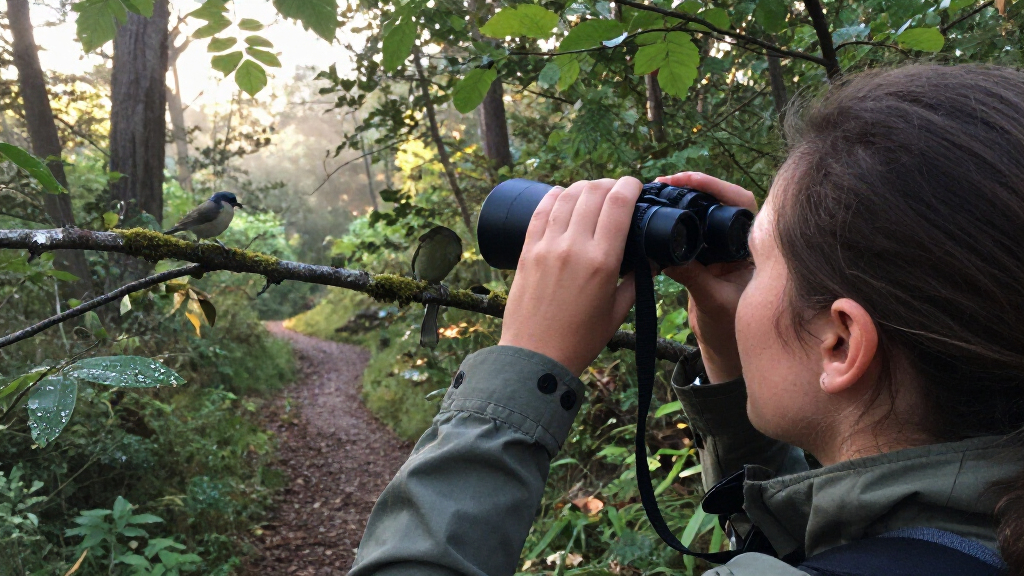

The right binoculars for bird watching balance magnification, brightness, and a steady handheld view — and getting that balance wrong is the most common mistake buyers make. The Vortex Crossfire HD 10×42 takes the top spot for pairing true HD optics with a rugged, fog-proof build at a mid-range price. If you want serious value, the Glosseek 10×42 ED brings extra-low-dispersion glass usually reserved for costlier models, while the Hontry 10×25 is the pick for casual walks and younger birders. The main tradeoff in this category: higher magnification like 20x sounds tempting but makes handheld identification of fast-moving birds nearly impossible, while smaller compacts sacrifice low-light performance. Keep reading for the full breakdown of all 15 models and which one fits your birding style.

Get travel and outdoor gear delivered free with Prime
- Fast, free delivery on millions of items
- Prime Video, Amazon Music and more included
- Member-only deals all year
Complete the kit



Key Takeaways
- 10×42 emerged as the sweet spot for birding across the lineup — enough reach to identify field marks without the hand shake that makes 15x-20x models frustrating on moving birds.
- High-magnification models like the 20×50 pairs and Deesoo 20×52 consistently disappoint for bird watching unless mounted on a tripod, which defeats the purpose of grab-and-go glassing.
- Phone adapters on the Adasion, Adorrgon, and 18×56 models add digiscoping fun, but the budget optics behind them limit image quality — they are convenience features, not performance features.
- ED glass on the Glosseek 10×42 visibly reduces color fringing compared with the standard-glass 12×42 budget models, making it the standout value for anyone serious about identification.
- Compact reverse-Porro models (Hontry 10×25, Occer 12×25, 8×21) work as second pairs or kids’ binoculars, but their small objectives struggle in the dawn and dusk hours when birds are most active.
| Adasion 12×42 Binoculars with Phone Adapter and Tripod |  | Best Accessory Bundle for Birders on a Budget | Magnification: 12x | Objective lens diameter: 42 mm | Field of view: 367 ft at 1,000 yd | VIEW LATEST PRICE | See Our Full Breakdown |
| Adorrgon 12×42 Binoculars with Phone Adapter and Tripod |  | Best Lightweight Digiscoping Alternative | Magnification: 12x | Objective lens diameter: 42 mm | Prism type: BAK4 roof prism, fully multi-coated | VIEW LATEST PRICE | See Our Full Breakdown |
| 7×42 Compact Waterproof Binoculars |  | Best for Beginners and Fast-Moving Birds | Magnification: 7x | Objective lens diameter: 42 mm | Field of view: 7.5°; 131 m at 1,000 m | VIEW LATEST PRICE | See Our Full Breakdown |
| 20×50 Waterproof Binoculars for Adults |  | Best for Long-Range Raptor and Shorebird Watching | Magnification: 20x | Objective lens diameter: 50 mm | Eyepiece diameter: 26 mm | VIEW LATEST PRICE | See Our Full Breakdown |
| 20×50 Binoculars for Adults |  | Best Long-Range Pick with Weather Sealing | Magnification: 20x | Objective lens diameter: 50 mm | Eyepiece diameter: 26 mm | VIEW LATEST PRICE | See Our Full Breakdown |
| Vortex Crossfire HD 10×42 Binoculars |  | Best Overall | Magnification: 10x | Objective lens diameter: 42 mm | Prism design: Roof prism | VIEW LATEST PRICE | See Our Full Breakdown |
| 18×56 UHD Waterproof Binoculars with Phone Adapter |  | Best for Long-Distance Birding and Digiscoping | Magnification: 18x | Objective lens diameter: 56 mm | Prism type: BAK4 | VIEW LATEST PRICE | See Our Full Breakdown |
| Deesoo 20×52 Binoculars for Adults |  | Best Budget High-Power Option | Magnification: 20x | Objective Lens Diameter: 52 mm | Field of View: 168 ft at 1,000 yards | VIEW LATEST PRICE | See Our Full Breakdown |
| Hontry 10×25 Compact Binoculars for Adults and Kids | 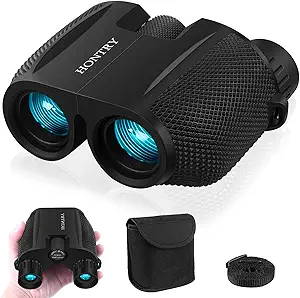 | Best Compact for Families and Travel | Magnification: 10x | Objective lens diameter: 25 mm | Prism type: Bak-4 | VIEW LATEST PRICE | See Our Full Breakdown |
| Vortex Triumph HD 10×42 Binoculars |  | Best Premium Value with Harness Included | Magnification: 10x | Objective lens diameter: 42 mm | Optical system: HD | VIEW LATEST PRICE | See Our Full Breakdown |
| Compact 8×21 Binoculars for Adults and Kids |  | Best Pocket Backup Pair | Magnification: 8x (listing also claims 12x) | Objective Lens Diameter: 21 mm | Weight: 0.19 kg (5.3 oz) | VIEW LATEST PRICE | See Our Full Breakdown |
| Glosseek 10×42 ED Binoculars |  | Best Premium Glass on a Budget | Magnification: 10x | Objective Lens Diameter: 42 mm | Glass: Extra-low dispersion (ED) | VIEW LATEST PRICE | See Our Full Breakdown |
| Occer 12×25 Compact Binoculars for Adults and Kids |  | Best Compact for Distance | Magnification: 12x | Objective Lens Diameter: 25 mm | Field of View: 273 ft at 1,000 yd | VIEW LATEST PRICE | See Our Full Breakdown |
| 15×52 Binoculars for Adults with Smartphone Adapter |  | Best for Digiscoping and Long-Range ID | Magnification: 15x | Objective Lens Diameter: 52 mm | Prism: BAK4 roof prism | VIEW LATEST PRICE | See Our Full Breakdown |
| VULNESS 8×42 Binoculars for Bird Watching, Hiking, and Travel |  | Best Overall for Everyday Birding | Magnification: 8x | Objective Lens Diameter: 42 mm | Prism: BAK4 roof prism | VIEW LATEST PRICE | See Our Full Breakdown |
| binoculars for bird watching | Magnification | Objective lens diameter | Field of view | Water resistance |
|---|---|---|---|---|
| Adasion 12×42 Binoculars with | 12x | 42 mm | 367 ft at 1,000 yd | IPX7 waterproof, fog-proof |
| Adorrgon 12×42 Binoculars with | 12x | 42 mm | 367 ft at 1,000 yd | Waterproof |
| 7×42 Compact Waterproof Binocu | 7x | 42 mm | 7.5°; 131 m at 1,000 m | Splash and light rain resistant |
| 20×50 Waterproof Binoculars fo | 20x | 50 mm | 168 yd at 1,000 yd | Daily waterproof; not submersible |
| 20×50 Binoculars for Adults | 20x | 50 mm | — | O-ring sealed; water- and fog-resistant |
| Vortex Crossfire HD 10×42 Bino | 10x | 42 mm | — | — |
| 18×56 UHD Waterproof Binocular | 18x | 56 mm | — | — |
| Deesoo 20×52 Binoculars for Ad | 20x | 52 mm | 168 ft at 1,000 yards | Not water resistant |
| Hontry 10×25 Compact Binocular | 10x | 25 mm | — | — |
| Vortex Triumph HD 10×42 Binocu | 10x | 42 mm | — | — |
| Compact 8×21 Binoculars for Ad | 8x (listing also claims 12x) | 21 mm | 1010 yards (spec listing) | Splash resistant, not submersible |
| Glosseek 10×42 ED Binoculars | 10x | 42 mm | 7° (122 m/1000 m) | — |
| Occer 12×25 Compact Binoculars | 12x | 25 mm | 273 ft at 1,000 yd | Waterproof |
| 15×52 Binoculars for Adults wi | 15x | 52 mm | 5.8° | — |
| VULNESS 8×42 Binoculars for Bi | 8x | 42 mm | 367 ft | — |
More Details on Our Top Picks
Adasion 12×42 Binoculars with Phone Adapter and Tripod
What makes this Adasion 12×42 stand out is less the optics themselves and more the complete digiscoping kit in the box: a universal phone adapter, a swivel tripod, a crossbody case, and a padded strap. For a birder who wants to start cataloging sightings with photos, that bundle saves a separate purchase that often costs as much as budget binoculars. Compared with the nearly identical Adorrgon 12×42, this model pulls ahead on comfort — its 13.6–19.6 mm of adjustable eye relief works for glasses wearers, while the Adorrgon offers a stingy 10 mm. The tradeoff is honest, though: 12x magnification in a 1.25 lb handheld body means image shake at full zoom, and a 367 ft field of view makes tracking a fast warbler harder than it would be through the 7×42 pick.
Pros:- Full accessory kit including phone adapter and tripod adds real value
- Adjustable eye relief up to 19.6 mm suits glasses wearers
- IPX7 waterproofing and fog-proof build outclass splash-resistant rivals
- Lightweight at 1.25 lbs for all-day carry
Cons:- 12x magnification produces noticeable hand shake without tripod support
- 367 ft field of view is narrow for following birds in flight
Best for: Budget-minded birders who want to pair binoculars with their smartphone for photos and video without buying accessories separately
Not ideal for: Glasses-free hunters of fast-moving songbirds — 12x shake and a narrower field of view make tracking small, quick birds frustrating
- Magnification:12x
- Objective lens diameter:42 mm
- Field of view:367 ft at 1,000 yd
- Eye relief:13.6–19.6 mm
- Prisms:BAK4
- Water resistance:IPX7 waterproof, fog-proof
- Weight:1.25 lbs
- Included accessories:Phone adapter, tripod, crossbody case, shoulder strap
Our verdict“This is the pick for birders who want a photo-ready kit out of the box, provided they accept a tripod-dependent shooting style.”
Adorrgon 12×42 Binoculars with Phone Adapter and Tripod
The Adorrgon 12×42 shares its core formula with the Adasion — same 12×42 configuration, same 367 ft field of view, same BAK4 prism and phone-adapter bundle — but trims the package down to 1.1 lbs, making it the lighter choice for birders who cover long trails. The rubber-armored body gives a secure grip in damp morning conditions, and the included tripod helps manage the shake inherent to 12x handheld viewing. Where it falls behind the Adasion is eye relief: just 10 mm means glasses wearers will struggle to see the full image circle, a real limitation for a shared family or group birding setup. A 3.5 mm exit pupil also delivers dimmer dawn and dusk views than the 5.5 mm exit pupil on the 7×42 model, so it’s better matched to bright midday sessions.
Pros:- Featherweight 1.1 lb body is easy to carry on long hikes
- Waterproof housing with textured rubber armor handles wet field conditions
- Smartphone adapter and tripod included in the box
- Compact 5.75-inch frame packs smaller than most 42 mm binoculars
Cons:- Only 10 mm of eye relief is uncomfortable or unusable with glasses
- Small 3.5 mm exit pupil limits low-light performance at dawn and dusk
Best for: Hiking-focused birders who prioritize low carry weight and want a phone adapter included for occasional digiscoping
Not ideal for: Eyeglass wearers — 10 mm of eye relief cuts off the field of view unless glasses come off
- Magnification:12x
- Objective lens diameter:42 mm
- Prism type:BAK4 roof prism, fully multi-coated
- Field of view:367 ft at 1,000 yd
- Eye relief:10 mm
- Exit pupil:3.5 mm
- Water resistance:Waterproof
- Weight:1.1 lb
- Included accessories:Smartphone adapter and tripod
Our verdict“Choose this over the Adasion only if weight matters more to you than glasses compatibility.”
7×42 Compact Waterproof Binoculars
While most of this lineup chases magnification, the 7×42 makes the case that less is more for actual birding. Its 7.5° field of view is dramatically wider than the 367 ft (roughly 7° equivalent or narrower at longer effective distances) on the 12x models, which translates to finding and following a flitting bird instead of losing it. The generous 5.5 mm exit pupil feeds more light to your eye at dawn and dusk — exactly when warblers and thrushes are most active — and low magnification keeps hand tremor from ruining the view. Twist-up eyecups and independent diopter adjustment make it one of the few budget picks here that genuinely works for glasses wearers, unlike the Adorrgon. The honest tradeoff: 7x won’t resolve fine plumage detail on a distant raptor the way the 20×50 models can, and the housing only resists splashes and light rain, not a full soak.
Pros:- Wide 7.5° field of view makes locating moving birds far easier
- 5.5 mm exit pupil delivers bright dawn and dusk images
- Low magnification minimizes visible hand tremor
- Twist-up eyecups and diopter adjustment accommodate glasses wearers
Cons:- Only splash-resistant, not fully waterproof for sustained rain or submersion
- 7x magnification limits detail on distant subjects
Best for: New birders and anyone tracking small, fast birds in woodland cover, especially in low morning light
Not ideal for: Open-field raptor watchers who want to study fine detail on distant birds — 7x simply runs out of reach
- Magnification:7x
- Objective lens diameter:42 mm
- Field of view:7.5°; 131 m at 1,000 m
- Exit pupil:5.5 mm
- Water resistance:Splash and light rain resistant
- Adjustments:Twist-up eyecups, central focus, independent diopter
- Mounting:Tripod adapter socket and strap mount
Our verdict“For learning the hobby and chasing active birds, this forgiving 7×42 is a smarter starting point than any high-power option here.”
20×50 Waterproof Binoculars for Adults
When the bird is a speck over a marsh or perched across a bay, 20x magnification does what no 10x or 12x model in this roundup can. These 20×50 binoculars pair BAK4 Porro prisms with multilayer-coated 50 mm objectives and a large 26 mm eyepiece, producing the bright, dimensional image Porro designs are known for — a contrast to the flatter roof-prism view of the Adorrgon or Adasion. The 168-yard field of view at 1,000 yards sounds generous on paper but is actually quite tight at 20x, so this is a tripod-and-scout binocular, not a woodland tracker — the 7×42 remains the right tool for that job. Rubber-coating over an impact-resistant body handles knocks on rocky blinds. Note that the housing is daily-waterproof only (no submersion), and with no published weight, buyers packing long distances are buying somewhat blind on carry comfort.
Pros:- 20x magnification resolves distant birds other picks can’t reach
- BAK4 Porro prisms deliver bright images with strong depth perception
- Large 26 mm eyepieces improve viewing comfort during long sessions
- Rubber-coated, impact-resistant body survives rough field use
Cons:- Very narrow field of view at 20x makes it nearly useless without tripod support
- No published weight or dimensions make packing plans difficult
Best for: Shoreline, wetland, and open-country birders who watch distant raptors, herons, and waterfowl from a fixed position
Not ideal for: Woodland birders and hikers — 20x is impractical to handhold and the narrow effective field loses fast movers
- Magnification:20x
- Objective lens diameter:50 mm
- Eyepiece diameter:26 mm
- Field of view:168 yd at 1,000 yd
- Prism type:BAK4 Porro
- Lens coating:FMC multilayer coating
- Water resistance:Daily waterproof; not submersible
Our verdict“A specialized long-range tool — buy it for distance watching, and keep a wider-field pair for everything else.”
20×50 Binoculars for Adults
This second 20×50 entry competes directly with the other 20×50 model but edges it on weather protection: an O-ring sealed, water- and fog-resistant housing holds up through sustained drizzle and humid mornings where the rival’s ‘daily waterproof, do not immerse’ rating is less reassuring. Optically it’s a familiar story — BAK4 Porro prisms, fully multi-coated lenses, big 26 mm eyepieces — geared toward the same distant-bird specialty, from soaring hawks to gulls on a far sandbar. Unlike the Adasion or Adorrgon, there’s no phone adapter or tripod bundled in, so digiscopers need to budget for those separately, and a diopter adjustment plus central focus wheel means fine-tuning takes patience at 20x. Like every 20x here, it demands steady support and sacrifices the wide, forgiving view that makes the 7×42 so good in the woods.
Pros:- O-ring sealed body resists water and internal fogging in humid conditions
- Fully multi-coated optics with BAK4 Porro prisms for bright daylight and low-light views
- Diopter and central focus allow precise personal calibration
- Rubberized grip improves handling in wet weather
Cons:- No phone adapter or tripod included despite magnification that demands one
- Not usable in total darkness and should not be submerged
Best for: Long-range birders and stargazers who face wet, humid conditions and already own or will buy a tripod
Not ideal for: Casual or travel birders — no accessories included, and 20x demands tripod support most casual outings won’t include
- Magnification:20x
- Objective lens diameter:50 mm
- Eyepiece diameter:26 mm
- Prism type:BAK4 Porro
- Lens coating:Fully multi-coated (FMC)
- Water resistance:O-ring sealed; water- and fog-resistant
- Included accessories:Cleaning cloth, carrying bag, neck strap, manual
Our verdict“Of the two 20×50 picks, this is the one to choose when weather sealing matters more than bundled accessories.”
Vortex Crossfire HD 10×42 Binoculars
The Crossfire HD hits the sweet spot for birding: 10x magnification is enough reach for skittish warblers without the hand shake that plagues higher-power models, and 42 mm objectives gather enough light for dawn chorus sessions when birds are most active. Compared with the Hontry 10×25, the larger objectives deliver a noticeably brighter image in forest shade, where compact binoculars struggle. The fully multi-coated optics render color accurately enough to distinguish similar species, and the waterproof, fogproof housing means a rainy morning in a blind is a non-issue. The lifetime VIP warranty outclasses most budget rivals like the Adasion 12×42, though it excludes loss and theft. The tradeoff is weight: at full size, this is a neck-strap binocular, not a pocket one.
Pros:- Fully multi-coated lenses deliver bright, color-accurate images for species identification
- Waterproof and fogproof construction handles wet, cold mornings
- Rubber armor protects against drops and provides a secure grip
- Tripod adaptable and backed by a lifetime warranty
Cons:- Full-size body is heavier and bulkier than compact alternatives
- Warranty excludes loss, theft, deliberate damage, and cosmetic issues
Best for: Birders who want a durable, all-weather 10×42 that will last through years of regular field use
Not ideal for: Travelers and hikers prioritizing packability — full-size bodies are heavier than compacts like the Hontry 10×25
- Magnification:10x
- Objective lens diameter:42 mm
- Prism design:Roof prism
- Lens coating:Fully multi-coated
- Waterproof:Yes
- Fogproof:Yes
- Tripod adaptable:Yes
- Warranty:Lifetime VIP Warranty
Our verdict“If a birder buys one pair and wants weatherproof durability with a lifetime warranty, this is the safest pick on the list.”
18×56 UHD Waterproof Binoculars with Phone Adapter
For birders who spend time glassing shorelines, marshes, or open fields, 18x magnification with 56 mm objectives brings distant herons and raptors into detail that a 10×42 simply cannot reach. The large objectives and BAK4 prisms also give it genuine low-light capability — an advantage over both the Vortex Crossfire HD and the smaller 15×52 option in this roundup for those owl-adjacent dusk sessions. The included universal phone adapter turns it into a digiscoping rig for documenting rare sightings, something the Vortex models don’t include. The catch: 18x is very hard to hold steady by hand, and this class of binocular really demands tripod use for sharp views. The unpublished weight is also a concern, since 56 mm glasses are rarely light.
Pros:- 18x magnification resolves distant birds that 10x models render as silhouettes
- 56 mm objectives and BAK4 prisms perform well in low light
- Universal phone adapter enables photos and video through the optics
- Waterproof and fogproof for harsh outdoor conditions
Cons:- Extreme magnification requires tripod support for steady viewing
- No published weight or dimensions, making portability hard to judge before purchase
Best for: Open-country and shoreline birders who observe distant subjects and want to photograph sightings through the eyepiece
Not ideal for: Woodland birders or anyone with unsteady hands — 18x magnification produces visible image shake without tripod support
- Magnification:18x
- Objective lens diameter:56 mm
- Prism type:BAK4
- Coating:Dielectric-coated
- Construction:Waterproof and fogproof
- Included accessory:Universal phone adapter
- Eyecups:Adjustable twist-up
Our verdict“This model makes the most sense for glassing distant birds across open terrain and digiscoping them, not for casual hand-held birding.”
Deesoo 20×52 Binoculars for Adults
The Deesoo 20×52 is the affordable route to serious long-range reach, and its fully multi-coated optics with BAK-4 prisms punch above its price class optically. The generous 26 mm of eye relief is a standout — glasses wearers who get frustrated by the short relief on compacts like the Occer 12×25 will find these comfortable to use without removing spectacles. However, the compromises are real: unlike the waterproof Vortex Crossfire HD or the 18×56 UHD model, this one has no water resistance at all, which is a genuine risk on dewy mornings or drizzle. And with 20x magnification at 2.18 pounds, hand-held viewing is shaky enough that the tripod mount is essentially mandatory — yet no tripod is included.
Pros:- 20x magnification delivers exceptional reach for feeder watching and distant perched birds
- Fully multi-coated optics with BAK-4 prisms produce sharp, bright images
- 26 mm eye relief is excellent for eyeglass wearers
- Tripod mount enables stable long-duration observation
Cons:- Not water resistant — a real limitation for outdoor birding in damp conditions
- Tripod required for steady 20x viewing but not included
- Heavy at 2.18 pounds and bulky to carry in the field
Best for: Budget-minded birders who watch from a fixed spot — backyard feeders, blinds, or overlooks — with a tripod already on hand
Not ideal for: Birders who walk trails in unpredictable weather — no water resistance and tripod-dependent viewing make it a poor field companion
- Magnification:20x
- Objective Lens Diameter:52 mm
- Field of View:168 ft at 1,000 yards
- Eye Relief:26 mm
- Prism Type:Roof prism, BAK-4
- Coating:Fully multi-coated
- Water Resistance:Not water resistant
- Weight:2.18 lbs
- Mount Type:Tripod mount
Our verdict“A capable budget choice for stationary, dry-condition birding from a tripod, but field birders should spend more for weatherproofing.”
Hontry 10×25 Compact Binoculars for Adults and Kids
At 0.6 pounds, the Hontry 10×25 is the binocular that actually gets carried — tucked in a jacket pocket on a hike or handed to a kid without worry. The adjustable 60–75 mm interpupillary distance is the family-friendly detail here: it fits children’s narrow-set eyes and most adult faces, which is why it beats single-user-focused models like the Compact 8×21 option for households. Full 10x magnification with Bak-4 prisms gives better reach than typical pocket binoculars, keeping the image detailed enough for identifying backyard visitors. The honest tradeoff is the 25 mm objectives: compared with the Vortex Crossfire HD’s 42 mm lenses, images in dense forest shade or at dusk will look dimmer and flatter. This is a fair-weather, daylight optic.
Pros:- Featherweight 0.6-pound design is easy to carry all day
- 10x magnification with Bak-4 prisms delivers surprisingly detailed images for the size
- Adjustable interpupillary distance fits both children and adults
- Small footprint suits hiking, travel, and event use
Cons:- 25 mm objectives limit brightness in low light and heavy shade
- No weatherproofing specs — questionable durability in rain or dust
Best for: Families and traveling birders who need a featherweight pair that fits kids and adults alike and lives in a backpack
Not ideal for: Serious birders pursuing dawn, dusk, or deep-forest species — the small objectives simply don’t gather enough light
- Magnification:10x
- Objective lens diameter:25 mm
- Prism type:Bak-4
- Weight:0.6 lbs
- Interpupillary distance:60–75 mm
Our verdict“The right choice when portability and family sharing matter more than low-light optical performance.”
Vortex Triumph HD 10×42 Binoculars
The Triumph HD sits a step above the Vortex Crossfire HD in optical refinement, with a dedicated HD optical system that renders finer detail and truer color — helpful for separating tricky species like empidonax flycatchers or fall warblers. Its real differentiator in this roundup is the included GlassPak chest harness, which distributes weight across the shoulders instead of the neck. For birders on long outings, that changes the whole day; no other model here bundles one. Like the Crossfire, it’s waterproof, fog proof, shockproof, tripod adaptable, and covered by the lifetime VIP warranty (with the same exclusions for loss and theft). The polycarbonate chassis keeps weight reasonable but feels less premium than metal-bodied rivals, and the full-size format still won’t fit a pocket.
Pros:- HD optical system produces sharper, more color-accurate images than standard full-size models
- Waterproof, fog proof, and shockproof for demanding field conditions
- Included GlassPak harness prevents neck strain on all-day outings
- Adjustable eyecups, diopter, and tripod adaptability plus lifetime warranty
Cons:- Full-size design is bulky compared with compact options like the Hontry 10×25
- Polycarbonate chassis feels less premium than metal-framed binoculars
- Warranty excludes loss, theft, deliberate damage, and cosmetic damage
Best for: Active birders on long hikes who want upgraded optics and the comfort of a chest harness out of the box
Not ideal for: Casual backyard observers — the optical upgrades and harness are wasted on short sessions at the feeder
- Magnification:10x
- Objective lens diameter:42 mm
- Optical system:HD
- Lens coating:Fully multi-coated
- Weather resistance:Waterproof and fog proof
- Chassis:Polycarbonate with full rubber armor
- Tripod adaptable:Yes
- Included accessories:Neck strap and adjustable GlassPak harness
- Warranty:Lifetime VIP Warranty
Our verdict“The best pick for birders who walk miles with binoculars on their chest and want a step up in optics over the Crossfire HD.”
Compact 8×21 Binoculars for Adults and Kids
At just 5.3 ounces, this is the pair you forget is in your jacket pocket until a bird lands unexpectedly. The 8×21 configuration is the classic pocket formula: modest light gathering, but a stable, easy image that suits casual feeder watching better than the twitchier 12x compacts in this roundup. Compared with the Occer 12×25, it gives up reach and low-light brightness, yet its smaller objectives and lighter body make it the one kids or hikers will actually carry. The rubber-armored aluminum housing handles rain splashes and drops far better than typical toy-grade compacts. One caveat worth flagging: the listing mixes 8x and 12x magnification claims, so buyers should expect the printed spec rather than the higher number.
Pros:- Extremely light at roughly 5.3 ounces for all-day pocket carry
- Rubber-armored aluminum body shrugs off splashes, dust, and bumps
- Full accessory kit includes case, strap, and cleaning cloth
- Center focus plus ±5 diopter adjustment is rare at this size
Cons:- 21 mm objectives limit brightness to daylight viewing
- Conflicting 8x/12x magnification claims create spec uncertainty
Best for: Hikers, travelers, and families who want an ultralight spare pair to keep in a pocket or glovebox
Not ideal for: Dawn and dusk birders — the 21 mm objectives simply can’t gather enough light for dim conditions
- Magnification:8x (listing also claims 12x)
- Objective Lens Diameter:21 mm
- Weight:0.19 kg (5.3 oz)
- Prism Type:Roof prism
- Coating:FMC multilayer coating
- Field of View:1010 yards (spec listing)
- Diopter Adjustment:±5 diopters
- Water Resistance:Splash resistant, not submersible
Our verdict“Buy this as a grab-and-go backup pair, not your primary birding optic.”
Glosseek 10×42 ED Binoculars
This model earns its spot on optics alone: ED glass paired with BAK4 prisms is the combination birders pay far more for in brands like Vortex, and here it targets the frustrating purple fringing that cheap glass shows on backlit birds. The 3 m close focus is a genuine differentiator — warblers and backyard subjects stay sharp in ways the 15×52 model in this roundup can’t manage, and the 7° field of view makes it easier to keep a moving bird in frame than tighter long-range options. The IPX7 waterproof, fogproof body and tripod threading round out a serious feature set. The tradeoff is weight: at 1.4 lb, it’s the heaviest 42 mm option here, and all-day neck carry is noticeable compared with the VULNESS 8×42.
Pros:- ED glass with fully multi-coated BAK4 optics minimizes color fringing
- 3 m close focus excels for nearby songbirds and backyard feeder watching
- 18 mm eye relief with twist-up eyecups works well for glasses wearers
- IPX7 waterproof, fogproof, tripod-adaptable body with lifetime warranty
Cons:- 1.4 lb weight becomes tiring during long handheld sessions
- Narrow 10x field of view demands more effort tracking fast flyers than 8x options
Best for: Intermediate birders who want ED-glass color accuracy and close-focus capability without flagship pricing
Not ideal for: Anyone prioritizing featherweight carry — it’s heavier than similarly sized 8×42 and compact models
- Magnification:10x
- Objective Lens Diameter:42 mm
- Glass:Extra-low dispersion (ED)
- Prism:BAK4
- Field of View:7° (122 m/1000 m)
- Close Focus:3 m
- Eye Relief:18 mm
- Waterproofing:IPX7, fogproof, shockproof
- Weight:1.4 lb
Our verdict“The sharpest-glass value in this lineup for birders ready to move beyond entry-level optics.”
Occer 12×25 Compact Binoculars for Adults and Kids
The Occer splits the difference between the featherweight 8×21 pocket pairs and full-size binoculars: 12x magnification in a 0.39 kg body that still fits one hand. For birders who want to resolve distant raptors or shoreline birds without hauling a 42 mm optic, the BAK-4 prisms and fully multi-coated lenses deliver a noticeably brighter image than smaller compacts manage. The 20 mm eye relief is a standout at this size — glasses wearers get a full field of view, something many pocket models botch. The honest tradeoff is physics: a 2.5 mm exit pupil means dim, murky images at dawn and dusk, exactly when many birds are most active. For low-light sit sessions, the Glosseek 10×42 is the better tool.
Pros:- 12x magnification resolves distant birds from a compact body
- 20 mm eye relief accommodates eyeglass wearers comfortably
- Waterproof construction with durable rubber armor
- BAK-4 prisms and FMC coatings outperform typical pocket optics
Cons:- 2.5 mm exit pupil is weak in low light and dense shade
- 12x handheld image is harder to steady than 8x alternatives
Best for: Daylight hikers and traveling birders who prioritize reach and portability over low-light performance
Not ideal for: Dawn-and-dusk watchers — the small exit pupil washes out in dim forest light
- Magnification:12x
- Objective Lens Diameter:25 mm
- Field of View:273 ft at 1,000 yd
- Prism:BAK-4
- Eye Relief:20 mm
- Exit Pupil:2.5 mm
- Water Resistance:Waterproof
- Weight:0.39 kg
Our verdict“The reach champion of the compact category, provided you bird mostly in daylight.”
15×52 Binoculars for Adults with Smartphone Adapter
This is the specialist of the batch: 15x magnification with 52 mm objectives built for identifying birds at serious distance — hawk watches, shorelines, open marshes. The bundled smartphone adapter turns it into an entry digiscoping rig, letting you document rarities instead of just claiming them. Compared with the 12×42 pairs elsewhere in this roundup, the larger objectives buy back some of the brightness that high magnification sacrifices, and the 3.47 mm exit pupil keeps the image usable. But the tradeoffs are real: a 5.8° field of view makes finding and following a flitting songbird genuinely difficult, and 15x is hard to hold steady without bracing or a tripod. This pick makes sense as a second, long-range optic rather than an everyday all-rounder.
Pros:- 15x reach with 52 mm objectives for distant bird identification
- Included smartphone adapter enables photo and video documentation
- 18 mm eye relief and adjustable eyecups suit glasses wearers
- Waterproof body with fully multi-coated BAK4 roof prisms
Cons:- 5.8° field of view makes acquiring and tracking moving birds difficult
- 15x image is shaky handheld without support
- Large and heavy for casual carry compared with compact picks
Best for: Hawk watchers, shorebirders, and photographers who want extreme reach plus phone-based photo capture
Not ideal for: Woodland birders tracking fast, close songbirds — the narrow field of view fights you constantly
- Magnification:15x
- Objective Lens Diameter:52 mm
- Prism:BAK4 roof prism
- Field of View:5.8°
- Eye Relief:18 mm
- Exit Pupil:3.47 mm
- Coating:Fully multi-coated
- Extras:Smartphone adapter, waterproof body
Our verdict“A long-range specialist and digiscoping starter — buy it for distance work, not general birding.”
VULNESS 8×42 Binoculars for Bird Watching, Hiking, and Travel
If one pair had to cover backyard feeder duty, woodland walks, and travel, this is the configuration I’d point most birders toward. The 8×42 format is the format serious birders default to: 8x magnification is steady in the hand, and the 5.25 mm exit pupil delivers a bright image in the shaded, dawn-adjacent conditions where the Occer 12×25 and 8×21 compacts fall apart. The 367 ft field of view is the widest in this batch, which matters more than magnification for tracking a warbler moving through branches. Twist-up eyecups and a diopter make shared use between glasses and non-glasses wearers painless. It lacks the ED glass of the Glosseek and any phone adapter, so serious photographers and fringing-sensitive viewers may want to step up — but for pure bird-finding, this is the most balanced pick here.
Pros:- Wide 367 ft field of view makes tracking moving birds much easier
- 5.25 mm exit pupil stays bright in shade and low light
- BAK4 prisms with fully multi-coated, anti-reflective lenses
- Twist-up eyecups and diopter adjustment suit shared and glasses-wearing use
Cons:- No smartphone adapter or tripod mount for digiscoping
- 1.2 lb weight is heavier than pocketable travel options
Best for: New-to-intermediate birders wanting one do-everything pair for woodland walks, backyard watching, and travel
Not ideal for: Birders chasing distant hawks or shorebirds — 8x doesn’t have the reach those situations demand
- Magnification:8x
- Objective Lens Diameter:42 mm
- Prism:BAK4 roof prism
- Coating:Fully multi-coated, anti-reflective
- Field of View:367 ft
- Eye Relief:18 mm
- Exit Pupil:5.25 mm
- Weight:1.2 lb
Our verdict“The most versatile birding binocular in this lineup — pick it first unless you need reach or photo capability.”

How We Picked
My ranking is built around what actually matters in the field when you are trying to identify a warbler in poor light: image brightness, edge sharpness, magnification practicality, and handling speed. I weighted 8×42 and 10×42 configurations heavily because their 5mm-plus exit pupils and wide fields of view make it faster to find and follow birds — a 42mm objective gathers roughly double the light of a 25mm compact, which matters at dawn and dusk. Models with ED or HD glass earned bonus consideration because reduced chromatic aberration translates directly into cleaner color separation on field marks like eye rings and wing bars.
I also factored in weatherproofing, ergonomics, and warranty support, since birding rarely happens in perfect conditions. Fully waterproof and nitrogen-purged housings like the Vortex models rank above budget rubber-armored bodies that can fog internally. Finally, I judged each product against its intended buyer — a compact for a child is not competing with a 10×42 for the top spot, so the ordering reflects both absolute performance and how well each model serves its own niche.
Factors to Consider When Choosing Binoculars For Bird Watching
Before settling on a specific model, it helps to understand how binocular specs translate into real birding outcomes. The choices below explain where money is well spent, where it is wasted, and which common assumptions lead to disappointment.Why Magnification Is Not the Free Upgrade It Seems
The single biggest mistake in birding optics is assuming more magnification is better. A 20x model magnifies every heartbeat and hand tremor by the same factor, turning a perched bird into a shimmering blur and making it nearly impossible to track anything in flight. Magnification also shrinks your field of view and exit pupil, so you find fewer birds and see dimmer images. Most experienced birders settle on 8x for woodland birding, where birds appear close and move fast, and 10x for open habitats like shorelines and marshes. Anything above 12x belongs on a tripod and is better suited to stationary target viewing than birding. If you are torn between two magnifications, choose the lower one — you will find and follow more birds.
Objective Size and the Low-Light Question
The second number (the objective diameter in millimeters) controls how much light reaches your eye, and birds are most active when light is worst — the first and last hour of the day. Divide objective size by magnification to get the exit pupil: an 8×42 gives 5.25mm, while a 10×25 gives just 2.5mm, less than half the light. A larger exit pupil also makes it easier to keep the image aligned with your eye, which is why full-size binoculars feel so much easier to use than compacts. If you bird primarily at midday or keep a pair in the car, compacts are fine. If dawn chorus walks are your thing, prioritize a 42mm or larger objective.
Glass Quality: Where Your Money Actually Goes
Beyond a certain point, spending more does not buy magnification or size — it buys glass. ED (extra-low dispersion) glass, dielectric prism coatings, and fully multi-coated optics are what separate a sharp, color-accurate image from a washed-out one. The practical difference shows up in color fringing: cheap glass puts purple edges on high-contrast birds against bright skies, which can obscure exactly the field marks you need for identification. The jump from a basic 12×42 to an ED-glass 10×42 is more noticeable than the jump in magnification ever would be. This is why my value picks emphasize glass over gadget accessories.
Weatherproofing and Build Durability
Birding happens in drizzle, humidity, and dust, and internal fogging on cheap binoculars can ruin a pair permanently. Look for O-ring sealing and nitrogen purging, which prevent moisture from entering and condensing on the internal lenses. Rubber armoring without sealing only protects against bumps, not weather. Also consider the chassis material: polycarbonate bodies are lighter and fine for casual use, while aluminum bodies hold alignment better over years of trail abuse. Cheaper models in this roundup cut costs here, which is acceptable if you bird occasionally in fair weather — but a fogged lens at the worst moment is a hard lesson in false economy.
Close Focus and Field of View for Birding Specifically
Two specs that general-purpose buyers ignore matter enormously for birders. Close focus determines how near a bird can be before the binoculars go blurry — critical for butterflies, feeder visitors, and woodland birds that appear at ten feet. Birding-grade models focus under 6 feet; long-distance models often will not focus closer than 15. Field of view determines how much scene you see at once, which directly affects how quickly you can get a moving bird into the frame. A wide field is the difference between a two-second acquisition and a frantic scan while the bird flies off. High-magnification binoculars almost always sacrifice both, another reason 8x and 10x dominate serious birding.
Who Should Pay More, and Who Should Not
Spend up if you bird weekly, watch in low light, or want optics that hold resale value — the difference between a budget 12×42 and a quality 10×42 HD model is visible within the first minute of use. Do not overspend if you are buying for a child, testing whether birding sticks as a hobby, or want a glovebox pair for occasional hikes. A sub-$50 compact that gets used constantly beats a premium pair left at home because it is heavy. One reasonable path: start with a solid mid-range 10×42, and only upgrade once you can articulate what your current pair is missing. That self-diagnosis is far more reliable than any spec sheet.
Frequently Asked Questions
Is 10×42 or 8×42 better for bird watching?
Both are excellent, and the right choice depends on where you bird. 8×42 offers a wider field of view, a brighter image, and a steadier handheld view, which makes it the favorite for woodland, backyard, and fast-moving songbirds. 10×42 gives extra reach for shorebirds, raptors, and open marshes where birds keep their distance, at the cost of a slightly narrower field and more visible hand shake. If you wear glasses or struggle with handshake, lean 8x. If most of your birding happens across open water or fields, 10x earns its keep. Beginners almost always progress faster on 8x because they find birds more quickly.
Are 20×50 binoculars good for bird watching?
Generally no, despite how appealing the magnification sounds. At 20x, the natural tremor in your hands is amplified to the point where fine field marks — the things you actually need for identification — blur together, and the narrow field of view makes finding a small bird in a tree extremely difficult. These models work best for stationary, distant subjects like landscapes or ships, or when mounted on a tripod. For birding, a lower-magnification binocular with better glass will identify more birds than a high-magnification one that shakes. If you already own a 20x pair, adding a tripod and using it for distant waterfowl and raptors is the best way to make it useful.
Do phone adapters on binoculars actually produce good bird photos?
They can be fun, but temper your expectations. Digiscoping through binoculars works best with bright, sharp optics and a steady support — the phone sensor is magnifying every optical flaw in the system. On budget models like the adapter-equipped 12×42 pairs, photos tend to look soft with visible vignetting, while an 18×56 or premium 10×42 paired with a tripod delivers noticeably better results. The adapter also slows you down, which is a real cost when the bird may only stay perched for seconds. Treat the phone adapter as a bonus for documenting feeder birds and cooperative perched subjects, not as a wildlife photography tool.
Can I use compact binoculars for serious birding?
Compacts like 10×25 or 8×21 models can work as a primary pair if your birding is casual, midday, or travel-focused, but they have real limits. Their small objectives deliver roughly a quarter of the light of a 42mm model, which makes dawn and dusk viewing — peak bird activity — genuinely difficult. They also demand precise eye alignment, which frustrates kids and new users. Where compacts shine is as a second pair: one that lives in a daypack, glovebox, or travel bag so you never miss an unexpected sighting. Many serious birders own both a full-size and a compact pair for exactly this reason.
What is the difference between cheap and ED glass binoculars for identifying birds?
The difference shows up in two places: color accuracy and edge sharpness. Standard glass bends different wavelengths of light at slightly different rates, producing chromatic aberration — the purple or green fringing you see on a dark bird against a bright sky. That fringing can smear the exact details, like wing bars and bill color, that separate similar species. ED glass corrects this dispersion, delivering cleaner separation between a bird’s colors and better contrast in backlit conditions. Edge sharpness matters too: budget binoculars blur toward the frame edges, so a bird at the edge of view looks soft until you recenter it. If identification is your goal rather than just spotting birds, ED glass is the single most worthwhile upgrade.
Conclusion
For most birders, the Vortex Crossfire HD 10×42 is the best overall choice — it combines HD optics, true waterproofing, and a no-questions warranty in a package that will last through years of field use. The Glosseek 10×42 ED is my best value pick, delivering ED glass and full-size performance at a budget-friendly price point where most competitors offer standard optics. For the best premium option, the 18×56 UHD brings low-light capability and digiscoping reach for open-habitat birding, provided you pair it with its tripod. Beginners and families should start with the Hontry 10×25 or the Occer 12×25 — inexpensive, light, and forgiving enough to learn on without fear of breaking them. For a do-it-all mid-range option, the VULNESS 8×42 covers birding, hiking, and travel with a bright, easy view, while the Vortex Triumph HD suits anyone wanting the Vortex platform at a lower price. Whatever you choose, prioritize glass and a 42mm objective over high magnification — that single decision will identify more birds than any other.
Halloween Picks
halloween
As an affiliate, we earn on qualifying purchases.