Density altitude is a hidden factor that affects your aircraft’s performance by changing lift, engine power, and climb ability. When conditions like high temperatures, lower pressure, or increased humidity occur, the air becomes less dense, reducing efficiency. You need to take into account this when planning flights, especially in hot, high, or humid environments. Knowing how to manage density altitude can improve safety and performance—continue exploring to uncover what you can do about it.
Open a free Amazon Business account
Business pricing, bulk buying and tax-exempt orders.
As an affiliate, we earn on qualifying purchases.
Key Takeaways
- Density altitude affects aircraft lift, engine power, and overall performance, especially in hot, high, or humid conditions.
- Higher density altitude means thinner air, requiring longer takeoff distances and reduced climb rates.
- Temperature, altitude, pressure, and humidity are key factors influencing density altitude calculations.
- Proper pre-flight planning and performance charts help pilots manage performance limitations caused by high density altitude.
- Ignoring density altitude can compromise safety, aircraft efficiency, and lead to unexpected performance issues.
What Is Density Altitude and Why Does It Matter?
Have you ever wondered why your airplane performs differently at various altitudes? That’s where density altitude comes in. It’s a vital concept for pilots because it affects aircraft performance, including takeoff, climb rate, and engine power. Understanding density altitude starts with aircraft certification standards, which guarantee planes operate safely within specified conditions. But during flight planning, you need to adjust for current conditions like temperature and pressure, which influence density altitude. Higher density altitude means less dense air, reducing engine efficiency and lift. Knowing how density altitude impacts your aircraft helps you make safe, informed decisions—especially when planning your route or calculating takeoff distances. Essentially, grasping this concept guarantees your flight remains safe, efficient, and within the aircraft’s performance limits. Additionally, awareness of performance factors like density altitude can help optimize your aircraft’s capabilities in various environments.
Factors That Influence Density Altitude
Your density altitude changes with temperature, pressure, and humidity. Warmer air, higher elevations, and increased humidity all make the air less dense. Understanding how these factors interact helps you predict aircraft performance more accurately. Additionally, knowing the specific paint spray technology used can influence how coatings respond under different atmospheric conditions.
Ambient Temperature Effects
How does ambient temperature influence density altitude? When temperatures rise, the air becomes less dense, increasing density altitude and decreasing aircraft performance. Conversely, cooler temperatures boost air density, lowering density altitude and improving lift. Here’s how temperature impacts you:
- Hot days can reduce engine efficiency and lift, affecting takeoff and climb rates.
- Warm weather may require adjustments in aircraft modifications to optimize performance.
- Accurate weather forecasting helps you anticipate temperature effects before flight.
- Higher temperatures mean you’ll need longer runways and more power to maintain safety margins.
- Understanding crochet styles for locs can inspire protective styling options that adapt to varying weather conditions.
Understanding ambient temperature’s role lets you better plan flights, ensuring safer, more efficient operations despite changing conditions.
Altitude and Pressure
Did you know that altitude and atmospheric pressure directly impact density altitude? As you ascend, both increase in altitude and decrease in pressure, which makes the air less dense. This affects aircraft performance, requiring adjustments in aircraft design and pilot training to handle these changes. Lower pressure at higher elevations means engines produce less power, and wings generate less lift. Understanding how pressure variations influence density altitude helps you make better decisions during flight planning and operations. Pilots trained to recognize these effects can anticipate performance shifts, especially in mountainous regions or high-altitude airports. Aircraft design also plays a role, with engines and aerodynamics optimized for different pressure environments. Recognizing the relationship between altitude, pressure, and density altitude is essential for safe, efficient flying. Additionally, vetted camping gear such as portable power sources and cooling units can be crucial for maintaining comfort and safety in high-altitude or remote locations.
Humidity Impact on Air
Ever wondered how humidity influences density altitude? Humidity effects play a significant role in air density. As humidity increases, water vapor replaces some of the nitrogen and oxygen molecules, making the air less dense. This reduction in air density impacts your aircraft’s performance. Here are four key points:
- Higher humidity lowers air density, increasing the density altitude.
- Less dense air reduces engine power and propeller efficiency.
- Flight performance diminishes, especially during takeoff and climb.
- Humidity effects become more pronounced at higher temperatures.
- Automation technologies in aviation are being developed to better predict and compensate for these environmental factors.
Understanding how humidity impacts air density helps you better anticipate aircraft behavior under different conditions. Remember, increased humidity means reduced air density, leading to higher density altitude and potential performance challenges.
How to Calculate Density Altitude
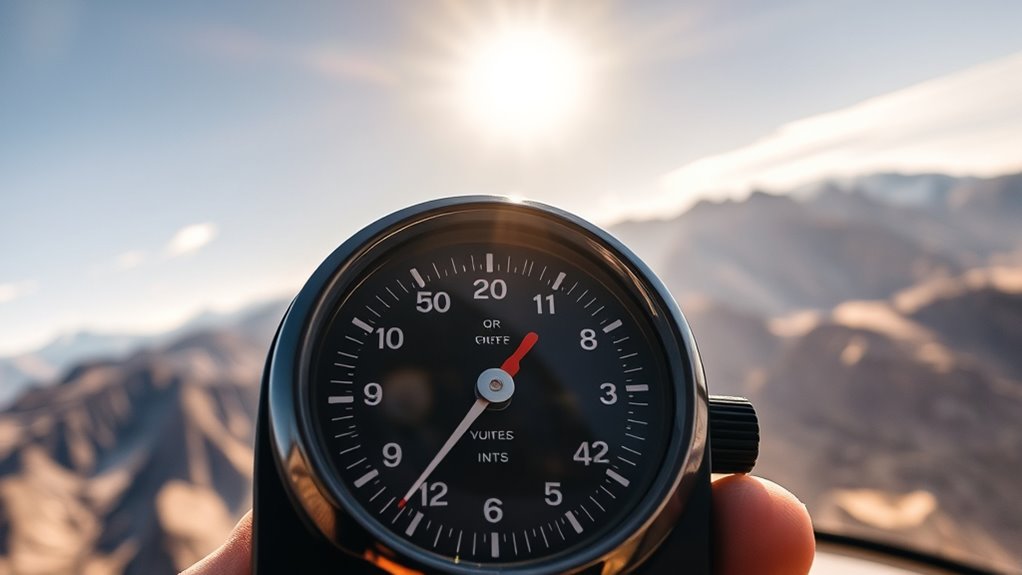
Calculating density altitude involves adjusting the pressure altitude based on current temperature and humidity conditions. To do this, start with the pressure altitude, then apply corrections for temperature and humidity. Use the following simplified table to understand how these factors influence aircraft performance:
| Temperature | Humidity | Effect on Density Altitude |
|---|---|---|
| Higher | Higher | Increases density altitude, reduces lift |
| Lower | Lower | Decreases density altitude, improves performance |
| Standard | Moderate | Balanced conditions, standard performance |
Additionally, understanding Ford Tuning principles can help optimize engine performance under varying environmental conditions.
The Impact of High Density Altitude on Aircraft Performance
When flying at high density altitudes, you’ll notice the thinner air reduces your aircraft’s lift and overall performance. Your engine also loses power because it can’t breathe as well, which affects your climb rate and speed. Understanding these effects helps you plan safer flights in challenging conditions. Additionally, proper pre-flight planning becomes crucial to account for the reduced aircraft capabilities in such environments.
Thinner Air Effects
At high density altitudes, the thinner air considerably reduces an aircraft’s performance. You’ll notice decreased lift and slower acceleration, impacting your ability to climb and maintain speed. Here are key effects to contemplate:
- Reduced lift due to lower air density, demanding careful weight management.
- Longer takeoff distances, requiring more runway and higher aircraft weight awareness.
- Decreased engine efficiency, even without considering engine power loss.
- Increased pilot workload, as you must constantly monitor aircraft performance and adjust accordingly.
- Awareness of grocery savings strategies can also help pilots allocate resources efficiently for long trips or emergency supplies.
Understanding these effects helps you make smarter decisions before flight. Pilot awareness of how thinner air impacts aircraft weight and performance ensures safer operations and better preparation for high-density altitude conditions.
Engine Power Loss
High density altitude considerably diminishes an engine’s power output because the thinner air provides less oxygen for combustion. As a result, your aircraft’s engine performance drops, reducing overall power available for climb, cruise, and acceleration. This loss of power affects aircraft efficiency, meaning you’ll need more runway for takeoff and more fuel to maintain your desired speed. You might notice sluggish acceleration and decreased ability to climb at normal rates. High density altitude forces your engine to work harder to produce the same power, which can lead to increased engine temperatures and potential stress on components. Understanding this impact helps you anticipate performance limitations and adjust your flight planning accordingly, ensuring safety and engine efficiency.
Recognizing and Preparing for Density Altitude Conditions
Recognizing and preparing for density altitude conditions is essential for safe and efficient flight operations. High density altitude affects aircraft performance, so understanding how to adapt is vital. To do this effectively, consider these key steps:
- Check aircraft weight—reducing weight can improve climb and acceleration.
- Assess weather reports—look for temperature, humidity, and pressure, which influence density altitude.
- Adjust flight planning—select routes and altitudes that account for performance limits.
- Perform pre-flight calculations—estimate takeoff and landing distances under current conditions.
- Incorporate eye patch benefits to maintain alertness and reduce fatigue during long flights or in challenging conditions.
Real-World Scenarios Demonstrating Density Altitude Effects
Understanding how density altitude impacts aircraft performance becomes clear when examining real-world flight scenarios. For example, pilots flying in hot, high-altitude environments often notice reduced engine power and longer takeoff runs. Urban heat can increase local temperatures, raising density altitude and affecting climb rates. Similarly, altitude sickness isn’t limited to humans; high density altitudes can impair engine efficiency.
| Factor | Effect |
|---|---|
| Urban heat | Raises temperature, increasing density altitude |
| High altitude | Reduces air density, decreasing lift and power |
| Hot weather | Causes performance degradation, longer takeoff |
| Elevated terrain | Compounds effects, requiring careful planning |
Being aware of these scenarios helps you anticipate performance challenges caused by density altitude.
Tips for Pilots to Manage Density Altitude Challenges
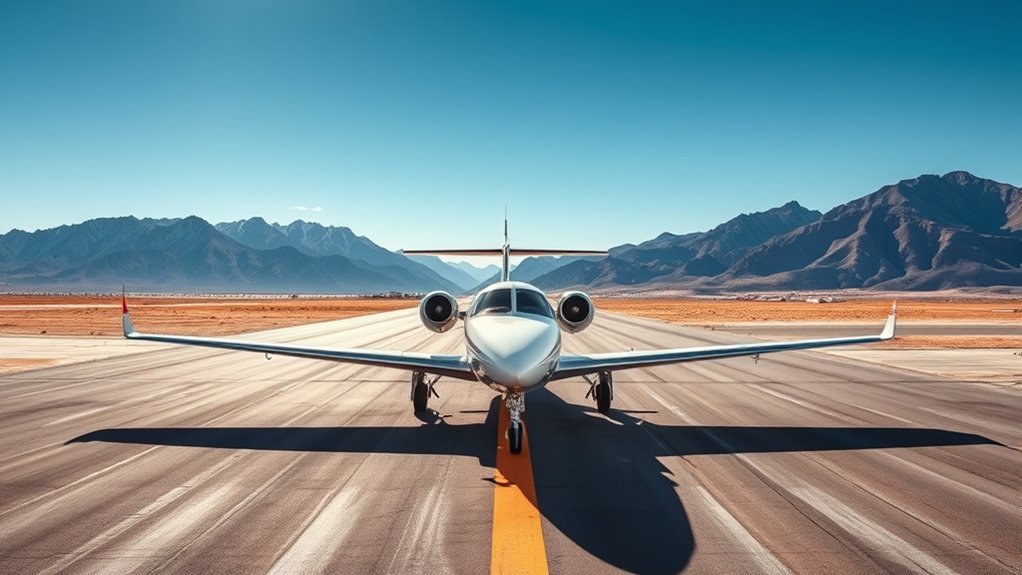
To effectively manage density altitude challenges, you should plan your flights carefully by checking weather reports and performance charts before departure. Adjust your aircraft weight to optimize performance—lighten the load when possible. Focus on navigation planning to avoid high-density altitude areas during peak heat. Here are four tips to help:
- Optimize aircraft weight—remove unnecessary gear and reduce fuel load if feasible.
- Adjust your takeoff and landing distances based on current density altitude data.
- Use performance charts to select the best altitude and route to mitigate density altitude effects.
- Keep a close eye on weather updates to anticipate temperature shifts and plan accordingly.
Frequently Asked Questions
How Does Density Altitude Affect Aircraft Engine Efficiency?
You might notice that engine performance drops as altitude effects increase. Higher density altitude means the air becomes less dense, so your engine gets less oxygen for combustion. This reduces power output, making your aircraft less responsive and harder to climb. Understanding how density altitude impacts engine efficiency helps you plan more effectively, ensuring you maintain safe and peak performance during your flight.
What Are the Signs of High Density Altitude During Flight?
Imagine a silent warning from the sky—your aircraft performance drops subtly yet markedly. When flying in high density altitude conditions, you notice reduced climb rates, longer takeoff distances, and sluggish engine response. Changes in weather patterns, like hot, dry days or high elevations, can signal these conditions. Keep an eye on performance indicators, as they’re your clues that the air’s thinner than usual, affecting your flight efficiency and safety.
Can Density Altitude Impact Aircraft Safety Margins?
Yes, density altitude can impact your aircraft safety margins. When altitude considerations are overlooked, performance implications become significant, especially at higher altitudes. You might notice reduced engine power, longer takeoff distances, and decreased climb rates. These factors can compromise safety if you don’t adjust your flight plan accordingly. Always account for density altitude to guarantee your aircraft operates within safe performance limits, preventing potential emergencies.
How Often Should Pilots Check Density Altitude Before Flights?
You should check density altitude before every flight, even if weather conditions seem stable. Don’t overlook aircraft weight and weather considerations, as they directly influence performance. It’s essential to evaluate density altitude regularly because it affects climb rate, takeoff, and landing distances. Making this a routine ensures your safety margins stay within limits, helping you make informed decisions and avoid surprises in performance during your flight.
Are There Aircraft Types More Affected by Density Altitude?
You should know that aircraft with higher weights, like multi-engine planes or those carrying heavy loads, are more affected by density altitude. During flight planning, you need to guarantee this, as higher density altitudes reduce engine power and lift. This means your aircraft’s performance decreases, especially in hot, high-altitude conditions. Being aware of these factors helps you ensure safe operation and proper planning for different aircraft types.
Conclusion
Understanding density altitude isn’t just a detail—it’s the secret weapon that can make or break your flight. Ignoring it could turn your smooth journey into a wild roller coaster ride, with your aircraft struggling like a fish out of water. Mastering this hidden factor empowers you to conquer the skies confidently, no matter how high the heat or the altitude. Stay sharp, stay prepared, and let density altitude be your silent partner in safe flying.
Fall yard work Picks
leaf blowers
As an affiliate, we earn on qualifying purchases.