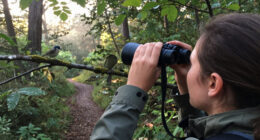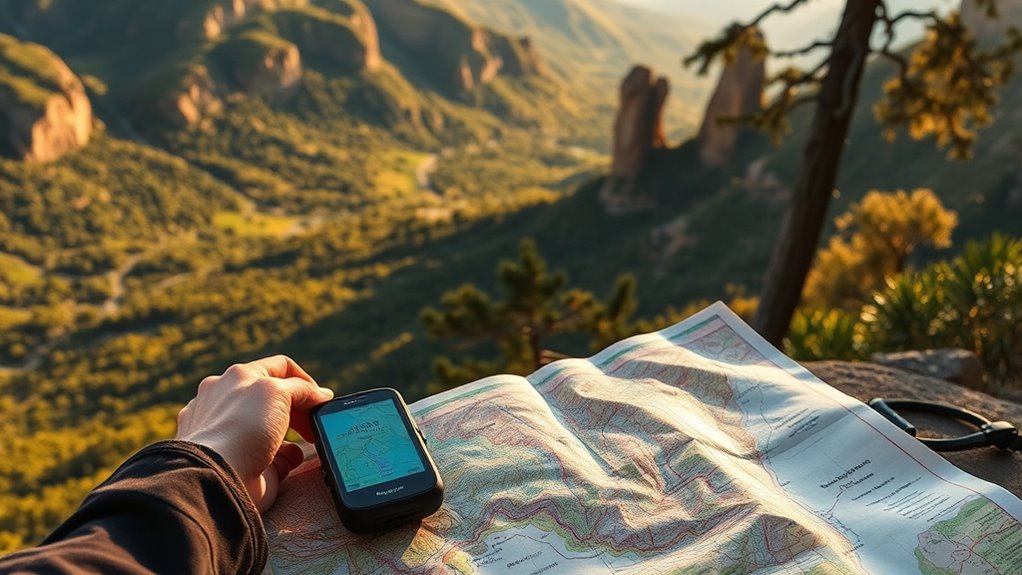

To steer easily, start by understanding map symbols for quick identification of landmarks, roads, and rivers. Confirm your direction with a compass or digital tool, ensuring the map aligns with real-world north. Use prominent landmarks like tall buildings or bridges to verify your route and stay oriented. Practice combining visual cues with GPS information to build confidence. Keep exploring, and you’ll find yourself steering even complex environments with greater ease and clarity.

Get travel and outdoor gear delivered free — and shop member deals
- Fast, free delivery on millions of items
- Access to Prime Big Deal Days deals on October 6–7
- Prime Video, Amazon Music and more included
Key Takeaways
- Recognize map symbols and legends to identify landmarks, roads, and features quickly.
- Confirm map orientation by aligning it with true north using a compass or digital tool.
- Use prominent landmarks to plan routes, verify progress, and maintain orientation during navigation.
- Incorporate visual and auditory cues to enhance understanding and interpretation of maps and surroundings.
- Practice regularly to develop confidence in reading maps, using GPS, and recognizing landmarks for effective navigation.
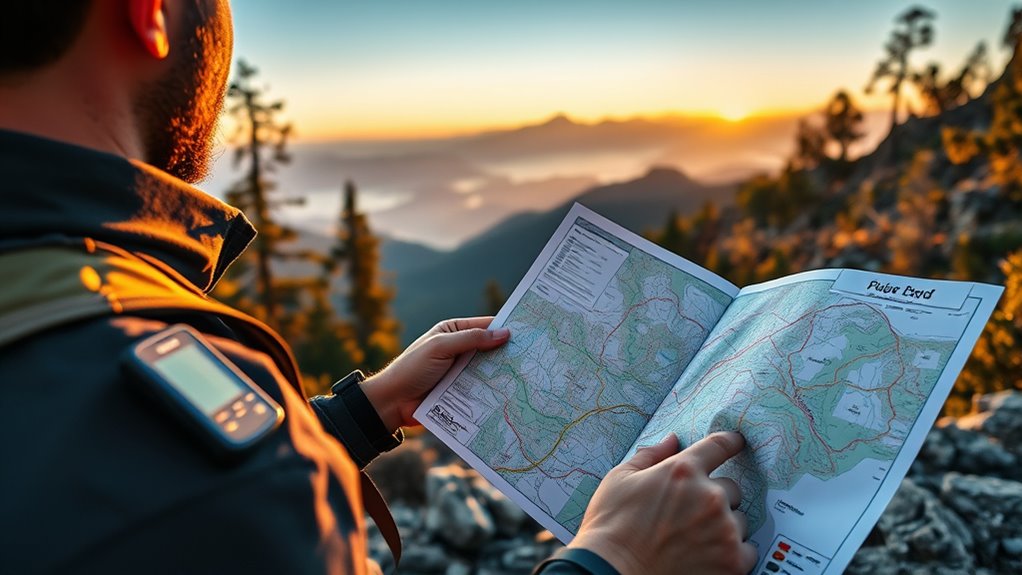
Have you ever felt lost trying to find your way in a new place? It’s a common experience, but understanding some basic wayfinding skills can make all the difference. When you’re looking at a map, it’s vital to recognize map symbols, which are the visual shortcuts that represent landmarks, roads, rivers, and other features. These symbols help you quickly identify important locations and understand the terrain without cluttering the map with too much detail. For example, a small tree symbol might indicate a park, while a blue line could represent a river. Familiarizing yourself with these symbols before you start wayfinding ensures you can interpret the map efficiently and avoid confusion.
Next, understanding compass directions is essential for orienting yourself correctly. Most maps are oriented with north at the top, but it’s easy to get turned around if you don’t verify your direction. Carrying a compass or using a digital compass feature on your device can help you confirm the correct bearings. When you’re trying to reach a destination, knowing whether to head east, west, north, or south keeps your movements purposeful. If you’re in an unfamiliar area, align your map with the real-world directions by holding it flat and turning it until the map’s north matches the actual north. This simple step guarantees that your map’s layout corresponds with what you see around you, reducing the risk of heading in the wrong direction.
Once you’ve interpreted the symbols and aligned your map with compass directions, you can start planning your route. Identify prominent landmarks—like a tall building, a bridge, or a distinctive tree—that you can spot from your current position. Use these landmarks to check your progress and confirm you’re on the right track. If you’re using a GPS device, it will often display your current location and direction, but it’s still wise to cross-reference with physical landmarks and your map. This layered approach strengthens your confidence and helps you stay oriented, especially if technology fails or signals are weak.
Additionally, understanding how visual and auditory elements in maps and guides can enhance your wayfinding experience helps you interpret complex information more effectively. Ultimately, mastering the basics of map reading, understanding symbols, and using compass directions will empower you to orient yourself confidently. Whether you’re hiking, exploring a new city, or just trying to find your way through unfamiliar territory, these skills allow you to move with purpose and clarity. Remember, the key is practice—familiarize yourself with your tools and environment, and wayfinding will become second nature. With time, you’ll find yourself moving through new places more easily, turning uncertainty into confidence with each step you take.
As an affiliate, we earn on qualifying purchases.
Frequently Asked Questions
How Do I Navigate in Areas With Poor GPS Signal?
When GPS signals are weak, you should rely on your compass and map orientation. First, use your compass to determine your direction; then, align your map accordingly. Look for landmarks, terrain features, or road signs to confirm your position. Keep track of your surroundings, and periodically recheck your compass to stay on course. This hands-on approach guarantees you navigate confidently even without a reliable GPS signal.
What Are the Best Landmarks for Urban Navigation?
You should focus on prominent landmarks like city statues and distinct building corners to navigate urban areas. These features are easy to spot and remain consistent, making them ideal for orientation. Use statues as reference points when moving through busy streets, and note building corners to confirm your location. Combining these landmarks with your map or compass helps you stay on track even when GPS signals are weak or unreliable.
How Can I Read Topographic Maps Effectively?
Your topographic map is a treasure map, revealing hidden land features! To read it effectively, focus on contour lines—they show elevation and terrain shape. Notice how closely spaced lines indicate steep slopes, while wide gaps mean gentle slopes. Use map symbols to identify features like rivers, forests, and roads. Keep practicing, and you’ll master terrain like a land explorer, turning complex maps into clear, exciting adventures!
What Tools Are Available for Offline Navigation?
You can use offline map apps like Gaia GPS or Maps.me for navigation without internet access. Additionally, understanding compass basics helps you stay on track when digital tools aren’t available. Carry a physical compass and a detailed paper map as backup, especially for remote areas. These tools guarantee you can navigate confidently, even when offline, making your journey safer and more efficient.
How Do Weather Conditions Affect Map Reading and GPS Accuracy?
Weather interference, like heavy rain, snow, or fog, can disrupt your GPS signal, causing inaccuracies or signal loss. These conditions make it harder to read maps accurately, especially if you’re relying on visual landmarks or GPS updates. To stay safe, always have a physical map as a backup, and remember that poor weather can slow down your navigation, so plan for delays and stay alert.
Conclusion
Mastering basic navigation skills like reading maps, using GPS, and recognizing landmarks keeps you safe and confident on any journey. Did you know that over 70% of people rely heavily on digital navigation tools today? However, knowing how to navigate without tech is invaluable if devices fail. So, practice these skills regularly. Being prepared guarantees you’ll always find your way, no matter where you go or what obstacles you face.
Fall Picks
fall essentials
As an affiliate, we earn on qualifying purchases.