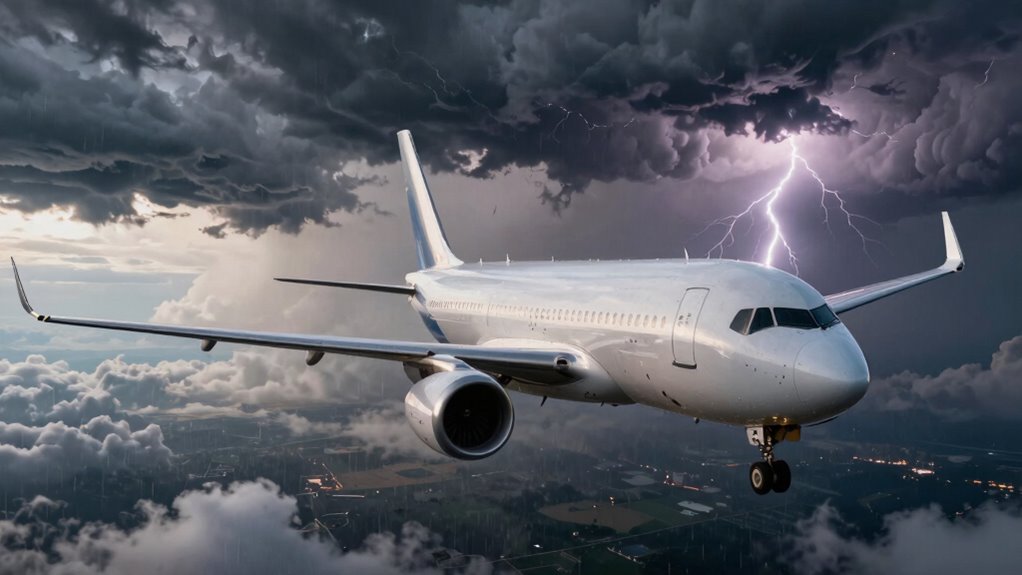

Weather risks like storms, turbulence, and fog directly impact how airspace is managed during flights. You rely on pilots and air traffic control to interpret weather data quickly and make decisions that prioritize safety, such as rerouting or delaying flights. Sudden weather changes require real-time coordination to avoid hazards, which can complicate airspace management. If you want to understand how technology and communication help navigate these challenges, keep exploring this important interplay.

Get travel and outdoor gear delivered free with Prime
- Fast, free delivery on millions of items
- Prime Video, Amazon Music and more included
- Member-only deals all year
Key Takeaways
- Weather risks can cause airspace restrictions, rerouting, or delays to ensure flight safety during adverse conditions.
- Rapid weather changes require real-time communication between pilots and ATC to adjust routes and altitudes effectively.
- Severe weather like storms or turbulence increases the likelihood of airspace congestion and safety management challenges.
- Technological tools enable proactive airspace management by providing accurate weather forecasts and real-time data.
- Collaborative decision-making between pilots and ATC is critical to balancing safety and efficiency amidst weather-related risks.
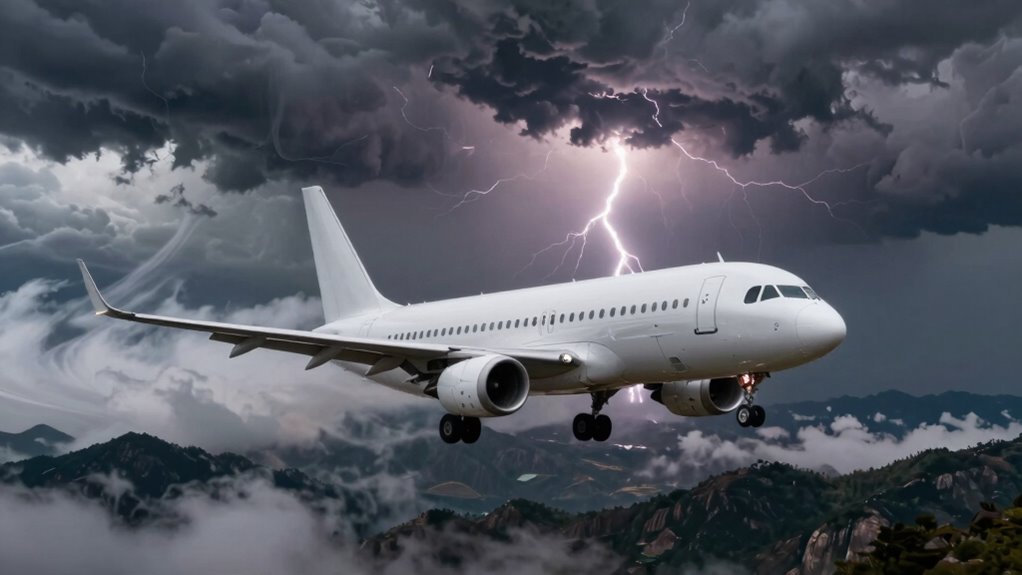
Weather conditions can considerably impact flight safety, as unpredictable elements like storms, turbulence, and fog pose direct risks to aircraft operations. When you’re flying, you rely heavily on pilot decision making to navigate these hazards effectively. Pilots must constantly interpret weather reports, radar data, and onboard instruments to decide whether to continue, reroute, or delay a flight. Strong storms or sudden turbulence can force quick decisions, and your judgment becomes essential in maintaining safety. Air traffic control (ATC) plays a significant role here, providing real-time weather updates and guiding pilots through safe routes. They coordinate with pilots to avoid hazardous areas, sometimes suggesting altitude changes or alternate routes to dodge severe weather.
The interaction between weather risk and airspace management makes flying a complex dance. If weather conditions deteriorate unexpectedly, air traffic controllers must rapidly assess the situation and communicate with pilots. They might hold aircraft on the ground or in holding patterns until conditions improve or clear routes become available. This dynamic relationship means that pilot decision making isn’t happening in isolation; it’s part of a broader system where ATC’s instructions and weather data influence each other. When visibility drops due to fog, pilots rely on instruments and ATC guidance to maintain safe separation from other aircraft. You might be asked to follow specific headings, reduce speed, or delay your approach until conditions improve.
Turbulence adds another layer of interaction. While it’s often not dangerous in itself, turbulence can cause discomfort and, in rare cases, injuries if passengers or crew aren’t prepared. Pilots use weather radar and reports from other aircraft to anticipate turbulent areas, adjusting their flight path accordingly. ATC supports this by providing updates from nearby flights and monitoring weather patterns. In such scenarios, pilot decision making becomes a balancing act—choosing the safest route while minimizing delays. Your training emphasizes communicating effectively with ATC and making quick, informed decisions under pressure. Additionally, understanding weather pattern forecasting enhances the ability of pilots and controllers to anticipate and respond to changing conditions proactively, reducing the likelihood of last-minute risky maneuvers. This understanding is especially important in managing airspace congestion, which can complicate rerouting efforts during adverse weather.
Effective airspace management depends on seamless communication and coordination between pilots and air traffic controllers, especially during unpredictable weather changes. Both pilots and ATC need to utilize weather data analysis to make informed decisions quickly, minimizing delays and safety risks. Moreover, advancements in technology and communication systems have significantly improved the ability to respond to weather-related challenges in real time. Ultimately, the relationship between weather risk and airspace management underscores the importance of coordination. Both pilots and air traffic controllers work together, sharing information and adapting plans to ensure safety. Weather may be unpredictable, but through precise decision making and seamless communication, you can navigate these risks successfully. This teamwork helps maintain safe skies despite the challenges posed by nature, keeping flights secure even amid adverse weather conditions.
As an affiliate, we earn on qualifying purchases.
Frequently Asked Questions
How Do Pilots Prepare for Unexpected Weather Changes During Flights?
You prepare for unexpected weather changes through thorough weather adaptation strategies and ongoing pilot training. Before flight, you review current weather reports and forecasts, staying alert for sudden updates. During the flight, you rely on your training to interpret weather data quickly and adjust your route or altitude accordingly. Continuous training helps you stay confident in managing unpredictable weather, ensuring safety and smooth navigation despite changing conditions.
What Technologies Assist in Predicting Airspace Risks Accurately?
You rely on advanced technologies like satellite monitoring and predictive analytics to accurately forecast airspace risks. Satellite monitoring provides real-time data on weather patterns, turbulence, and other hazards, while predictive analytics analyze historical and current data to identify potential threats ahead of time. Together, these tools enable you to make better-informed decisions, navigate safely, and respond swiftly to emerging risks, ensuring a safer flight experience.
How Do Air Traffic Controllers Manage Risks During Adverse Weather Conditions?
You bet air traffic controllers don’t just cross their fingers during bad weather! They monitor weather patterns closely, reroute flights, and adjust altitudes to dodge turbulence and storms. Through risk mitigation strategies, they keep chaos at bay, ensuring safety isn’t left to chance. With a sharp eye on weather updates, they juggle aircraft spacing and timing, proving that managing risks during adverse conditions is an art form—minus the paint.
Can Weather Risk Impact Flight Insurance Policies or Claims?
Weather risk can substantially impact your flight insurance policies and claims. If unpredictable weather patterns cause delays, diversions, or cancellations, your insurance coverage might be affected, especially if the policy excludes weather-related incidents. You should review your insurance considerations carefully, understanding what weather conditions are covered. In some cases, frequent weather-related disruptions could lead to higher premiums or influence claim approval processes, making weather an essential factor in your flight planning and coverage.
What Are the Most Common Airspace Risks Encountered in Different Regions?
In different regions, you’ll encounter common airspace risks like regional security issues and geopolitical tensions. For example, in conflict zones, military activity and restricted airspace pose significant threats, while in politically unstable regions, sudden restrictions or conflicts can disrupt flights. These risks force you to stay informed about regional security updates, as they directly impact flight safety, routing, and insurance considerations, making it essential to adapt your planning accordingly.
Conclusion
You see, weather and airspace risks intertwine intricately, impacting every flight’s fate. By understanding how turbulent temperatures and treacherous terrain challenge your journey, you become better prepared. Embrace the expertise of experienced eyes and alert alerts to avoid adverse adventures. Remember, vigilance and vigilance alone can vanquish vulnerabilities. So, stay savvy, stay safe, and savor the skies — where risks are managed with meticulous mastery, making every flight a flawless feat.
Halloween Picks
halloween
As an affiliate, we earn on qualifying purchases.